10
Loading video...

By Jesus Mesa
Reporter
0
Share
Newsweek is a Trust Project member
See more of our trusted coverage when you search.Prefer Newsweek on Googleto see more of our trusted coverage when you search.
Millions of Venezuelans stayed up late Sunday night, hoping for an announcement that might change the political landscape they have endured since Hugo Chavez came to power in 1998. That optimism vanished when Nicolás Maduro was abruptly declared the winner in what is widely being seen as a rigged vote.
The National Electoral Council (CNE), loyal to Maduro's ruling party, announced his victory over Edmundo Rodriguez, the main opposition candidate, handing the leftist strongman a third six-year term. The results come as Venezuela's economy is attempting to recover from collapse, and a population that is desperate for change.
Maduro's legitimacy has been questioned since his first election victory in 2013, after being designated by Chavez as his successor. According to the official count on Sunday, Maduro claimed 51% of the vote, despite earlier polls and exit polls indicating that Gonzalez was leading by a large margin.
Read More on World

...
"Venezuelans and the entire world know what happened," Gonzalez said. He and his allies urged supporters to remain calm and called on the government to avoid stoking conflict. Maria Corina Machado, the charismatic opposition leader who backed Gonzalez after she was banned from running against Maduro, said he had taken about 70% of the vote.
Despite reports of arrests and intimidation of his supporters, Gonzalez has not called for his followers to take to the streets and has warned against violence. In response, the sound of banging pots and pans echoed across various neighborhoods in Caracas on Monday as Venezuelans participated in a "cacerolazo," a traditional Latin American protest.
For many Venezuelans, the scenario feels all too familiar. While Machado and Gonzalez remain optimistic about comparing their own data with that of the CNE, experts and politicians believe this was the last opportunity after numerous failed attempts to overthrow the socialist regime that has ruled the country for 26 years. Economic sanctions, threats of military force, the possibility of a U.S. invasion floated by then-President Donald Trump and international isolation have all failed to unseat Maduro.
"The international community's options are limited, and the conversation suggests a grim outlook for achieving significant political change in Venezuela in the near future," Sandra Borda, a political science professor at the University of the Andes in Bogotá, Colombia, told Newsweek.
Millions of Venezuelans have fled the country in the past decade since Maduro took office, spurred by economic policies that led to hyperinflation, other regional pressures, and, more recently, the pandemic. Since 2010, the number of Venezuelan immigrants in the U.S. has nearly tripled, according to figures from the Migration Policy Institute.
Sunday's election was a setback for the Biden administration, which had eased sanctions hoping to induce a free and fair vote. U.S. Secretary of State Antony Blinken expressed "serious concerns that the result announced does not reflect the will or the votes of the Venezuelan people," urging electoral officials to publish detailed vote tabulations.
Possible Scenarios
The immediate future for Venezuela remains uncertain. The opposition has pledged to continue its fight for a transparent vote count and the restoration of democracy. International pressure is expected to mount, with potential diplomatic and economic repercussions for Maduro's already-isolated government.
"Allies such as Russia and some in Latin America, among others, have helped the Maduro government survive despite a period of strong international isolation and rejection by important actors, said Carolina Jiménez Sandoval, president of the Washington Office on Latin America (WOLA).
While the results of the election are being disputed, a bureaucratic showdown is simmering: Gonzalez has asked electoral authorities to present all the voting tallies printed by voting machines at the 30,000 polling stations across the country. Gonzalez said he would not call for his supporters to take to the streets in protest or commit any act of violence.

...
Some opposition leaders, like Julio Borges, former president of the National Assembly, urged the military to "defend the will of the people," a sentiment echoed by Machado during her speech after the CNE released the election results on Monday.
"No one believes this farce announced by Maduro's corrupt National Electoral Council; it is a big lie that the country will not tolerate," Borges, the Venezuelan politician, told Newsweek.
According to Jiménez, from WOLA, the opposition should continue to pressure the government and the international community to ensure that the electoral authorities act with transparency and accountability.
"It is essential for them to exercise their right to obtain all relevant electoral information. Without appropriately auditing and disaggregating each tally sheet, it is impossible to ensure the legitimacy of electoral results," she said.
Borda, the Colombian professor, believes the situation could deteriorate further. She doubts that Maduro and the CNE will release voting data, even under international pressure, saying the Venezuelan president will take advantage of a chaotic global situation, with conflicts in Gaza and Ukraine and the U.S. election diverting attention from Caracas.
"What will continue to happen, as it has in recent years in Latin America, is that the U.S. will try to convince the region to contain the migration issue, which is like lukewarm water, but it won't solve the underlying problem. The core issue remains unresolved," she said.
A nationwide poll conducted last month by the Venezuela-based research firm Delphos showed that roughly a quarter of Venezuelans are considering migrating, primarily for economic reasons. Of those thinking about leaving the country, about half said an electoral win by the opposition would make them stay, and roughly the same amount indicated that an improved economy would also keep them in their home country.
...
Another scenario is that Maduro could increase pressure on the opposition, specifically against Machado herself. She was blocked from registering as a presidential candidate, and members of her team have been arrested and attacked as an agent of Washington. Tarek William Saab, the attorney general of Venezuela, has accused her of hacking the counting system alongside "forces in the U.S."
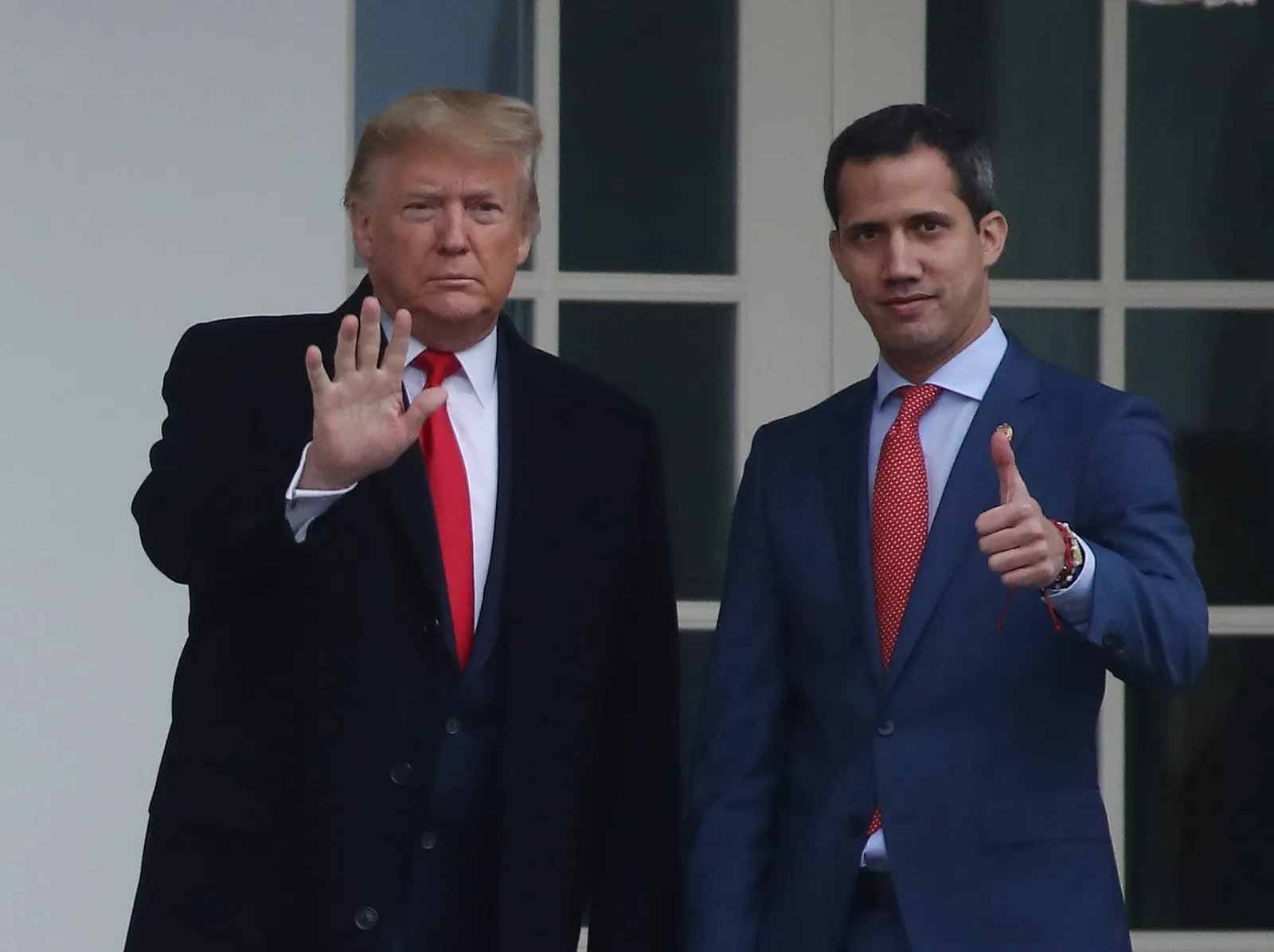
Another possible outcome is even more political isolation, something that Maduro has navigated well over the past eight years. The Venezuelan president survived not only economic pressures but also a high-profile political campaign, with the U.S. backing Venezuelan legislator Juan Guaido as "interim president" in 2019.
Guaido's attempt at regime change failed, and he now lives in exile in Florida.
Do you have a story Newsweek should be covering? Do you have any questions about this story? Contact LiveNews@newsweek.com
View 0 Comments
Submit Correction
View Editorial & AI Guidelines