10
Loading video...


By Jordan King and Toby Meyjes
0
Share
Newsweek is a Trust Project member
See more of our trusted coverage when you search.Prefer Newsweek on Googleto see more of our trusted coverage when you search.
Thousands of Catholics in the United States who belong to or formally support the Society of Saint Pius X (SSPX) have been warned they could face excommunication after the Vatican ruled the breakaway traditionalist group's latest episcopal consecrations constituted "an act of nature schismatic."
In a decree issued on Thursday, the Dicastery for the Doctrine of the Faith formally declared the excommunication of six bishops connected to the SSPX after the priestly fraternity consecrated four new bishops in Écône, Switzerland, on Wednesday without Pope Leo XIV's approval. The Holy See said in its decree that the ordinations were carried out "without pontifical mandate and against the will of the Supreme Pontiff."
The decree also has implications for the entire SSPX community, as it warns lay followers who formally adhere to the fraternity that they are to be considered excommunicated and invalidates confessions and marriages celebrated by SSPX clergy.
Read More on News
"As for the lay faithful, those who formally adhere to the Fraternity are to be considered excommunicated," reported Vatican News, the Holy See's official media outlet.
The warning affects about 30,000 SSPX faithful in the United States, along with 124 priests serving 115 chapels, according to SSPX data for 2024, the most recent available, meaning the Vatican's ruling could affect a significant number of American Catholics.
The excommunication decree has also fed into wider Catholic culture-war debates over whether Leo is taking a tougher line against traditionalists than against more progressive factions in the church.

...
What Constitutes 'Formal Adherence'?
While the decree does not explain what it means to "formally adhere" to the SSPX, it points to a 1996 Vatican explanatory note that says that "an occasional participation in liturgical acts or activities" of the movement "is not sufficient" to constitute formal adherence, indicating that merely attending an SSPX Mass is not enough.
According to the 1996 note, "formal adherence" requires both a conscious decision to place allegiance to the SSPX above obedience to the pope and an outward expression of that choice.
SSPX bishops Alfonso de Galarreta and Bernard Fellay, who carried out the consecrations, are explicitly named, as well as newly consecrated bishops Pascal Schreiber, Michael Goldade, Michel Poinsinet de Sivry and Marc Hanappier. The decree said they all incurred ipso facto excommunication.
The decree, which appears to go significantly further than the Vatican's response to the society's 1988 consecrations, also represents one of the strongest acts of Pope Leo XIV's pontificate to date, signaling his willingness to enforce papal authority after months of efforts to resolve the dispute with the breakaway group.

...
Inside the Vatican's Excommunication Decree
The Vatican said the six bishops had incurred automatic, or latae sententiae, excommunication under canon law by participating in episcopal consecrations carried out without the pope's approval.
The decree, signed by Cardinal Víctor Manuel Fernández, the prefect of the Dicastery for the Doctrine of the Faith, was issued by the dicastery 24 hours after the consecration ceremony in Écône.
An accompanying explanatory note said repeated efforts by the Holy See—from the papacy of Pope Paul VI, which ended in 1978, through recent talks under Pope Leo XIV—to restore the SSPX to full communion had proved unsuccessful.
The note quoted from St. John Paul II's 1988 apostolic letter Ecclesia Dei, in which he excommunicated SSPX's founder, Archbishop Marcel Lefebvre, saying, "Such disobedience—which implies in practice the rejection of the Roman primacy—constitutes a schismatic act."
Decree-of-the-Dicastery-for-the-Doctrine-of-the-Faith.pdf.PDF
What Happened at Écône?
The consecrations took place at the SSPX's international seminary in Écône, a site closely associated with the group since Lefebvre established it in 1970.
During the ceremony, de Galarreta, the consecrating bishop, laid his hands on the heads of the four priests—a central moment in the Catholic rite of episcopal ordination that symbolizes the transmission of apostolic succession—before they concelebrated Mass alongside senior SSPX clergy.
The ceremony went ahead despite repeated warnings from the Vatican that carrying out episcopal consecrations without papal approval would have serious canonical consequences. In May, Fernández wrote to SSPX Superior General Davide Pagliarani urging him to cancel the consecrations, warning they would represent "a true schismatic act." The fraternity rejected the request, arguing that the new bishops were needed to ensure the continuation of its ministry worldwide.
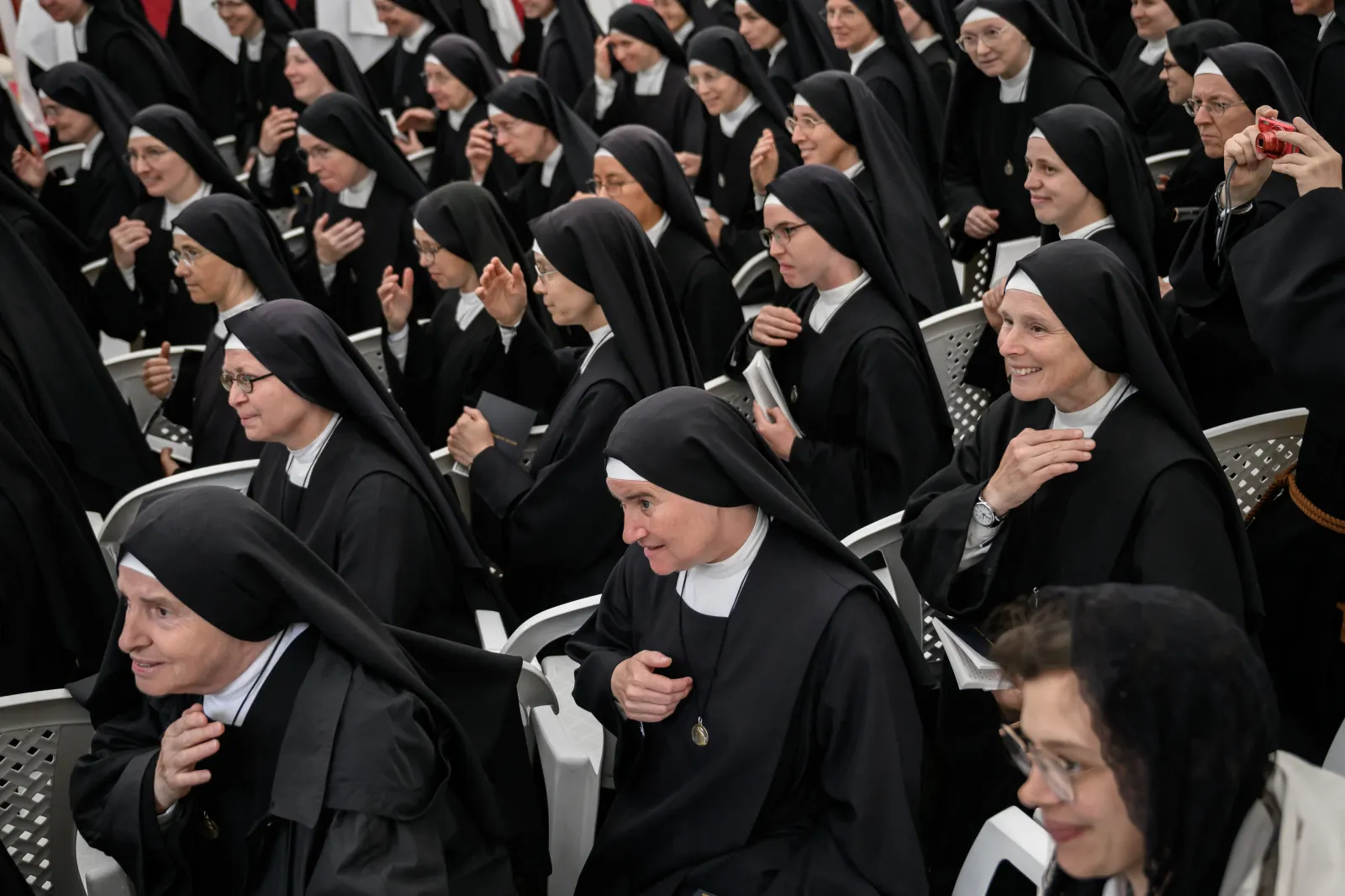
The five-hour consecration ceremony drew an estimated 16,500 worshippers and was livestreamed in multiple languages, according to the Associated Press.
...
Speaking with reporters shortly after the consecrations, Vatican Secretary of State Cardinal Pietro Parolin said he felt "deep sorrow" over the ceremony, saying it had inflicted a serious blow to the church's unity.
"I wish to express deep sorrow, because, when speaking of the unity of the church, an act of this kind deeply wounds that unity," he said, adding that episcopal ordinations carried out without a papal mandate "break the unity of the church" and incur excommunication.
How the SSPX Responded
The SSPX has not responded to the Vatican's excommunication decree. During Wednesday's ceremony, it defended the consecrations as a necessary step to preserve its mission, rejecting suggestions that it intended to create a rival church or challenge the pope's authority.
Before the consecrations began, the SSPX read a letter explaining why it had decided to proceed. It repeated its long-standing disagreements with Rome, arguing that since the Second Vatican Council, church leaders had abandoned Catholic tradition, and it dismissed the Holy See's excommunication threats.
"We consider every punishment and censure brought to bear against this step will have no validity," the group said.

...
After the ordinations went ahead, the SSPX said in a statement that it "sincerely regrets" that the consecrations were carried out without Leo's authorization, but that "exceptional circumstances" had made them necessary.
The group also said it regretted that its superior general had not received a personal meeting with Leo to explain "the grave reasons" behind the ceremony.
It added that the consecrations were a source of "profound joy," saying the four new bishops would help preserve "the sacred heritage of Tradition" and represented "a very great grace for the society itself and for the whole church."
Wider Cultural Divides in the Church
Some conservative Catholics have questioned why the Vatican moved so forcefully against the SSPX while disputes over LGBTQ inclusion, women's ordination and so-called Pride Masses have not drawn the same penalties.
The Lepanto Institute, a conservative Catholic research and advocacy organization in the U.S., commented on an X post showing photos of a Pride Mass organized by the LGBTQ+ organization Stonewall, writing: "Pure sacrilege goes unpunished … but the SSPX is the problem the Vatican needs to focus on."
According to the Vatican, the SSPX case is different because it involves a direct act of schism: Bishops were consecrated without papal approval, challenging the pope's authority over the governance and unity of the church.
The Vatican has not endorsed same-sex marriage or the liturgical blessings of same-sex unions. In its 2023 declaration Fiducia Supplicans, the Dicastery for the Doctrine of the Faith allowed spontaneous pastoral blessings for "couples in irregular situations and same-sex couples," but it said those blessings must not resemble a wedding rite or suggest approval of the union.
The clash reflects a broader struggle inside Catholicism that mirrors political and cultural divisions outside the Church: between those who want Rome to be more welcoming on issues such as sexuality and gender and those who see such moves as evidence that the church has abandoned its original beliefs. The SSPX has long argued that reforms linked to the Second Vatican Council weakened Catholic doctrine, while the Vatican says unity with the pope is not optional.
Contact Newsweek editors on this story: Tobias Meyjes and Shakeema Edwards.
View 0 Comments
Submit Correction
View Editorial & AI Guidelines