...

By Jesus Mesa
Reporter
0
Share
Newsweek is a Trust Project member
See more of our trusted coverage when you search.Prefer Newsweek on Googleto see more of our trusted coverage when you search.
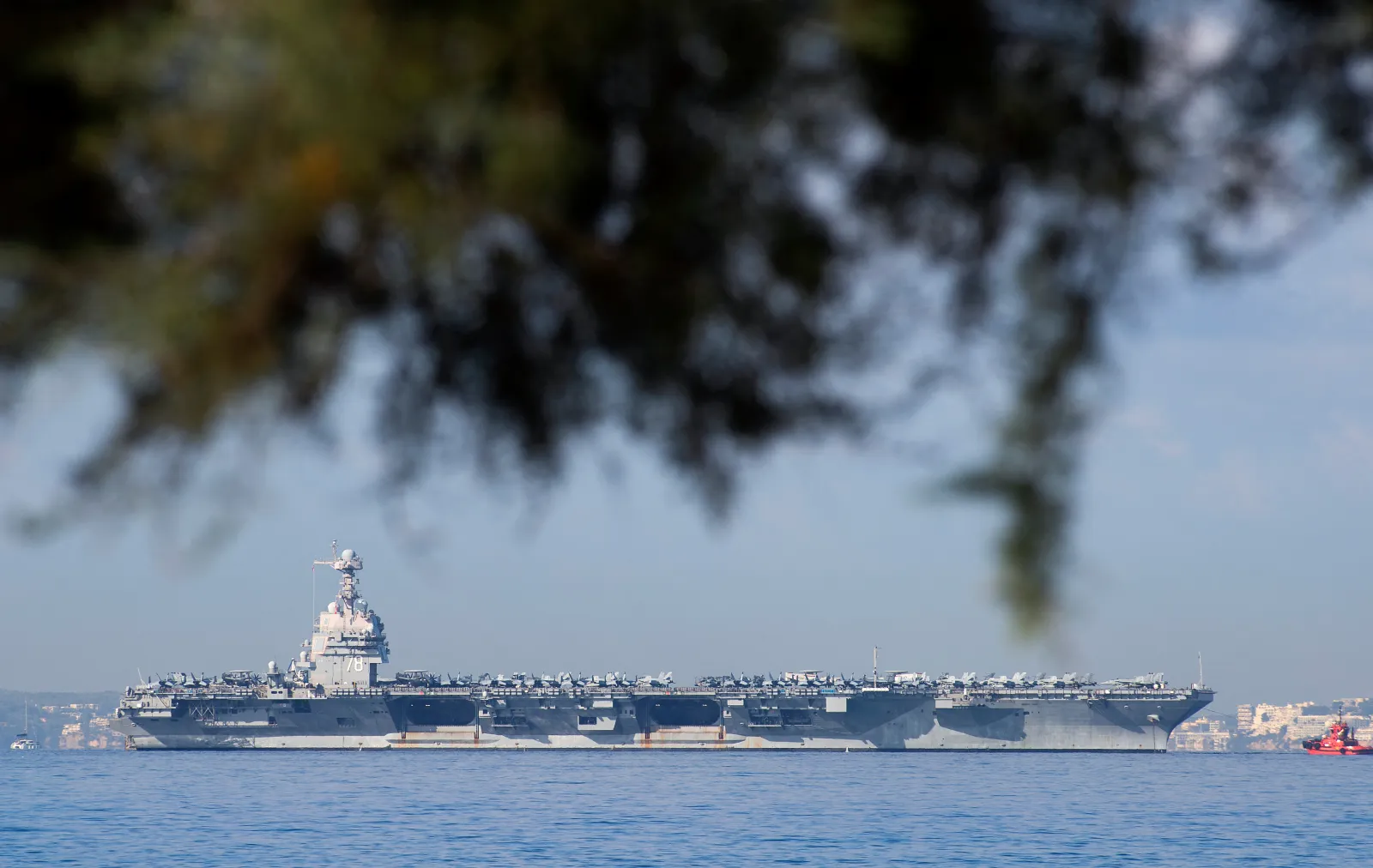
The United States Navy has redirected the aircraft carrier USS Gerald R. Ford from Europe to the Caribbean as part of an expanded military operation targeting drug trafficking networks, a move drawing sharp criticism from Venezuela's government as it dramatically increases U.S. presence in the region.
The Ford, accompanied by five guided-missile destroyers as Carrier Strike Group 12, left Split, Croatia, on October 26. The U.S. Naval Institute reported the carrier was last tracked in the Ionian Sea and was expected to cross the Strait of Gibraltar before entering Atlantic waters. The redeployment was ordered by Defense Secretary Pete Hegseth and places the entire carrier group — the world's largest — under U.S. Southern Command.
The carrier can be tracked below. The information is based on maritime tracking data broadcast by the ship’s Automatic Identification System (AIS):
Read More on News
The Gerald R. Ford, commissioned in 2017, is the Navy’s most advanced aircraft carrier and the centerpiece of U.S. naval power. Carrying about 90 aircraft and more than 5,000 personnel, the ship was originally deployed to support NATO allies in the Mediterranean and North Sea.
Now, the Ford is heading back to the Western Hemisphere under new orders. The redeployment, which comes as part of the Trump administration's muscular posture toward Latin America , places the strike group under U.S. Southern Command—a signal of shifting priorities.
Trump has severely escalates his administration’s campaign against drug cartels, which he has designated as unlawful combatants. Declaring the United States to be in an armed conflict with those groups, the president has authorized at least nine lethal strikes on alleged drug-trafficking vessels since early September, killing more than 43 people, according to official figures. The operations mark a dramatic expansion of U.S. military action in the region and have drawn international scrutiny.
The Pentagon insists the mission is lawful and necessary. Spokesperson Sean Parnell said the deployment will “detect, monitor, and disrupt illicit actors and activities that compromise the safety and prosperity of the United States homeland,” according to a statement shared with Newsweek. Trump has also authorized operations that could extend to land-based targets.
In Caracas, President Nicolás Maduro accused Washington of using the carrier group as a pretext to provoke conflict. “They are fabricating a new eternal war,” Maduro said during a national broadcast, calling the move part of a “fake narrative” aimed at destabilizing his government.
The Ford’s redeployment adds to a growing U.S. presence in the region. At least three destroyers—the USS Jason Dunham, USS Gravely, and USS Stockdale—are already operating in the Caribbean, alongside a cruiser, a littoral combat ship, a submarine and three amphibious warships.

...
View 0 Comments
Submit Correction
View Editorial & AI Guidelines