
...


By Dan Gooding and Jasmine Laws
0
Share
Newsweek is a Trust Project member
See more of our trusted coverage when you search.Prefer Newsweek on Googleto see more of our trusted coverage when you search.
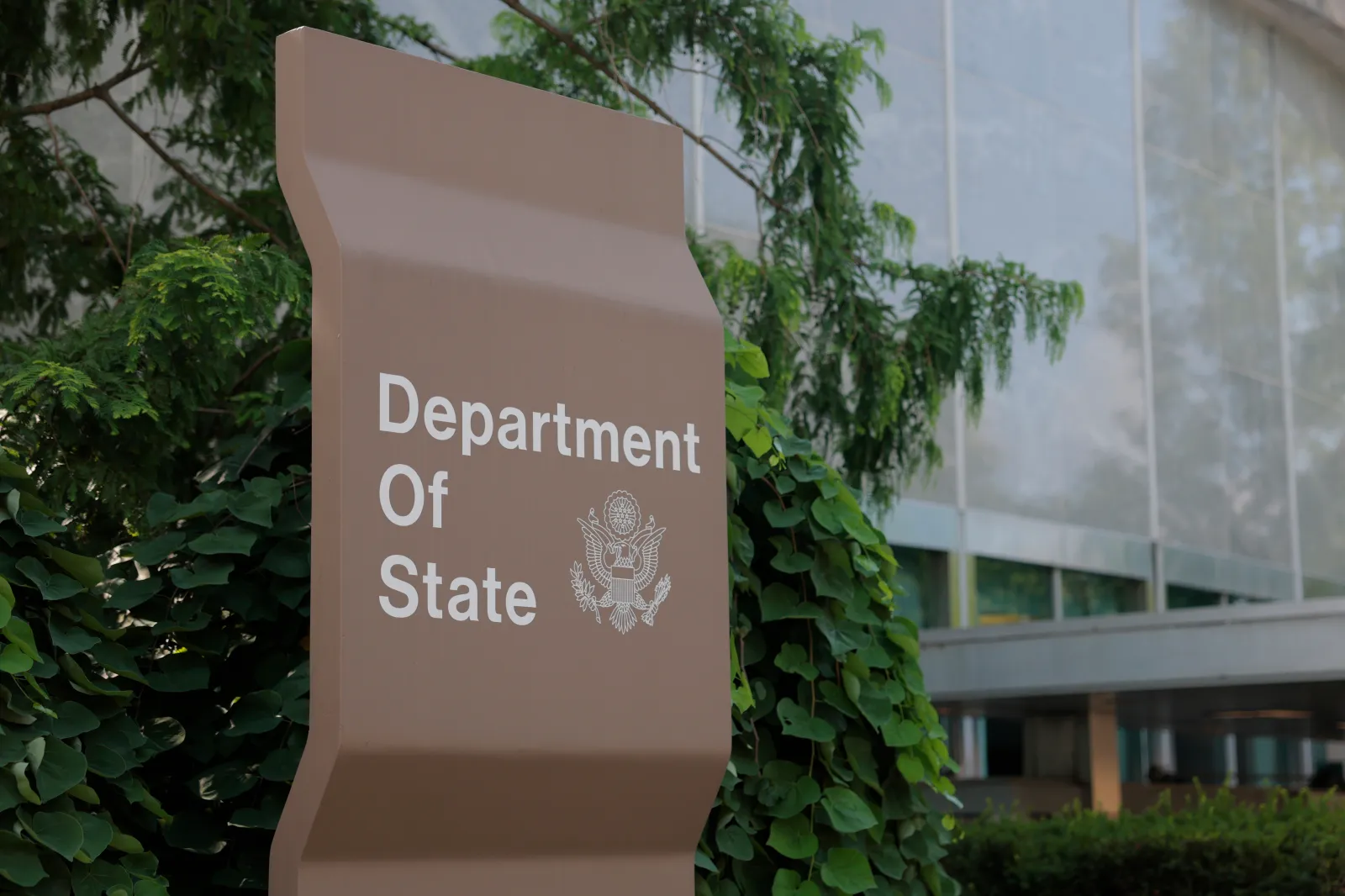
The U.S. State Department is set to close almost 30 embassies and consulates that process visas in Africa, according to a memo seen by The Associated Press (AP) on Monday.
The move would be the latest made by President Donald Trump's administration to cut back on pathways for immigrants seeking to head to the United States, which has included travel bans affecting many African and Asian countries.
Officials who spoke with the AP said that diplomats were told Friday that visa services would be scaled back to 20 so-called hubs across the continent.
Read More on U.S.
Why Is the Trump Administration Cutting US Embassies in Africa?
A State Department official would not confirm the move directly with Newsweek, saying that the department was constantly evaluating overseas operations, including "a visa process that maintains rigorous standards of security screening and vetting."
The memo showed 20 hubs would continue processing visas on the continent.
- Abidjan, Ivory Coast
- Accra, Ghana
- Addis Ababa, Ethiopia
- Cape Town, South Africa
- Dakar, Senegal
- Dar-Es-Salaam, Tanzania
- Djibouti, Djibouti
- Johannesburg, South Africa
- Kampala, Uganda
- Kigali, Rwanda
- Kinshasa, Congo
- Lagos, Nigeria
- Lome, Togo
- Luanda, Angola
- Malabo, Equatorial Guinea
- Monrovia, Liberia
- Nairobi, Kenya
- Port Louis, Mauritius
- Praia, Cape Verde
- Yaounde, Cameroon
Using this list and comparing with current Department of State information on the U.S. diplomatic footprint in Africa, Newsweek understands the remaining sites colored orange in the map below will lose consular visa processing. The map shows the closest geographic hub site for each country affected.
There was no set date for the change, approved by Secretary of State Marco Rubio, but officials said it was likely to happen some time this month.
Under the new rules, those applying for U.S. visas in a country without visa processing would need to travel to a nearby hub embassy or consulate for processing.
The sites without visa processing will still be able to offer emergency assistance to American citizens, as well as diplomatic visa services.
"Closing embassies or consulates overseas is yet another way the Administration is attempting to shut down the lawful pathways Congress created for people to come to the US, whether to visit loved ones, reunite with family, pursue educational or employment opportunities, or contribute their talents to this country," Nils Kinuani, federal policy manager at African Communities Together, told Newsweek in a statement.
"These actions do more than limit access; they undermine congressional intent and run counter to the values, principles, and identity of our nation."
How This Fits With US Immigration Policy
Travel bans have been a central pillar of the Trump administration's approach to legal immigration, with Africa increasingly at the center of new restrictions.
A December 2025 proclamation expanded entry limits to 39 countries—many of them in Africa—imposing full or partial suspensions on both immigrant and nonimmigrant visas.
Analysts have noted that Africa has borne the brunt of these measures, with some estimates suggesting that dozens of African nations now face either visa bans, partial restrictions, or expanded screening requirements tied to security concerns, visa overstays, and deportation compliance.
Other policy shifts have reinforced this trend. The administration has also paused immigrant visa processing for nationals of dozens of countries, including many in Africa, while reassessing screening procedures and tightening “public charge” rules that make it harder for applicants perceived as likely to rely on government assistance.
In parallel, additional requirements, such as high visa bond proposals and stricter eligibility criteria, have further narrowed access across categories ranging from tourism to student visas.
...
How Has the Ebola Outbreak Impacted Visas?
The current Ebola outbreak in Central and East Africa has added another layer of restrictions that directly affect travel and immigration, often on a much shorter timeline but with immediate consequences.
Last month, U.S. authorities introduced emergency measures, including entry restrictions and enhanced health screening, for travelers who had recently been in outbreak-affected areas such as the Democratic Republic of the Congo, Uganda, and South Sudan.
The State Department also temporarily paused all visa services at U.S. embassies in the hardest-hit countries, halting appointments for tourist, student, business, and immigrant visas alike. Applicants in those countries are unable to schedule interviews, and previously booked appointments have been canceled.
The Ebola Outbreak—Latest Updates
According to the latest information available shared by the Centers for Disease Control and Prevention (CDC), as of June 1, there have been 321 confirmed cases of Ebola in the Democratic Republic of the Congo (DRC) in this current outbreak, as well as 48 confirmed deaths and 116 suspected cases.
There have been 11 confirmed cases in Uganda, and one confirmed death. Though, the situation is "rapidly evolving," the CDC said, so these figures are subject to change.
The areas of the DRC that have been affected include the provinces of Ituri, Nord-kivu and Sud-Kivu. In Uganda, cases have been reported in the capital Kampala.
The CDC maintains that threat to the U.S. remains "low," with no cases yet reported in America as part of this outbreak. One American physician, Dr. Peter Stafford, who was exposed to the virus while treating patients in the DRC, has tested positive, and was subsequently transferred to Germany for treatment alongside other high-risk contacts. He is currently in a "stable condition," the CDC said on Monday.
The U.S. has also implemented precautionary measures to prevent domestic transmission. Last month, the CDC and the Department of Homeland Security instituted enhanced screening and entry restrictions under a Title 42 public health order. The measures target travelers arriving from outbreak-affected countries, including the DRC, Uganda, and South Sudan.
This article contains reporting by the AP.
Update 6/2/26, 5:24 a.m. ET: This article has been updated with additional information on the Ebola outbreak and a map.
Update 6/2/26, 3:06 p.m. ET: This article was updated with comment from Nils Kinuani.
View 0 Comments
Submit Correction
View Editorial & AI Guidelines