Newsweek Photo-Illustration/Getty/Canva

By Hugh Cameron
Reporter
0
Share
Newsweek is a Trust Project member
See more of our trusted coverage when you search.Prefer Newsweek on Googleto see more of our trusted coverage when you search.
Hauling an estimated 11 billion tons annually and handling nearly three quarters of the nation’s freight by weight, there can be few doubts about the importance of the nation's truckers to the economy.
"America’s truck drivers are essential to the strength of our economy, the security of our nation, and the livelihoods of the American people," the White House said earlier this year.
And for the drivers themselves, carting cargo on America’s highways has been an engine of class mobility—a flexible vocation offering decent pay without the prerequisite of a college education or the daunting prospect of an office-based 9-to-5. But burnout and stagnant wages have sparked a retention crisis among truckers, and the industry as a whole appears to be in a period of flux.
Read More on U.S.
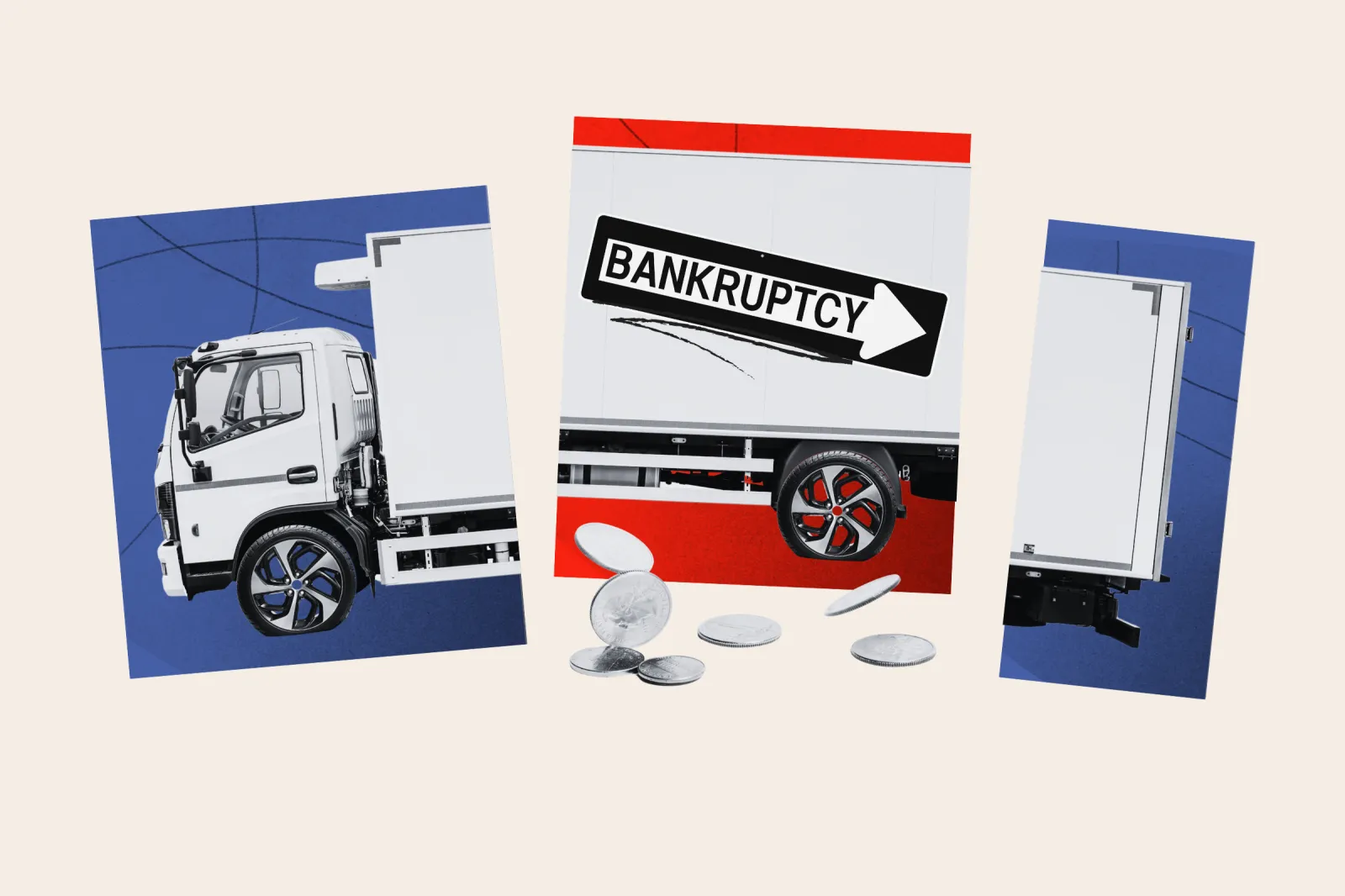
Since at least 2023, bankruptcies have been on an upward trend—Equipment Finance News counts over 30 trucking companies that have filed for chapter 11 since the beginning of the second quarter—and the latest forecasts paint a "highly uncertain" picture for the industry, according to ACT Research, buffeted by trade policy, weak demand and broader economic headwinds.
Newsweek Photo-Illustration/Getty/Canva
Labor, Demand and the 'Freight Recession'
To some, the problem is one of labor and an insufficient supply of drivers. A survey by Tech.co in July found that 69 percent of freight businesses were struggling to meet demand as a result of driver shortages. However, James Peoples Jr., professor of economics at the University of Wisconsin—Milwaukee, told Newsweek that there was a "big debate" over whether there was a driver shortage, or simply a retention issue.
**"**Nonetheless, consistently high labor turnover rates create the same challenge as a shortage—companies are unable to operate at full capacity and fill shipper demands in a timely fashion," he said.
Stephen Burks, a former truck driver and now professor of economics and management at the University of Minnesota, argues that, far from a shortage, the industry suffers from excess capacity as a result of demand falling since the post-COVID boom.
Burks told Newsweek that a huge spike in employment rates coming out of the pandemic—when "becoming a truck driver was a golden handshake"—had been followed by a decline in demand that had kept the industry in a "freight recession" since the back half of 2022.
Avery Vise, vice president of Trucking at FTR Transport Intelligence, said: "Trucking remains in a prolonged slump that perhaps might best be thought of as severe hangover from the extraordinarily strong freight market from late 2020 through early 2022."
Trade Policy Hits the Open Road
Data from the Department of Transportation shows that freight volumes have been on a noticeable downtrend since early 2022, and experts think the problem may be poised to worsen as tariffs weigh on demand. Peoples told Newsweek that "declining consumer demand attributable to high tariffs," as well as intermodal competition from freight rail companies, had created "a challenging business environment for trucking companies."
Beyond the secondary effects of tariffs on goods weighing on demand, trucking companies and, in particular, truck manufacturers may also have to contend with the recently announced duties on medium and heavy-duty trucks, set to take effect in November.
"The 25 percent tariff on heavy-duty trucks is intended to help U.S. producers," Peoples said. "However, many of these manufacturers rely on production from abroad. So, production costs of domestic manufactures will increase unless they are able to easily shift production to the U.S."
David Owen, co-founder and president of the National Association of Small Trucking Companies (NASTC), believes "the moves being made are long overdue and in the long run, positive," but told Newsweek "the jury’s out" on the eventual impact of tariffs.
Vise said: "Even if truck manufacturers can move that production to the U. S.—and apparently much of it can be moved—tariffs will mean higher prices because of all the labor and transition costs required for domestically produced vehicles.
"Moreover, costs for trucks and trailers already were rising because of tariffs on imported steel and aluminum content."
Automation and the Road Ahead
Some have also warned about the risks posed to small and midsized trucking companies from recent immigration moves, in particular the Department of Transportation’s decision to "drastically restrict" eligibility for non-domiciled commercial driver’s licenses (CDLs), following a series of fatal crashes involving noncitizen truckers.
Vise told Newsweek that these effects were "uncertain" and unlikely to cause any "major labor tightness in trucking." But beyond contemporary policy changes, a much larger disruptive force is on the horizon for America’s truckers.
A Senate report released in early October estimated that nearly half of the nation’s truck drivers could be replaced thanks to artificial intelligence and automation within a decade. However, while this may spell trouble for drivers themselves, others believe that new technologies could be what is needed to get the industry back on its feet.
"I am quite optimistic about the future of the trucking industry," Peoples told Newsweek. "That optimism is based in part on the introduction of efficiency enhancing technology such as logistics software and autonomous vehicles."
As for its more contemporary challenges, Vise believes that despite a "combination of stable but sluggish freight and economic conditions," the industry would survive "because it must."
"The risks are high, and undoubtedly many carriers will misjudge their best moves with sometimes catastrophic consequences," he added. "To the extent this dynamic produces a leaner industry, the survivors will benefit during the next strong market, but getting from here to there will be ugly and painful for many operations."
View 0 Comments
Submit Correction
View Editorial & AI Guidelines