...

By Ryan Chan
China News Reporter
0
Share
Newsweek is a Trust Project member
See more of our trusted coverage when you search.Prefer Newsweek on Googleto see more of our trusted coverage when you search.
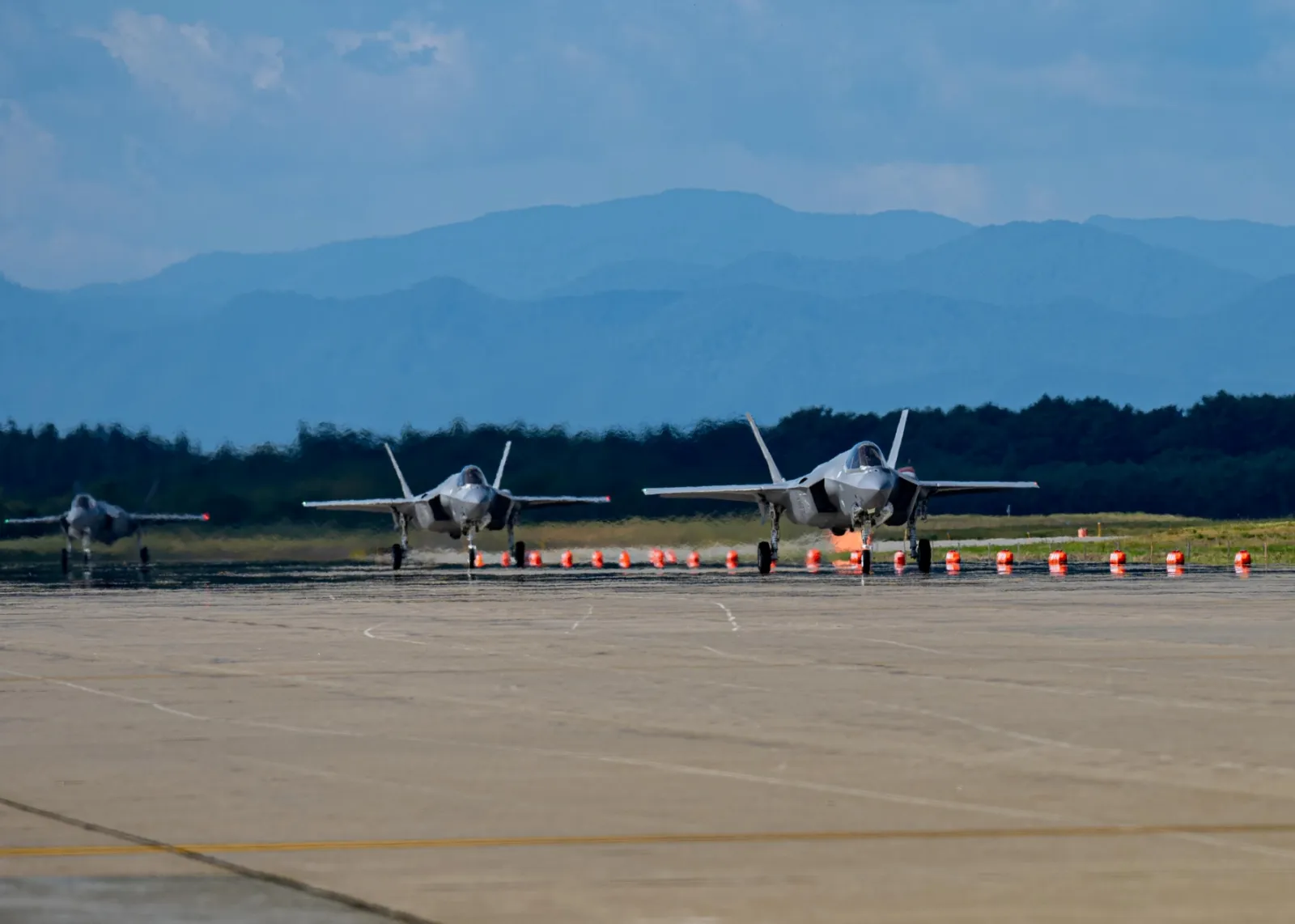
The United States is preparing Misawa Air Base, one of its major military outposts in Japan for projecting air power, to support the future hosting of stealth fighter aircraft.
As part of a plan announced in July 2024 to modernize its Japan-based tactical aircraft, the Pentagon has decided to deploy 48 F-35A jets, capable of evading radar detection, to Misawa to replace 36 older F-16 jets with greater capacity and capability.
Why It Matters
Japan is a key ally in helping the U.S. deter and defend against potential aggression across the western Pacific. Chinese and Russian forces often operate near Japanese territory, while North Korea has test-fired missiles toward the country.
Read More on World
As part of its force stationed in Japan, the Pentagon has deployed F-35B and F-35C jets, capable of operating from ships, at Marine Corps Air Station Iwakuni, while the conventional F-35A variant has been sent to Kadena Air Base on a rotational basis.
...
The upgrade of U.S. air power in Japan comes as the Trump administration released the latest U.S. national security strategy, calling for a military buildup to counter aggression along the First Island Chain, which runs from Japan to the Philippines through Taiwan.
What To Know
Images released by the U.S. Air Force this week shows personnel from the 35th Fighter Wing, the host unit at Misawa Air Base, receiving and unboxing support equipment in preparation for the arrival of F-35A jets. Preparations began as early as last month.
"The delivery of cargo supporting future F-35A Lightning II fighter aircraft operations will enhance the wing's ability to generate and sustain airpower in support of Indo-Pacific regional security and deterrence," according to one of the image captions.

...
While it remains unclear when Misawa will receive its first F-35A jets, the base continues routine aircraft operations. Official imagery shows F-16 jets assigned to the base taking part in an exercise earlier this month in snow and extreme cold.
"Winter takeoffs validate the [35th Fighter Wing]'s ability to generate combat airpower in austere conditions, supporting a forward-postured force capable of responding rapidly across the Indo-Pacific region," the U.S. Air Force said in a photo caption.
Located in northern Japan and facing the Pacific Ocean, Misawa Air Base also hosts two of Japan's F-35A jet units and supported U.S. bomber deployments in 2025.
During his meeting with Japan's Defense Minister Shinjiro Koizumi at the Pentagon earlier this month, Defense Secretary Pete Hegseth described the U.S.-Japan alliance as remarkable and praised Japan's commitment to increase defense spending.
According to the Pentagon, the two defense chiefs agreed to continue upgrading the alliance's command-and-control systems, make bilateral drills more realistic, improve their military presence and closely cooperate on defense industrial base matters.

...
What People Are Saying
The U.S. Air Force said: "In permanently assigning its most advanced tactical aircraft in Japan, [the Department of War] will bolster regional deterrence and significantly improve its response capabilities."
Defense Secretary Pete Hegseth said: "[We] talk about America first, yes, but it doesn't mean America alone. It means [working] with our friends [who] are investing [and] standing with us. And that's how we bring peace through strength around the world [and] here in our hemisphere."
What Happens Next
It remains to be seen whether the U.S. military will deploy additional assets—aircraft, ships and missile systems—in Japan amid ongoing tensions within the First Island Chain, including the Korean Peninsula, the Taiwan Strait and the South China Sea.
View 0 Comments
Submit Correction
View Editorial & AI Guidelines