10
Loading video...

By Micah McCartney
Reporter
0
Share
Newsweek is a Trust Project member
See more of our trusted coverage when you search.Prefer Newsweek on Googleto see more of our trusted coverage when you search.
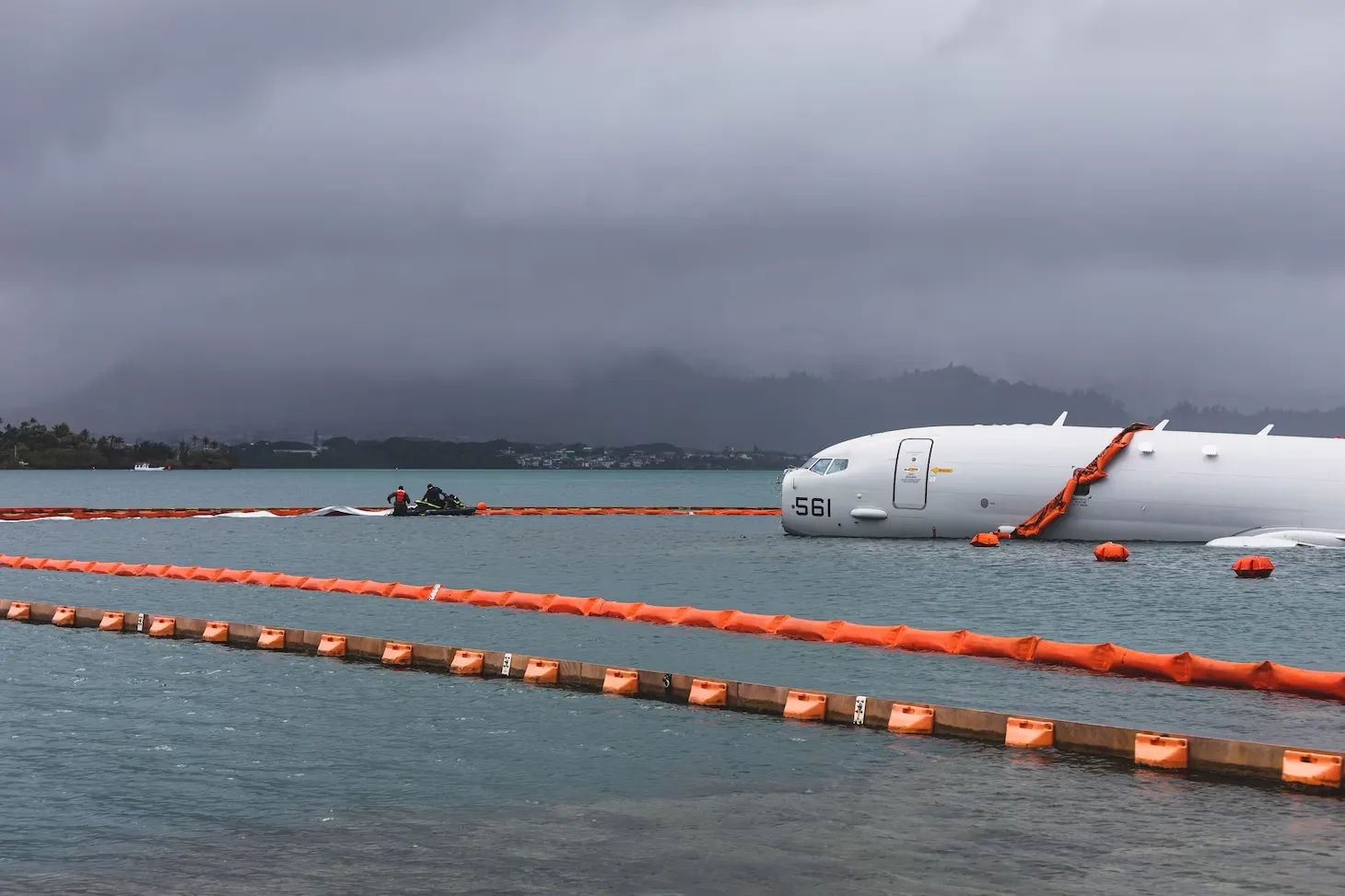
The U.S. Navy's Third Fleet released new images on Wednesday of the maritime patrol aircraft that crashed into Hawaii's Kaneohe Bay earlier this week.
The P-8A Poseidon aircraft overshot the runway on Monday local time while returning to a U.S. Marine Corps air station on Oahu, skidding along the ground and stopping in the shallows waters. All nine crew members were safely evacuated without any reported injuries.
Marine Corps Air Station Kaneohe Bay carries out repairs and operations for aircraft in Hawaii—, which also houses the headquarters of U.S. Indo-Pacific Command—and contributes to the overall readiness of U.S. military forces in region.
Read More
China Calls America’s Bluff in the South China Sea5 min read

U.S. Navy Plane Misses Runway, Lands in Water4 min read

China Denies Injuring Australian Navy Divers With Sonar4 min read

Images released by the Third Fleet showed sailors deploying environmental containment booms around the aircraft, which was partially submerged in the bay.
"As part of the process, a Navy structural engineer arrived on island to analyze the aircraft's structural integrity. Preliminary assessments indicate the aircraft to be structurally intact, and there have been no signs of fuel leaking," its statement said.
The Third Fleet's commander was "evaluating recovery options, including reviewing lessons learned from similar incidents," it said.
...
Aircraft expert Peter Forman, speaking to Hawaii News Now, said on Monday that several factors could have been at play at the time of the incident, including the air station's relatively short runway, wind and adverse weather conditions.
Local residents have raised concerns about potential environmental damage from the downed aircraft.
The Navy said its precautionary measures included the installation of booms as well as an around-the-clock skimmer that has been placed on standby, in case pollutants need to be removed from the ocean's surface.
In addition, servicemembers trained in environmental observation have been instructed to monitor local wildlife for any changes resulting from Monday's plane crash.
"With the utmost concern for mitigating any potential environmental impacts, a number of environmental protection measures have been employed or are at the ready," it said.
Specialists with experience in aircraft salvage and equipment operation have been hired help develop a "safe, expeditious and environmentally protective recovery plan," the Navy said.

...
The crew of the crashed P-8 was from Patrol Squadron-4, also known as the "Skinny Dragons," based in Washington state. The P-8 Poseidon, adapted from the Boeing 737, is a versatile aircraft used for reconnaissance, anti-submarine warfare and search-and-rescue.
In the wake of the incident, another P-8 Poseidon, assigned to Patrol Squadron VP-40, the "Fighting Marlins," has arrived to assume "homeland defense coverage" duties.
The P-8's prominent role as the Navy's hunter of enemy submarines—a job it typically does from the sky—has resulted in the sharing of memes among defense experts on social media.
View 0 Comments
Submit Correction
View Editorial & AI Guidelines