...

By Jordan King
Reporter
0
Share
Newsweek is a Trust Project member
See more of our trusted coverage when you search.Prefer Newsweek on Googleto see more of our trusted coverage when you search.
The U.S. Virtual Embassy in Iran has issued a warning to American citizens repeating advice to leave the country "now" and plan "alternative means of communication" that do not include the internet.
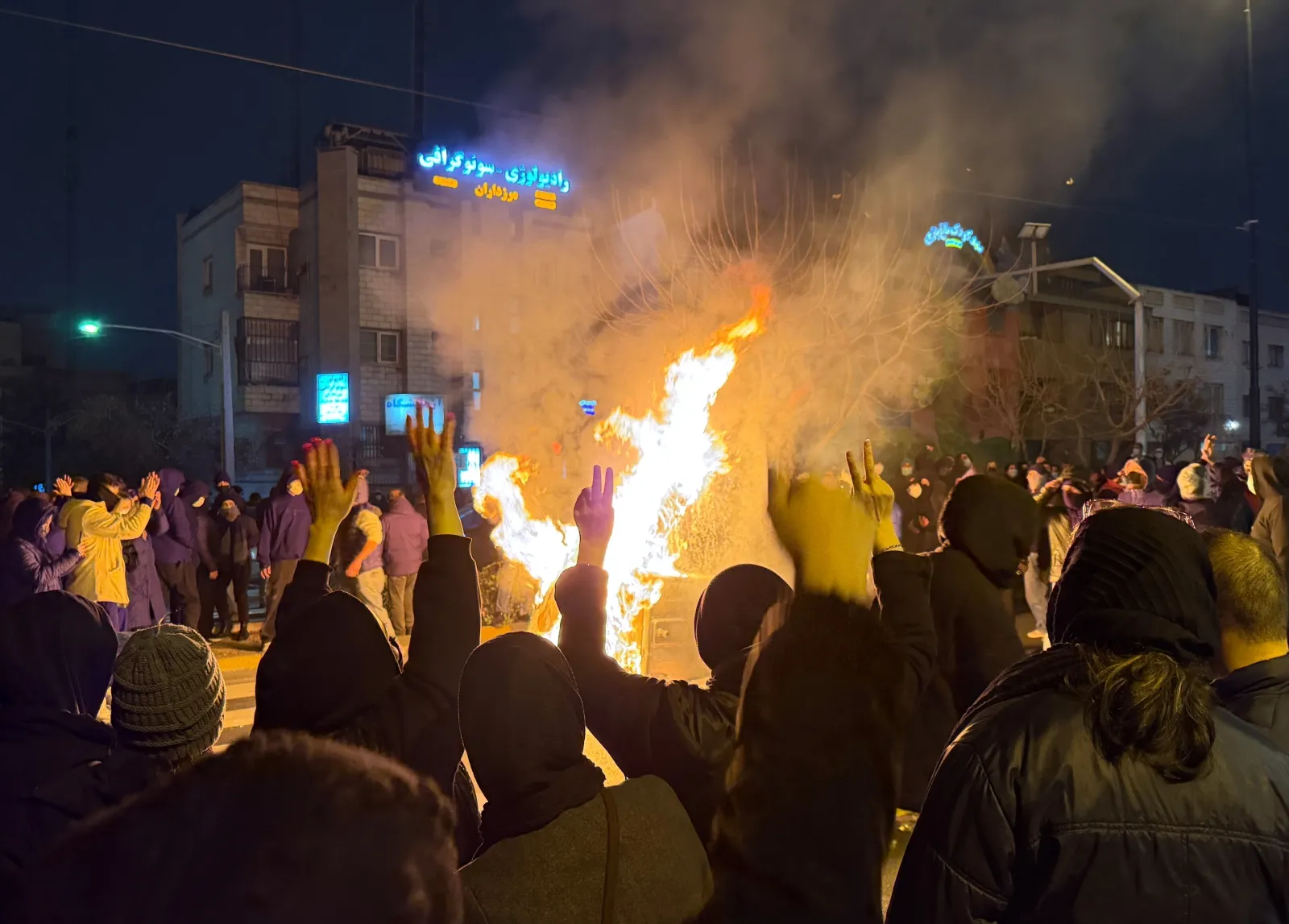
Americans were already told to leave Iran in January, amid unrest and anti-regime protests across the county that left thousands dead.
But the Virtual Embassy Tehran issued another warning on Friday, which said: "U.S. citizens should expect continued internet outages, plan alternative means of communication, and, if safe to do so, consider departing Iran by land to Armenia or Türkiye."
Read More on News
"Leave Iran now. Have a plan for departing Iran that does not rely on U.S. government help," it adds.
Why It Matters
The updated alert arrived just before Washington and Tehran restart nuclear talks in Oman, a sensitive diplomatic moment underscoring security risks facing Americans inside Iran.
The State Department maintains a Level 4: Do Not Travel advisory for Iran and has repeatedly warned about the risk of arbitrary detention and limited consular options inside the country.
...
What To Know
In a notice published by the U.S. Virtual Embassy Tehran on Friday, officials warned of increased security measures, road closures, public transportation disruptions and ongoing internet blockages across Iran.
The alert said airlines continue to limit or cancel flights to and from Iran and urged Americans to leave the country.
As of Thursday, February 5, the Agarak/Norduz crossing with Armenia was open, and U.S. citizens may remain in Armenia for up to 180 days visa-free with a valid U.S. passport, the alert said.
The alert said Turkish land border crossings with Iran—Gürbulak/Bazargan, Kapıköy/Razi, and Esendere/Serow—were also open, and U.S. citizens may stay in Türkiye for up to 90 days visa-free with a valid U.S. passport.
Turkmenistan’s land borders with Iran were described as open, but U.S. citizens require advance authorization from Turkmen authorities coordinated through the U.S. Embassy in Ashgabat before approaching the border.
Azerbaijan’s land borders were closed to routine traffic, and any entry request would require prior approval facilitated by the U.S. Embassy in Baku with extended wait times expected, according to the alert.
U.S.-Iranian dual nationals were told they must depart Iran on Iranian passports because Tehran does not recognize dual nationality and will treat dual nationals solely as Iranian citizens.
The alert said U.S. nationals face significant risk of questioning, arrest, and detention, and that displaying a U.S. passport or connections to the United States can be sufficient grounds for detention by Iranian authorities.
Americans were told not to travel to Afghanistan, Iraq, or the Pakistan-Iran border area and were reminded that the Swiss Embassy in Tehran serves as the protecting power for U.S. interests in Iran.
Friday’s advisory follows a January 13 notice telling Americans to leave Iran amid the escalating protests, flight suspensions and widespread communications restrictions at that time.
The United States only has a virtual embassy in Iran because Washington and Tehran do not have official diplomatic relations—the U.S. embassy in Tehran was closed after the 1979 Iranian Revolution and subsequent hostage crisis. Without formal ties or an accredited mission, the U.S. established an online “virtual embassy” to share information in the absence of a physical diplomatic presence.
What People Are Saying
The U.S. Virtual Embassy in Tehran said in its warning: "The U.S. government cannot guarantee your safety if you choose to depart using the following options. You should leave only if you believe it is safe to do so."
U.S. Republican Senator Tom Cotton on X: "The Ayatollahs are well-aware of our military’s capabilities and would be wise to take President Trump’s words seriously."
Behnam Ben Taleblu, senior director of the Iran Program at the Foundation for Defense of Democracies previously told Newsweek: "The Iranians have three sets of options born of different political assumptions. One, they can play dead and survive. Two, they try to meet adversaries where they are. And three, that regardless of the nature of the adversary's strike, they ‘go big’…in a bid at stalling escalation."
What Happens Next
Tensions between Washington and Tehran remain high amid a large U.S. military build-up in the Middle East, including the deployment of an aircraft carrier group in the Persian Gulf. This follows serious unrest in Iran last month in which thousands of protesters were killed, with President Donald Trump having warned Tehran of military action should the death toll continue to rise.
Trump has also threatened to strike Iran should the talks in Oman fail to end in a deal.
View 0 Comments
Submit Correction
View Editorial & AI Guidelines