
...

By Brendan Cole
Senior Reporter
0
Share
Newsweek is a Trust Project member
See more of our trusted coverage when you search.Prefer Newsweek on Googleto see more of our trusted coverage when you search.
President Donald Trump's suggestion a deal with Tehran has nearly been done is at odds with Iranian officials expressing defiance toward the U.S., amid differing messages from both sides about the prospects of ending the Iran War.
Expectations raised by Trump’s comments on Saturday were later managed by a U.S. official on Sunday, who told Axios that Iran’s leadership may need several days to approve a deal to end the war that started February 28 and entered an uneasy ceasefire on April 7.
In a Truth Social post on Monday, Trump said his proposed deal "will either be a great and meaningful one, or there will be no deal nuclear deal with Iran."
Read More on World
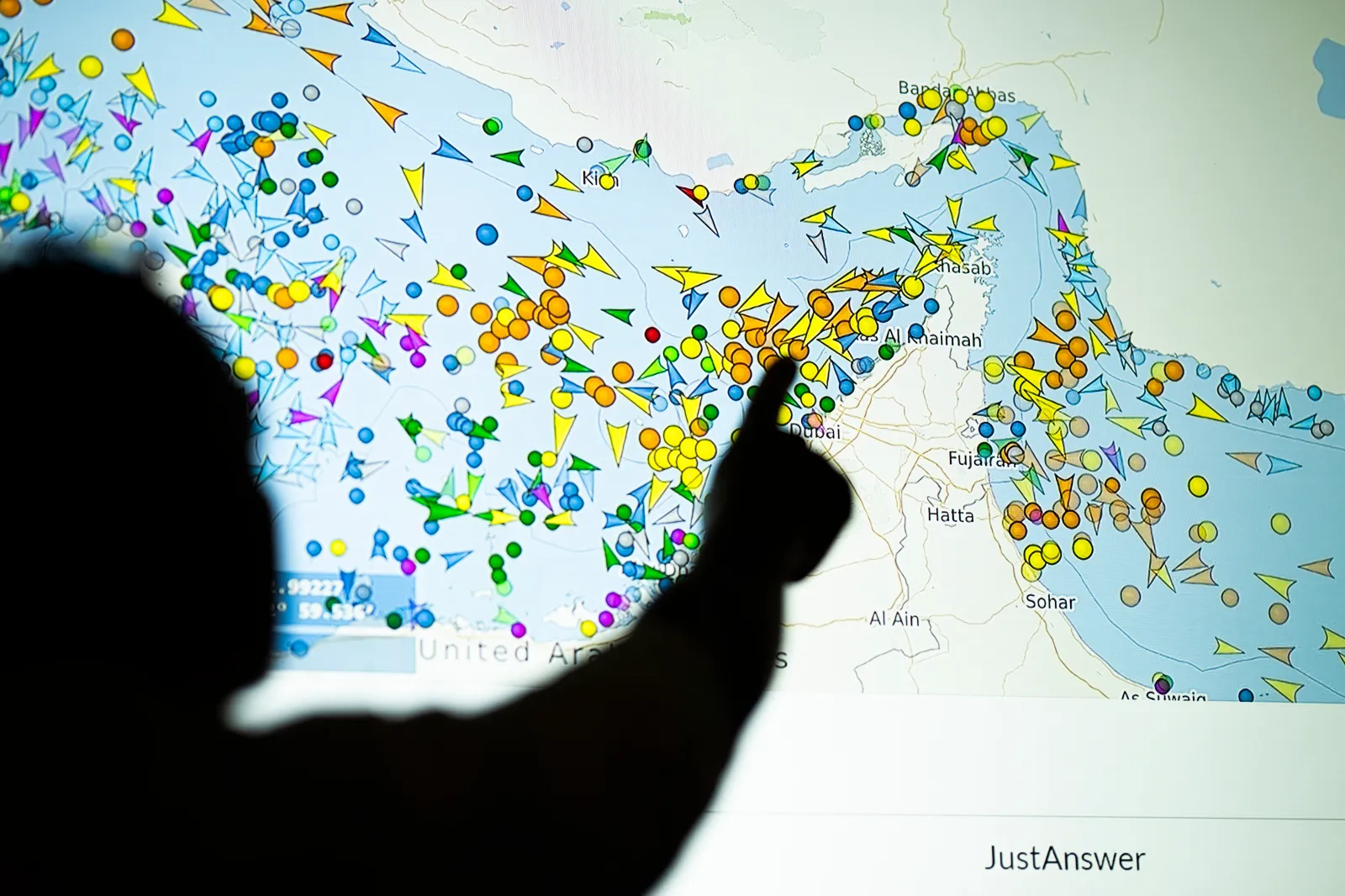
Markets have reacted positively to the prospect of a reopening of the Strait of Hormuz that Tehran is holding hostage, but on Monday, one Iranian official said Iran would not yield to U.S. pressure and that "time was against" Trump.
...
Iran's Nuclear Ambitions Crucial
Meanwhile, the fate of Iran’s nuclear program, a sticking point for Washington, does not appear to have been immediately addressed as both sides gave different interpretations of a memorandum of understanding (MOU) to end hostilities.
"Both the Iranian government and the U.S. administration are walking a tightrope, trying to negotiate a deal to end the war while avoiding a loss of domestic support," Hamidreza Azizi, an Iran expert from the German Institute for International and Security Affairs, (SWP-Berlin) told Newsweek Monday.
"I do not think we should take the two sides’ public messaging at face value, because both are speaking to different audiences and are primarily concerned with managing domestic politics," said Azizi.
"There are hard-liners on both sides—both in the United States and in Iran—who firmly oppose any deal that is seen as insufficient in terms of their priorities and maximalist demands."
...
What the US Has Said
Trump said Saturday a deal to end the war had been "largely negotiated," although the following day a senior U.S. official told Axios no agreement was immediately expected and officials, like Supreme Leader Mojtaba Khamenei, may need some time to approve it.
An unnamed senior U.S. official told the outlet that Washington is in a "very good place" but that the parties are still negotiating details and "whether this becomes an agreement is still an open question."
During a trip to India, U.S. Secretary of State Marco Rubio said Monday that U.S. and Iranian negotiators had "a pretty solid thing on the table" and a deal may be reached the same day. Such a deal reportedly involves a 60-day ceasefire extension, reopening the Strait of Hormuz and a plan for further negotiations over Iran's nuclear program.
Later Monday, Trump posted on Truth Social how his proposed deal was the "exact opposite" of former President Barack Obama's nuclear deal with Iran, known as the Joint Comprehensive Plan of Action (JCPOA) which limited Tehran's nuclear program for an easing of sanctions. Trump pulled the U.S. out of the plan during his first term in 2017.
Testing both the ceasefire agreed last month and the chances of a breakthrough in negotiations, the U.S. said it launched new strikes overnight Monday on southern Iran, targeting missile sites and boats attempting to place mines in the Strait.
On Tuesday, Secretary of State Marco Rubio insisted that progress can happen and that a potential U.S.-Iran deal would “take a few days” amid discussions over the language in the agreement.
His comments came ahead of talks in Qatar between Iran's top negotiator and foreign minister and the Qatari prime minister. "I think it's a lot of talking back and forth going on about specific language in the initial document," Rubio told reporters during an official visit to India.
What Iran Has Said
Iranian officials issued defiant messages on Monday without explicitly ruling out the terms of a deal while the matter of its nuclear program appears unresolved.
Ebrahim Rezaei, spokesperson for Iran’s National Security and Foreign Policy Commission, posted on X: "Do not believe the bluff of the failed president; time is against the Americans."
"If they want an agreement, they should negotiate," he said on Monday, "if they want $6 gas, they should stand firm and bluff until the grass grows under their feet. Iran does not bow to force or threats."
Citing an Iranian official, Reuters reported that the Supreme Leader had not approved the framework of a deal. Trump has said that stopping Tehran from getting a nuclear weapon was a key goal, and while Iran’s President Masoud Pezeshkian has said no such bomb would be built, the Supreme Leader has made no recent comment on this.
After the overnight U.S. strikes, a message attributed to Iran’s Supreme Leader Mojtaba Khamenei, who has not appeared in public since the start of the war, warned that U.S. bases throughout the Middle East could not be protected by the Gulf powers.
“The region will not return to past conditions, and Washington will no longer have a safe place to station military bases in the region,” the message posted on Telegram and reported by Iranian state media said.
Differences Over Iran’s Nuclear Program
Iranian Foreign Ministry spokesman Esmaeil Baghaei said on Monday that the focus of negotiations was ending the war, not the nuclear issue.
Trump has reportedly demanded that Iran forgo the enrichment of uranium, the critical material for creating a nuclear bomb, while Iranian officials have opposed new restrictions on the program as a red line.
The U.S. president said on May 21 Iran must export its highly enriched uranium (HEU) as part of any deal, However, Iranian media have reported that no such commitments for this have been made.
Hossein Noushabadi, from Iran’s Foreign Ministry, told state news agency ISNA "rumors claiming that Iran has committed to a 20-year suspension of uranium enrichment in the proposed draft for an initial agreement are pure fabrication." He said the nuclear issue, enrichment and stockpiles of highly enriched uranium will be reviewed in 60-day talks in exchange for the lifting of sanctions, the full release of Iran’s blocked assets, and U.S. forces "fully" withdrawing from the area around Iran.
Differences Over the Strait of Hormuz
Trump has said that any deal includes reopening the Strait of Hormuz but has not specified whether this could include Iran having permanent control over the waterway through which one-fifth of the world’s hydrocarbons transits.
The messaging from Iran is that it will continue to have sovereignty over the strait and retain permanent control which could involve charging tolls.
Under the peace deal as reported, the strait would gradually reopen as the U.S. ends the blockade of Iran’s ports it launched on April 17 which has limited Tehran's ability to ship its oil. Trump had said the U.S. naval blockade "will remain in full force and effect" until an agreement is "reached, certified, and signed."
But Iran could be allowed to sell its oil through sanctions waivers, and sanctions relief would be negotiated during a 60-day period, the Associated Press reported.
Does Iran Hold All Cards?
Earlier reports had pointed to some agreement on adopting an incremental approach, beginning with the most urgent issues—ending the war and guaranteeing safe passage through the Strait of Hormuz—before moving on to more politically difficult matters such as the nuclear program.
"The messaging from Trump and members of his administration over the weekend also suggested that they may be comfortable with such an approach," said Azizi from SWP Berlin.
"At the same time, however, internal pressure—particularly from Republicans—appears to be constraining Trump’s room for maneuver, and this could ultimately jeopardize the agreement," he added.
The Institute for the Study of War (ISW) said Sunday that Tehran thinks it is negotiating from a stronger position than the United States and so is trying to remake the regional order in a way that benefits the Islamic Republic.
"Iran has not publicly accepted meaningful nuclear concessions in the possible MOU," the think tank said, adding that Tehran "believes that the draft defers nuclear talks until after Iran secures relief from military and economic pressure."
Iranian officials have also insisted that any deal must end the war on all fronts, including Lebanon where Israel is fighting Tehran-backed Hezbollah. Trump has backed Israel’s wish to continue the fight against the group although he has called on Israeli Prime Minister Benjamin Netanyahu, who has refused to end operations in Lebanon, to ease strikes.
Azizi said if the objective is a framework agreement or memorandum of understanding, both the Strait of Hormuz issue and the nuclear question can be managed.
Iran Seeking Normalcy
"On the Strait, Iran has consistently insisted on recognition of its sovereignty-related role, but it has recently shown greater flexibility regarding demands for transit tolls," he said.
"This suggests that Tehran is primarily seeking nominal recognition of its role in the Strait, rather than the continuation of wartime measures, which it understands are neither sustainable nor acceptable even to partners such as Russia and China."
On the nuclear issue, the technical complexity of the matter inevitably requires detailed negotiations, Azizi added. "Therefore, I would expect the framework agreement to include a general formulation stating that Iran commits not to pursue nuclear weapons, while leaving the technical details for future negotiations."
View 0 Comments
Submit Correction
View Editorial & AI Guidelines