10
Loading video...

By Ryan Chan
China News Reporter
0
Share
Newsweek is a Trust Project member
See more of our trusted coverage when you search.Prefer Newsweek on Googleto see more of our trusted coverage when you search.
The United States has improved the readiness of its underwater forces amid China's fast-growing navy, with none of its nuclear-powered attack submarines idle awaiting maintenance for the first time in over a decade, a report said on Monday.
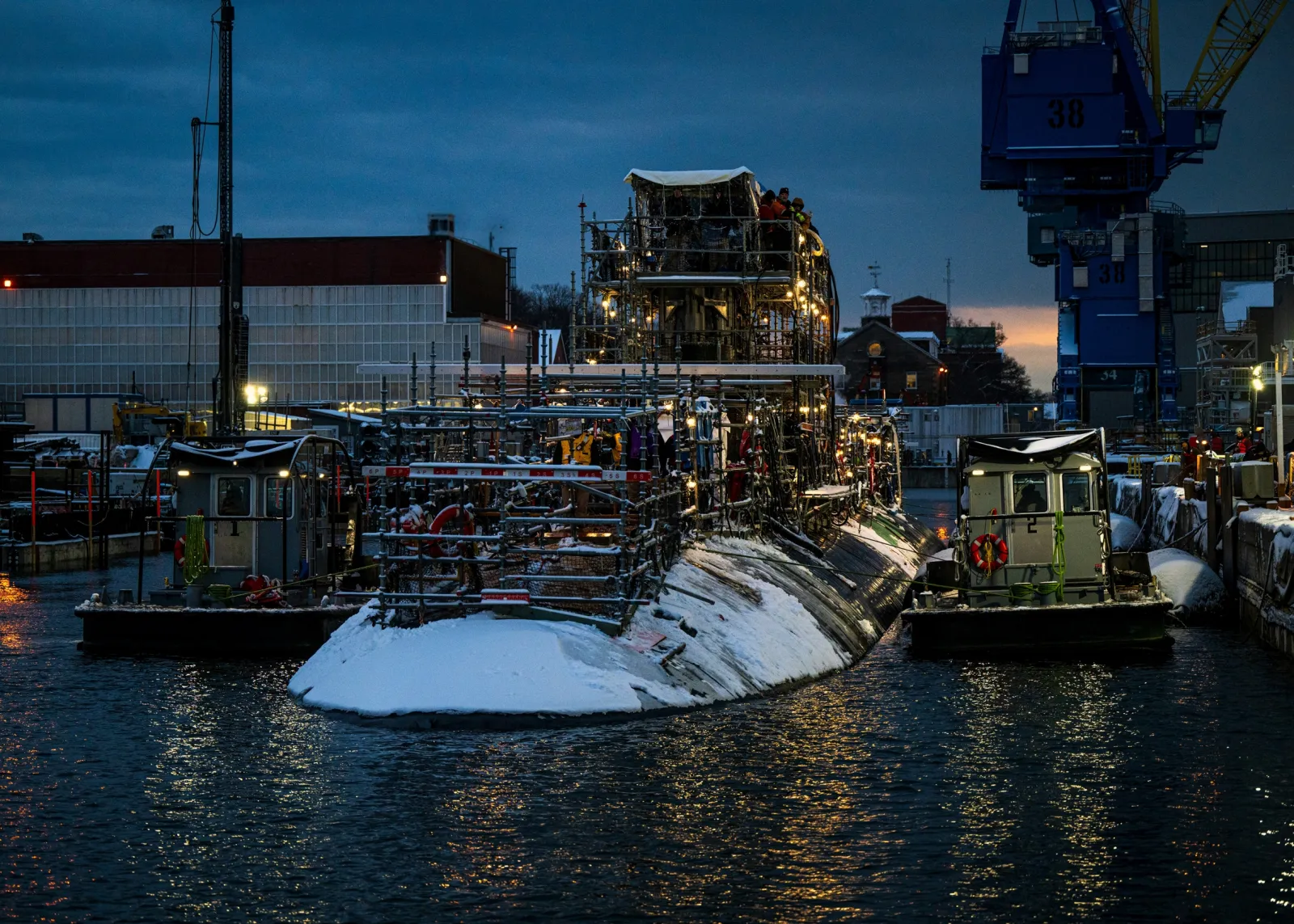
According to a Congressional Research Service (CRS) report, 16 of 47 U.S. nuclear-powered attack submarines—or 34 percent of the fleet—underwent "depot maintenance" in fiscal year 2024, while the remaining submarines maintained operationally ready status.
The Chinese Foreign Ministry did not immediately respond to a request for comment.
Read More on U.S.
Why It Matters
As part of the Pentagon's efforts to contain China's military threat, the U.S. Navy has maintained a robust submarine presence in the Pacific through permanent stations and forward deployments, which experts say constitutes a major threat to the Chinese naval fleet—the world's largest by hull count with over 370 vessels, including 60 submarines.
With high demand to support U.S. naval operations and a planned transfer of at least three vessels to Australia, the U.S. attack submarine force has faced both production and maintenance issues over the past few years, caused by supply chain disruptions and capacity constraints—insufficient workers and facilities—according to the CRS report.

...
What To Know
The U.S. Navy's nuclear-powered underwater fleet consists of three submarine types. In addition to attack submarines (SSNs), of which 49 vessels in three classes have been in service since fiscal year 2026, the fleet includes 14 nuclear ballistic missile submarines (SSBNs) and four cruise missile and special operations forces submarines (SSGNs).
The last time no American attack submarines awaited depot maintenance, also known as idle, was in fiscal year 2013, when 12 of 53 vessels—or 23 percent of the fleet—were in shipyards for maintenance. The percentage of submarines in depot maintenance or idle was at its lowest in fiscal years 2010 and 2015, when 19 percent of the fleet was unavailable.
As the total number of SSNs decreased gradually, the maintenance backlog worsened following the outbreak of the COVID-19 pandemic. In fiscal year 2020, 10 submarines were in maintenance and five—the highest number recorded—were idle, accounting for 30 percent of the fleet. The figure peaked at 37 percent or 18 submarines, in fiscal year 2021.
According to the CRS report, the U.S. Navy aims to have about 20 percent of SSNs in depot maintenance, with none idle at any given time, to preserve the fleet's capacity to meet daily mission demands and ease pressure on submarines that are operationally ready.

...
Alex Luck, an Australia-based naval analyst, described the report as a "mildly positive development" for the U.S. SSN force, noting that it should lead to a notable increase in operational submarines in the near future if the trend of having no vessels idle holds.
"Assuming this dynamic continues to improve, [U.S. Navy] may move towards an aim of 80 percent operational availability," the analyst said, noting that the total number of SSNs will be determined by the pace of submarine decommissioning and commissioning.
The U.S. SSN force currently consists of 20 Los Angeles-class, three Seawolf-class and 26 Virginia-class submarines, the report said. At least two Virginia-class vessels, USS Idaho and USS Massachusetts, are scheduled for official commissioning this spring.
While three Los Angeles-class vessels—USS Newport News, USS Scranton and USS Alexandria—are scheduled for retirement in fiscal year 2026, their sister ship, USS Cheyenne, recently completed an overhaul to extend its service life beyond 44 years.
The Virginia-class is the only U.S. SSN still in production. The Navy aims to increase the build rate from 1.1-1.2 submarines per year to two, and eventually to 2.33, with Congress having appropriated billions of dollars to support the effort, the report said.
...
What People Are Saying
The Congressional Research Service report said: "Department of Defense officials and other observers view SSNs as particularly useful for implementing certain elements of the national defense strategy because of their ability to evade China's extensive anti-access/area-denial (A2/AD) forces."
The U.S. Navy said: "Attack submarines are designed to seek and destroy enemy submarines and surface ships; project power ashore with Tomahawk cruise missiles and Special Operation Forces; carry out intelligence, surveillance and reconnaissance missions; support battle group operations; and engage in mine warfare."
In a polarized era, the center is dismissed as bland. At Newsweek, ours is different: The Courageous Center—it's not "both sides," it's sharp, challenging and alive with ideas. We follow facts, not factions. If that sounds like the kind of journalism you want to see thrive, we need you.
When you become a Newsweek Member, you support a mission to keep the center strong and vibrant. Members enjoy: Ad-free browsing, exclusive content and editor conversations. Help keep the center courageous. Join today.


View 0 Comments
Submit Correction
View Editorial & AI Guidelines