...

By Giulia Carbonaro
Senior Reporter
0
Share
Newsweek is a Trust Project member
See more of our trusted coverage when you search.Prefer Newsweek on Googleto see more of our trusted coverage when you search.
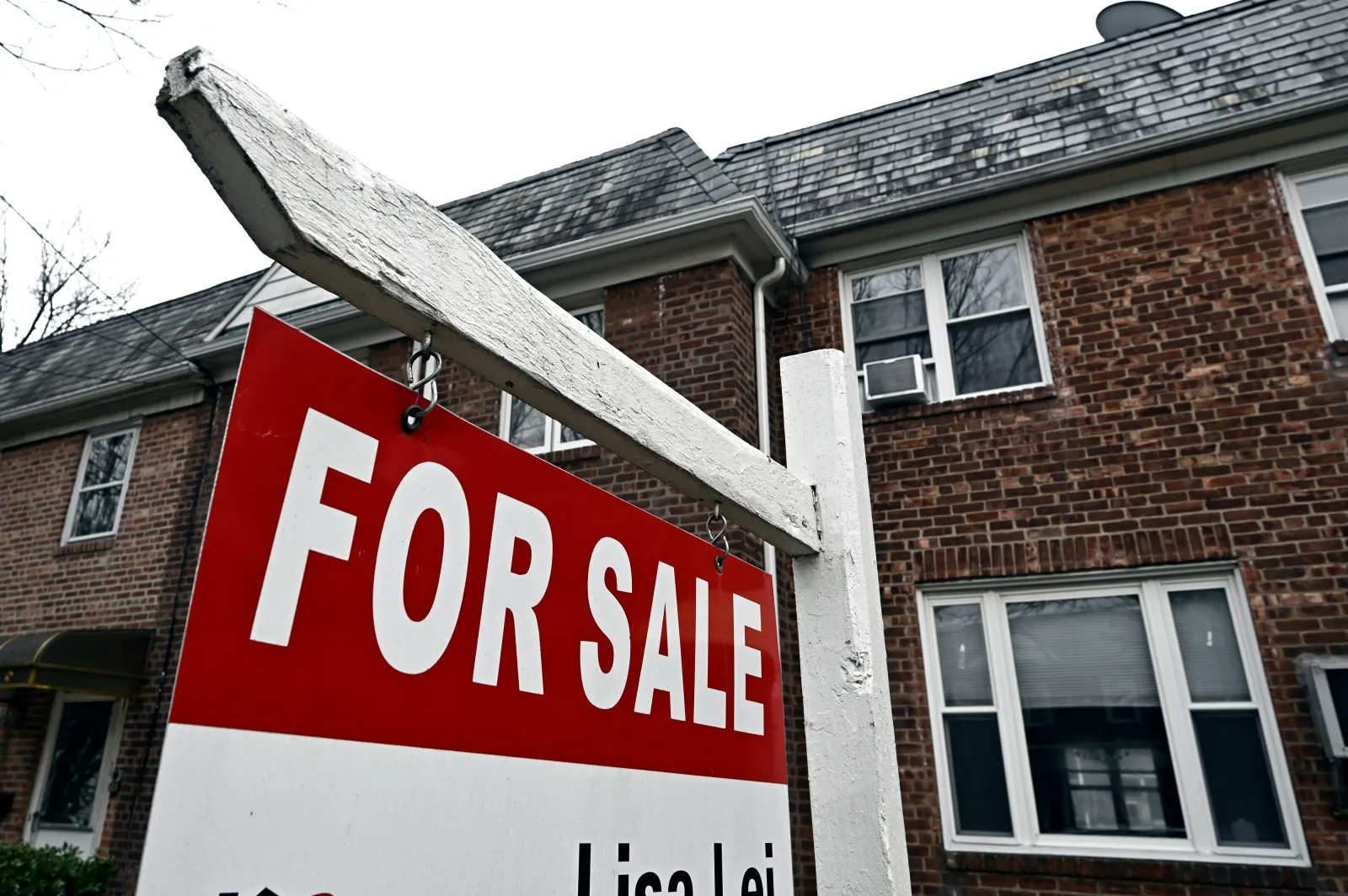
There were nearly 630,000 more sellers than buyers in the U.S. housing market last month, marking the largest gap in records dating back to 2013, according to Redfin data.
While these figures indicate that the United States is solidly a buyer’s market, since higher inventory levels give buyers more negotiating power, it might not feel like it to many Americans still struggling with rising home prices and growing economic uncertainty.
Why It Matters
During the pandemic homebuying frenzy, when historically low mortgage rates unleashed a surge in demand across the country, inventory levels plunged in the U.S., bringing up home prices. In November 2021, there were 36 percent more buyers than sellers in the country, according to Redfin data.
Read More on U.S.
But the supply of homes for sale has been steadily climbing since summer 2023, with this trend accelerating over the past year as many homeowners locked into their properties by lower borrowing costs stopped waiting for mortgage rates to come down and put their homes on the market.
In parts of the country that have seen the biggest inventory hikes, like the South, the additional supply of homes is allowing buyers to negotiate sellers’ asking prices down; at the national level, the mismatch between buyers and sellers has slowed down home price growth. As of February, the median sale price of a typical U.S. home was $429,226, up by only 0.9 percent year-over-year, compared to an annual increase of over 3 percent in February 2025 and of over 6 percent in February 2024.
What To Know
There were an estimated 46 percent more sellers than buyers in the U.S. housing market last month, or 629,808 more. That was up from 29.8 percent, or 449,409, a year earlier.
From a strictly numerical point of view, this makes the U.S. a buyer’s market, marking a shift after years when the country was firmly in favor of sellers. According to Redfin, a market with over 10 percent more sellers than buyers is a buyer’s market, while one with over 10 percent fewer sellers than buyers is a seller’s market.
But under this definition, it has been a buyer’s market since May 2024—without bringing much relief to U.S. buyers. Mortgage rates, after falling below 6 percent for the first time in years in late February, climbed back above that threshold following the start of the war in Iran.
...
As of the week ending March 19, the national average 30-year fixed-rate mortgage was 6.22 percent, up from 6.11 a week earlier and down from 6.67 percent a year earlier, according to Freddie Mac. Home prices and home insurance rates are still rising nationally, and fears about the impact of the conflict in the Middle East on the U.S. economy and the prices of everyday goods like gas have made buyers more cautious.
Their reluctance is showing up in the data: in February, the number of homebuyers in the market fell 2.4 percent month-over-month to an estimated 1.36 million. Sellers are reacting to their withdrawal from the market by taking a step back: the number of sellers in the market in February was down 0.4 percent from January, to an estimated 1.99 million.
However, there are some places in the country where sellers are truly enjoying having the upper hand over buyers. These were Miami, which last month had an estimated 163 percent more sellers than buyers; Nashville (120 percent); Austin (112 percent); West Palm Beach (110 percent), and San Antonio (104 percent).
On the other hand, the strongest seller’s markets in February were Newark, New Jersey, where buyers outnumbered sellers by 31.1 percent; Montgomery County, Pennsylvania (-29 percent), Nassau County, New York (-25.8 percent), Milwaukee (-25.2 percent) and New Brunswick, New Jersey (-14.5 percent).
What People Are Saying
Justin Gomez, a Redfin Premier real estate agent in Omaha, Nebraska, said in a statement: “We’re seeing a lot more inventory on the market compared to the past two years because the mortgage rate lock-in effect is easing and there’s a lot of new construction.
“This has been great for affordability, especially for the younger crowd. Our median home price is in the low $300,000 range. Two years ago, people were offering $15,000 over the asking price just to get a home, with multiple offers everywhere.”
Redfin Principal Economist Sheharyar Bokhari said in a recent report: “Mortgage rates have ticked up in the past few weeks following months of declines, but we still expect housing affordability to improve this year as income growth outpaces home price growth.
“Homebuyers in many markets are having success asking for discounts and other concessions, and they have the luxury of time because they aren’t facing much competition.”
What Happens Next
Despite recent increases in mortgage rates, experts still expect housing affordability to modestly improve this year, allowing more buyers—especially young, first-time buyers—to access homeownership. But while the traditional spring homebuying season was widely expected to boost sales across the country this year, experts have warned that the season might have been “delayed” by the war in Iran.
In a polarized era, the center is dismissed as bland. At Newsweek, ours is different: The Courageous Center—it's not "both sides," it's sharp, challenging and alive with ideas. We follow facts, not factions. If that sounds like the kind of journalism you want to see thrive, we need you.
When you become a Newsweek Member, you support a mission to keep the center strong and vibrant. Members enjoy: Ad-free browsing, exclusive content and editor conversations. Help keep the center courageous. Join today.


View 0 Comments
Submit Correction
View Editorial & AI Guidelines