...

By Jordan King
Reporter
0
Share
Newsweek is a Trust Project member
See more of our trusted coverage when you search.Prefer Newsweek on Googleto see more of our trusted coverage when you search.
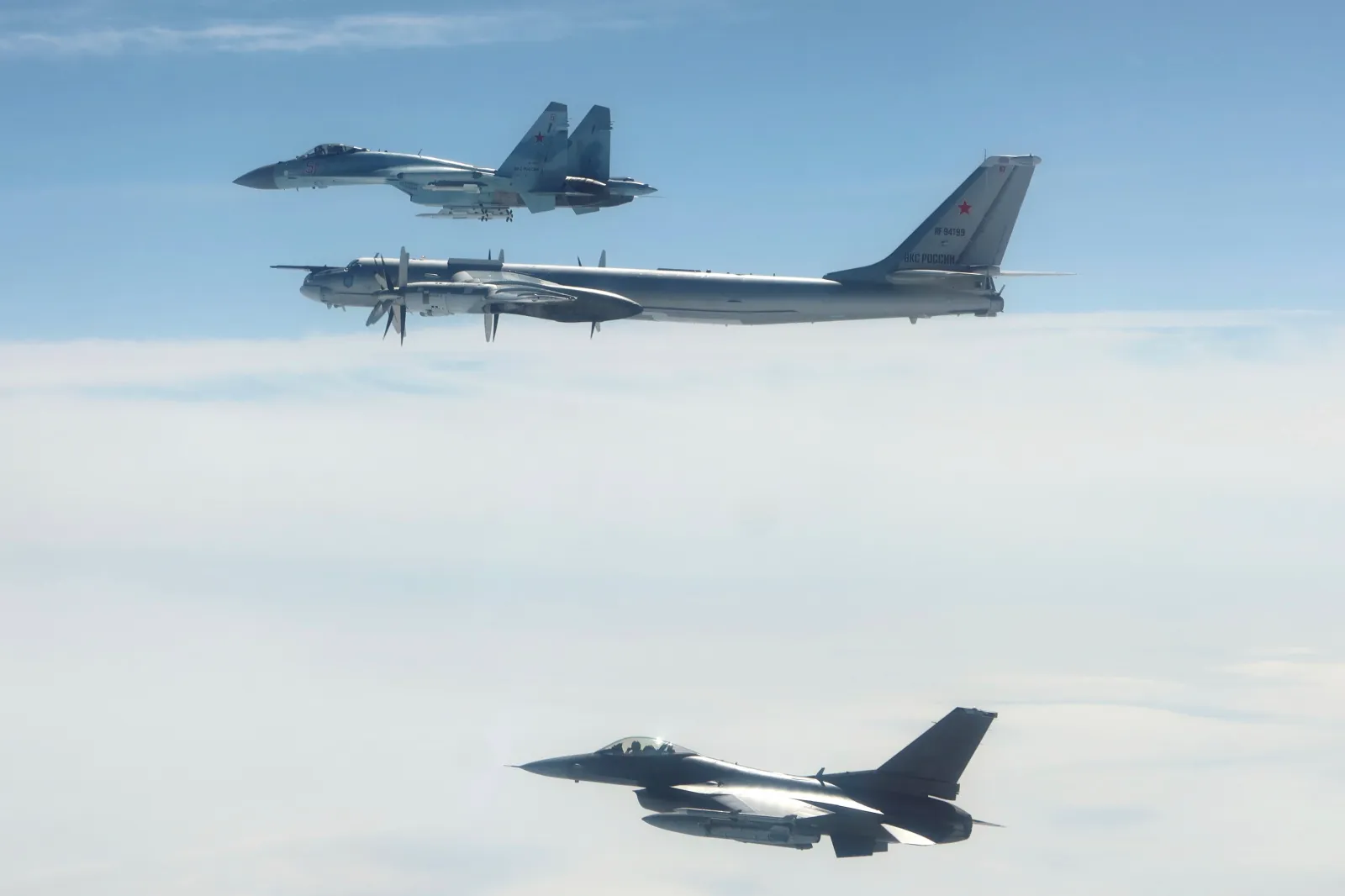
The United States and Canada scrambled multiple aircraft to intercept and track five Russian military planes flying near Alaska on Thursday.
The North American Aerospace Defense Command (NORAD) said it detected two Russian Tu-95s, two Su-35s and one A-50 early warning spy aircraft operating in the Alaskan Air Defense Identification Zone (ADIZ).
NORAD, a joint U.S.-Canadian command, said it launched two F-16s, two F-35s, one E-3, and four KC-135 aircraft to "intercept, positively identify, and escort the aircraft until they departed the Alaskan ADIZ."
Read More
Why It Matters
The intercept underscores NORAD’s continuous monitoring of foreign military flights in international airspace near Alaska. NORAD stressed that “Russian activity in the Alaskan ADIZ occurs regularly and is not seen as a threat.”
The event also fit a broader pattern of Russian operations in the North Pacific and Arctic that U.S. and allied officials have tracked in recent years, as Moscow and Beijing expand patrols and research activities across the region.
What To Know
NORAD said it detected, tracked, and identified Russian aircraft inside the Alaskan ADIZ and launched U.S. fighter jets to respond, adding that the foreign planes remained in international airspace and did not enter sovereign U.S. or Canadian airspace.
The Russian formation included two Tu-95 bombers, two Su-35 fighter jets, and an A-50 airborne early warning and control aircraft. NORAD scrambled two F-16s, two F-35s, and four KC-135 refueling tankers to monitor and escort the group until it departed the ADIZ.
The Alaskan ADIZ is a defined area of international airspace that begins where sovereign airspace ends and requires positive identification of aircraft in the interest of national security, a characterization also noted in recent coverage of operations there.
NATO leadership has warned about expanding Russian and Chinese patrols across the Arctic, including areas north of Alaska and near Canada.
Supreme Allied Commander of Europe General Alexus Grynkewich recently warned at Sweden’s National Security Conference that Russia and China are escalating joint patrols in the Arctic, extending their presence from the Russian northern coast to north of Alaska and near Canada.
While Thursday’s interception has been described as “routine,” the Arctic is increasingly serving as a location for great power competition, possibly raising the stakes for national security and global stability.
...
What People Are Saying
NORAD said in its press release: "The Russian military aircraft remained in international airspace and did not enter American or Canadian sovereign airspace. This Russian activity in the Alaskan ADIZ occurs regularly and is not seen as a threat."
Supreme Allied Commander of Europe General Alexus Grynkewich said last month that [Chinese and Russian patrols] are “not for peaceful purposes.”
“They're not studying the seals and the polar bears,” he said. “They're out there doing bathymetric surveys and trying to figure out how they can counter NATO capabilities on and under the sea. So that's something that could grow very quickly, and we need to be mindful of it and ready for it.”
What Happens Next
NORAD will continue to detect, track and identify aircraft approaching North American airspace using a layered system of satellites, radars and fighter aircraft, and it will scramble assets when required by standard procedures.
U.S. and allied planners will likely factor the frequency of Russian flights and broader Arctic patrols into ongoing force posture and coordination, while maintaining that activity in the ADIZ will not necessarily indicate a direct threat.
View 0 Comments
Submit Correction
View Editorial & AI Guidelines