


+3
By Toby Meyjes, Brendan Cole, John Feng, Amanda Castro, Anna Commander, and Gabe Whisnant
0
Share
Newsweek is a Trust Project member
See more of our trusted coverage when you search.Prefer Newsweek on Googleto see more of our trusted coverage when you search.
The U.S. Embassy in Saudi Arabia was reported struck by two suspected Iranian drones, two people familiar with the matter told CNN on Monday night. There were no immediate reports of injuries, one of the people told the network.
President Donald Trump reacted to the news telling NewsNation's Kellie Meyer when asked what the U.S. retaliation will be, "you'll find out soon."
Trump's rationale for the expanding U.S.–Israeli strikes on Iran grew even murkier Monday as Secretary of State Marco Rubio defended the operation as a response to an “imminent threat,” while simultaneously describing it as a preemptive move meant to stop Iran from striking first. Speaking on Capitol Hill ahead of a classified briefing for congressional leaders, Rubio offered shifting justifications for the campaign, acknowledged there is no diplomatic contact with Tehran, and warned that “the hardest hits are yet to come” as the U.S. seeks to dismantle Iran’s missile forces and other military capabilities.
What To Know
- Trump said the conflict could last “four to five weeks” and insisted the U.S. could continue operations far longer, adding that he doesn’t “get bored.”
- He briefly mentioned the four U.S. service members killed, despite speaking at a ceremony honoring veterans of past wars.
- He defended his 2018 withdrawal from the Iran nuclear deal, claiming it would have enabled Iran to obtain nuclear weapons, even though Iran complied with the agreement until the U.S. exited and never produced a weapon afterward.
- Six U.S. service members have died since the U.S.-Israeli operations were launched early Saturday.
- Iran named a three-member interim leadership council after Supreme Leader Ayatollah Ali Khamenei was killed
- The Lebanese Health Ministry said early Monday the attacks in Beirut and South Lebanon had killed 31 people and injured 149.
- Three U.S. F-15E Strike Eagles were shot down over Kuwait in an apparent friendly fire incident.
- The Iranian Red Crescent Society reportedly said on Monday that over 550 people have been killed in Iran following U.S.-Israeli attacks
This live blog is now closed.
In a polarized era, the center is dismissed as bland. At Newsweek, ours is different: The Courageous Center—it's not "both sides," it's sharp, challenging and alive with ideas. We follow facts, not factions. If that sounds like the kind of journalism you want to see thrive, we need you.
When you become a Newsweek Member, you support a mission to keep the center strong and vibrant. Members enjoy: Ad-free browsing, exclusive content and editor conversations. Help keep the center courageous. Join today.


Mar 02, 2026 at 11:14 PM EST
US visa appointments in Pakistan canceled
According to the U.S. Embassy Islamabad in a post to X on Monday night, all visa appointments this week have been canceled in Islamabad and the Consulates General in Lahore and Karachi.
The embassy said this is due to current security concerns. It is unclear if appointments will restart after March 6.
Mar 02, 2026 at 10:48 PM EST
Republican breaks with Trump admin over Iran war explanation
Republican Representative Warren Davidson of Ohio was asked by CNN's Kaitlan Collins on Monday night if he thinks the Trump administration has done a good enough job explaining why the war with Iran is happening.
"I don't," he replied.
"I had asked for a classified briefing last week," he continued, "before the war began to explain what is the mission. Define the mission in Iran, and we're seeing that today with multiple definitions."
The Ohio lawmaker went on to say that he personally does not support a regime change war in Iran with U.S. boots on the ground. "Even if there were to be such an action," Davidson said, "it would require a vote by Congress, according to our Constitution."
Mar 02, 2026 at 10:27 PM EST
Democrat issues warning after US embassy in Riyadh hit
Democratic Senator Chris Murphy of Connecticut warned on Monday night that the ongoing situation in the Middle East is “spiraling fast” amid reports that the U.S. Embassy in Riyadh, Saudi Arabia, was hit by suspected Iranian drones.
“This is spiraling fast, and they seem to have no clue or plan on how to control it,” Murphy said on X.
Earlier on Monday, Murphy said that the attacks against Iran were going to be “a massive, deadly, trillion-dollar failure” for the Trump administration.
Mar 02, 2026 at 09:56 PM EST
U.S. Central Command releases new video of attacks in Iran
The U.S. Central Command released a new video on social media on Monday night of Operation Epic Fury. The video shows apparent strikes against infrastructure and a truck.
The post read, "As the Secretary of War stated this morning, U.S. forces are hitting Iran surgically, overwhelmingly, and unapologetically. Operation Epic Fury is laser-focused on destroying Iranian offensive missiles."
Mar 02, 2026 at 09:39 PM EST
JD Vance says “no way” Trump putting US in multi-year conflict without clear end in sight
Mar 02, 2026 at 09:30 PM EST
Netanyahu says “not an endless war” in Iran
In an interview with Fox News' Sean Hannity on Monday night, Israeli Prime Minister Benjamin Netanyahu said that Israel and the U.S. are creating the conditions for peace in Iran and in the Middle East.
"Of course, it's up to the people of Iran...to change the government. But we are creating, America and Israel together are creating the conditions for them to do so. I think that if we go through what we plan to do, I think it'll create conditions for peace. This is not an endless war, this is in fact something that will usher in an era of peace, that we haven't even dreamed of," Netanyahu said.
Mar 02, 2026 at 08:47 PM EST
Trump reacts to US embassy attack in Riyadh
President Trump was asked about the reported strike against the U.S. embassy in Riyadh, Saudi Arabia, on Monday night.
NewsNation's Kellie Meyer asked the president what the U.S. retaliation will be. The president said, "you'll find out soon," Meyer's posted, on X.
An official spokesperson for the Saudi Ministry of Defense said in a post on X that the attack resulted "in a limited fire and minor material damage to the building."
Mar 02, 2026 at 08:31 PM EST
Trump’s Iran strategy remains murky as air war enters third day
Three days into the U.S.‑led air campaign against Iran, President Donald Trump’s goals for the conflict remain unclear, with shifting explanations from the White House and mixed messages from senior officials. What began as an operation described as targeting Iran’s nuclear program has expanded into a broader set of objectives, even as the administration avoids outlining what it envisions for Iran’s political future.
In his first on‑camera remarks since the strikes began, Trump said the U.S. aims to destroy Iran’s ballistic missile systems, its navy, its nuclear development capacity, and its support for regional proxy groups. He framed the campaign as necessary to protect the U.S. and its allies from future attacks. But he did not explain what comes after those goals are met or how the U.S. expects Iran to change once the operation ends.
Those comments contrasted with Trump’s earlier statements urging Iranians to “take back your government,” widely interpreted as a call for regime change. He also boasted that the strike that killed Supreme Leader Ayatollah Ali Khamenei eliminated most potential successors, without offering any view on who might lead Iran next.
Defense Secretary Pete Hegseth has insisted the U.S. is not pursuing regime change, even as he acknowledged the leadership vacuum created by the strikes. Gen. Dan Caine, chair of the Joint Chiefs of Staff, offered a more cautious assessment, warning that the campaign will be “difficult and gritty” and that further U.S. casualties are likely.
Iran has already retaliated with strikes on U.S. partners in Jordan, Bahrain, and the UAE, killing four American service members. Trump has warned that more losses are possible but argues the conflict is necessary to reshape the regional balance of power.
Members of Congress are increasingly pressing for clarity. Democrats say the administration has not presented intelligence showing an imminent threat, nor has it articulated a long‑term strategy. They have also criticized Trump’s unconventional communication approach — announcing the war via video, posting updates on social media, and giving brief, sometimes contradictory phone interviews rather than delivering a formal address.
Trump has said the war could last “four to five weeks” or “as long as it takes,” offering no details on what would constitute victory. Former CIA Director David Petraeus called the killing of Iran’s supreme leader a historic moment but warned that urging Iranians to rise up could be dangerous, given the strength and brutality of the country’s security forces. He also said he does not expect the U.S. to deploy ground troops, noting that Trump and the vice president have repeatedly ruled that out.
Mar 02, 2026 at 08:30 PM EST
Photos: Explosions, smoke and debris in Tehran
Images on Monday show debris and smoke in Iran's capital city amid ongoing strikes.

...

...

...
Mar 02, 2026 at 08:17 PM EST
WATCH: Defense Department releases videos of strikes on Iran
Mar 02, 2026 at 08:03 PM EST
Texas GOP voters back Trump’s Iran strikes ahead of primary day
On the eve of Texas’ primary elections, two Republican voters told CNN they support President Donald Trump’s decision to launch strikes against Iran, even as national polling shows most Americans disapprove of the operation.
Linda Johnson, a Republican from Waco who voted early for Attorney General Ken Paxton in the Senate primary, said she views the strikes as “necessary.” She argued that Trump’s approach reflects a willingness to take difficult actions that she believes are required to protect the United States, warning that complacency would allow hostile governments to act unchecked.
Kurt Krakowian, a GOP voter from Hewitt who remains undecided in the Senate race, also praised Trump’s response. He said previous presidents had tried but failed to confront Iran’s leadership, and he credited Trump for taking what he described as decisive steps. Krakowian added that he hopes the outcome of the conflict will ultimately lead to greater freedom for the Iranian people.
Their comments come as a new CNN poll shows a stark partisan divide over the strikes. Nearly six in ten Americans overall disapprove of the U.S. military action, but support among Republicans is high at 77%, compared with 32% of independents and 18% of Democrats.
Mar 02, 2026 at 07:50 PM EST
Democratic strategist breaks with party to support Trump’s Iran strike
Democratic pollster and longtime political adviser Doug Schoen is urging his party to back President Donald Trump’s coordinated strike on Iran, arguing in a new op‑ed that Democrats are misreading both the stakes and the public mood. Schoen writes that the joint U.S.–Israeli operation — which killed Iran’s supreme leader and several senior officials — represents a rare opportunity to weaken a government he describes as repressive, destabilizing, and unwilling to curb its nuclear ambitions through diplomacy.
Schoen says many Democrats have responded by criticizing Trump for bypassing the War Powers Act rather than recognizing what he views as a potentially transformative moment inside Iran. He argues that large segments of the Iranian population have long sought political change and that the strike could accelerate that shift.
He also contends that Iran’s record as a state sponsor of terrorism and its refusal to dismantle its nuclear program created an urgent national‑security threat that justified decisive action. Schoen contrasts this with what he characterizes as some Democrats’ focus on Israeli politics, saying the party should instead unite behind efforts to promote stability and democratization in the region.
While acknowledging that bipartisan support is unlikely, Schoen credits Trump for taking bold steps abroad — from the arrest of Venezuela’s Nicolás Maduro to the strike that removed Iran’s top leadership — and urges Democratic leaders to stand with the administration and the Iranian people as the conflict unfolds.
Mar 02, 2026 at 07:46 PM EST
US Embassy in Riyadh, Saudia Arabia, Comes Under Attack: Report
The U.S. Embassy in Saudi Arabia was struck by two suspected Iranian drones, two people familiar with the matter told CNN.
There were no immediate reports of injuries, one of the people told the network.
The strike on the embassy in Riyadh is part of a series of attacks on U.S. military and diplomatic sites in the region. The U.S. Embassy in Kuwait was also hit on Sunday and Monday, CNN reported.

...
Mar 02, 2026 at 07:36 PM EST
Airlines face mounting losses as Iran conflict triggers global disruptions and insurance gaps
The widening U.S.–Israeli air campaign against Iran is rippling through the aviation industry, where carriers are now confronting a third straight day of severe operational disruption — and mounting financial losses that insurers are unlikely to cover. Travel stocks tumbled from Asia to Wall Street on Monday as thousands of flights were canceled or rerouted, major Middle Eastern hubs shut down, and oil prices surged.
Insurance analysts say the industry is entering a precarious phase. Commercial property policies almost always exclude war‑related damage, meaning losses from strikes on high‑value assets — including sites like Dubai’s Palm Jumeirah — may fall entirely on owners. Aviation war‑risk policies give insurers the right to cancel coverage, and standard non‑war aviation policies typically exclude conflict‑related events outright. So far, insurers have not issued cancellation notices, but experts caution that the option remains on the table.
Airlines do carry war‑risk insurance for their fleets, covering aircraft damage and liability. But the far larger financial hit — lost revenue from grounded operations — is generally excluded under business‑interruption clauses, leaving carriers to absorb the cost themselves. Ratings agency Morningstar DBRS warned that the conflict poses significant underwriting and investment challenges across marine, aviation, property, travel, and supply‑chain insurance lines. It also noted that missile interceptions and debris could trigger major hull and liability claims.
The conflict is already reshaping global shipping. Insurance costs for vessels transiting the Gulf have jumped as much as fivefold in just 48 hours, and many underwriters are refusing to cover sailings through the Strait of Hormuz altogether. Analysts say a prolonged conflict could tighten capacity and drive up prices in terrorism and political‑violence insurance markets.
The aviation sector now faces a dual crisis: operational paralysis and financial exposure at a moment when insurers are narrowing their willingness to absorb risk. As the conflict shows no sign of easing, airlines and their insurers are bracing for a prolonged period of volatility.
Mar 02, 2026 at 07:22 PM EST
Oil surge from Iran conflict complicates Trump’s inflation message
A sharp jump in oil prices following U.S.–Israeli strikes in Iran is threatening to undercut President Donald Trump’s argument that inflation is easing and that interest rates should fall. Crude futures spiked overnight, with West Texas Intermediate rising more than 5% and Brent climbing about 6%, adding fresh pressure to an economy already showing signs that underlying price growth remains firm.
Economists note that energy shocks have historically fed broader inflation, and analysts say this conflict is no exception. Higher insurance costs, shipping disruptions, and rerouted tankers are already pushing up crude prices, adding to what some describe as a “war‑driven supply shock.” Even before the strikes, oil markets had been tightening as companies stockpiled supplies.
Recent data suggests inflation was firming even before the latest geopolitical jolt. January’s producer price index rose more than expected, and a key manufacturing survey showed a sharp increase in the share of firms reporting higher input costs. While the U.S. economy is less vulnerable to oil spikes than it was decades ago, economists warn that a prolonged conflict could still raise consumer prices and slow growth.
The duration of the war will determine how much damage it does. A short‑lived disruption may have only a modest effect, but a drawn‑out conflict could amplify supply chain problems and keep energy costs elevated. Some analysts have raised the specter of stagflation if higher prices collide with signs of cooling in the labor market and uncertainty around tariffs and fiscal policy.
Mar 02, 2026 at 07:08 PM EST
UK warns businesses of rising Iran-linked cyber risks after regional strikes
The UK’s National Cyber Security Centre is urging companies with operations or supply chains in the Middle East to heighten their defenses amid what it describes as an “almost certain” increase in indirect cyber threats from Iran. The alert follows U.S.–Israeli strikes that have destabilized the region and raised concerns about retaliation in cyberspace.
Officials said Iran’s cyber capabilities remain intact despite the bombing campaign that killed senior political and military leaders, including Supreme Leader Ayatollah Ali Khamenei. According to the NCSC, Iranian state-backed and Iran‑aligned hackers still possess the ability to launch disruptive operations, even if the direct threat to the UK itself has not significantly changed.
The agency warned that British companies could face spillover attacks from hacktivists or state-linked groups targeting regional infrastructure. It advised organizations with Middle East exposure to increase network monitoring, review contingency plans, and follow established NCSC guidance for operating under elevated threat conditions.
Jonathon Ellison, the NCSC’s director for national resilience, said critical sectors such as aviation and energy must “act now” to guard against potential compromise. His warning comes as cybersecurity firms report early signs of Iranian-linked activity, including denial‑of‑service attacks and efforts to steal data from organizations that store large amounts of personal information.
Experts note that while Iran’s cyber operations are generally less sophisticated than those of Russia or China, past attacks on U.S. banks, Saudi Aramco, and the Sands casino demonstrate its ability to cause significant disruption. Analysts also caution that companies operating in the Middle East face not only digital threats but the possibility of physical strikes on data centers that could halt operations.
Mar 02, 2026 at 07:04 PM EST
Thomas Massie says Congress “MUST” debate objectives of war with Iran
In a post to X on Monday, the Kentucky lawmaker said in part that he would help force that debate and vote in the House this week.
Mar 02, 2026 at 06:57 PM EST
Trump calls out “sick” Democrats over Iran attack
Trump ripped into "sick" and "crazy" Democrats in a Truth Social post on Monday regarding the attacks in Iran. The president said that Democrats are upset because he is the one who did it.
"if I didn’t do it, they would be screaming — Why didn’t 'TRUMP' attack Iran, he should do it, IMMEDIATELY? There’s nothing surprising about this!" Trump said in part.
The post continued: "It’s the same people that the other night at The State of the Union Address wouldn’t stand for ANYBODY, including a mother who lost her beautiful daughter to an illegal alien, a Great and Brave Helicopter Pilot, who got the Congressional Medal of Honor, or a 100-year-old Veteran Warrior whose Bravery is Legend! The fact is, whatever I do, they will be on the opposite side. These people are SICK, CRAZY, and DEMENTED, but America, despite them all, is now BIGGER, BETTER, AND STRONGER THAN EVER BEFORE. MAKE AMERICA GREAT AGAIN! President DONALD J. TRUMP"
Mar 02, 2026 at 06:54 PM EST
Iran warns its enemies ‘will not be safe anywhere,’ IRGC says
Iran’s Islamic Revolutionary Guard Corps issued one of its starkest threats yet, declaring that those it considers adversaries “will no longer be safe anywhere in the world — not even in their own homes.” The warning, carried by state broadcaster IRIB, came as the IRGC framed the recent killing of Iran’s supreme leader and other senior officials not as a setback but as a moment that has “made [Iran] stronger.”
In its statement, the IRGC vowed to continue fighting “until the enemy is defeated,” signaling that Tehran sees the conflict as entering a more expansive and unpredictable phase. The group accused its opponents of believing they could weaken Iran through targeted strikes, insisting instead that the losses had hardened the country’s resolve.
Mar 02, 2026 at 06:40 PM EST
U.S.–Iran conflict opens new chapter in a long, turbulent relationship
The latest U.S. and Israeli strikes on Iran represent a dramatic escalation in a relationship shaped by decades of political upheaval, covert operations, and periodic military confrontation. Although the weekend’s attacks mark a new phase, they follow a long history of flashpoints that have defined how Washington and Tehran view one another.
Tensions trace back to 1953, when the CIA helped engineer the overthrow of Prime Minister Mohammad Mosaddegh after he moved to nationalize Iran’s oil industry. The coup restored the shah’s authority and cemented a close U.S.–Iran alliance that lasted until the 1979 revolution. That uprising toppled the monarchy, brought Ayatollah Ruhollah Khomeini to power, and set the stage for the hostage crisis that kept 52 Americans captive for 444 days.
The years that followed saw further entanglements. The Reagan administration became embroiled in the Iran‑Contra affair, secretly selling weapons to Tehran while funneling proceeds to Nicaraguan rebels. By the late 1980s, U.S. and Iranian forces clashed in the Persian Gulf, culminating in the U.S. Navy’s accidental downing of Iran Air Flight 655, which killed all 290 people on board.
Efforts to stabilize the relationship have been uneven. The 2015 nuclear agreement placed limits on Iran’s nuclear program in exchange for sanctions relief, but the deal unraveled when the U.S. withdrew in 2018 and reimposed economic pressure. The relationship deteriorated further in 2020 after a U.S. drone strike in Baghdad killed Qassem Soleimani, one of Iran’s most powerful military figures, prompting Iranian missile attacks on bases housing American troops.
The cycle intensified again in 2025, when the U.S. and Israel carried out coordinated strikes on Iranian nuclear facilities. President Trump declared the operation a major success, though analysts questioned the extent of the damage. Intelligence officials at the time said Iran was not actively building a nuclear weapon.
Against this backdrop, the current conflict is less an isolated event than the latest turn in a long, volatile history. Each confrontation has layered new grievances atop old ones, leaving both countries locked in a pattern of escalation that continues to shape the region.
Mar 02, 2026 at 06:39 PM EST
Bahrain’s U.N. Ambassador rips ‘Iranian aggression’
Jamal Alrowaiei, Bahrain’s U.N. Ambassador, criticized Iran's "aggression" in his country, which is "resulting in significant material and psychological damages that threaten the safety and security of residents and citizens," the AP reports.
Alrowaiei made the remarks to the U.N. Security Council. He noted that the attacks targeting residential and civilian areas have forced schools to close in an effort to protect children.
Mar 02, 2026 at 06:27 PM EST
Legal scholars say Trump’s Iran war violates U.S. and international law
A bipartisan group of former lawmakers, judges, ethics officials, and legal scholars is warning that President Trump’s bombing campaign in Iran is unlawful, arguing he launched a full‑scale war without congressional approval or a legitimate claim of self‑defense. In an essay published Monday, the authors say Trump has now embroiled the United States in a second unauthorized conflict in less than two months, following an earlier operation in Venezuela.
They acknowledge Iran’s long record of repression and hostility toward the United States but argue that none of those realities provide legal grounds for the president to initiate war on his own. Under the Constitution, they note, only Congress can authorize hostilities. They cite decades of precedent — from Vietnam to the post‑9/11 authorizations — to show that even controversial or flawed military campaigns were at least grounded in congressional approval. Trump, they write, bypassed that requirement entirely.
The authors also say the attack violates the War Powers Resolution, which limits unilateral presidential action to cases of sudden or imminent attack. No such emergency existed, they argue, and the administration has not presented evidence of one. They add that brief conversations with select lawmakers do not meet the law’s requirement for consultation “in every possible instance.”
Beyond domestic law, they contend the strikes breach the United Nations Charter, which bars the use of force except in self‑defense or with Security Council approval. They argue that Trump’s stated goal of regime change — and the targeting of Iran’s supreme leader — falls outside those narrow exceptions and constitutes an illegal act of aggression.
The group warns that Trump’s decision to act alone has already resulted in American casualties and widespread civilian harm in the region, including the bombing of a girls’ school in Iran. They argue that allowing presidents to cite past overreach as precedent only accelerates the erosion of constitutional checks on war powers.
Mar 02, 2026 at 06:13 PM EST
Airline stocks slide as Middle East conflict disrupts travel and drives oil prices higher
Airline shares tumbled Monday as the widening conflict in the Middle East forced governments and carriers to shut down airports, cancel flights, and brace for a surge in operating costs. The sell‑off followed U.S. and Israeli strikes on Iran over the weekend and Iran’s retaliatory attacks across the region, developments that President Trump said could continue for “four to five weeks.”
Oil prices spiked more than 8 percent, raising immediate concerns about the cost of jet fuel — one of the largest expenses for airlines. Investors also shifted into traditional safe‑haven assets, pushing gold up more than 2 percent.
The combination of higher fuel prices and collapsing demand for international travel hit U.S. carriers hard. American Airlines, United Airlines, and Delta Air Lines each fell more than 6 percent in early trading, while Alaska Air Group dropped about 5 percent. United and American suspended regional routes, and Delta extended its cancellations to Tel Aviv through March 31.
The downturn spread across global markets. In Asia, Singapore Airlines slid more than 4 percent, with ANA Holdings, Japan Airlines, and Cathay Pacific posting similar losses. European carriers were also hit: Lufthansa, Air France, and IAG — the parent company of British Airways — all fell 6 percent or more in premarket trading.
Travel‑related companies were swept up in the sell‑off as well. TUI, Europe’s largest travel operator, dropped 9 percent, while hotel and cruise stocks also declined. Energy companies, meanwhile, rallied on expectations of sustained high oil prices.

...
Mar 02, 2026 at 05:59 PM EST
Legal experts question U.S.–Israeli strikes as debate grows over UK’s ‘defensive’ role
Legal scholars say the initial U.S. and Israeli strikes on Iran were unlawful, arguing that neither country has shown evidence of an imminent threat that would justify pre‑emptive force under international law. Israel has claimed Iran was “planning a bomb,” but experts note that Article 51 of the UN Charter allows self‑defense only after an armed attack, and even the broader doctrine of anticipatory self‑defense requires clear proof of imminent danger. Analysts pointed out that Donald Trump’s earlier boast that he had already destroyed Iran’s nuclear program further undermines claims of an urgent threat.
The UK’s position is more ambiguous. London insists it is participating only in “defensive action” at the request of regional allies, releasing an unusual legal summary saying it is acting in collective self‑defense. British aircraft are focused on intercepting drones and missiles targeting countries not previously involved in the conflict. But legal experts say the justification becomes murkier when the UK responds to U.S. requests tied to strikes many view as unlawful. Some warn that offering defensive support to an operation lacking a legal basis risks blurring the line between defensive and offensive force.
Iran, meanwhile, is legally entitled to strike U.S. and Israeli military targets after coming under attack, according to international law specialists. But its retaliation has also hit civilian sites in Dubai and other countries not party to the conflict — actions that violate international humanitarian law, which prohibits deliberate attacks on civilians and on states not involved in hostilities.
Mar 02, 2026 at 05:55 PM EST
Johnson says war powers effort will fail, defends Trump’s authority
House Speaker Mike Johnson said he expects upcoming votes on war powers resolutions to fail, arguing that President Trump’s actions against Iran fall within the scope of a limited and necessary military operation. Speaking to reporters, Johnson rejected the idea that Congress should have been required to authorize the strikes, saying the president was overseeing an operation “limited in scope, limited in its objective, and absolutely necessary for our defense.”
Johnson said Iran had been “building missiles at a rapid clip to the point where our allies in the region could not keep up,” framing the administration’s response as a defensive measure rather than the start of a broader war. His comments come as lawmakers debate whether Trump exceeded his authority in launching sustained strikes without congressional approval.
Mar 02, 2026 at 05:46 PM EST
WATCH: Iranian-American citizens across US celebrate Surpreme Leader Khamenei’s death
Mar 02, 2026 at 05:36 PM EST
Israel says it has detected missiles launched from Iran
The Israeli military said it has identified missiles fired from Iran, marking another escalation in the fast‑moving regional conflict.
In a brief statement, the IDF said its air‑defense systems were actively intercepting incoming projectiles, though it did not immediately provide details on the number of missiles or potential impact zones.
Mar 02, 2026 at 05:32 PM EST
Starmer defends cautious approach to U.S. base access as MPs press him on Middle East strategy
Prime Minister Keir Starmer told British lawmakers that the U.K. will not take part in offensive military action in the Middle East, even as it allows the United States to use British bases for defensive purposes amid the escalating conflict with Iran. Speaking in the House of Commons, he sought to reassure both critics who say he acted too slowly and those who fear Britain is being drawn into a widening regional war.
Starmer said Britain would “protect our people in the region and support the collective self‑defense of our allies,” but emphasized that any cooperation must meet strict legal and strategic standards. Responding to opposition leader Kemi Badenoch, he said he had not approved U.S. access earlier because “any U.K. action must always have a lawful basis… a viable and thought‑through plan… and it must be in our national interest.”
Lawmakers also pressed him on whether airstrikes could topple Iran’s leadership. Starmer rejected the idea outright, saying his government “does not believe in regime change from the skies,” distancing the U.K. from any suggestion it supports broader offensive aims.
Mar 02, 2026 at 05:31 PM EST
U.S. urges citizens to leave more than a dozen Middle East countries
The U.S. State Department has issued one of its broadest regional warnings in years, calling on American citizens to immediately depart more than a dozen Middle Eastern nations as U.S.-Israeli strikes on Iran continue to widen. The advisory, announced by Assistant Secretary for Consular Affairs Mora Namdar, urges Americans to leave using commercial options from Bahrain, Egypt, Iran, Iraq, Israel, the West Bank and Gaza, Jordan, Kuwait, Lebanon, Oman, Qatar, Saudi Arabia, Syria, the United Arab Emirates, and Yemen.
The alert reflects mounting concern inside Washington about the pace and scale of the conflict, which has intensified sharply since the killing of Iranian Supreme Leader Ayatollah Ali Khamenei in a U.S.-Israeli strike. Officials warn that the combination of sustained military operations, retaliatory attacks, and the absence of a clear endgame has created conditions for a prolonged and unpredictable regional war.
The State Department has also noted that airspace closures, disrupted travel routes, and rapidly shifting security conditions could leave Americans stranded if they delay departure. Recent worldwide cautions emphasize that travelers should expect sudden cancellations and follow embassy alerts closely as the conflict evolves.
As the situation continues to deteriorate, the U.S. government is signaling that the risks now extend far beyond Iran itself, with instability spreading across the Gulf, the Levant, and key transit hubs.
Mar 02, 2026 at 05:19 PM EST
Qatar halts LNG production after Iranian strikes as regional energy sites come under fire
Qatar’s state‑run energy giant said Monday it has stopped all liquefied natural gas production after Iranian drone attacks hit facilities in Ras Laffan and Mesaieed, triggering one of the most significant disruptions to global gas supplies in years. The shutdown by QatarEnergy — the world’s largest LNG producer — sent benchmark gas prices in Europe and Asia soaring by 40–50% within hours.
Qatar’s Defense Ministry said two Iranian drones struck a water‑plant tank in Mesaieed and an energy installation in Ras Laffan, though no casualties were reported. Authorities said damage assessments are underway.
The shockwaves rippled across the Gulf. In Saudi Arabia, officials temporarily shut down parts of the Ras Tanura refinery after intercepting two drones, one of which caused a small fire. The refinery, one of the world’s largest, sustained “limited damage,” according to the Saudi government.
The attacks come as oil tankers pile up on both sides of the Strait of Hormuz, a chokepoint for a fifth of global oil shipments and most Qatari gas exports. Oil prices surged as much as 13%, briefly topping $82 a barrel, while European and Asian gas benchmarks posted their steepest intraday jumps in months.
Gulf governments have condemned Iran’s strikes, which Tehran says are retaliation for U.S.–Israeli attacks. A joint statement from the U.S., Bahrain, Jordan, Kuwait, Qatar, Saudi Arabia, and the UAE reaffirmed their right to self‑defense as the region braces for further escalation.
Mar 02, 2026 at 05:06 PM EST
Iraq warns war is destabilizing region as Baghdad feels direct impact
Iraq’s Foreign Minister Fuad Hussein said his country is now “directly affected by the course of the war,” warning that continued fighting will deepen regional instability and push the Middle East toward broader chaos, according to comments reported by the Iraqi News Agency.
Hussein delivered the warning during a phone call with Hamish Falconer, the U.K.’s Minister of State for the Middle East, where the two officials reviewed the latest battlefield developments and their political fallout. The discussion included what the agency described as a “comprehensive assessment” of both the military situation and diplomatic efforts underway.
Falconer outlined London’s updated position, including allowing U.S. forces to use certain British‑linked facilities and working to streamline procedures connected to those operations, the agency said.
Hussein stressed that Iraq is increasingly exposed to the consequences of the conflict and urged intensified international and regional diplomacy to secure an immediate ceasefire. He argued that halting the fighting is essential to contain escalation and create conditions to restore stability across the region.
Mar 02, 2026 at 04:59 PM EST
Qatar condemns Iran’s missile barrage in letters to UN, warns it may respond
Qatar has formally denounced Iran’s recent attacks on its territory and on neighboring Gulf states, calling the strikes “an unacceptable escalation that threatens the security and stability of the region.” The condemnation came in letters sent to the UN Secretary‑General and the president of the UN Security Council by Sheikha Alia Ahmed bin Saif Al Thani, Qatar’s permanent representative to the UN.
The letters outline the scale of Iran’s assault, which began hours after U.S. and Israeli strikes killed Supreme Leader Ayatollah Ali Khamenei and dozens of senior Iranian officials. According to Qatar, Iran launched 83 missiles and 12 drones at the country on Saturday. Qatari defenses intercepted most of them, but two missiles hit Al Udeid Air Base, where U.S. forces are stationed, and one drone struck an early‑warning system. No casualties were reported.
Qatar said missiles were intercepted over several populated areas, including West Bay and Barwa City, raising concerns about the risk to civilians. By Sunday morning, Qatari systems had detected 92 ballistic missiles and 17 drones in total.
In its letters, Qatar stressed that it “reserves the right to respond” to the attacks while urging an immediate halt to further escalation. The government called for a return to dialogue and “the language of reason and wisdom” to prevent the conflict from widening and to protect the region’s population and critical infrastructure.
Mar 02, 2026 at 04:50 PM EST
Dubai begins limited flight operations as regional conflict disrupts air travel

...
Dubai said it would restart limited flights from its airports on Monday night, offering the first signs of movement after days of shutdowns triggered by the U.S.-led attack on Iran and Tehran’s sweeping retaliation across the Gulf. Emirates announced it would operate a “limited number of flights” and would prioritize passengers with existing bookings, warning travelers not to come to the airport unless they had been directly notified.
The partial restart marks the first departures from Dubai International Airport since Saturday, when major carriers halted or diverted flights as Iran launched hundreds of missiles and drones at the United Arab Emirates and other Gulf states hosting U.S. military bases. FlyDubai said four flights to Russia would depart Monday, with several inbound flights from Somalia, Pakistan, and other countries still scheduled. In Abu Dhabi, officials said the capital’s airport had “partially resumed” operations.
The UAE reported fewer strikes on Monday compared with the weekend, though a rocket was seen flying over Dubai earlier in the day. The country’s defense ministry said its air defenses intercepted nine ballistic missiles, six cruise missiles, and 148 drones in the past 24 hours.
The weekend’s attacks left visible damage across Dubai: fires at luxury hotels, shattered windows in residential towers, and injuries at the international airport. Amazon said it shut down power to one of its facilities after objects struck a data center, sparking a fire. Tens of thousands of travelers remain stranded as airlines assess when broader operations can safely resume.
Mar 02, 2026 at 04:42 PM EST
Israel issues urgent evacuation order for Beirut’s southern suburbs
The Israel Defense Forces issued an urgent warning Monday to residents of Beirut’s southern suburbs, telling people in part of the Harat Hreik neighborhood to evacuate immediately. In a message posted by IDF spokesperson Avichay Adraee, the military said civilians living in a specific building and surrounding structures were located near what it described as Hezbollah‑linked facilities that would be targeted “forcefully in the near future.”
The notice urged residents to leave the area without delay and to remain at least 300 meters away from the designated buildings. Harat Hreik is a densely populated district and a central stronghold of Hezbollah, making it a frequent focus of Israeli military messaging during periods of escalation.
Mar 02, 2026 at 04:37 PM EST
Putin warns Gulf leaders of escalation risk as Iran conflict spreads
Russian President Vladimir Putin held calls Monday with four key Persian Gulf leaders, warning that U.S. and Israeli attacks on Iran risk triggering a wider regional war. The Kremlin said Putin and Saudi Crown Prince Mohammed bin Salman shared “serious concern about the real risk of the expansion of the conflict zone,” noting that violence has already spilled into several Arab countries and could carry “catastrophic consequences.”
Putin urged a return to diplomacy to address what he called an “extremely dangerous situation,” while the crown prince suggested Russia could act as a stabilizing force because of its ties with both Iran and Gulf states. Moscow has condemned the U.S.–Israeli strikes and the killing of Iran’s supreme leader, Ayatollah Ali Khamenei.
The Russian president also spoke with the leaders of the United Arab Emirates, Qatar, and Bahrain. In his call with UAE President Mohamed bin Zayed Al Nahyan, both sides emphasized the need to halt hostilities and revive political dialogue, according to the Kremlin. Putin and Qatar’s emir, Tamim bin Hamad Al Thani, voiced concern that the conflict could expand further and draw in additional countries.
Mar 02, 2026 at 04:35 PM EST
Rubio expands justification for Iran strikes, citing missile threat
Secretary of State Marco Rubio on Monday offered a broader rationale for the U.S.–Israeli strikes on Iran, arguing that the operation is aimed not only at stopping Tehran’s nuclear ambitions but at dismantling the country’s long‑range missile program. Speaking to reporters on Capitol Hill, Rubio said Iran has been working to build a vast arsenal of conventional missiles and drones that would serve as a protective “shield” for its nuclear activities.
Rubio said the goal of the campaign is “to destroy that missile capability,” contending that Iran seeks to accumulate enough firepower to deter outside intervention and make its nuclear program untouchable. He described the strikes as a pre‑emptive effort to prevent Iran from reaching a point where it could inflict “so much damage that no one can do anything” to stop it.
Mar 02, 2026 at 04:29 PM EST
What is the Gang of Eight?

...
House Speaker Mike Johnson said Monday that the intelligence community briefed the “Gang of Eight” earlier in the week about the possibility that military action against Iran might become necessary, confirming that a small circle of congressional leaders had advance warning before the U.S.–Israeli strikes began.
The Gang of Eight includes the top bipartisan leaders of the House and Senate, as well as the chairs and ranking members of both intelligence committees — the group presidents are permitted to brief in lieu of the full Congress during highly sensitive national‑security situations. Johnson said the briefing outlined scenarios in which force could be required to protect U.S. troops and citizens in Iran, and that he has remained in contact with senior administration officials as the operation unfolds.
Under the Intelligence Oversight Act of 1980, the White House can limit disclosures to this group when “extraordinary circumstances” affect vital U.S. interests. The administration is now preparing to brief the full Congress, with Secretary of State Marco Rubio, Defense Secretary Pete Hegseth, CIA Director John Ratcliffe, and Joint Chiefs Chair Gen. Dan Caine scheduled to appear on Tuesday.
The strikes — which killed Iran’s supreme leader, Ayatollah Ali Khamenei, and dozens of senior officials — have triggered Iranian retaliation across Israel and the Gulf, hitting energy infrastructure and U.S. partner nations. President Donald Trump has said the campaign could last four to five weeks, though he has also signaled it may continue longer.
The current Gang of Eight members are House Speaker Mike Johnson, House Minority Leader Hakeem Jeffries, Senate Majority Leader John Thune, Senate Minority Leader Chuck Schumer, House Intelligence Chair Rick Crawford and Ranking Member Jim Himes, and Senate Intelligence Chair Tom Cotton and Ranking Member Mark Warner.
Mar 02, 2026 at 04:29 PM EST
Democrats push for unity on Iran war powers vote as GOP splits emerge
Democratic leaders are urging their caucus to hold together ahead of a high‑stakes vote on President Donald Trump’s war powers in Iran, an effort that has taken on new urgency as the conflict intensifies. In a whip notice sent Monday and obtained by CNN, party leaders told members they are “urged to vote yes” on the resolution, which was already scheduled before the U.S.‑Israeli strikes but now carries far greater political weight.
The vote will test whether Democrats can remain unified as a small group of Republicans signals they may break with their party. Reps. Thomas Massie of Kentucky and Warren Davidson of Ohio have indicated they could support the measure, creating an unusual cross‑party coalition aimed at reasserting congressional authority over military action.
Frontline Democrats in districts that lean toward Trump are under particular scrutiny, with some already showing signs of hesitation. Rep. Josh Gottheimer has said he plans to oppose the resolution, though he announced that position before the latest escalation in Iran.
Mar 02, 2026 at 04:23 PM EST
Jeffries says Trump has offered ‘no justification’ for Iran strikes, warns of ‘all-out war’
House Minority Leader Hakeem Jeffries sharply criticized President Trump’s decision to launch strikes on Iran, telling CNN that the administration has “failed to provide any justification” for what he called preemptive and unauthorized military action. Jeffries said no intelligence has been presented showing Iran was preparing to attack the United States, adding, “Nothing has been presented to justify what has taken place up until this point.”
Jeffries argued there is “no indication” Iran had restarted its nuclear program or planned a strike on U.S. interests, insisting the operation resembles a “regime change war” that Congress has not authorized. He reiterated that Article I gives Congress sole authority to declare war and said Democrats will force a vote on a War Powers resolution to constrain the president. “Donald Trump chose intentionally not [to] come before Congress,” he said.
The New York Democrat warned the U.S. is witnessing “the beginning of an all‑out war in the Middle East,” criticizing the administration for spending “billions of dollars for bombs” while cutting domestic programs. He also noted that four U.S. service members have been killed, saying no additional lives should be lost before Congress weighs in.
Jeffries said New Yorkers and Americans should be concerned about potential retaliation, arguing that Trump’s actions have made the country less safe. He dismissed claims that the operation could remain limited, saying he sees no credible rationale for the strikes and no path to regime change without U.S. troops on the ground.
As European allies voice their own concerns, Jeffries said the administration has yet to offer any explanation that “makes sense” for U.S. national security, warning that the conflict risks becoming another costly and open‑ended Middle East war.
Mar 02, 2026 at 04:17 PM EST
Missile blast near Iranian Hospital triggers panic as attacks on medical sites Mount
A missile detonated beside a hospital in Iran on Monday, sending patients fleeing in fear and adding to a growing list of medical facilities damaged in the latest wave of U.S. and Israeli airstrikes. Hossein Kermanpour, a Health Ministry official who works at the hospital, said smoke rose from the blast site and described scenes of panic as people rushed out of the building. He did not report casualties or the extent of the damage.
Iranian authorities say several hospitals across the country have been struck in recent days, forcing evacuations and disrupting emergency care. Officials reported damage to Aboozar Children’s Hospital in Ahvaz and to emergency medical centers in East Azerbaijan, Sistan‑Baluchistan, and Hamedan provinces.
Mar 02, 2026 at 04:14 PM EST
Six U.S. troops killed as Iran conflict enters more dangerous phase
At least six American service members have been killed since the United States and Israel launched their joint bombing campaign against Iran on Saturday, U.S. Central Command confirmed Monday, marking the deadliest stretch for U.S. forces since the operation began. The military said the latest casualties were two troops whose remains were recovered from a facility struck during Iran’s initial wave of retaliatory attacks across the region.
CENTCOM said “major combat operations continue,” and withheld the identities of the fallen pending notification of their families. The deaths underscore the escalating risks facing U.S. personnel as Iran targets bases and facilities in multiple countries hosting American forces, including Jordan, Bahrain, and the United Arab Emirates.
Mar 02, 2026 at 04:10 PM EST
Spain blocks U.S. use of its bases for strikes on Iran
Spain said Monday that it refused permission for U.S. forces involved in the attack on Iran to use its military bases, a sharp break with Washington at a moment of escalating regional conflict. According to the government, at least 11 U.S. KC‑135 tanker aircraft departed the Rota and Morón bases late Sunday after Madrid objected to participating in an operation it considers outside international law.
Foreign Minister José Manuel Albares said Spain would not allow its facilities to support any action “outside the agreement with the United States and the United Nations Charter,” calling the U.S.–Israeli strikes “unilateral.” The move adds to a series of public disagreements with the Trump administration, including over immigration, Venezuela, and Israel’s war in Gaza.
Prime Minister Pedro Sánchez has positioned Spain as one of Europe’s most outspoken critics of the current U.S. approach in the Middle East, drawing praise from progressives and fierce attacks from conservatives at home. Israel’s foreign minister accused Madrid of “standing with Iran,” while Spain’s opposition mocked Sánchez as aligned with authoritarian leaders.
Spain’s defense minister, Margarita Robles, said the bases could still be used for humanitarian purposes, but insisted that military cooperation applies only within the bounds of international law. The United States has long relied on the Spanish bases for refueling and regional operations, including during the Afghanistan evacuation and counterterrorism missions in Africa.
The decision underscores widening diplomatic fractures in Europe as the Iran conflict intensifies and U.S. allies weigh the legal and political risks of supporting Washington’s military campaign.
Mar 02, 2026 at 04:08 PM EST
Rubio defends Iran strikes but offers shifting rationale as campaign expands
Secretary of State Marco Rubio on Monday offered an evolving justification for the U.S.–Israeli strikes on Iran, describing the operation as both a response to an “imminent threat” and a preemptive effort to stop Tehran from striking the United States first. Speaking on Capitol Hill ahead of a classified briefing for congressional leaders, Rubio said the attacks were launched “proactively in a defensive way,” even as he acknowledged there is currently no diplomatic contact between Washington and Tehran.
Rubio’s comments marked a shift from his earlier claims that Iran was developing long‑range missiles capable of reaching the continental United States — an assertion U.S. intelligence officials said they had no evidence to support. On Monday, he offered no specifics about what constituted the “imminent threat” he cited, instead emphasizing that the military campaign would intensify.
Mar 02, 2026 at 04:02 PM EST
Explosions reported near Iran’s parliament as journalists probe possible attack
Multiple explosions were heard in central Tehran on Monday, according to early reports circulating on Iranian media channels, with initial indications suggesting the national Parliament building may have been targeted.
Details remain scarce, and state-affiliated Fars News said its journalists are still verifying the information.
Mar 02, 2026 at 03:56 PM EST
Oil price surge seen as boosting Russia’s war finances, analyst says
A sharp rise in global oil prices driven by fears of supply disruptions from the expanding Middle East conflict could deliver a financial windfall to Russia, according to an energy analyst. Simone Tagliapietra, a senior fellow at the Bruegel think tank, told CNN that higher crude prices translate directly into larger oil revenues, which remain central to Moscow’s ability to sustain its war in Ukraine.
Tagliapietra said the latest jump in prices is “good news for Russia and bad news for Ukraine,” noting that the Kremlin’s budget still relies heavily on oil and gas income. Despite sanctions and falling export volumes in recent years, hydrocarbons accounted for about 23% of Russia’s federal budget last year, according to the Oxford Institute for Energy Studies.
Brent crude briefly climbed above $82 a barrel early Monday before easing back, though it remained roughly 6% higher on the day. Any sustained increase, Tagliapietra said, strengthens Russia’s fiscal position and helps fund its military operations.
The surge comes as markets react to escalating attacks across the Middle East and concerns about potential disruptions to shipments through the Strait of Hormuz, a chokepoint for more than a fifth of global oil flows. Rising prices, the analyst warned, risk deepening the financial strain on Ukraine while bolstering Russia’s capacity to continue the conflict.
Mar 02, 2026 at 03:42 PM EST
Brazil warns Iran conflict could shorten its rate-cut cycle
Brazil’s Treasury Secretary Rogerio Ceron said Monday that the country’s long‑anticipated interest‑rate cutting cycle may end sooner than expected if the conflict involving Iran continues to push global oil prices higher. Speaking at an event hosted by Valor Econômico, Ceron emphasized that the central bank’s March plan remains unchanged, but future cuts could pause earlier if inflation pressures intensify.
Brazil’s central bank has held the benchmark Selic rate at 15%, a near-20-year high, since ending an aggressive tightening cycle last July. Inflation stood at 4.1% in February, and policymakers have signaled they expect to begin easing at their March 17–18 meeting. Economists had previously forecast seven rate cuts in 2026, with the Selic ending the year at 12%.
Ceron noted that the stronger Brazilian real has helped offset the inflationary impact of rising oil prices following U.S.–Israeli strikes on Iran. He also highlighted that higher crude prices bring fiscal benefits, boosting government revenue through oil royalties and dividends from Petrobras. Brazil’s budget assumes oil at $65 per barrel, but Brent crude climbed above $79 on Monday, with analysts warning of further increases as the conflict threatens shipments through the Strait of Hormuz.
The Treasury chief said oil up to $85 per barrel remains fiscally positive, but prices above $100 could create “real inflationary pressure” and broader economic risks. Brazil has budgeted 30 billion reais in revenue from oil‑field stake auctions this year, a figure that could rise if crude prices stay elevated.
Mar 02, 2026 at 03:29 PM EST
Iran strikes energy sites in Qatar and Saudi Arabia as Gulf States reel
Iran expanded its retaliation campaign on Monday by striking energy infrastructure in Qatar and Saudi Arabia, hitting two of Washington’s closest partners in the Gulf and escalating fears of a broader regional crisis. The attacks targeted a power plant and an energy facility in Qatar, prompting QatarEnergy—one of the world’s largest LNG exporters—to halt production, a move that sent global natural gas prices sharply higher.
Saudi Arabia reported a fire at the Ras Tanura oil refinery after debris from intercepted Iranian drones fell onto the facility. Parts of the refinery were shut down as a precaution, and the kingdom said it also intercepted five drones near Prince Sultan Air Base south of Riyadh.
The strikes are part of Iran’s widening response to the U.S.–Israeli assault launched Saturday, which has triggered a wave of missile and drone attacks across the Gulf. Hundreds of projectiles have hit or targeted the UAE, Qatar, Kuwait, and other states hosting American military bases, killing at least six people and injuring more than 100, many of them migrant workers. In Dubai, fires tore through luxury hotels as debris from intercepted drones rained down on the city.
Gulf governments—long caught between reliance on the United States and proximity to Iran—now face the conflict they had urgently tried to prevent. Oman’s foreign minister publicly pleaded with Washington not to deepen its involvement, warning, “This is not your war.”
Foreign ministers from Gulf states condemned Iran’s attacks in a joint statement Sunday night, asserting their right to respond but urging a return to diplomacy as “the sole path” to prevent the region from sliding into “dangerous trajectories with catastrophic consequences.”
As energy facilities burn and airspace across the Gulf remains volatile, the conflict is rapidly reshaping the strategic and economic landscape of a region that had hoped to avoid becoming the battleground for another U.S.–Iran confrontation.
Mar 02, 2026 at 03:24 PM EST
U.S. Embassy in Jordan evacuates staff after security threat
The U.S. Embassy in Jordan temporarily evacuated all personnel from its compound on Monday after identifying what officials described as a credible security threat. In a brief alert posted on social media, the embassy said staff had departed “out of an abundance of caution,” without providing details about the nature of the danger or whether it was linked to the widening U.S.–Israeli conflict with Iran.
Mar 02, 2026 at 03:15 PM EST
Israel to reopen Ben Gurion Airport in limited capacity as airlines plan rescue flights
Israel’s Ben Gurion Airport said it expects to partially reopen Monday evening, describing the restart as operating in an “extremely limited format” as security conditions continue to evolve. In a message circulated on its WhatsApp channel and cited by Reuters, airport officials said flight activity would gradually expand beginning Tuesday, depending on the threat environment. Only Israeli carriers are expected to resume operations at first.
Flag carrier El Al said it is seeking approval to run charter flights from Europe to border destinations to help Israelis stranded abroad. The airline is preparing a large-scale rescue effort, planning flights from more than 20 cities, including New York, Miami, Los Angeles, Bangkok, London, Paris and multiple European hubs. El Al estimates that around 40,000 passengers are awaiting a way home.
Mar 02, 2026 at 03:01 PM EST
Gas prices jump as Iran conflict pushes oil markets higher
U.S. gasoline prices are already rising in the wake of the U.S.–Israeli strikes on Iran, and analysts warn that steeper increases are likely in the days ahead. The national average for a gallon of regular gas was just under $3 on Monday morning, according to AAA’s survey taken Sunday, about six cents higher than a week earlier and the highest level since early December.
Oil prices surged when markets opened Monday, a move that typically feeds quickly into retail fuel costs. Independent analyst Tom Kloza said wholesalers were already hiking prices over the weekend, with some raising rates by 25 cents a gallon. He expects pump prices to climb five to ten cents per day in the near term.
Gasoline normally becomes more expensive in early spring as demand rises, with recent years’ peaks arriving in mid‑April. But the conflict with Iran has accelerated that seasonal trend, creating uncertainty about how high prices may go.
Kloza said that before the strike,s he expected the national average to top out near $3.25. Now, he said, the trajectory is “open‑ended” as markets absorb the impact of a widening regional war.
Mar 02, 2026 at 02:59 PM EST
Qatar says it shot down two Iranian bombers as Gulf tensions intensify
Qatar announced Monday that its Air Force downed two Iranian Su‑24 bomber jets, a striking escalation as Iran expands its retaliation for ongoing U.S. and Israeli attacks. In a brief statement, Qatar’s defense ministry said the Soviet‑era aircraft were “coming from the Islamic Republic of Iran,” but offered no details about where the interception occurred or the fate of the crews.
The incident marks the first reported use of Iranian warplanes in the current conflict, which until now has relied on missiles and drones. It also raises questions about why Tehran would target Qatar — a country that has maintained relatively cordial ties with Iran and has frequently served as a diplomatic intermediary between Tehran and the West.
Iran’s air force, made up largely of aging pre‑1979 aircraft and a limited number of later‑acquired models, has long struggled with maintenance and access to spare parts due to sanctions. Its Su‑24s would be no match for the modern U.S. and Qatari aircraft patrolling the Gulf, underscoring the risks of deploying them in contested airspace.
Qatar said its forces also intercepted seven ballistic missiles and five drones on Monday, though an Iranian drone managed to strike a QatarEnergy facility. The state‑owned company, one of the world’s largest exporters of liquefied natural gas, halted production after the attack — a move with immediate implications for global energy markets.
Iran’s missile and drone barrage across the Gulf has already killed at least six people and injured more than 100, many of them migrant workers. While Tehran insists it is targeting U.S. bases, the strikes have repeatedly hit civilian infrastructure and energy sites.
Qatar, which refrained from military retaliation during the 2025 Iran‑Israel war and instead helped mediate an end to that conflict, signaled a different posture this time. Foreign ministry spokesman Majed al‑Ansari told CNN that Iran’s attacks “cannot go unanswered” and that “a price has to be paid for this blatant attack on our people.” He added that Qatar was not currently in contact with Tehran, though it would keep diplomatic channels open.
Mar 02, 2026 at 02:47 PM EST
Iranian commander threatens missile strikes on Cyprus, citing U.S. military presence
A senior commander in Iran’s Revolutionary Guard Corps has threatened to launch missiles at Cyprus, escalating Tehran’s rhetoric as regional tensions continue to widen. Brigadier General Ibrahim Jabari was quoted by the Tasnim news agency as saying that Iran views the island as a staging ground for U.S. military activity.
According to the report, Jabari claimed that “most” American aircraft involved in operations against Iran had been moved to Cyprus. He said Iran would fire “several missiles” at the island to force U.S. forces to withdraw from there as well.
Mar 02, 2026 at 02:33 PM EST
North Korea weighs opportunity and risk after U.S.–Israeli strikes on Iran
The U.S.–Israeli attack on Iran is reverberating far beyond the Middle East, with analysts saying it could both unsettle and motivate North Korean leader Kim Jong Un. Experts note that the operation reinforces Kim’s belief in the value of a nuclear arsenal while also increasing the likelihood that he will seek another meeting with President Donald Trump.
For Kim, the attack on Iran highlights a long‑held conviction: nuclear weapons are the ultimate deterrent. North Korea’s Foreign Ministry condemned the strikes as “an illegal act of aggression” and a blatant violation of sovereignty, framing the assault as proof that non‑nuclear states remain vulnerable to U.S. military action.
North Korea is far more advanced than Iran in its nuclear development. Estimates from the Stockholm International Peace Research Institute suggest Pyongyang has around 50 assembled warheads and enough fissile material for dozens more. That capability, analysts say, makes North Korea fundamentally different from Iran—and far harder for Washington to pressure militarily.
Despite the risks, the attack may also create an incentive for Kim to re-engage with Trump. The two leaders have met three times and maintain what Trump has described as a “great relationship.” Kim recently signaled openness to further diplomacy, provided the U.S. stops demanding that North Korea abandon its nuclear weapons outright.
With Trump scheduled to visit China from March 31 to April 2, some experts believe a meeting could be arranged around that trip. Yang Moo‑jin, a professor at the University of North Korean Studies in Seoul, said Pyongyang may see value in responding positively to a U.S. overture to avoid losing influence with Trump. He argued that the likelihood of an April meeting is rising.
The speed with which the Trump administration moved against Iran could make Kim wary, but North Korea’s nuclear capability gives him leverage Iran does not possess. That dynamic—fear of U.S. force paired with confidence in nuclear deterrence—may push Kim toward engagement rather than confrontation.
Mar 02, 2026 at 02:22 PM EST
Kuwait says naval forces soldier killed during national duty
Kuwait’s military announced that a member of its Naval Forces was killed Monday evening while carrying out what it described as national duties, marking a rare public acknowledgment of a service member’s death amid heightened regional tensions.
In a brief statement posted on social media, the Kuwaiti army identified the soldier as Sgt. Waleed Majed Suleiman, but did not provide details about how or where the incident occurred.
Mar 02, 2026 at 02:21 PM EST
IRGC says it hit U.S.-linked tanker in escalating strikes near Strait of Hormuz
Iran’s Islamic Revolutionary Guard Corps says it struck an oil tanker it claims is tied to the United States, describing the attack as part of a broader retaliation campaign following U.S.–Israeli airstrikes. In a statement carried by state media, the IRGC said the ATHE NOVA tanker “is still on fire after being hit by two drones,” and framed the strike as a direct message to Washington and its allies.
The incident comes after the IRGC announced over the weekend that it had effectively closed the Strait of Hormuz, one of the world’s most critical energy chokepoints. The narrow passage handles roughly one‑fifth of globally traded oil and major volumes of liquefied natural gas from Qatar and the UAE, making any disruption there immediately consequential for global markets.
The tanker attack underscores how quickly the conflict is expanding beyond military targets and into the infrastructure that underpins global energy supply. With about 20 million barrels of oil passing through the strait each day, even temporary instability can trigger price spikes and force shippers to reroute vessels at high cost.
Mar 02, 2026 at 02:20 PM EST
Qatar’s emir thanks Putin for support after Iranian attacks
Qatar’s Emir Sheikh Tamim bin Hamad Al Thani held a phone call with Russian President Vladimir Putin as regional tensions continued to rise following Iran’s recent attacks. According to a statement from the emir’s office, Sheikh Tamim expressed his appreciation after Putin conveyed Russia’s solidarity with Qatar and its readiness to provide any assistance needed in the aftermath of the strikes.
Both leaders discussed the rapidly shifting situation across the Middle East and emphasized the need to intensify diplomatic efforts to reduce tensions and safeguard regional stability. The call underscored growing international concern as Gulf states navigate the fallout from Iran’s retaliation against U.S. and Israeli military operations.
Mar 02, 2026 at 02:07 PM EST
Bahrain says it intercepted large-scale Iranian missile and drone barrage
Bahrain reported Monday that its air‑defense systems intercepted a new wave of Iranian ballistic missiles and drones, marking one of the largest single attacks the kingdom has faced since the regional conflict escalated over the weekend.
According to the National Communication Centre, a total of 70 missiles and 59 drones were detected and neutralized, state media said.
Mar 02, 2026 at 01:54 PM EST
Germany prepares evacuation effort for vulnerable citizens amid expanding Middle East conflict
Germany is preparing to evacuate vulnerable nationals stranded across the Middle East as the regional conflict triggered by U.S.–Israeli strikes on Iran continues to disrupt travel and close key air corridors. Foreign Minister Johann Wadephul said Monday that the government will prioritize children, pregnant women, and people with medical conditions, with aircraft set to deploy to Riyadh in Saudi Arabia and Muscat in Oman.
German officials estimate that up to 30,000 tourists booked through German travel agencies have been affected since Saturday, when Iran began retaliatory attacks on U.S. forces in Gulf states, including Qatar and the United Arab Emirates—both major international aviation hubs.
A Defense Ministry spokesperson earlier described evacuations as a “last resort,” but Wadephul said the Foreign Ministry is now sending crisis support teams to Muscat, Doha, and Dubai to coordinate assistance. Additional teams are assessing conditions at border crossings as land routes become increasingly important.
German nationals may be advised to cross into Oman or Saudi Arabia, whose airspace remains open, to reach evacuation flights. In Egypt, embassy staff are helping Germans attempting to leave Israel via land borders.
Mar 02, 2026 at 01:40 PM EST
Why the U.S. is attacking Iran
The United States’ decision to launch sweeping strikes on Iran—coordinated with Israel and resulting in the death of Supreme Leader Ayatollah Ali Khamenei—marks the most dramatic escalation between the countries in decades. President Donald Trump framed the operation as a necessary step to neutralize what he described as mounting threats from Tehran, even as he had previously emphasized diplomacy and campaigned as a “peace president.” His administration has outlined several overlapping justifications for the attacks.
Trump has repeatedly argued that Iran must never be allowed to obtain a nuclear weapon. He claimed U.S. strikes last June “obliterated” Iran’s nuclear infrastructure but said Tehran had begun rebuilding. Western governments have long questioned Iran’s enrichment levels, which exceed what is typically needed for civilian energy use. Iran denies seeking nuclear weapons and says it has the right to enrich uranium under the Non‑Proliferation Treaty.
The administration has also pointed to Iran’s missile program, which Trump described as an increasing threat to U.S. forces abroad and to allies in Europe and the Middle East. He alleged that Iran was developing long‑range missiles capable of reaching the United States, though he did not provide evidence. Iranian state media has previously claimed similar ambitions.
Trump said the strikes were intended to “eliminate imminent threats” posed by Iran and its network of regional proxies. He cited decades of hostile actions, including the 1979 takeover of the U.S. Embassy in Tehran, the 1983 bombing of a Marine barracks in Beirut, and more recent attacks on U.S. personnel and shipping lanes. He also referenced Iran’s support for Hamas, which carried out a deadly attack on Israel in 2023.
The president has repeatedly condemned Iran’s handling of widespread protests, accusing the government of killing tens of thousands of demonstrators—figures that remain disputed. Human rights monitors have documented thousands of deaths, while Iranian officials have acknowledged several thousand fatalities.
In his video message announcing the strikes, Trump went further than previous administrations by openly urging Iranians to overthrow their government. He said the attacks would continue “as long as necessary” and described the moment as a rare opportunity for political change. Iranian state media later confirmed that Khamenei had been killed in the initial wave of strikes.
The operation represents a major shift in U.S. policy toward Iran, moving from pressure‑based diplomacy to direct military confrontation. How Iran’s leadership and population respond will shape the next phase of the crisis.
Mar 02, 2026 at 01:39 PM EST
Iraq says more than 70 missiles and drones hit Erbil as conflict spills over
Iraq’s foreign minister says the country is being pulled deeper into the regional conflict after more than 70 missiles and drones struck the northern city of Erbil, with additional attacks reported in the south and west.
Fouad Hussein, speaking in a call with his Emirati counterpart Abdullah bin Zayed Al Nahyan, said Iraq has “become a victim of this war” and is now facing strikes from “various parties involved in the conflict,” according to a government statement.
Mar 02, 2026 at 01:26 PM EST
How Iran’s drone and missile attacks spread across the Middle East
Iran launched a broad retaliatory barrage Saturday, firing missiles and drones at Israel and striking U.S. military installations in Bahrain, Kuwait and Qatar. The attacks came roughly 12 hours after the first U.S.–Israeli strikes on Iranian territory.
The U.S. military said there were no American casualties and only minimal damage to bases despite what it described as “hundreds” of incoming projectiles. Israel reported that Iran fired “dozens” of missiles, most of which were intercepted. Emergency responders said 89 people were lightly injured.
Regional governments reported additional attempts by Iran to hit targets across the Gulf. Saudi Arabia said it repelled attacks on its capital and eastern region. Bahrain reported damage to buildings in Manama and Muharraq from drone strikes and missile debris. Kuwait said a drone hit its main international airport, injuring several workers, and confirmed three troops were wounded by shrapnel at Ali Al‑Salem air base. Qatar reported explosions, and Jordan said it intercepted 49 drones and ballistic missiles.
Yemen’s Houthi movement, aligned with Iran, signaled plans to resume attacks on Red Sea shipping lanes and on Israel, according to senior officials.
Mar 02, 2026 at 01:20 PM EST
Drone strike sparks fire at Abu Dhabi fuel terminal, no injuries reported
Authorities in Abu Dhabi say a drone hit a fuel‑tank facility in the Musaffah industrial area, igniting a fire but causing no casualties or operational shutdowns. In a statement, the Abu Dhabi Media Office said emergency teams quickly contained the blaze and confirmed that the terminal’s activities were not disrupted.
The incident comes amid heightened regional tensions and follows a series of warnings from Gulf governments about potential spillover risks to critical infrastructure. Officials did not specify the drone's origin or whether additional security measures were being implemented, but emphasized that the situation was stabilized within a short period.
The Musaffah district is home to key logistics and energy sites, making any attack there particularly sensitive.
Mar 02, 2026 at 01:15 PM EST
EU lawmakers zero in on energy risks after strikes in Iran
European Union lawmakers meeting to assess the fallout from the Israeli‑U.S. strikes in Iran turned their attention to the immediate pressure on global energy markets, a critical vulnerability for Europe’s heavily import‑dependent economies. Officials said the bloc is monitoring both supply conditions and price volatility as the conflict injects fresh uncertainty into oil and gas flows.
According to a readout from the meeting, the European Commission is “closely tracking” developments and will convene a task force later this week to examine rising energy costs and potential disruptions.
Mar 02, 2026 at 01:13 PM EST
What triggered the U.S.–Israel attack on Iran and why the conflict escalated overnight
The United States and Israel carried out sweeping strikes across Iran on Saturday in what President Donald Trump described as a massive effort to cripple the country’s military infrastructure and halt its nuclear ambitions. In an address released on social media, Trump said the operation was designed to “destroy” Iran’s ability to build a nuclear weapon and called on Iranians to “take over your government” once the attacks subside.
Iran responded with a wave of counterstrikes, firing drones and missiles at Israel and targeting U.S. military installations in Bahrain, Kuwait and Qatar. Explosions were reported across the region as the exchanges continued into the night. Iranian state media, citing the Red Crescent, said at least 201 people had been killed and more than 700 injured.
The confrontation erupted just two days after the latest round of U.S.–Iran nuclear talks, which had stalled despite a heavy American military buildup in the region. Iran’s leadership has also been under pressure at home following months of protests that began over economic grievances and evolved into broader anti-government demonstrations.
U.S. officials said they were reviewing reports of civilian casualties, including more than 80 people killed at a girls’ school in southern Iran. Local authorities told state television that dozens more were wounded.
Mar 02, 2026 at 01:07 PM EST
Etihad extends flight suspensions as regional airspace crisis deepens
Etihad Airways has halted all commercial flights to and from Abu Dhabi until 14:00 UAE time on March 4, citing severe airspace disruption across the region. The airline said only limited repositioning, cargo, and repatriation flights may operate, and only with explicit approval from UAE authorities. Passengers were urged not to go to the airport unless they have been directly contacted with a confirmed departure time.
Etihad advised travelers to check their flight status online, update their contact information, and rebook or request refunds if their tickets fall within the affected travel window. The carrier also warned of long wait times due to a surge in customer inquiries.
Dubai International Airport issued a similar alert, telling passengers to stay away unless their airline has confirmed a departure slot, underscoring the scale of the operational shutdown.
The disruption comes as Iranian President Masoud Pezeshkian condemned recent attacks on civilian sites, including a hospital and a school, calling them violations of humanitarian principles. In a statement, he said Iran “will not remain silent or yield” in the face of such actions and urged the international community to denounce the targeting of patients and children.
The combination of escalating regional violence and widespread airspace closures has left airlines scrambling to adjust operations and thousands of travelers stranded across the Gulf.
Mar 02, 2026 at 01:00 PM EST
Israel threatens expanded airstrikes across Lebanon as mass evacuations unfold
Israel’s military has warned it is preparing to strike multiple locations across Lebanon, explicitly naming every branch of al‑Qard al‑Hasan, a Hezbollah‑linked financial institution, as potential targets. The threat has intensified fears that the country could be on the brink of days of sustained bombardment, deepening an already fast‑moving humanitarian crisis.
Smoke was seen rising over Beirut’s southern suburbs, an area heavily associated with Hezbollah and now largely deserted. Residents began fleeing before dawn, forming long lines of cars as families packed what they could and sought shelter in schools, mosques, and hotels. Hundreds of thousands have left since early morning, turning once‑crowded neighborhoods into empty streets.
Israel says it has launched a broad offensive against Hezbollah and expects several days of fighting, vowing to intensify strikes after the group fired a barrage of rockets across the border. Hezbollah has described its attack as retaliation for the killing of Iran’s Supreme Leader, Ali Khamenei.
Forced evacuation orders issued by Israel have triggered mass displacement across both Beirut and southern Lebanon. Dozens of towns and villages near the border have emptied out, with many residents leaving without knowing where they will sleep next. Aid groups warn that the sudden movement of so many people is creating a secondary humanitarian emergency, straining already limited resources.
While Israel sometimes issues advance warnings before airstrikes, several attacks in recent hours reportedly came without notice, heightening panic among civilians. Such unannounced strikes often target specific individuals, adding to the sense of unpredictability and fear.
Mar 02, 2026 at 12:47 PM EST
Stocks fall as investors react to Middle East strikes and energy shock
Global markets slid Monday as investors absorbed the economic fallout from U.S. and Israeli strikes on Iran, a confrontation that has rattled energy supplies and driven a sharp flight to safety. U.S. equities opened more than 1 percent lower, with the S&P 500, the Nasdaq Composite, and the Russell 2000 all declining as traders reassessed the risks of a prolonged conflict.
The downturn followed a surge in oil prices, driven by fears of disrupted production and transport routes across the region. Gold also climbed, extending gains as investors sought assets viewed as more stable during geopolitical crises.
The Russell 2000’s drop underscored concerns about the broader economic outlook, as smaller companies are often more sensitive to rising costs and tightening financial conditions. Tech stocks and large‑cap benchmarks also came under pressure, reflecting worries that higher energy prices could weigh on consumer spending and corporate margins.
Mar 02, 2026 at 12:33 PM EST
Putin and UAE leader call for immediate ceasefire, condemn strikes on Iran
Russia said President Vladimir Putin and United Arab Emirates President Mohammed bin Zayed Al Nahyan used a phone call Monday to urge an immediate ceasefire between Iran, the United States, and Israel, warning that the rapidly expanding conflict is driving “tragic developments” across the Middle East.
According to the Russian Foreign Ministry, both leaders stressed the need to return to political and diplomatic channels, framing de‑escalation as the only viable path to preventing further regional instability. Moscow’s statement sharply criticized the recent military action against Iran, describing it as an “unprovoked act of armed aggression against a sovereign UN member state.”
The Kremlin also highlighted comments from the UAE president, who reportedly told Putin that Iran has struck his country despite the UAE not serving as a launchpad for attacks against Iran. Moscow said Mohammed bin Zayed called the Iranian strikes “unjustified,” underscoring growing Gulf concerns about being pulled into a conflict they insist they are not participating in.
Mar 02, 2026 at 12:28 PM EST
Hezbollah condemns Lebanese government after ban on its military activity
Hezbollah sharply criticized Lebanon’s government after Prime Minister Nawaf Salam announced a ban on the group’s military and security operations, a move that came just hours after Israel launched major airstrikes on Beirut’s southern suburbs in response to a Hezbollah rocket‑and‑drone attack.
In a statement, Hezbollah said it understood what it called the government’s “impotence” in the face of Israeli actions, accusing Israel of violating Lebanon’s sovereignty and threatening national stability. The group acknowledged that decisions on “war and peace” fall to the state but argued that the government’s weakness left no justification for targeting Lebanese who “reject the occupation.”
Hezbollah insisted its response to Israel is the only path to what it described as real security for Lebanon, dismissing the government’s measures as misguided at a moment of escalating regional conflict.
Mar 02, 2026 at 12:25 PM EST
Italy begins large-scale evacuations from UAE as regional turmoil disrupts travel
Italy has begun moving hundreds of its citizens out of the United Arab Emirates, launching a coordinated evacuation effort amid regional instability that complicates commercial travel. Foreign Minister Antonio Tajani told the Italian Senate that roughly 30,000 Italians are currently in the UAE, and the government is working to create safe routes home.
A group of 98 Italians traveled from the UAE to Oman on Monday and is expected to land in Rome later today. Another evacuation is planned for about 200 Italian students stranded in Dubai, who are scheduled to fly to Milan on a UAE-operated flight on Tuesday.
Tajani said Italy is building “corridors and networks of embassies” to help citizens reach airports with available flights. He added that the government will also assist with charter flights for thousands of Italians who were supposed to transit through Dubai on their return from the Maldives but can no longer do so.
The foreign minister emphasized that the priority is to ensure that all Italians in the region have a clear and safe path home as the situation continues to evolve.
Mar 02, 2026 at 12:21 PM EST
Trump shifts from Iran war update to White House ballroom boast
Moments after delivering a closely watched update on the U.S. war in Iran, President Trump pivoted to a far more domestic priority: the construction of his new White House ballroom. Speaking during a Medal of Honor ceremony, he praised the renovation work happening around him and predicted it would become “the most beautiful ballroom anywhere in the world.”
Trump said the project was running ahead of schedule and under budget, calling it part of a broader effort to “improve the building.” He also joked about the constant construction noise, saying Melania Trump “isn’t thrilled” about the all‑day hammering, but that he personally welcomed the sound because “it means money.”
The ballroom has been one of Trump’s long‑running ambitions. Demolition of the East Wing began in October to make room for the sprawling event space, which is expected to cover roughly 89,000 square feet—significantly larger than the 55,000‑square‑foot Executive Mansion itself. Trump has been deeply involved in the design process, weighing in on floor plans, marble choices, and other details that echo the gilded aesthetic of his private clubs.
Mar 02, 2026 at 12:19 PM EST
CENTCOM raises casualty count as more U.S. troops confirmed seriously wounded
The U.S. military has updated its casualty figures from ongoing operations against Iran, confirming that 18 service members have been seriously wounded, according to U.S. Central Command spokesperson Capt. Tim Hawkins. The revised number marks a significant increase from the initial tally released over the weekend.
CENTCOM had previously announced that three U.S. service members were killed and five seriously wounded in action. On Monday, officials confirmed that the death toll has risen to four, with all of the fatalities stemming from the same attack in Kuwait, sources told CNN. The total number of seriously wounded personnel was also updated to 18, reflecting the strike's broader impact.
The casualties come amid an intensifying U.S.–Israeli campaign targeting Iranian military infrastructure and Iran‑aligned groups across the region. The attack in Kuwait underscores the widening geographic scope of the conflict and the risks facing U.S. forces stationed throughout the Middle East.
Mar 02, 2026 at 12:09 PM EST
Trump frames war goals without calling for regime change
Former President Trump outlined four objectives for the U.S. war in Iran, presenting them as a focused military mission rather than an effort to topple the government in Tehran.
He said the campaign aims to dismantle Iran’s missile capabilities, destroy its naval forces, block any path to a nuclear weapon, and cut off funding to the network of regional proxy groups aligned with Iran. Notably absent from that list was any reference to removing the regime itself.
Trump spoke as though Iran’s leadership would remain in place in some form, even as he described the government as dangerous and destabilizing.
Mar 02, 2026 at 11:58 AM EST
Trump signals weeks-long campaign in Iran, says he’s prepared to go ‘far longer’
President Trump suggested the U.S. assault on Iran could stretch well into next month, telling attendees at the White House that the operation may last “four to five weeks” and that the military has the capacity to sustain it beyond that timeline.
He framed the conflict as something he is personally prepared to continue, adding, “I don’t get bored. There’s nothing boring about this.”
Mar 02, 2026 at 11:57 AM EST
Trump escalates rhetoric against Iran as messaging splits emerge inside his administration
President Trump intensified his justification for the war in Iran during his latest remarks, claiming that grievous injuries suffered by U.S. service members over the years — “every time you see someone with missing arms or legs” or a face “shattered” — were “most likely caused” by Iranian‑made roadside bombs.
He described the Iranian government as a “sick” and “sinister” regime, framing the current conflict as a continuation of decades of Iranian attacks on Americans.
Mar 02, 2026 at 11:54 AM EST
Trump expands justification for Iran war, citing missile threat and past attacks on Americans
President Trump continued defending his decision to launch a large‑scale military campaign against Iran, arguing that Tehran’s rapidly expanding missile program was designed to shield its nuclear ambitions and make it harder for other nations to stop its weapons development. He said Iran’s pursuit of long‑range missiles and nuclear capability would pose an “intolerable threat” not only to the Middle East but to the United States itself.
Trump again criticized the Obama‑era nuclear agreement, calling it a “dangerous document,” and claimed Iran would already possess nuclear weapons if he had not withdrawn from the deal during his first term. He framed the current conflict as the culmination of decades of Iranian aggression, saying the regime had been responsible for attacks that maimed American service members. He also referenced the U.S. killing of Iranian commander Qassem Soleimani, describing him as the architect of roadside bombs used against U.S. troops.
Mar 02, 2026 at 11:52 AM EST
Trump says Iran posed ‘colossal threat’ as he gives first public remarks on new war
President Trump used his appearance in the White House East Room to deliver his first on‑camera remarks about the U.S. war in Iran, offering a sweeping defense of the military campaign he ordered. Speaking at the start of a Medal of Honor ceremony, he said the United States is conducting “large‑scale combat operations in Iran” to eliminate what he described as grave dangers to American security.
Trump said Iran had ignored U.S. warnings after what he called the “obliteration” of its nuclear program during an earlier operation, insisting Tehran continued pursuing nuclear weapons at new sites. He also pointed to Iran’s expanding ballistic‑missile program, arguing it posed a “colossal threat” to U.S. forces overseas and would soon endanger the United States itself.
He said Iran already possessed missiles capable of striking Europe and American bases in the region, framing the current offensive as necessary to prevent the regime from gaining the ability to reach the U.S. homeland.
Mar 02, 2026 at 11:46 AM EST
Trump makes first public appearance as reporters gather for Iran war remarks
President Trump has entered the East Room of the White House, where he is expected to deliver his first public comments on the war he has launched against Iran.
Among those present are Chief of Staff Susie Wiles and Gen. Dan Caine, who earlier briefed reporters at the Pentagon about U.S. operations. Sen. Tom Cotton, one of the administration’s strongest supporters on military action, is also in the room.
Mar 02, 2026 at 11:30 AM EST
Iran-aligned militia claims drone strikes in Erbil as Iraq warns of escalation risks
An Iran‑aligned umbrella group known as the Islamic Resistance says it carried out 23 drone attacks targeting the U.S. consulate and Erbil International Airport, escalating fears that the conflict could spill deeper into Iraq. The groups said the strikes were retaliation for the killing of Iran’s supreme leader, a justification they have echoed in other recent attacks across the region.
Iraqi officials said three additional drones were launched but were intercepted before reaching their targets. While politicians have urged calm, security analysts and regional observers are describing the developments as highly dangerous, given Erbil’s role as a strategic hub for U.S. forces and international diplomacy.
Iraq’s government issued a sharp warning against allowing its territory to be used as a staging ground for attacks by any party, cautioning that such actions risk dragging the country further into the widening conflict. The statement reflects Baghdad’s longstanding fear of being caught between Iran‑backed militias and U.S. military interests, a dynamic that has repeatedly destabilized the country in past crises.
Mar 02, 2026 at 11:26 AM EST
Iranian Deputy Foreign Minister defends retaliatory strikes, rejects U.S. calls for diplomacy
Iranian Deputy Foreign Minister Majid Takht‑Ravanchi said Tehran sees little room for negotiations with the United States after what he described as “naked aggression” by U.S. and Israeli forces, telling CNN’s John Berman that the attacks shattered ongoing diplomatic efforts. In a wide‑ranging interview on CNN News Central, he said Iranian and U.S. representatives had been engaged in “serious negotiations” in Geneva just two days before the strikes.
Takht‑Ravanchi said Iran had been preparing to send technical teams to Vienna and had agreed to another meeting later in the week, calling the subsequent military assault a betrayal of diplomatic trust. “How can one talk about diplomacy?” he asked. “Why did they betray the trust needed for diplomacy?”
He confirmed that Iran is currently governed by a three‑member council following the assassination of Supreme Leader Ayatollah Khamenei, insisting that “everything is in order” despite the leadership vacuum.
Pressed on why Iran has launched attacks across the Gulf—including in the UAE, Bahrain, Qatar, Kuwait, and Jordan—Takht‑Ravanchi argued that Tehran is targeting only U.S. military assets in the region under the right of self‑defense. He denied responsibility for strikes on civilian sites, including a hotel in Dubai, and rejected claims that Iran targeted Saudi oil facilities, saying Tehran had already clarified the issue with Riyadh.
The deputy minister dismissed images of celebrations inside Iran following Khamenei’s death, insisting that the overwhelming public reaction has been one of mourning and anger. “The comparison speaks for itself,” he said.
Asked how long Iran can withstand U.S. and Israeli attacks—after President Trump suggested the conflict could last four to five weeks—Takht‑Ravanchi said Iran will defend itself “no matter what,” adding that time is not a determining factor in its response.
Mar 02, 2026 at 11:22 AM EST
Iranian lawmaker says multiple hospitals hit, one fully evacuated
An Iranian parliament member says several hospitals have been struck amid the ongoing wave of attacks inside the country, forcing at least one major facility in Tehran to shut down. Fatemeh Mohammad Beigi, who serves on parliament’s health commission, told state media that five of the affected hospitals are in the capital, with four more located in other cities. “Five of the attacked hospitals are in Tehran, while four are in other cities,” she said, according to the transcript.
She added that Gandhi Hospital in Tehran has been completely evacuated, with patients transferred to other medical centers for safety. “Gandhi Hospital… has been completely evacuated, with patients moved to other institutions,” she said.
Mar 02, 2026 at 11:18 AM EST
Trump to address Iran war as he appears at Medal of Honor ceremony
Reporters were brought into the East Room of the White House on Monday as President Trump prepared to preside over a Medal of Honor ceremony for veterans of the Vietnam and Afghanistan wars. The room, filled with senior military leaders, is expected to serve as the backdrop for Trump’s first on‑camera remarks about the United States’ new war in Iran, according to the White House.
Officials said the president will use the ceremony to speak about the rapidly escalating conflict, marking a rare public appearance after days of communicating only through prerecorded social‑media videos and brief phone calls with select reporters. His absence from public view has fueled anticipation around what he will say as U.S. forces continue operations and Iran launches retaliatory strikes across the region.
Mar 02, 2026 at 11:12 AM EST
Hegseth declines to set timeline for U.S. combat operations in Iran
Defense Secretary Pete Hegseth offered no firm timetable for how long U.S. forces will remain engaged in combat operations in Iran, telling reporters Monday that the duration of the mission remains fluid and ultimately rests with President Donald Trump. Speaking at the Pentagon alongside Joint Chiefs Chair Gen. Dan Caine, Hegseth said the president has “all the latitude in the world” to project how long the campaign may last, noting Trump has publicly floated estimates ranging from two to six weeks.
Hegseth emphasized that U.S. commanders are focused on carrying out the objectives already set, though neither he nor Caine detailed what those objectives entail. Trump has similarly avoided outlining a clear end state, even as he suggested in weekend interviews that the conflict could extend for more than a month.
Pressed on an exit strategy, Hegseth sidestepped specifics, saying only that the mission is “very clear” to U.S. service members on the ground. He described the operation as being executed “violently” and “deliberately” under the direction of senior military leaders, including U.S. Central Command officials.
Mar 02, 2026 at 11:01 AM EST
Israel says Iran has launched new missile barrage
Israel’s government said Monday that the IDF detected missile launches from Iran aimed at Israeli territory, according to an announcement posted on the state’s official X account. Air‑defense systems were activated to intercept the incoming fire, though no details were immediately released about impacts or damage.
Mar 02, 2026 at 10:59 AM EST
Israel says 600 Iranian sites hit as reservist call-up grows
Israel’s military says it has destroyed roughly 600 sites it labels as “terrorist infrastructure” inside Iran, using an estimated 2,500 munitions in a broad campaign aimed at degrading Tehran’s missile and air‑defense capabilities. The Israel Defense Forces detailed the strikes in a morning statement posted to Telegram.
According to the IDF, the targets included more than 20 facilities tied to senior Iranian military leaders, alongside over 150 surface‑to‑surface ballistic missiles and more than 200 aerial defense systems. The military described the operation as part of an ongoing effort to weaken Iran’s ability to launch or coordinate further attacks.
Israel also reported hitting around 30 additional sites in Lebanon, continuing its parallel campaign against Hezbollah positions along the northern front.
The IDF added that Israel has mobilized approximately 110,000 reservists, signaling preparations for a potentially prolonged confrontation on multiple fronts.
Mar 02, 2026 at 10:50 AM EST
UAE says it intercepted massive barrage of Iranian missiles and drones
The United Arab Emirates said its air‑defense systems intercepted a large wave of Iranian ballistic missiles, cruise missiles, and drones over the past 24 hours, as Tehran continues its regional retaliation campaign. According to the UAE defense ministry, forces shot down nine ballistic missiles, six cruise missiles, and 148 drones in the latest round of attacks.
The ministry said the country has now intercepted 161 of 174 ballistic missiles and 645 of 689 drones launched since Iran began its strikes on Saturday. Officials acknowledged that some projectiles penetrated defenses, causing damage to civilian property, though no casualty figures were released.
Mar 02, 2026 at 10:48 AM EST
UK says drone strike on RAF Akrotiri ‘deeply concerning,’ moves families to safety
Britain’s defence minister condemned a drone attack on RAF Akrotiri in Cyprus, calling it a troubling example of the “dangerous and indiscriminate” strikes carried out by Iran and its regional proxies. In a statement, he said the government’s assessment indicates the drone was launched before the prime minister’s announcement on Sunday regarding U.S. use of UK bases.
The minister confirmed there were no casualties and only minimal damage to the installation, one of the UK’s most important overseas air bases and a key hub for operations across the Middle East. He said British jets and equipment at Akrotiri remain fully prepared to defend UK personnel, facilities, and allied forces.
Mar 02, 2026 at 10:46 AM EST
Middle East conflict enters third day of escalation as U.S. and Israel intensify strikes: Here is the latest
The U.S. and Israeli militaries continued heavy strikes across Iran and the broader Middle East for a third straight day on Monday, widening a conflict that has now drawn in multiple countries, caused mounting casualties, and raised fears of a region‑wide war.

...
Key developments
- Strikes across multiple fronts: Israeli jets flew over Tehran as Iran launched explosive drones across the Persian Gulf. Hezbollah fired rockets into Israel, prompting Israeli bombardments around Beirut. U.S. warplanes continued hitting Iranian targets.
- Friendly‑fire incident in Kuwait: Three U.S. jets were shot down by Kuwaiti air defenses in what the Pentagon called an “apparent friendly fire incident.” All crew members were recovered safely.
- No timeline for the campaign: Gen. Dan Caine, chairman of the Joint Chiefs of Staff, said he could not give an end date for operations and confirmed more U.S. forces are deploying to the region. President Trump told The New York Times the strikes could continue for “four to five weeks.”
- Unclear endgame: Trump has offered conflicting visions for Iran’s future after the killing of Supreme Leader Ayatollah Ali Khamenei in a U.S.-Israeli strike. Critics say the administration lacks a plan as casualties rise, including four U.S. service members killed since Sunday. “We expect to take additional losses,” Caine said.
- Rising death toll: Iran’s Red Crescent reported more than 550 people killed since the war began. Lebanese officials said at least 31 people have died in Israeli strikes. At least six people have been killed across Gulf states since Saturday.
- Iran remains defiant: Top security official Ali Larijani denied reports of outreach to Washington, accusing Trump of “delusional fantasies” and declaring Iran prepared for a “long war.”
- U.S. targeting strategy: Defense Secretary Pete Hegseth said strikes are focused on Iran’s nuclear and missile programs and its navy, arguing Iran has spent decades arming groups that attack the U.S. “We didn’t start this war,” he said. “But under President Trump we are finishing it.”
Situation by region
- Iran: Israel says it is striking sites in Tehran and across the country with little resistance from Iranian air defenses. U.S. and Israeli forces have hit more than 2,000 targets since Saturday.
- Persian Gulf: Drone and missile attacks disrupted oil and gas facilities in Saudi Arabia and Qatar. Qatar halted LNG production at two sites after “military attacks.” Explosions were also reported in Kuwait and the UAE.
- Lebanon: Hezbollah fired a major rocket barrage at Israel as a yearlong truce collapsed after Khamenei’s killing. Israel responded with waves of strikes around Beirut. Lebanon’s government condemned Hezbollah’s actions as “unlawful.”
- Israel: Air‑raid sirens sounded repeatedly as Iran launched more ballistic missiles and drones. Most were intercepted, but a direct hit Sunday killed at least nine people in Beit Shemesh.
- Economic fallout: Oil and gas markets swung sharply as shipping routes shut down. Traffic through the Strait of Hormuz has halted, and Maersk suspended some Red Sea routes.
Mar 02, 2026 at 10:35 AM EST
Israel says Iran has launched new missile barrage, public told to take shelter
The Israeli military said Monday that it detected missile launches from Iran aimed at Israeli territory, prompting air‑defense systems to engage incoming threats. In a statement shared on its official channels, the IDF said interception efforts were underway and that the Home Front Command issued immediate alerts to residents in affected areas.
Authorities urged the public to enter protected spaces as soon as warnings sound and to remain inside until an official all‑clear is issued. The military stressed that people should follow Home Front Command instructions closely, noting that adherence to shelter directives “saves lives.”
Mar 02, 2026 at 10:32 AM EST
Israel details killing of senior Hezbollah intelligence official in Beirut
The Israeli military has released new information about the overnight strike in Beirut that killed Hussein Makled, a senior figure within Hezbollah’s intelligence network. Israel had earlier identified Makled as the head of Hezbollah’s intelligence headquarters, describing the operation as a targeted attack on a key architect of the group’s military planning.
According to the updated military statement, Makled held multiple roles within Hezbollah’s intelligence apparatus in recent years and rose to lead the unit after the killing of his predecessor, Hussein Hazima, in October 2024. Israeli officials say Makled oversaw the preparation of intelligence assessments on Israeli forces and coordinated with top Hezbollah commanders to plan attacks.
The military said the strike was part of its ongoing campaign to disrupt Hezbollah’s operational capabilities and warned that operations against the group would continue.
Mar 02, 2026 at 10:22 AM EST
France to expand nuclear arsenal for first time in more than three decades
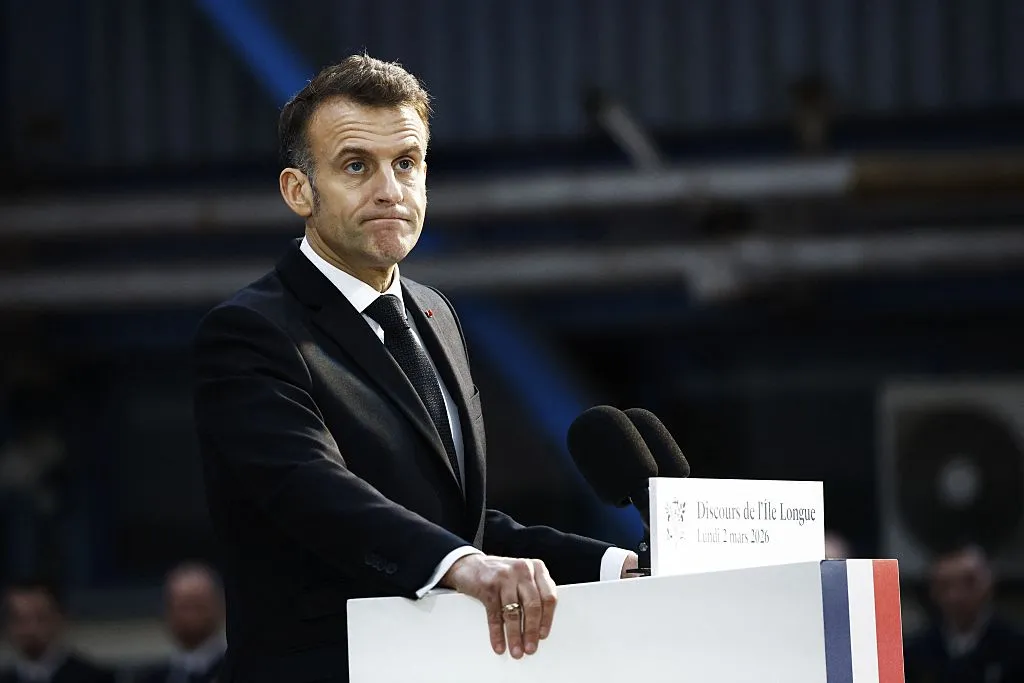
...
President Emmanuel Macron announced Monday that France will increase the number of nuclear warheads in its arsenal, marking the country’s first expansion of its stockpile since the early 1990s. Speaking at the L’Ile Longue submarine base in northwestern France, which houses the nation’s ballistic‑missile submarines, Macron said the current total of fewer than 300 warheads would be raised, though he did not specify by how many.
Macron framed the decision as a response to what he called a more dangerous global environment and growing uncertainty over U.S. security guarantees to Europe. He said strengthening France’s nuclear deterrent was essential to reinforcing Europe’s overall defense posture.
As part of the shift, Macron said France would allow temporary deployments of its nuclear‑armed aircraft to allied countries, a move intended to deepen coordination with European partners. He also announced that France, Germany, and the United Kingdom will collaborate on “very long‑range missile projects” to bolster shared strike capabilities.
Mar 02, 2026 at 10:18 AM EST
Putin speaks with Gulf leaders after Iranian strikes hit UAE and Qatar
President Vladimir Putin held calls Monday with the leaders of the United Arab Emirates and Qatar as both U.S.-aligned Gulf states reel from Iranian retaliation linked to the U.S.–Israeli military campaign. According to a Kremlin readout, Emirati leader Sheikh Mohammed bin Zayed told Putin that Iranian strikes had hit the UAE despite the country not serving as a launch point for operations against Iran.
Putin said he would relay that message to Tehran, positioning Moscow once again as a potential intermediary amid widening regional tensions. The Russian president also spoke with Qatar’s emir, part of a broader diplomatic push as Gulf governments seek to avoid being pulled deeper into the conflict.
Mar 02, 2026 at 10:10 AM EST
Israel says senior Hezbollah intelligence figure killed in targeted strike
The Israeli military said Monday that its forces killed Hussein Makled, a senior intelligence official within Hezbollah, in a strike it described as part of ongoing operations against the group’s command structure.
According to the military, Makled played a central role in producing intelligence assessments on Israeli troops and worked closely with top Hezbollah commanders involved in planning attacks on Israel.
Mar 02, 2026 at 10:05 AM EST
Trump to deliver first live remarks on Iran war since strikes began
President Donald Trump is set to speak publicly at 11:00 a.m. ET on Monday, marking his first live, on‑camera comments since the United States and Israel launched major strikes on Iran over the weekend.
The White House said the president will address the ongoing conflict before continuing with a previously scheduled event.
Mar 02, 2026 at 10:05 AM EST
Caine says U.S. strikes have established ‘air superiority’ over Iran
Gen. Dan Caine, chairman of the Joint Chiefs of Staff, said the recent wave of U.S. strikes in Iran has given American forces “air superiority” across key parts of the country, describing the operation as swift and overwhelming. At a Pentagon briefing, he said the strikes had created conditions that allow U.S. forces to operate with greater protection and freedom of movement.
According to Caine, the U.S. is still surging additional personnel and equipment into the region, with more units expected to arrive Monday. He outlined a large-scale deployment that includes thousands of service members, advanced fourth‑ and fifth‑generation aircraft, refueling tankers, and the Lincoln and Ford carrier strike groups, supported by a broad intelligence and logistics network.
Caine said the buildup had achieved its intended effect of disorienting Iran’s military. He claimed U.S. efforts targeting Iranian space and cyber capabilities left the country “without the ability to see, coordinate, or respond effectively,” contributing to what he described as a temporary advantage in the air.
Mar 02, 2026 at 10:04 AM EST
Trump tells CNN the Iran operation is ‘going very well’ as strikes intensify
CNN anchor Jake Tapper said Monday that he spoke directly with President Donald Trump for nine minutes about the ongoing U.S. and Israeli military campaign against Iran. According to Tapper, the president offered an upbeat assessment of the operation, saying, “We’re knocking the crap out of them. I think it’s going very well.”
Trump also suggested that the most significant phase of the assault had not yet begun. Tapper said the president told him, “We haven’t even started hitting them hard, the big wave hasn’t even happened. The big one is coming soon.”
Mar 02, 2026 at 09:51 AM EST
Jeffries says Trump has offered ‘no justification’ for strikes on Iran
House Minority Leader Hakeem Jeffries sharply criticized the Trump administration’s decision to launch strikes on Iran, saying officials have “failed to provide any justification” for the escalation. In an interview with CNN’s Kate Bolduan, Jeffries said he has yet to see intelligence indicating that Iran was preparing to attack the United States.
Jeffries, who is scheduled to attend a classified “Gang of Eight” briefing later in the morning, said he is still “looking for information” that would explain the administration’s actions. “Nothing has been presented to justify what’s taking place up until this point,” he said, adding that the American public is owed a clear explanation.
He argued that Americans want leaders to focus on affordability and quality of life, not “another endless war in the Middle East that is going to end in failure.” Jeffries also criticized federal spending priorities, saying the administration “found billions of dollars for bombs, but can’t find any money to actually bring down the high cost of living.”
The New York Democrat questioned whether President Donald Trump has the authority to initiate a conflict with Iran without congressional approval. Citing Article I of the Constitution, he said the framers intentionally vested the power to declare war in Congress to prevent unilateral decisions by executive leaders. Jeffries added that lawmakers plan to force a vote on a war powers resolution in response to the strikes.
Mar 02, 2026 at 09:47 AM EST
State media says Khamenei’s wife dead after injuries from weekend attack
Iran’s state broadcaster reported Monday that Khojasteh Bagherzadeh, the wife of the late Supreme Leader Ayatollah Ali Khamenei, has died from injuries sustained in the strike that killed her husband.
According to the report, Bagherzadeh had been in a coma since Saturday, when the attack hit the Khamenei family compound and left several relatives wounded.
Mar 02, 2026 at 09:39 AM EST
U.S. Embassy in Beirut urges Americans to leave Lebanon immediately
The U.S. Embassy in Beirut issued its strongest warning yet on Monday, urging all American citizens in Lebanon to depart the country immediately while commercial flights are still operating. The State Department described the security environment as “volatile and unpredictable,” citing ongoing airstrikes across southern Lebanon, the Beqaa Valley, and parts of Beirut.
Officials warned that the situation could deteriorate with little notice and stressed that Americans who choose to remain should be prepared to shelter in place and rely on their own contingency plans. The embassy emphasized that these plans should not assume U.S. government evacuation assistance, noting that all consular services have been suspended and the mission currently has no ability to aid U.S. citizens inside the country.
The alert urged Americans in high‑risk areas—including southern Lebanon, regions near the Syrian border, refugee settlements, and Beirut’s Dahiyeh district—to leave those locations immediately. Beirut–Rafic Hariri International Airport remains open, but officials cautioned that flights may be canceled without warning.
The embassy reiterated that U.S. citizens should avoid all travel to Lebanon, in line with the existing travel advisory, and encouraged those still in the country to enroll in the State Department’s Smart Traveler Enrollment Program to receive updates and be reachable in an emergency.
Mar 02, 2026 at 09:38 AM EST
U.S. embassies warn Americans to leave or take shelter as regional violence spreads
U.S. embassies across the Middle East have issued urgent new security alerts, warning Americans to leave immediately or take shelter as missile and drone attacks linked to the widening regional conflict continue to intensify.
In Beirut, the U.S. Embassy urged citizens to depart Lebanon while commercial flights remain available, calling the security environment “volatile and unpredictable.” The advisory reflects growing concern that the situation could deteriorate with little warning.
In Bahrain, the embassy in Manama cautioned Americans to remain vigilant amid ongoing missile and drone launches from Iran. Officials warned that hotels in the capital could be targeted, advising U.S. citizens to avoid them altogether.
The embassy in Kuwait issued one of the starkest alerts, citing a “continuing threat of missile and UAV attacks.” Americans were told not to approach the embassy and to shelter on the lowest floor of their residence, away from windows, until the threat subsides.
In Jordan, U.S. officials said they had indications of continued missiles, drones, or rockets entering Jordanian airspace in the coming days, urging Americans to stay indoors and avoid exposure to falling debris.
View 0 Comments
Submit Correction
View Editorial & AI Guidelines