...

By Giulia Carbonaro
Senior Reporter
0
Share
Newsweek is a Trust Project member
See more of our trusted coverage when you search.Prefer Newsweek on Googleto see more of our trusted coverage when you search.
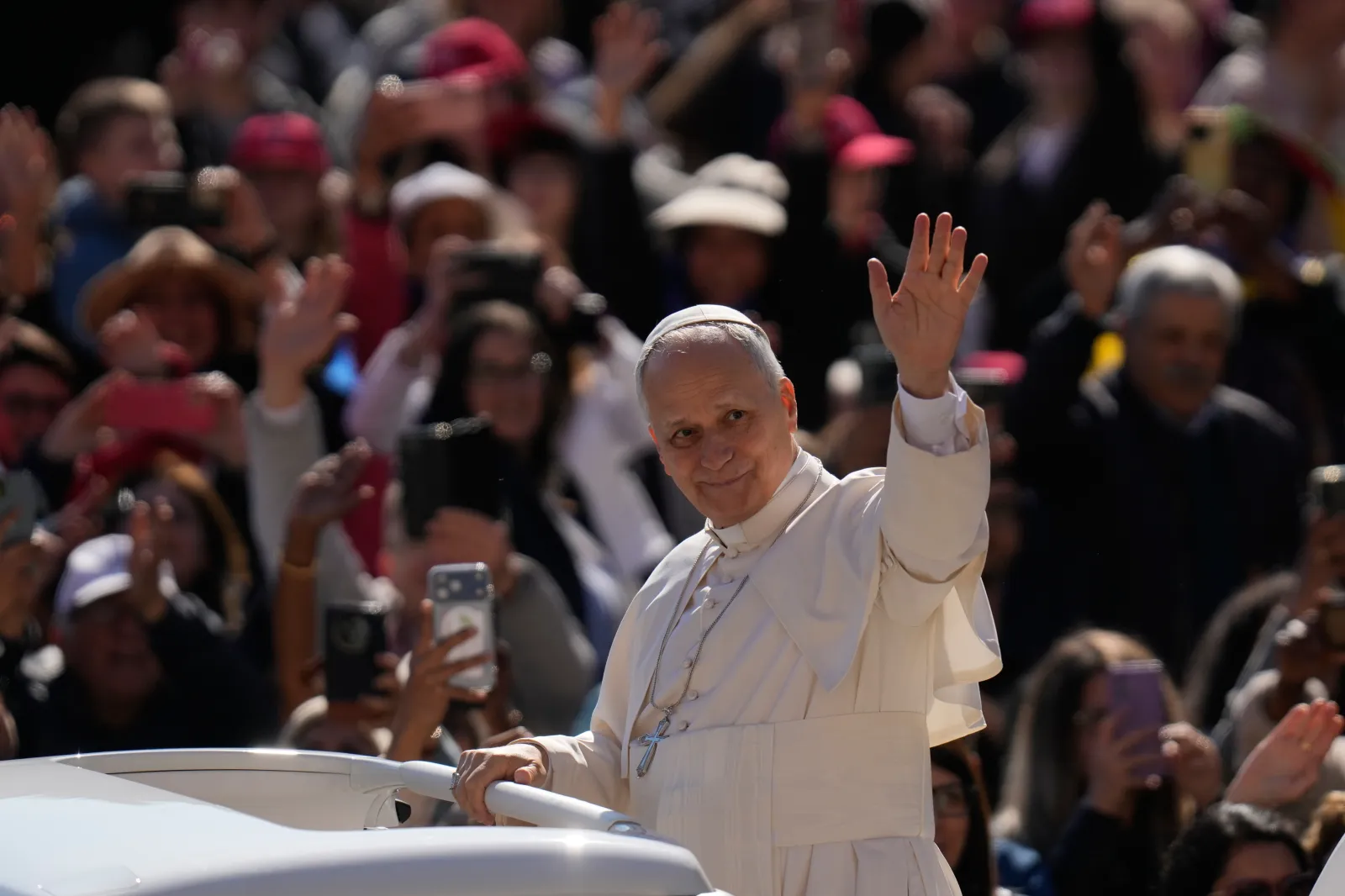
As tensions between the White House and Pope Leo XIV continue to brew, U.S. Catholics appear to be increasingly turning their back on President Donald Trump, according to recent surveys.
This might have as much to do with Trump’s policies as the pontiff’s frequent criticism of his actions, including his recent comment, said in the context of the war in Iran, that God “does not listen” to leaders who start conflicts and have “hands full of blood.” Recent reports of a tense January meeting between senior Pentagon officials and the Vatican's ambassador have also drawn international attention.
Newsweek contacted the Holy See for comment by email on Thursday morning.
Read More on News
Are US Catholics Losing Faith in Trump?
In the midst of the 2024 presidential election campaign, Pope Francis—a staunch critic of Trump and strong defender of migrants’ rights—had urged U.S. Catholics to choose “the lesser evil” when casting their ballots.
A majority of them, 55 percent, voted for Trump, according to the Pew Research Center. White Catholics overwhelmingly backed Trump (62 percent against 37 percent who backed Kamala Harris), while a majority of Hispanic Catholics (58 percent) voted for the Democratic candidate.
...
But Catholics’ enthusiasm for the president seems to be cooling fast.
A poll released in February by the Pew Research Center, issued before the start of the Middle East conflict, shows that in most religious groups—including evangelicals, Catholics, and Protestants who are not evangelicals—the president’s approval rating is now much lower than in the first days of his second term.
Approval for the way the president is handling his job is down to 52 percent from 59 percent in February 2025 among white Catholics, researchers found, while it is down to 23 percent from 31 percent among Hispanic Catholics. Similarly, support for all or most of his agenda has also declined among these groups, going from 51 to 46 percent for white Catholics and from 20 percent to 18 percent for Hispanic Catholics.
Belief that Trump is acting ethically in office has also fallen among all religious groups, including white Catholics (from 39 percent to 34 percent), and Hispanic Catholics (from 22 percent to 14 percent).
The poll of 8,512 respondents, conducted from January 20 to 26, 2026, had a margin of error plus or minus 1.4 percentage points.
America’s Favorite Catholic
Not only Trump is losing favor among U.S. Catholics—but support for Pope Leo XIV, the first American pontiff, is actually on the rise in the country across all Americans.
A recent NBC poll found that, 10 months into his papacy, U.S. registered voters now see the pope more favorably than the president, with 23 percent of respondents saying they see Leo very positively, 19 percent saying they view him somewhat positively, and only 8 percent saying they view him negatively.
This net positive of 34 places Pope Leo well ahead of Trump, who in the same poll was found to be viewed favorably by 41 percent of voters and negatively by 53 percent for a net negative of 12.
But the pope was also much more appreciated by his fellow countrymen than two of the most prominent Catholics in the Trump administration: Vice President JD Vance (viewed positively by 38 percent of voters and negatively by 49 percent) and Secretary of State Marco Rubio (34 percent versus 41 percent).
The pope was actually only one of two figures scoring a net positive among U.S. voters, followed by late-night comedian and fellow Catholic Stephen Colbert (+10).
The NBC News survey conducted by Hart Research Associates, polled 1,000 registered voters and was conducted between February 27 and March 3, i.e. as the war in Iran began. It had a margin of error of plus or minus 3.1 percentage points.
Among Catholics, the pope from Chicago is even more popular. A September survey by the Pew Research Center found that eight in 10 U.S. Catholics had a favorable opinion of Pope Leo, even as at the time he was not a well-known figure.
'Truly Unacceptable'
On Tuesday, before the ceasefire was announced, Pope Leo XIV delivered one of his strongest rebukes yet of Trump’s rhetoric toward Iran, condemning threats against the country’s population and culture as “truly unacceptable.” The pope was responding to Trump’s comments, suggesting that “a whole civilization will die tonight” if Iran failed to meet a U.S. deadline tied to the widening conflict.
“Today, as we all know, there was this threat against all the people of Iran,” the pope said. “This is truly unacceptable.”
Also on Tuesday, Archbishop Paul S. Coakley, president of the U.S. Conference of Catholic Bishops, backed Pope Leo's call for peace.
“I call on President Trump to step back from the precipice of war and negotiate a just settlement for the sake of peace and before more lives are lost,” he said according to Vatican News.
“I make a special plea to my brother bishops, the priests, the laity, and all people yearning for true peace to join the Holy Father’s Vigil for Peace, whether virtually, or in parishes, chapels, or before the Lord present in the quiet of their hearts to join with our Holy Father as we pray for peace in our world,” he added.
On Wednesday, Vice President JD Vance said he would look into reports that senior Pentagon officials lectured the Vatican's ambassador, leading to the cancellation of a planned visit by Pope Leo XIV.
Reports first shared by The Free Press said Cardinal Christophe Pierre was told in January that the Vatican and the Catholic Church should get on board with the Trump administration's military tactics.
Reports also suggested the pope was invited to the U.S. as part of the country's 250th anniversary celebrations.
According to the Free Press, the Vatican did initially entertain the idea, but postponed the visit indefinitely because of foreign policy disagreements.
On July 4, the pope will instead travel to the Italian island Lampedusa, where North African migrants often wash ashore.
View 0 Comments
Submit Correction
View Editorial & AI Guidelines