...

By Pandora Dewan
Senior Science Reporter
0
Share
Newsweek is a Trust Project member
See more of our trusted coverage when you search.Prefer Newsweek on Googleto see more of our trusted coverage when you search.
Scientists have uncovered new information about the infamous Bigfoot, revealing important insights into its most-likely identity.
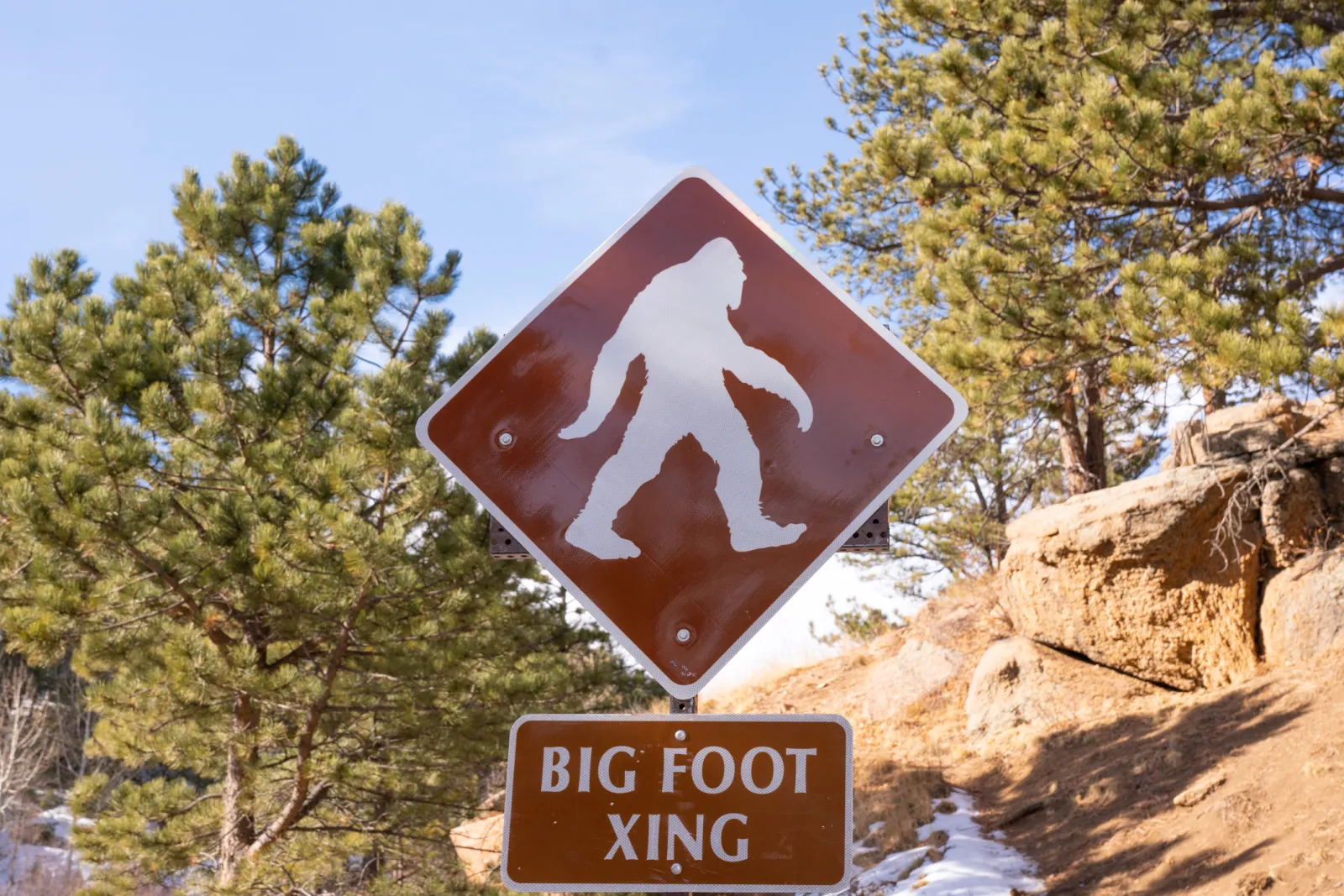
Bigfoot, or the sasquatch, is a legendary ape-like beast that has been spotted all over North America. People say the creature is tall and hairy, roaming through the nation's forests on two legs. Indeed, these eyewitness accounts number in the thousands, according to the Bigfoot Field Researchers Organization, making the creature a prominent cryptozoological phenomenon across the United States.
However, while there are likely to be many undescribed species in our nation's forests, most scientists agree that the majority of Bigfoot sightings can be explained by a more-familiar creature: the black bear.
Read More
Loch Ness Monster Search Gets Technology Boost3 min read

Where has Bigfoot Been Sighted the Most? Washington, California, Pennsylvania Among Top States3 min read

UFOs and Ghosts: How Mainstream Culture Has Turned Us Into Believers6 min read

The black bear, as known as Ursus americanus, is the most-common bear species in the United States. Its range spreads across Canada, the U.S. and northern Mexico, and the black bear can be found in forested areas, mountains, swamps, scrub and even more urban settings.
The large, stocky animals can weigh up to 660 pounds and measure up to 6.6 feet long, but, despite its large size, the bear can run at speeds of up to 35 miles per hour and can often be seen walking on its hind legs.
...
The presence of a black bear can be indicated by signs such as overturned logs and stones, broken branches, claw marks, dark hair and big footprints. They are often active at night and can be heard vocalizing with grunts, howls, snorts and roars.
Already, these features are match up well with the majority of Bigfoot sightings, but there's more. In a new study, published in the Journal of Zoology, Floe Foxon, founder of the Folk Zoology Society, has demonstrated a close correlation between Bigfoot sightings and black-bear populations across the U.S. and Canada.
After adjusting for human population and forested areas, Foxon found that an average of one Bigfoot sighting can be expected every year for every 5,000 bears across the United States. This can be translated to a 4 percent increase in Bigfoot sightings with every additional 1,000 bears in the U.S.
"This is logical because [...] bears and sasquatch share many characteristics in habitat, appearance, attributes and behavior," Foxon writes. "Poor viewing conditions, non-expert observation, and expectant attention—'seeing' what one anticipates— could explain why some people might confused bears for mystery hominids."
Foxon adds that Bigfoot sightings might be useful for future black-bear conservation efforts, allowing experts to gain information about bear populations through data from citizen scientists.
Do you have a tip on a science story that Newsweek should be covering? Do you have a question about Bigfoot? Let us know via science@newsweek.com.
View 0 Comments
Submit Correction
View Editorial & AI Guidelines