
...

By Giulia Carbonaro
Senior Reporter
0
Share
Newsweek is a Trust Project member
See more of our trusted coverage when you search.Prefer Newsweek on Googleto see more of our trusted coverage when you search.
The nationwide average gas price in the U.S. climbed to $4.55 per gallon on Wednesday, up by nearly $1.60 since late February, before the U.S. and Israel launched joint strikes on Iran.
It is inching closer to the national average of $4.56 reported on May 7, the highest price since the start of the war in the Middle East and the highest under President Donald Trump’s second tenure.
If $4.55 per gallon sounds like a very high sum already, it is worth considering that some Americans have it much worse. According to the latest data by the American Automobile Association (AAA), drivers in California are paying the highest price to fill the tank on Wednesday, for a statewide average of $6.14 per gallon of regular gas—up from approximately $4.45 per gallon in late February.
In five other states, including Hawaii, Illinois, Nevada, Oregon and Washington, the statewide average was above the $5 mark.
...
The lowest price can be found in Georgia, where drivers are paying a statewide average of $4.01 for a gallon of regular gas. But even there, prices at the pump are much higher than before the start of the Iran war; in late February, the statewide average was approximately $2.75 per gallon.
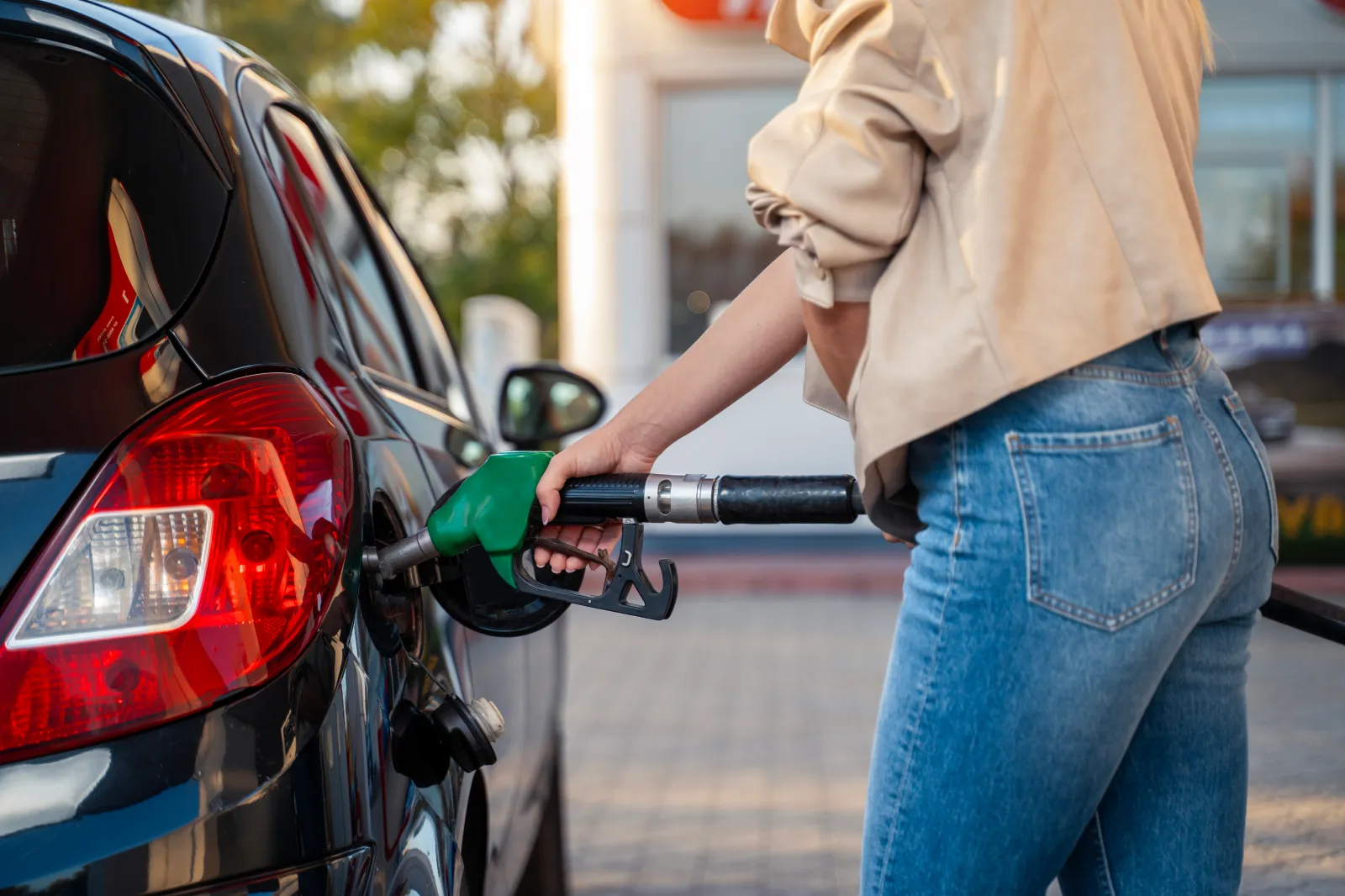
No state has been spared by gas price hikes over the past few months, as disruptions to the global production and supply of crude oil have sent energy costs up all across the world. For Americans, these increases are causing significant pain at the pump.
“Americans will spend [approximately] $590 million more on gasoline today alone versus the pre-war price,” Patrick De Haan, head of petroleum analysis at GasBuddy, wrote on X on Tuesday. “Cumulatively, for the [roughly] 79 days the Strait has been closed, Americans have now spent [around] $33 billion more on gasoline alone.”
Why Are Gas Prices Rising?
The Iran war has caused significant disruption to the production and shipping of oil across the Middle East, the most significant of which is the effective chokehold that has been placed on the Strait of Hormuz since late February.
The strait, a narrow waterway connecting the Persian Gulf to the Gulf of Oman and the Arabian Sea, normally carries a fifth of the world’s oil and liquefied natural gas (LNG). Since the U.S. and Israel bombed Iran, starting the ongoing conflict, traffic through the strait has been reduced to a trickle—despite Trump’s calls for Iran to end its effective blockade.
The upset caused to the production and supply of oil in the Middle East has sent global crude oil spiking. Brent crude oil was $109.32 a barrel on Wednesday, according to Trading Economics data, down 1.77 percent from the previous day, but still dramatically from the average of roughly $73 per barrel reported in late February.
Increases in the price of crude oil have in turn brought up gas prices across the world and even in the U.S., despite the country being the world’s largest oil producer.
What Will Stop Them Climbing Further Up?
Experts widely agree that gas prices will only start going down when Washington and Tehran can reach an agreement and traffic through the Strait of Hormuz is resumed.
Trump has been sending mixed messages about the future of the conflict. On Tuesday, he said the war with Iran could end “very quickly” as the Iranians want “to make a deal so badly,” he claimed.
“It’s gonna happen, and it’s gonna happen fast. You’re going to see oil prices plummet, they’re gonna come down,” he added.
But on the same day, the president also warned that Washington could resume strikes in the coming days if negotiations fail. He said he called off a fresh wave of strikes on that same day, explaining: “I was an hour away from making the decision to go today.”
Congress Looks to Relieve Burden
Lawmakers, meanwhile, are trying to pass measures that would offer immediate relief to drivers struggling with higher prices.
House Republicans passed a bill last week that would allow nationwide year-round sales of E15, a blend of gasoline mixed with 15 percent ethanol, also known as Unleaded 88—a product that refiners and retailers normally cannot sell in around half the country during the summer months due to air pollution concerns.
E15 is generally cheaper than E10. According to a 2024 estimate by the EPA, the E15 blend was then about $0.25 a gallon cheaper than E10. The Renewable Fuels Association estimates the price for E15 to be often 5-10 percent lower than the one for E10.
But the future of the bill is uncertain, as it would need 60 votes to clear a filibuster and be sent to Trump’s desk.
View 0 Comments
Submit Correction
View Editorial & AI Guidelines