...

By Ryan Chan
China News Reporter
0
Share
Newsweek is a Trust Project member
See more of our trusted coverage when you search.Prefer Newsweek on Googleto see more of our trusted coverage when you search.
The United States recently conducted a missile test as part of the Army's modernization to enhance its capabilities in preparation for a potential war with China in the Pacific.
The Chinese Foreign Ministry did not immediately respond to a request for comment from Newsweek.
Why It Matters
Facing China's military buildup, particularly its missiles, the Pentagon has designated the Indo-Pacific as its "priority theater." Given the Pacific's vast maritime expanse, the U.S. Army has been improving its firepower by developing various missile systems.
Read More on World
This year, the U.S. Army bolstered the presence of its missiles near China, including the deployment of a long-range hypersonic weapon—capable of flying over five times the speed of sound—in Australia and the mid-range Typhon missile system in Japan.
American ground forces based in Hawaii have replaced weapons—such as howitzers—considered outdated and inefficient for a future conflict with the combat-proven High Mobility Artillery Rocket System (HIMARS), capable of firing precision rockets and missiles.
What To Know
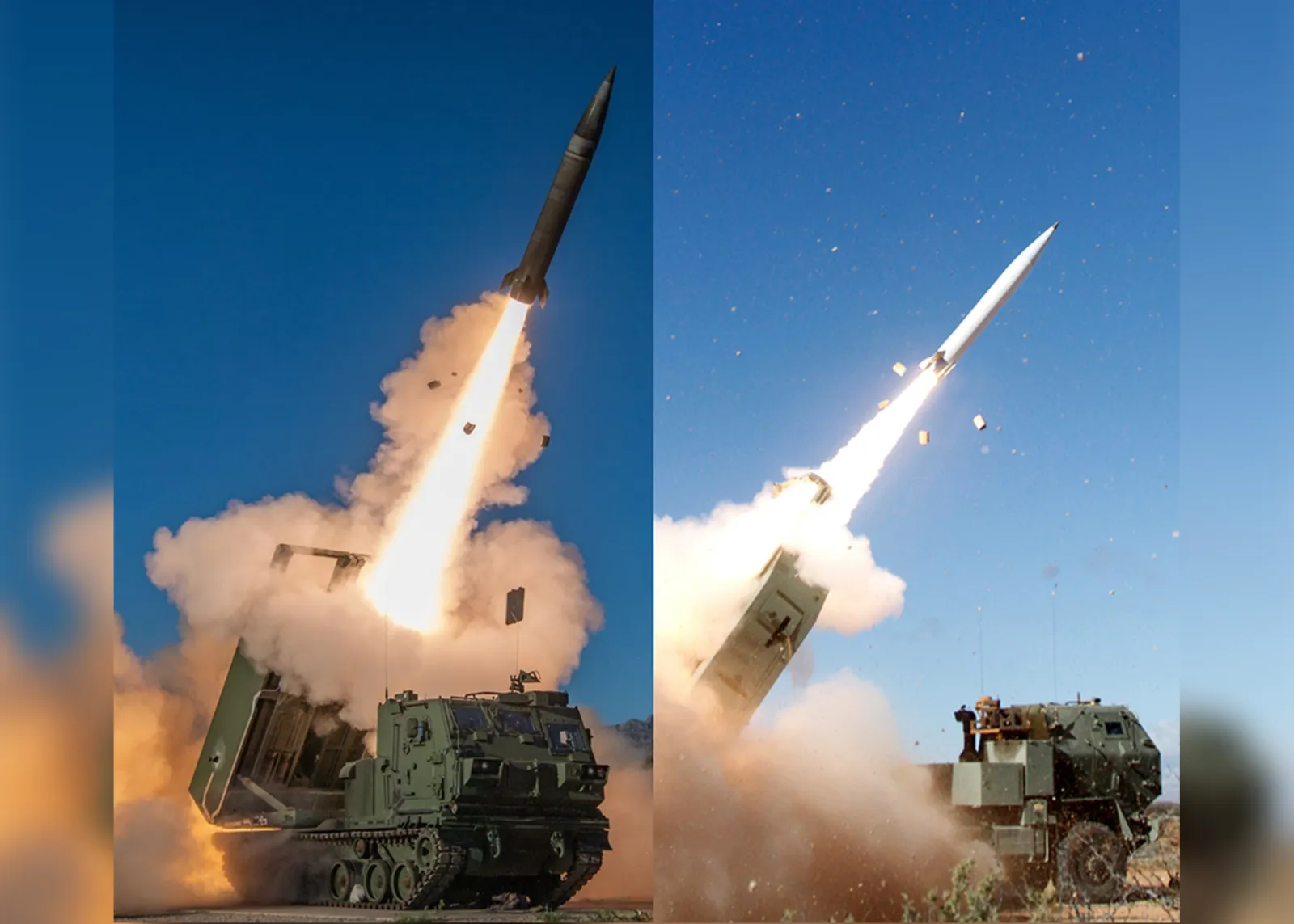
The U.S. Army announced that during an operational test on September 26 at White Sands Missile Range in New Mexico, four Precision Strike Missile Increment 1 missiles were fired at targets arrayed in a simulated staging area 124 miles away.
"Missile performance met all objectives for range, trajectory, accuracy, and height of burst, with initial lethality assessments indicating nominal performance as expected," the U.S. Army Program Executive Office Missiles and Space said in a statement.
According to Lockheed Martin, the defense contractor that manufactures the Precision Strike Missile, said the missiles were fired from two types of mobile launchers: the HIMARS and the Multiple Launch Rocket System (MLRS).
Both launchers are capable of carrying two Precision Strike Missiles—with a range of over 310 miles—per launch pod. The MLRS is equipped with a pair of launch pods, while the HIMARS has only one.
By comparison, the Army Tactical Missile System (ATACMS) and the Guided Multiple Launch Rocket System (GMLRS)—missiles and rockets currently used by both launchers—have ranges of up to 186 miles and 93 miles, respectively, according to Lockheed Martin.
Carolyn Orzechowski, vice president of Precision Fires Launchers and Missiles at Lockheed Martin, said the test validated the ability to fire the Precision Strike Missile from all platforms in the U.S. Army inventory and certified its mission readiness.
The Precision Strike Missile is intended to provide the U.S. Army with what the service described as "a next-generation, long-range precision strike capability," and its open-systems architecture and modular design allow for future growth and upgrades.
...
What People Are Saying
Major General Frank Lozano at U.S. Army Program Executive Office Missiles and Space said in a press release on Tuesday: "The success of this test series is a testament to the hard work and dedication of our soldiers, as well as the strong partnership between the Army and our industry partners … Partnerships are instrumental in the development and testing of advanced, lethal capabilities, and we look forward to continuing to work together to deliver this critical capability to the warfighter."
Carolyn Orzechowski, vice president of Precision Fires Launchers and Missiles at Lockheed Martin, said in a press release on Wednesday: "Lockheed Martin is committed to pushing the boundaries of innovation to deliver the most advanced 21st Century Security solutions to the warfighter—leveraging digital technologies to streamline development, testing and fielding."
What Happens Next?
Breaking Defense previously reported that the U.S. Army is developing other versions of the Precision Strike Missile, including the Increment 2, designed to strike enemy ships, and the Increment 3, which it described as having "enhanced lethality payloads."
View 0 Comments
Submit Correction
View Editorial & AI Guidelines