...

By John Feng
China Editor
0
Share
Newsweek is a Trust Project member
See more of our trusted coverage when you search.Prefer Newsweek on Googleto see more of our trusted coverage when you search.
Japan will begin building bomb shelters next year on its remote islands closest to Taiwan, amid fears that its far western territory could become a legitimate target for Chinese missiles if China and the United States go to war.
The plans point to a possible scenario in which Beijing orders preemptive strikes against major U.S. and allied bases in the Pacific before launching an amphibious invasion by sea and air across the Taiwan Strait to achieve what strategists call a fait accompli. They also acknowledge the complex reality that Japan—the U.S. treaty ally hosting the most American troops anywhere in the world outside U.S. territory—will in all probability not avoid the spillover of a superpower conflict so near its shores.
The Chinese Communist Party claims democratically governed Taiwan as part of its own territory, despite Taipei's objections. China refuses to rule out the use of force to unify the island with the mainland, and a widening hard power imbalance across the Taiwan Strait is fueling concerns that Beijing could soon compel Taipei with the threat of a hot war.
Read More on World
...
U.S. officials said Chinese President Xi Jinping has ordered his armies to be ready to take Taiwan by force by 2027. Whether the military capability will be matched by political intent cannot be known. Taiwan is a core issue in the U.S.-China relationship, Beijing's officials say.
At Asia's top security forum in Singapore in May, U.S. Defense Secretary Pete Hegseth said China's military was "rehearsing for the real deal," and that an attack "could be imminent." Beijing accused him of trying to stoke confrontation.
America has strong economic and security stakes in Taiwan despite no formal diplomatic ties. The U.S. is bound by U.S. law to arm Taiwan and assist in its self-defense. Former President Joe Biden suggested he was prepared to defend Taiwan with American forces. President Donald Trump has kept his cards closer to the vest.
What is certain is that the U.S. likely cannot win a Pacific war against China without the help of Japan, whose vast territory of more than 14,000 islands spans 1,000 miles across the first and second island chains in the West Pacific.
Japan's Self-Defense Forces are among the world's most well-armed militaries thanks in part to historically strong heavy industry and U.S. export licenses for the production of platforms like the F-35 stealth jet and the future operation of weapons like the Tomahawk cruise missile.
And although Japan's constitution explicitly renounces the use of force, Tokyo's reinterpretation of the document in recent years may allow its military to perform collective self-defense alongside U.S. and allied forces, even if Japan itself is not attacked.

...
Evacuation Facilities
The Japanese government will subsidize the construction of long-stay evacuation facilities in the Sakishima archipelago at the end of its Nansei or southwest island chain, starting next year with the westernmost inhabited territory of Yonaguni, less than 70 miles east of Taiwan.
More bomb shelters—equipped with facilities for stays of up to two weeks—will be built on the neighboring islands of Iriomote, Ishigaki, Tarama and Miyako by spring 2028, Japan's Nikkei newspaper reported in June.
Okinawa, the largest of Japan's southwestern islands, hosts some 30,000 of the 54,000 active-duty American service members in Japan. The U.S. Navy, Air Force, Army and Marine Corps operate bases on the Pacific node, with U.S.-Japan joint training exercises reaching all the way to Yonaguni.

...
Officials in Tokyo plan to evacuate residents to the country's main islands long before hostilities begin. However, official estimates indicate sea and air evacuations of more than 100,000 civilians during a Taiwan Strait crisis could take nearly a week. The emergency shelters would act as a backstop to house up to 200 people left behind.
The buildup to a possible major war is palpable to the islanders, who have expressed angst about being on the front line of what their government calls a "Taiwan contingency."
"The plan is very detailed and I felt a strong sense of crisis in the remote border islands," Gen Nakatani, Japan's defense minister, said at a news conference in January while reviewing Yonaguni's evacuation measures.
Preparing for the Worst

...
The preparations are as necessary as they are uncomfortable; the worst-case planning does not presume a peaceful end to a decades-long dispute that in many ways resembles China's most formidable hurdle in its pursuit of true superpower status against a resistant United States.
"China's military expansion in recent years and its attempts to unilaterally change the regional status quo have aroused a high degree of vigilance in democratic countries like Japan, the United States and in the European Union," Taiwan's Foreign Ministry spokesperson Hsiao Kuang-wei told Newsweek.
Taipei welcomes the international community's continued attention to the security situation in the Taiwan Strait and in the region, Hsiao said.
"Taiwan is an inalienable part of China and the Taiwan question is purely China's internal affair that brooks no external interference," said Liu Pengyu, China's embassy spokesperson in Washington, D.C. "The one-China principle is the political foundation of China-Japan relations."
In 1972, Japan broke off diplomatic relations with Taipei's Republic of China government to establish formal ties with the People's Republic of China in Beijing. Liu told Newsweek: "Japan bears historical responsibilities to the Chinese people over the Taiwan question and should act with extra prudence and honor its promise of adhering to the one-China principle with concrete actions."

...
Japan ruled Taiwan as a colony for 50 years from 1895 to 1945. Today, mutual affection between the two peoples is high and two-way tourism is booming.
"The Japanese government is developing specific temporary evacuation facilities...in five municipalities in the Sakishima islands, where evacuation difficulties are anticipated," a Japanese government official said in a statement to Newsweek. "This is based on the assumption that, in the event of an armed attack, etc., some residents may be unable to evacuate due to adverse weather conditions rendering aircraft or vessels unusable."
The official added: "The government is not currently developing specific temporary evacuation facilities with any particular armed attack situation or time frame in mind."
The U.S. State Department referred Newsweek to the government of Japan.
Increasing Military Activity
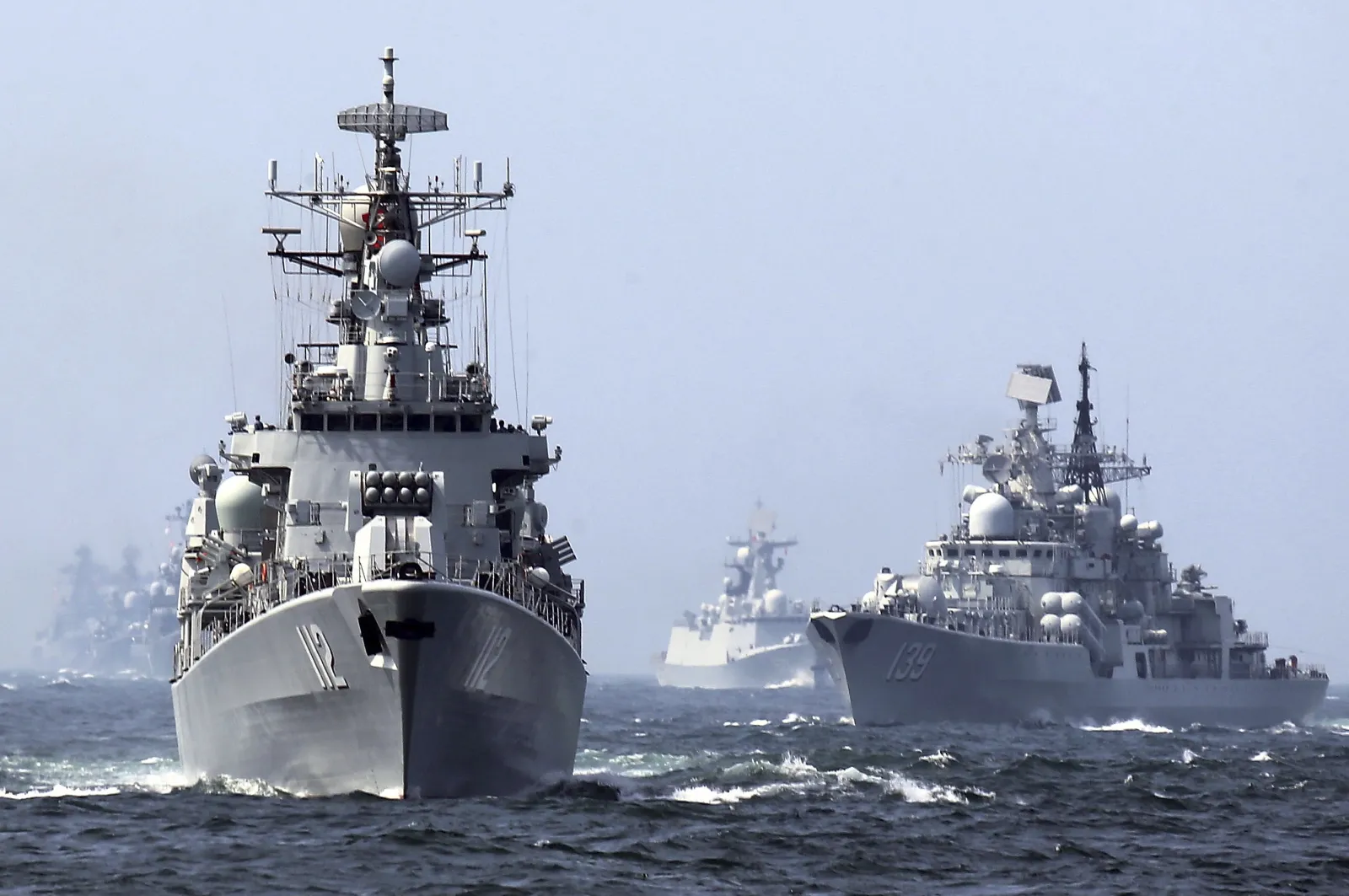
Beijing's modern military is on the march, with ambitions of global supremacy that stretch to the Arctic and even space. Intensive Chinese military activity in Taiwan's surrounding sea and airspace is now the norm, yet they increase still. Last year, Taipei tracked over 3,000 Chinese warplane sorties in its air defense zone, nearly double the figure recorded in each of the previous two years, according to PLATracker, a public dataset maintained by U.S. analysts Gerald C. Brown and Benjamin Lewis.
...
Taiwan's defense reforms have progressed steadily, but not fast enough for many of its supporters in the U.S. The island's political, military and civic leaders, however, are applying lessons from Russia's war in Ukraine: how to win international support, how to use sea drones and HIMARS rocket launchers and how to resist.
The U.S. and Japanese militaries have witnessed some of the biggest shifts in defense posture, both individually and collectively as an alliance.
The Pentagon is overseeing a fundamental change in warfighting doctrine across the U.S. armed services as part of a pivot to the Indo-Pacific theater, where seas are wide, islands are many and continental land is scarce.

...
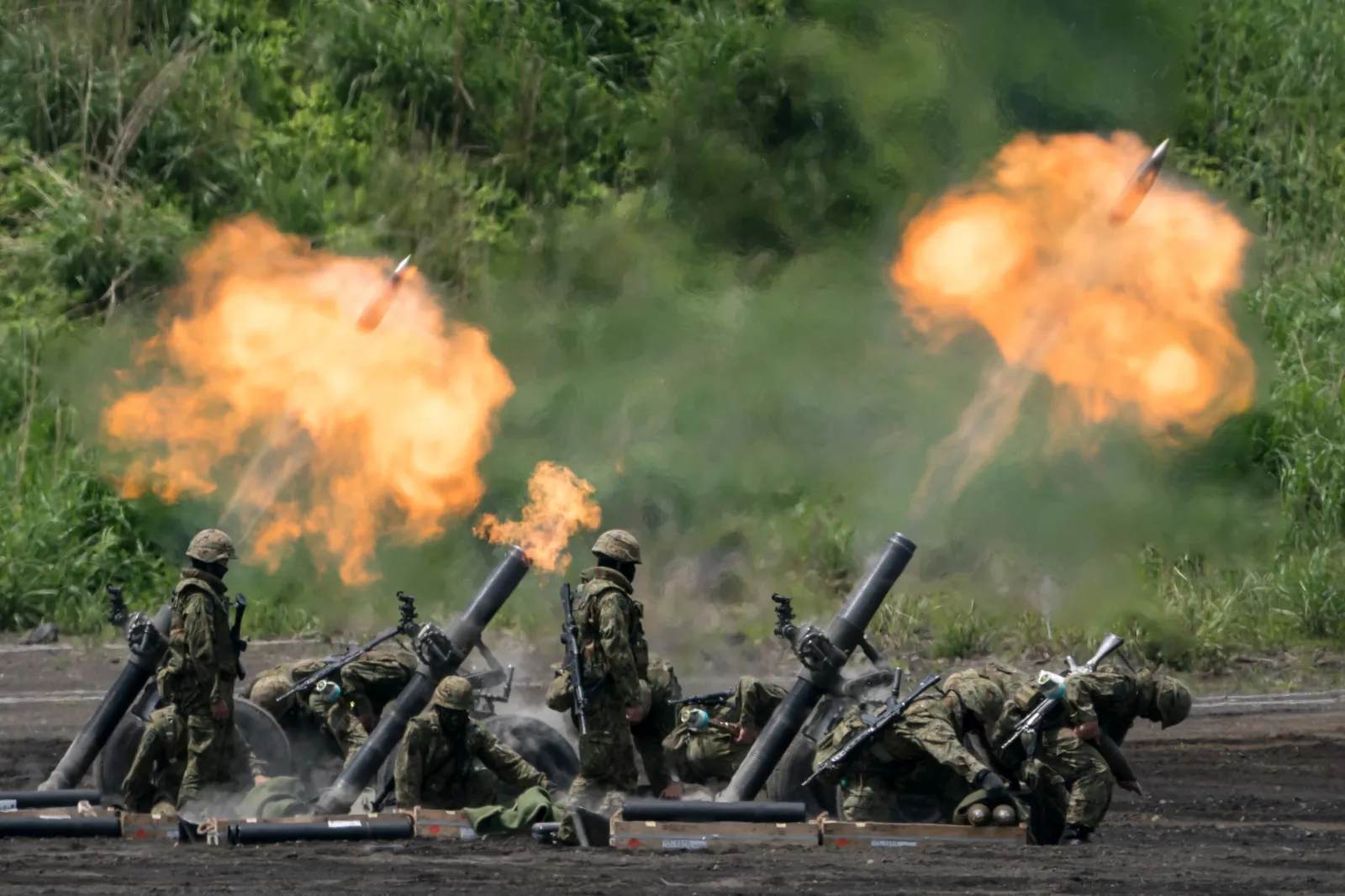
In Japan, the larger of the Sakishima islands—Yonaguni, Miyako and Ishigaki—have each hosted new Japanese army bases in the last 10 years. On Yonaguni, whose population is only around 1,500, a Patriot missile unit operates a battery of advanced PAC-3 interceptor systems, and long-range radar stations in the mountains watch Chinese forces daily.
On June 24, Japan's army announced that it had conducted its first missile test on Japanese territory, firing a Type 88 short-range surface-to-ship missile on its northernmost main island of Hokkaido. Tokyo is also acquiring long-range counterstrike weapons—the U.S.-made Tomahawk and its own Type 12 missile—that can reach China's coast.
Defense planners are not discounting the possibility that China could move on the disputed Senkaku or Diaoyu islands in the East China Sea, around 100 miles north of the Sakishima group. U.S. and Japanese soldiers have trained together to retake Japan's remote islands from enemy forces, and this year simulated anti-ship strikes on maritime choke points used by the Chinese navy.
The U.S.-Japan alliance is open about the perceived China threat in ways that the U.S.-South Korea alliance cannot be. Seoul fears that a diversion of American strength from the Korean Peninsula could invite trouble at the Demilitarized Zone with Kim Jong Un's North. "The decision to publicize these preparations may also point to deeper coordination between Japan and Taiwan than is openly acknowledged," Bryce Barros, nonresident associate fellow at the Bratislava-based GLOBSEC think tank, told Newsweek.
"More broadly, it raises important questions for other countries in the region. For example, I'd be curious to see what measures Filipino authorities are taking for islands in the Bashi Channel, which would also be on the front line of any cross-strait crisis."
Tsun-yen Wang, associate research fellow at the Institute for National Defense and Security Research in Taipei, told Newsweek: "It should not be ruled out that those shelters may also be utilized for housing and aiding refugees fleeing from Taiwan. The 'Taiwan refugees' concern was raised about two years ago, and discussion of this issue may well conjure up the Japanese people's memory of finding 'boat people' at the end of the Vietnam War."

...
Deterrence by Denial
The Trump administration is prioritizing a strategy of "denial" to deter a Chinese attack on Taiwan, Pentagon policy chief Elbridge Colby said in his confirmation hearing earlier this year. He told the Senate Committee on Armed Services: "Losing Taiwan, Taiwan's fall, would be a disaster for American interests."
Unlike deterrence by punishment, which threatens consequences like economic sanctions, a strategy of denial seeks to convince an aggressor that its objectives are unobtainable, by making the likelihood of a catastrophic military defeat more credible.
To achieve denial against a peer adversary like China, the U.S. may need to clearly signal a readiness to intervene, in what would be a test of the American public's appetite for more war. In a poll released by the Ronald Reagan Institute in June, seven in 10 Americans said they would support U.S. military action to defend Taiwan.
View 0 Comments
Submit Correction
View Editorial & AI Guidelines