...

By Kate Nalepinski
Reporter
0
Share
Newsweek is a Trust Project member
See more of our trusted coverage when you search.Prefer Newsweek on Googleto see more of our trusted coverage when you search.
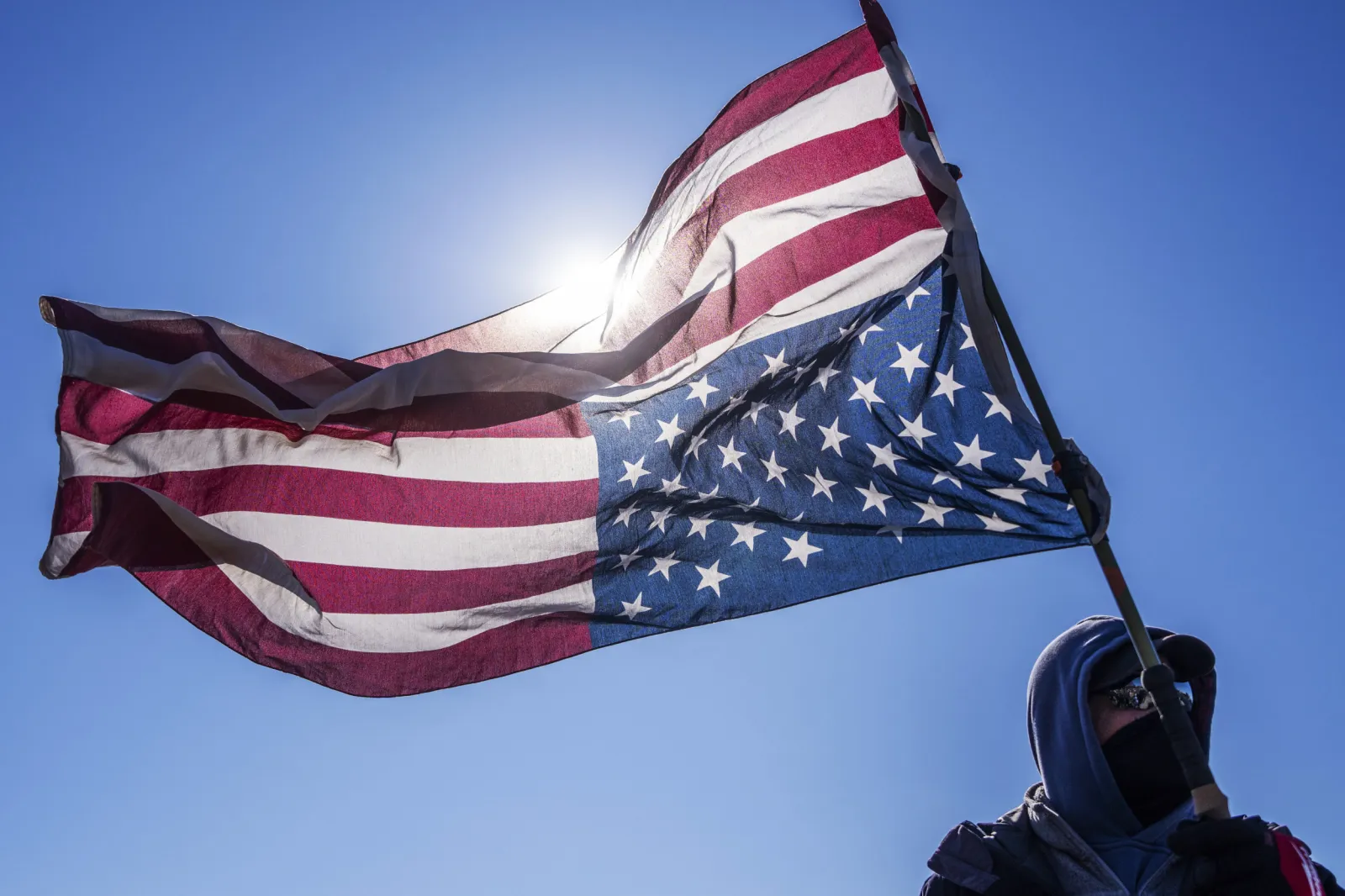
Flying the American flag upside down is a symbol that has sparked debate and controversy in the United States. Traditionally a distress signal, the inverted flag has been used as a form of protest in various contexts, from government policies to social issues.
Recent displays this month—including the draping of an inverted flag over El Capitan at Yosemite National Park and another outside the State Department in Washington, D.C.—have drawn attention to the symbol's evolving meaning and the motivations behind its use.
Newsweek has contacted the National Park Service for comment via email.
Read More on News
Why It Matters
An upside-down American flag has long been used as a symbol of distress, but recent displays have reignited debate over its meaning.
As Newsweek previously reported, Yosemite National Park employees hung the upside-down flag to protest the Trump administration's firing of about 1,000 newly hired National Park Service employees, including several who worked at the park.
...
National Park Service spokesperson Andrew Munoz stated that the flag was removed shortly after being discovered and that the action was unauthorized, per NBC News. Munoz emphasized that the agency "respects the right of individuals to express their personal views but expects them to do so in an appropriate manner."
The inverted flag is not a new form of protest and has been used by both the left and right for decades.
Last year, conservative Supreme Court Justice Samuel Alito came under fire after a photo of an upside-down American flag outside of his Virginia home made headlines.
Rioters at the Capitol on January 6, 2021, also carried inverted flags. The Yosemite display, tied to staffing and budget cuts, and the D.C. display, reportedly connected to political grievances, have put the flag's symbolism in the national spotlight.
Upside-Down US Flag Meaning
Historically, flying the U.S. flag upside down is recognized as a distress signal. According to the U.S. Flag Code, an inverted flag should only be used "as a signal of dire distress in instances of extreme danger to life or property."
Why are Federal Workers Protesting?
Federal employees at national parks and other agencies have voiced concerns over staffing shortages, reduced budgets, and increased workloads.
The Yosemite display reflects broader frustrations within the National Park Service, which has faced funding challenges despite rising visitor numbers. Critics argue that budget cuts compromise park operations, environmental stewardship, and public safety.
Is It Illegal to Fly a US Flag Upside Down?
No, flying the U.S. flag upside down is not illegal. The First Amendment Encyclopedia explains that the Supreme Court has upheld the right to use the flag as a form of symbolic speech.
In the 1989 case Texas v. Johnson, the Court ruled that flag desecration is protected under the First Amendment.
While the U.S. Flag Code outlines proper flag etiquette, including the restriction on displaying an inverted flag except in cases of distress, it does not impose legal penalties for violations. This legal protection allows individuals to fly the flag upside down as a form of protest without fear of prosecution.
What People Are Saying
Maintenance mechanic Gavin Carpenter, who supplied the flag in Yosemite and helped hang it, told the San Francisco Chronicle: "We're bringing attention to what's happening to the parks, which are every American's properties. .... It's super important we take care of them, and we're losing people here, and it's not sustainable if we want to keep the parks open."
Former Yosemite National Park custodian Olek Chmura told KSEE Fresno: "Nothing's going to prepare you for that - for your whole life being uplifted from under your feet," he said. Chmura attended an in-person protest at the park this month.
Civil rights attorney David Loy told NPR that protests involving the flag are a form of constitutionally protected speech. "The First Amendment exists to protect expression that may offend."
View 0 Comments
Submit Correction
View Editorial & AI Guidelines