...

By Khaleda Rahman
National Correspondent
0
Share
Newsweek is a Trust Project member
See more of our trusted coverage when you search.Prefer Newsweek on Googleto see more of our trusted coverage when you search.
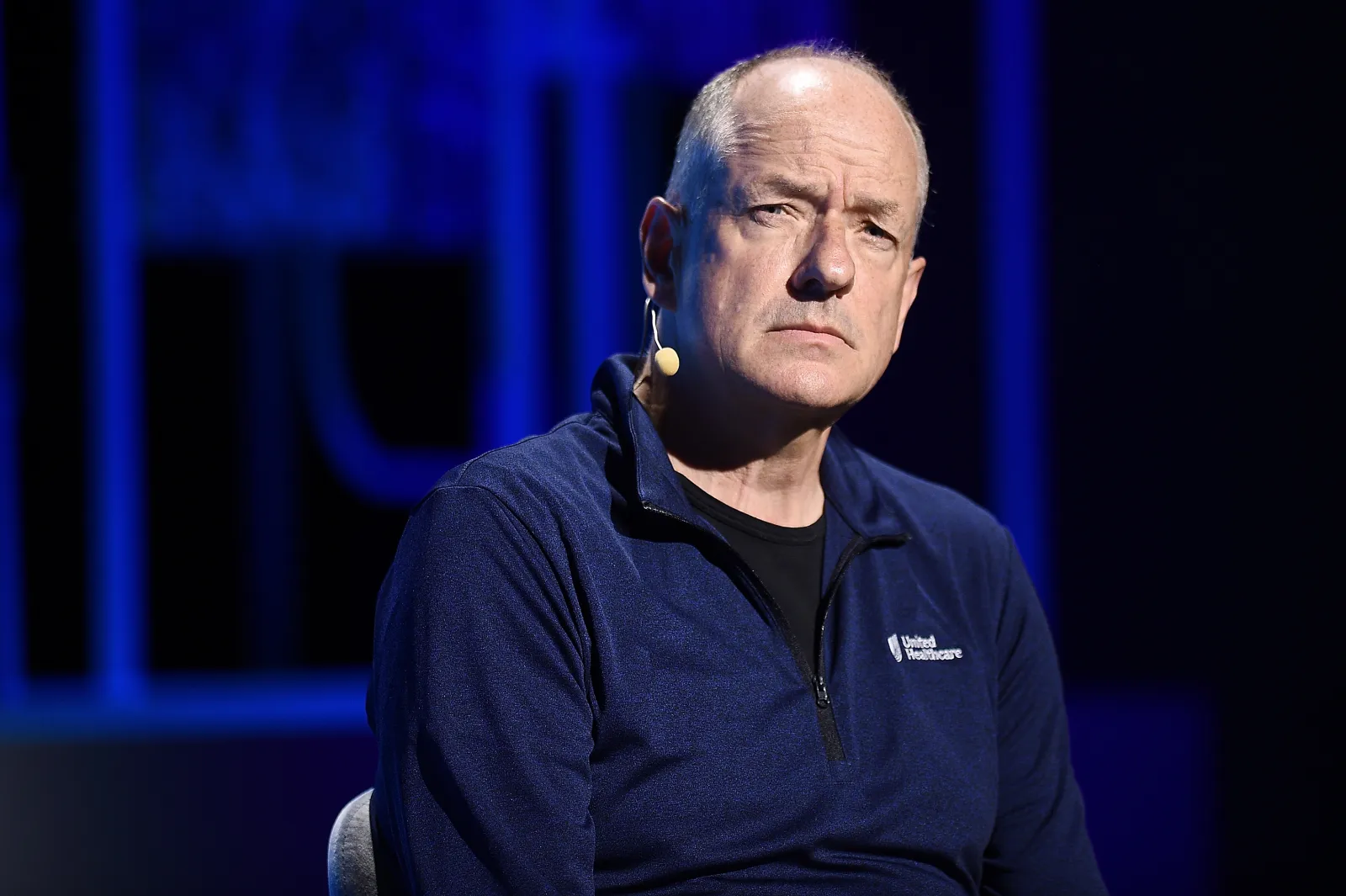
The CEO of UnitedHealth Group defended the company's role in the U.S. health care system days after a report said the company made huge profits by significantly marking up the cost of lifesaving drugs.
Andrew Witty said the company had helped lower costs for consumers, and placed the blame on drug companies and health providers for high prices during an earnings call on Thursday.
His comments came as the company reported that its revenues for 2024 amounted to $400.3 billion, up 8 percent from the year before.
Read More on News
...
Why It Matters
Witty's comments came during the company's first earnings call since the killing of Brian Thompson, the CEO of the company's insurance arm UnitedHealthcare.
Thompson, 50, was gunned down as he walked to the company's annual investor conference at a New York City hotel early on December 4. The killing prompted a wave of anger and resentment from Americans frustrated over access to health care, with some crticizing health insurers for denying or delaying claims to boost profits.
Luigi Mangione, 26, is facing state and federal charges in connection with Thompson's killing, He has pleaded not guilty to multiple counts of murder in a New York state court but won't need to enter a plea on the federal charges until an indictment is returned.
What To Know
The Federal Trade Commission released a report on Tuesday that said the nation's three biggest pharmacy benefit managers (PBMs)—UnitedHealth's Optum Rx, CVS health's CVS Caremark and Cigna's Express Scripts—marked up prices for certain specialty drugs at their affiliated pharmacies by thousands of percent.
The report said by doing so, the PBMs collectively generated more than $7.3 billion in revenue between 2017 and 2022. PBMs are third-party companies that act as intermediaries between insurance provides and drug manufacturers.
An Optum spokesperson told CNBC that the company lowers the cost of drugs and helped patients save $1.3 billion in 2024.
On Thursday's call, Witty said that health care in the country needs to be "less confusing, less complex and less costly."
"Ultimately, improving health care means addressing the root cause of health care costs," he said. "Fundamentally, health care costs more in the U.S. because the price of a single procedure, visit or prescription is higher here than it is in other countries." He noted that GLP-1 drugs used to treat diabetes and for weight loss cost $900 in the U.S. but are just one-tenth of that in Europe.
PBMs "play a vital role" in keeping down drug prices, he said. Optum "delivers many tens of billions of dollars in savings annual versus the pricing set by the manufacturers—including on the GLP-1s," Witty said."That sharply reduces the gap versus other countries, but even then, prices in the U.S. are still multiples of what the rest of the world pays for the same drugs.
"Last year, our PBM passed through more than 98 percent of the rebate discounts we negotiate with drug companies to clients.
"While we offer customers 100 percent pass-through options, a small number have historically elected other models. We are committed to fully phasing out those remaining arrangements so that 100 percent of rebates will go to customers by 2028 at the latest. We will continue to encourage all of our clients to fully pass these savings directly to patients at the point of sale, as we already do for all of the people we serve in our fully insured employer offerings."
Doing so, he added, "will help make more transparent who is really responsible for drug pricing in this country: the drug companies themselves."
What People Are Saying
Hannah Garden-Monheit, director of the FTC's Office of Policy Planning, in a statement: "FTC staff have found that the Big 3 PBMs are charging enormous markups on dozens of lifesaving drugs. We also found that this problem is growing at an alarming rate, which means there is an urgent need for policymakers to address it."
Pharmaceutical Care Management Association Vice President of Public Affairs Greg Lopes, in a statement: "It's clear this report again fails to consider the entirety of the prescription drug supply chain and makes sweeping assertions about the role of PBMs disconnected from a full appreciation of their critical cost-saving role for employers, unions, taxpayers, and patients."
What Happens Next
The FTC sued the three PBMs in September, alleging they artificially inflated insulin drug prices. Further legal action could be taken, though the FTC's report on Thursday said the issues highlighted do not indicate that any illegal conduct has occurred.
View 0 Comments
Submit Correction
View Editorial & AI Guidelines