...

By Adeola Adeosun
Weekend Night Editor
0
Share
Newsweek is a Trust Project member
See more of our trusted coverage when you search.Prefer Newsweek on Googleto see more of our trusted coverage when you search.
The United Nations Security Council is scheduled to meet Monday following U.S. military action that deposed Venezuelan President Nicolas Maduro. Colombia, with backing from Russia and China, requested the emergency session of the 15-member council, according to Reuters.
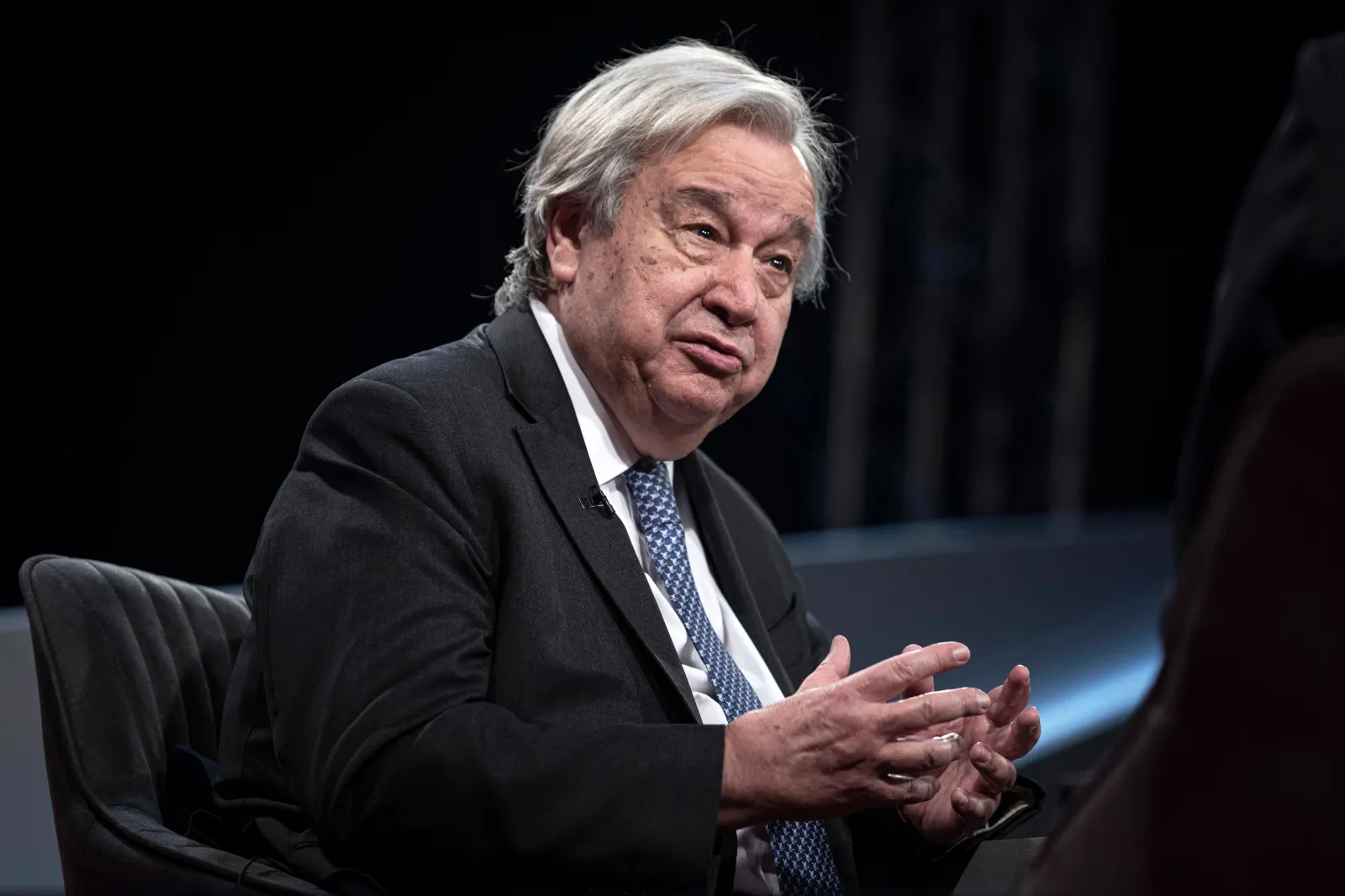
U.N. Secretary-General Antonio Guterres has characterized the American intervention as setting "a dangerous precedent." President Donald Trump announced Saturday that Washington would run Venezuela "until such time as we can do a safe, proper and judicious transition," though specifics of this plan remain unclear.
Why It Matters
In an early Saturday morning operation, the U.S. struck Caracas and captured Maduro and his wife, Cilia Flores, at Trump's direction. In an image shared by the president on Truth Social, Maduro was seen blindfolded, handcuffed, holding a water bottle and wearing a grey Nike sweatsuit while aboard the USS Iwo Jima.
Read More on News
Maduro, his wife, and his son have been formally indicted in the Southern District of New York, including on charges of narco-terrorism conspiracy, U.S. Attorney General Pam Bondi said.
Maduro had previously been indicted in March 2020 on "narco-terrorism" conspiracy charges in the same district, and in August 2025, the U.S. doubled its bounty to $50 million for information leading to his arrest. Maduro has denied any wrongdoing.
What To Know
Venezuela's U.N. Ambassador Samuel Moncada wrote to the Security Council Saturday, calling the action "a colonial war aimed at destroying our republican form of government." He accused the U.S. of violating the U.N. Charter, which prohibits members from using "the threat or use of force against the territorial integrity or political independence of any state."
The Trump administration has spent months targeting suspected drug trafficking vessels off Venezuela's coast and throughout Latin America's Pacific region. Last month, the U.S. intercepted two tankers carrying Venezuelan crude as part of an expanded blockade against vessels subject to American sanctions.
In October, the U.S. justified its actions as consistent with Article 51 of the U.N. Charter, which allows self-defense measures against armed attack and requires immediate notification to the Security Council.
What People Are Saying
Stephane Dujarric, U.N. Secretary-General Spokesperson: "The Secretary-General continues to emphasize the importance of full respect - by all - of international law, including the UN Charter. He's deeply concerned that the rules of international law have not been respected."
Samuel Moncada, Venezuela's U.N. Ambassador: "This is a colonial war aimed at destroying our republican form of government, freely chosen by our people, and at imposing a puppet government that allows the plundering of our natural resources, including the world's largest oil reserves."
Mike Waltz, U.S. Ambassador to the U.N.: "This is not regime change this is justice. Maduro was an indicted, illegitimate dictator that led a declared Narco-terrorism organization responsible for killing American citizens."
Speaking at a Mar-a-Lago press conference, President Donald Trump said: "[Venezuelans] suffered. So much was taken from them. They are not going to suffer anymore."
He added: "We’re going to run the country until such time as we can do a safe, proper and judicious transition. We don’t want to be involved with having someone else get in, and we have the same situation that we had for the last long period of years. So, we are going to run the country."
...
What Happens Next
The Security Council will convene Monday to address the crisis, with potential implications for international law and U.S. foreign policy.
Update 1/3/26, 6:57 p.m. ET: This article has been updated with additional information.
View 0 Comments
Submit Correction
View Editorial & AI Guidelines