...

By Ellie Cook
Senior Defense Reporter
0
Share
Newsweek is a Trust Project member
See more of our trusted coverage when you search.Prefer Newsweek on Googleto see more of our trusted coverage when you search.
It was mostly a hatred of working in the confines of the office that pushed him to be a military pilot, says Yakiv, one of the 10 Ukrainian trainees now within touching distance of finishing a rotation in the U.K. designed to prep them to fly F-16 fighter jets.
For Fedir, sitting next to Yakiv in the airbase in the east of England furnishing the Ukrainians with a first burst of flight training, the motivation came at a younger age.
"Oh, this is my future," he recalled thinking as a child. "I want to be a pilot."
Read More on World
Yakiv and Fedir are not their real names, which have been changed to shield their identities as Ukraine continues its 3-year-old war with Russia following the February 24, 2022, invasion. The two are among the handful of trainees on the cusp of completing the initial phase of NATO-hosted fast jet training, drilled into the 20-something Ukrainian recruits at an air force base in England's Midlands region. The base is not being named for security reasons.
...
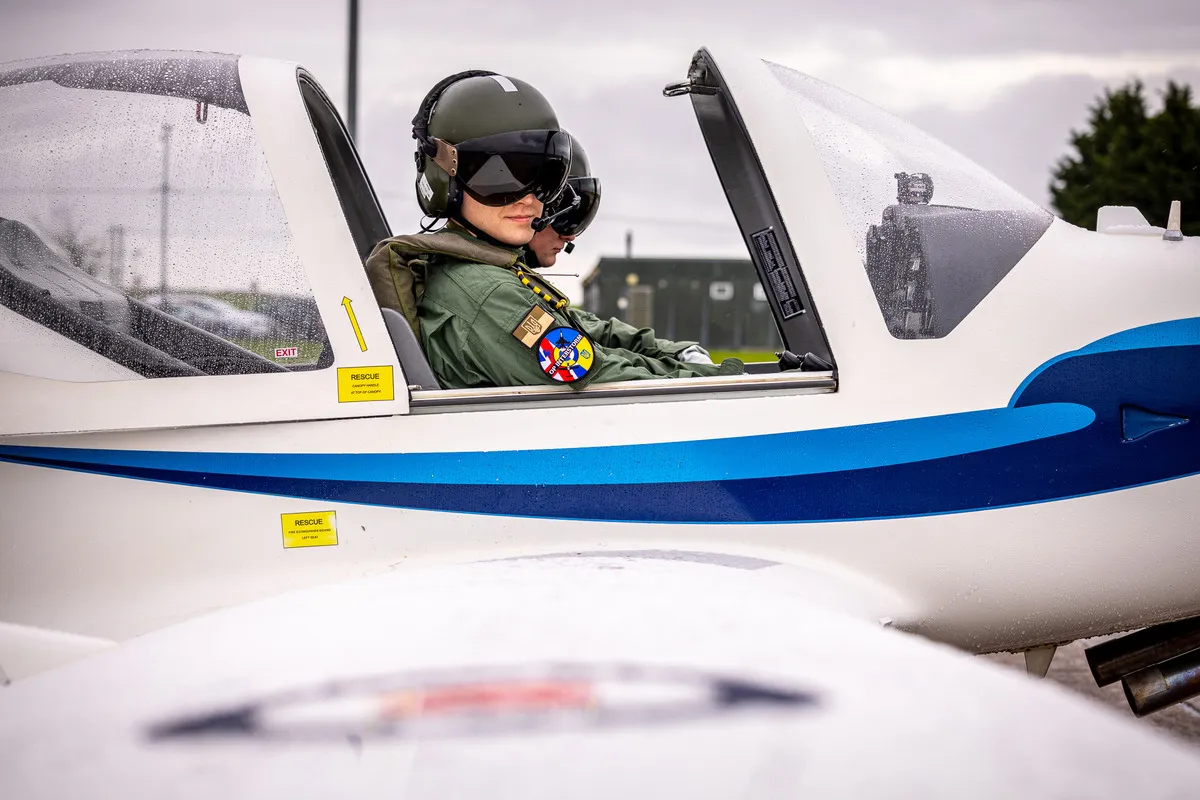
Part of the initiative dubbed Operation Interstorm, two dozen Ukrainian pilots destined to operate U.S.-made F-16s and French Mirage fighter jets have undergone intensive training in English-language skills, ground operations and the basics of flying in tiny, two-seater trainer aircraft in the U.K.
Like the groups before them, Fedir, Yakiv and their fellow trainees will soon head off for more advanced flying lessons. Past cohorts have trekked across to France to train on Alpha Jets, although Canada is set to take over this leg.
The final phase will get the pilots used to flying the Lockheed Martin-made F-16s.
Three of the young pilots, including Fedir and Yakiv, sit in one of the brightly lit rooms on the base, hot drinks in front of them, as they give resolved answers on what they could face by the time they finish their training. They have a certain grim acceptance for the possibility that they could find themselves in the cockpit of an F-16, flying within Russia's reach.
But for now, "our war is here," chimes in Ivan, another recruit who traveled from Ukraine for the first wave of instruction. "We are here, training."
The U.K. hasn't pledged to send jets to Ukraine and does not operate F-16s. Nor does the British military operate the Mirage 2000s that are now in Ukraine, courtesy of the French government.
Kyiv had clamored for F-16s for many, many months before the Western-made jets were first used by Ukraine in late summer 2024.
Yet despite the pomp that enveloped their unveiling, relatively little has been heard about the long-awaited jets. They were quickly put into defensive roles but have stayed under the radar, and there is a sticky sense that they simply came far too late to make a real difference to Ukraine's war effort.
They are certainly a high-profile target that Ukraine will jealously guard. Russia has publicly admitted it has dangled rewards over the heads of Moscow's troops as an incentive to shoot down the dozens of donated F-16s.
Kyiv is known to have lost at least one Danish-contributed F-16, and its famous pilot, Lieutenant Colonel Oleksiy Mes. Ukraine's air force said when the pilot was killed in late August that he died while "repelling a massive Russian combined air and missile attack." The Wall Street Journal reported earlier this month that "friendly fire likely was involved" in Mes' death, citing unnamed sources.
Mes did not train at the British facility, and none of those who have passed through the NATO training pipeline have yet flown in combat operations in Ukraine.

...
The first Ukrainian pilots arrived in the U.K. for English-language teaching in August 2023, trickling out of training in the U.K. in March last year. These pilots are now wrapping up their final stage F-16 training elsewhere.
When in Canada, the pilots will take to the skies in the L-39 jet trainers many will be familiar with from their experiences in Ukraine, before moving on to the F-16s.
The three stages take roughly 18 months—about a year shorter than comparable training regimens for Britain's Royal Air Force. Cutting the time any further would likely raise serious concerns about whether the pilots are prepared enough for combat operations.
The British air force base is able to train 20 Ukrainian pilots in this first stage each year, and cannot accommodate any more. Ukrainian officials have previously accused the U.S., one of the other countries training Ukrainian pilots, of dragging their feet over training.
More Ukrainian personnel are sent to the U.K. for English-language training than are selected for fast jet training. Britain's embassy in Kyiv said at the start of 2025 that the U.K. had trained 200 Ukrainian flight personnel—not just fast jet pilots—in skills like ground operations and boosting English fluency, the latter one of the biggest hurdles for the trainee pilots to overcome.
The British chunk of training takes the recruits back to basics, starting from scratch. Old habits ingrained during flight training in Ukraine are hard to break, Yakiv admits.
While the two dozen pilots trained so far have had flying experience back in Ukraine, future cohorts making the journey to the U.K. for training in eastern England will not.
Ukraine has not yet received all of the pledged F-16s, and the total number of promised jets falls far short of what Kyiv has said it needs.
View 0 Comments
Submit Correction
View Editorial & AI Guidelines