...


By Frances Mao and Jesus Mesa
0
Share
Newsweek is a Trust Project member
See more of our trusted coverage when you search.Prefer Newsweek on Googleto see more of our trusted coverage when you search.
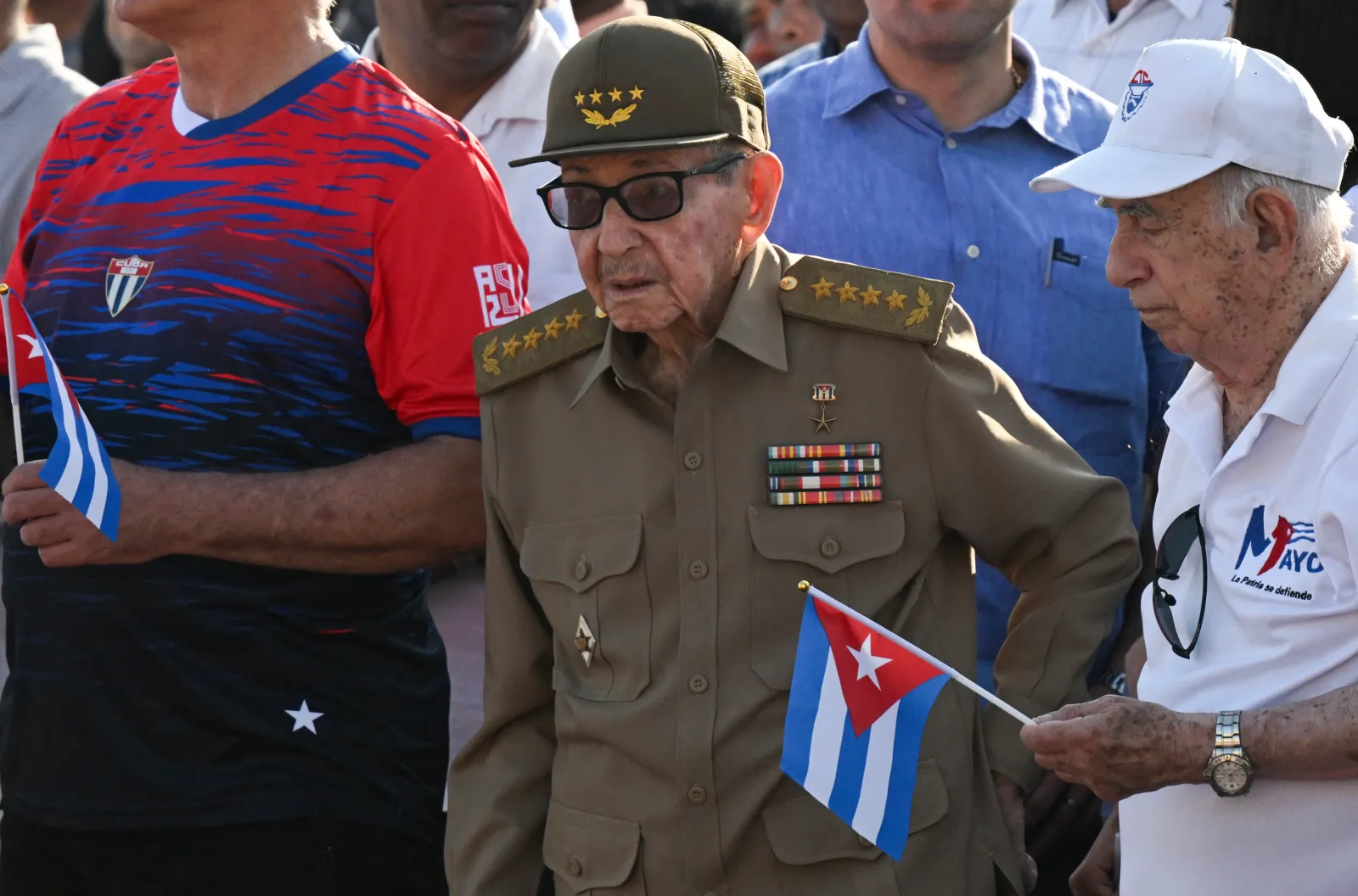
The United States has brought criminal charges against the former Cuban President Raúl Castro on Wednesday, following months of Trump administration pressure on Havana, bringing long-dormant charges related to the 1996 shoot-down of two civilian planes that killed four people.
Castro, 94, who led Cuba from 2008 to 2018, remains one of the island's most powerful figures. While the U.S. has formally charged him, it lacks the jurisdictional power to arrest him in Cuba.
Justice Department officials said Castro, then serving as defense minister, allegedly ordered the attack on Brothers to the Rescue, a Miami-based Cuban exile group conducting humanitarian rescue missions. Federal prosecutors in Miami first drafted the indictment in the 1990s following the incident, which hardened U.S.-Cuba relations and prompted Congress to strengthen the embargo.
Read More on Politics
The indictment arrives as the Trump administration escalates pressure on Cuba's government through economic blockade and military threats, with Secretary of State Marco Rubio offering $100 million in aid directly to the Cuban people on Cuban Independence Day.
What Happened and Why Is Raúl Castro Being Charged?
On February 24, 1996, Cuban MiG fighter jets shot down two small Cessna aircraft operated by Brothers to the Rescue, a Miami-based group of Cuban exiles. The planes were on a humanitarian mission searching for Cubans fleeing the island on rafts. Four people died in the attack: three Americans and one Cuban American.
Cuba argued the shootdown was justified. The island said the planes had repeatedly violated Cuban airspace more than 25 times between 1994 and 1996, and that it had formally notified the U.S. State Department, the Federal Aviation Administration, and the International Civil Aviation Organization about each violation. The U.S. countered that the planes were conducting a legitimate rescue mission in international waters.
...
The incident escalated tensions between Washington and Havana and prompted Congress to strengthen the embargo. Raúl Castro, defense minister at the time, now faces indictment for allegedly ordering the attack.
What Cuba Says About The Airspace Incident
Cuba's embassy disputed the indictment, saying the 1996 shootdown was not unprovoked but a response to repeated violations of Cuban airspace. Between 1994 and 1996, more than 25 territorial violations occurred, the embassy said, and Cuba formally denounced each one to the U.S. State Department, the Federal Aviation Administration, and the International Civil Aviation Organization.
"Were diplomatic and institutional channels exhausted before tensions escalated in the airspace?" the embassy said on social media. "Yes, rigorously and repeatedly. Each of the more than 25 territorial violations that occurred between 1994 and 1996 was formally denounced in writing. No one can claim ignorance."
Is Trump Going To Invade Cuba?
Reacting to the indictment, President Donald Trump said in a statement Wednesday, "America will not tolerate a rogue state harboring hostile foreign military, intelligence and terror operations just ninety miles from the American homeland."
Trump has not ruled out military action in recent months to "take over" the Communist island, while Rubio has called for systemic change in Cuba's government.
Since March, the U.S. has suggested it could seize a "weakened" Cuba after taking control of Venezuela's oil exports, on which the island had become dependent. That shortage has triggered cascading crises across the island: businesses, schools and public transport have shut down, and most essential services have ceased operating.
Hospitals now run on backup generators. In Havana, most residents have less than an hour of electricity per day as nationwide blackouts continue.
Cuban Invasion Response
The Cuban government has also warned it would fight back against any U.S. military action taken against it, with President Miguel Diaz-Canel last month telling Newsweek in Havana the country was prepared for war.
On Monday, he again warned that any U.S. invasion would lead to "bloodshed". U.S. intelligence officials told Axios that Cuba has acquired at least 300 attack drones from Russia and China in recent months.
Marco Rubio's Message on Cuba's Independence Day
Earlier on Wednesday, Secretary of State Marco Rubio released a video message directed at the Cuban people, offering them a "new relationship" with the US and $100 million in aid.
He argued the country was not suffering "22-hour blackouts" because of the U.S. blockade but because of the decades-long mismanagement and corruption of the Cuban government.
Rubio, the son of Cuban migrants who moved to the U.S. before the Communist Revolution, delivered the five-minute message in Spanish, in which he heavily criticized the Cuban government's state corporation, GAESA, which runs many enterprises on the island.
Who is Raúl Castro?
Raúl Castro is a key Cuban revolutionary leader who helped his brother Fidel sweep the U.S-backed military dictator Fulgencio Batista from power in the rebel guerrilla war in 1959.
Upon the establishment of the successful Revolution, he helped serve as Defense Minister for several decades and was a leading government figure while the new Communist government re-nationalized institutions and set about instating policies of universal healthcare, education and providing subsidized housing and jobs.
When Fidel stepped down as leader in 2011, Raúl took over as president and, following his brother's death, negotiated a period of rapprochement and some reforms with the then Obama administration.
That period saw Cuba emerge from its diplomatic isolation and the U.S. relaunch commercial flights to Cuba for the first time in 50 years.
Economic Collapse and Military Preparation
The backdrop to Rubio's appeal is an island economy in acute distress. Electricity is available for only two hours per day in some parts of Cuba. Food is scarce. The Trump administration has effectively imposed a blockade on the island by threatening sanctions on countries supplying it with fuel, triggering widespread power outages and deepening an already fragile economic situation.
President Trump has been seeking regime change in Cuba, where communists have been in charge since Raúl Castro's late brother, Fidel Castro, led a revolution in 1959. Trump said in March that Cuba "is next" following Maduro's capture and has repeatedly signaled that the fall of the Cuban government is an achievable objective.
Cuban officials have begun preparing for the possibility of military confrontation. U.S. intelligence officials told Axios that Cuba has acquired at least 300 attack drones from Russia and China in recent months. The Cuban government has also said it would prepare a "bloodbath" response should the United States attempt a military intervention.
How Cubans Are Coping With Daily Darkness
Cubans have endured daily blackouts since the start of the year after Trump cut off Venezuelan oil and threatened tariffs against countries like Mexico that once supplied oil to Cuba.
Last month, a Russian tanker carrying oil supplies reached the island for the first time in several months, providing temporary relief. Cubans received a few additional hours of electricity per day, up to six hours in some areas of Havana.
Trump called it a humanitarian gesture. The UN has criticized the U.S. blockade, saying it is causing a humanitarian crisis on the island.
But as those supplies ran out last week, Cubans took to darkened streets at night, banging pots and pans in peaceful protests known as cacerolazos.

...
One Havana resident told Newsweek the demonstrations had grown, particularly among families and vulnerable women with children. Power outages now stretched 24 to 48 hours without electricity, they said, far too long to recharge devices or preserve food.
Wealthier families have adapted by installing solar lights, fans and battery-powered devices. But most Cubans remain under strain, though not yet in panic.
Rising May temperatures and humidity have intensified the crisis. Air conditioning units sit idle, and the heat compounds daily hardship.
"Blackouts are as bad as they were at the beginning of the year," one resident told Newsweek on condition of anonymity. "The grid collapse feels familiar. But the heat is different. It's unbearably hot. It makes people miserable and desperate, just wanting to blame someone to get a fan back on."
View 0 Comments
Submit Correction
View Editorial & AI Guidelines