...

By Billal Rahman
Immigration Reporter
0
Share
Newsweek is a Trust Project member
See more of our trusted coverage when you search.Prefer Newsweek on Googleto see more of our trusted coverage when you search.
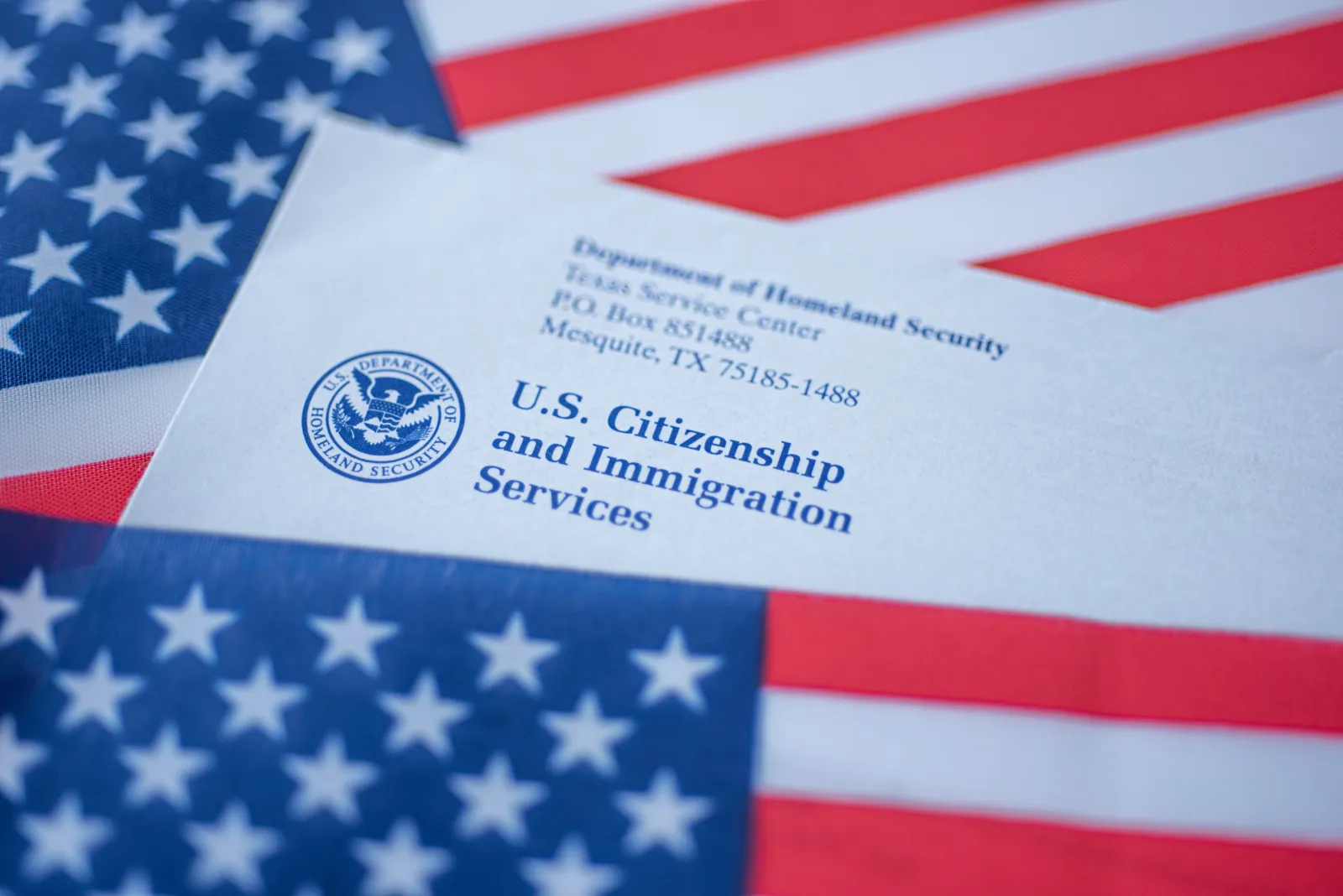
Certain immigration-related fees will increase in 2026 to account for inflation, U.S. Citizenship and Immigration Services (USCIS) announced Thursday.
The fees will affect several forms tied to asylum, work permits and temporary protected status (TPS), according to a USCIS news release. The changes are being made under the One Big Beautiful Bill Act.
"Any immigration benefit request postmarked on or after January 1, 2026 without the proper filing fee will be rejected," USCIS wrote in a Federal Register filing.
Read More on News
Why It Matters
USCIS, a component of the Department of Homeland Security (DHS), is responsible for administering the nation’s immigration and naturalization system. The agency processes applications for citizenship, permanent residency, asylum, work authorization and other immigration benefits. Under the Trump administration, USCIS has slapped additional fees on initial and renewal applications for employment authorization, TPS, asylum filings, parole-related applications and certain special immigrant petitions, increasing the overall cost for applicants.
...
What To Know
The annual asylum application fee, currently stayed via court order, will rise from $100 to $102, according to USCIS. Employment authorization documents (EADs) for initial asylum applicants and initial parole applicants will increase from $550 to $560.
Renewal or extension of parole EADs will go from $275 to $280, and initial TPS EADs will rise from $550 to $560, with renewals or extensions increasing from $275 to $280. Re-parole EADs filed under Form I-131, Part 9, will also increase from $275 to $280.
The application fee for TPS (Form I-821) will climb from $500 to $510.
Some fees will remain unchanged under the notice. The initial asylum application fee (Form I-589) stays at $100, the renewal or extension of asylum applicant EAD remains $275, and the Special Immigrant Juvenile Fee (Form I-360) continues at $250.
DHS has indicated that future Federal Register notices will provide updates on the inflationary adjustment for the immigration parole fee.
USCIS wrote in a post on X that DHS will "continue to adjust these fees for inflation each fiscal year."
Attorney Abhinav Tripathi told Newsweek that "the impact is meaningful for the people involved."
Since President Donald Trump took office in January 2025, his administration has implemented a series of changes that have reshaped how USCIS operates. The agency has been directed to enforce stricter vetting measures, including a new screening for "anti-Americanism."
The White House has issued executive orders altering admission and citizenship priorities, focusing on South Africans. The administration will slash refugee admissions to 7,500 for the 2026 fiscal year. DHS moved to expand USCIS’s authorities by creating armed "special agents" with powers to execute warrants, make arrests and carry firearms under new changes.
The agency has also reinstated more intrusive background measures, including the return of neighborhood and workplace checks for some naturalization applicants, and ended certain benefit extensions, such as the automatic extension for employment authorization documents.
Meanwhile, USCIS is rolling back steep fee hikes for the EB-5 immigrant investor visa program after a Colorado judge ruled the increases were unlawful. The EB-5 visa allows immigrants to gain permanent residency by investing in U.S. job-creating businesses, often through regional centers.
Fees will revert to previous levels: the I-526 form drops from more than $11,000 to $3,675, petitions to remove residency conditions from more than $9,500 to $3,750, and regional center applications from nearly $48,000 to $17,795.
What People Are Saying
Attorney Abhinav Tripathi told Newsweek: "These are predictable inflation updates, but they fall squarely on communities with the least financial stability. Many asylum seekers and parole applicants arrive with limited resources and are trying to secure the right to work and rebuild their lives. A $10 or $20 rise may appear modest, yet for someone choosing between filing a form or paying rent, it can alter timing and access. The increases are marginal, but the circumstances of those affected are anything but."
U.S. Citizenship and Immigration Services said on X that it has "issued a Federal Register notice to increase certain immigration-related fees we charge as mandated by the One Big Beautiful Bill."
What Happens Next
U.S. Citizenship and Immigration Services urges applicants to verify the correct fee amount when submitting applications to avoid delays in processing. The fees go into effect on January 1, 2026.
Update 11/21/25, 10:27 a.m. ET: This story was updated with comment from Abhinav Tripathi.
View 0 Comments
Submit Correction
View Editorial & AI Guidelines