10
Loading video...

By Jenni Fink
Senior Editor
0
Share
Newsweek is a Trust Project member
See more of our trusted coverage when you search.Prefer Newsweek on Googleto see more of our trusted coverage when you search.
Utah Judge Tony Graf reversed an earlier decision excluding a modified video from evidence in the murder case against Tyler Robinson, the man accused of assassinating conservative commentator Charlie Kirk, while simultaneously ruling that the footage should remain shielded from public viewing because it has not been adequately redacted.
During the hearing, which prosecutors hope will convince a judge to allow the case to proceed to trial, prosecutors and the defense have been arguing over what should be admitted as evidence and what should be made public to the media. Defense attorneys argue that there's media bias against their client, Robinson, and that much of the evidence should be kept hidden from potential jurors. Robinson has not entered a plea yet and won't until after the judge rules the case can go to trial.
Prosecutors are seeking the death penalty against Robinson, who faces aggravated murder and other charges in connection with the death of Kirk in September 2025.
Read More on News
What Did the Judge Rule in the Tyler Robinson Case
One dispute centered on a compilation of video evidence assembled from multiple camera angles. Prosecutors sought to introduce videos depicting the shooting and its immediate aftermath. Some versions of the footage had been altered or edited to combine viewpoints and enhance visibility of events surrounding the attack, including a zoomed-in version.
Prosecutors argued that zooming into the video makes the events of the video easier to see for both the judge and the public.
"Unless you have very, very good vision or you've zoomed in on that monitor you can't really see what Agent Hull has just described," the prosecutor said. "We believe that it's helpful to see it up close."
Defense attorney Kathryn Nester told the judge that the defense once again argued the video being publicized put Robinson's ability to get a fair trial at risk and asked that the judge "stand by your previous ruling on that."
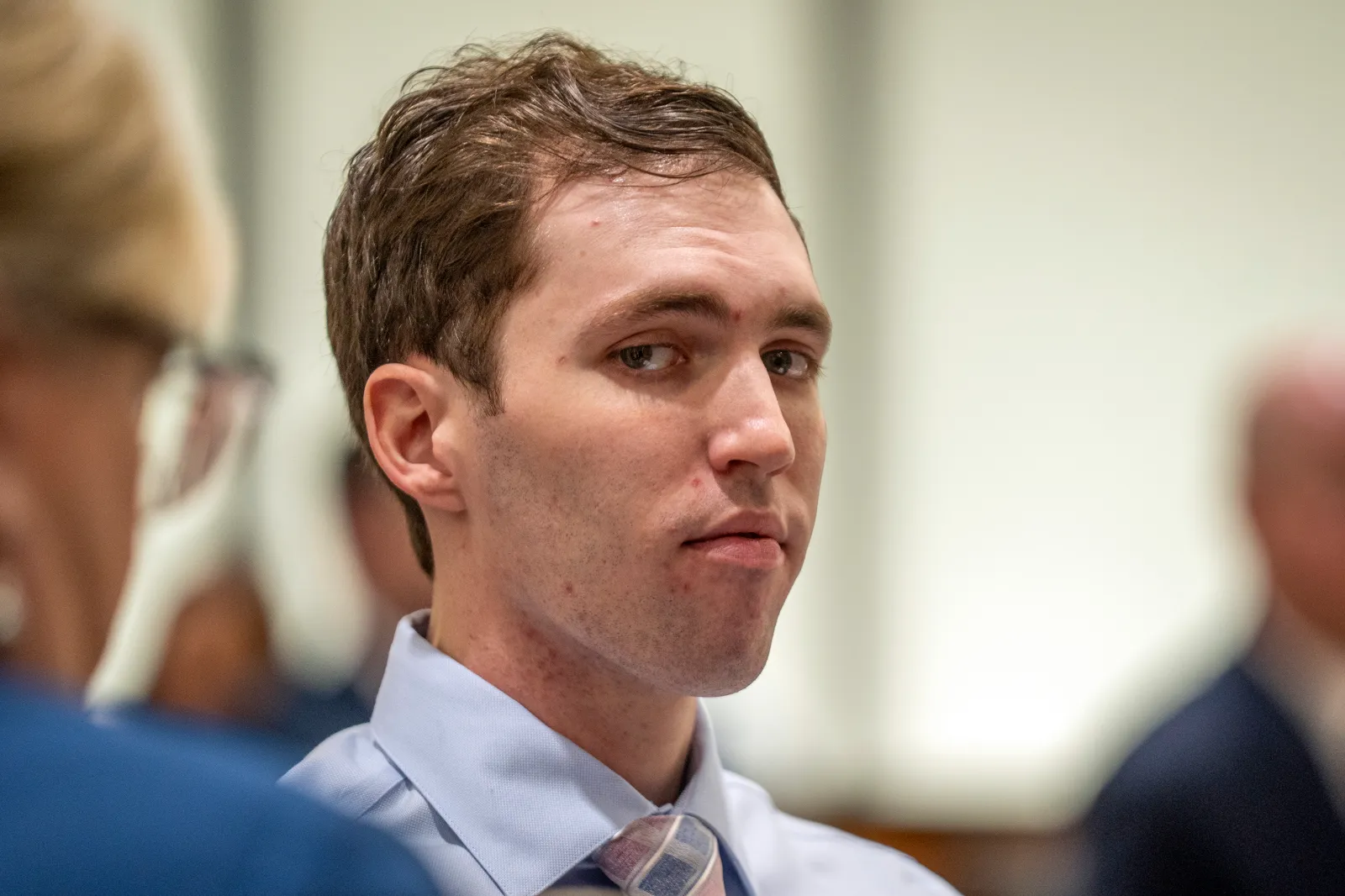
...
Graf initially excluded the modified footage over evidentiary concerns before later deciding it could be admitted for purposes of the hearing. However, he drew a separate distinction regarding public access and said that the video would not be played on courtroom monitors, thereby blocking media and hearing attendees from seeing it.
"There is nothing on this video from what's been represented that the public has not already seen," Graf said. "In balancing the constitutional rights of all parties I'll view it on the monitor ... but it will not be broadcast in the court room or by the video camera."
As a result, the video was provided to the court and defense attorneys but was not displayed to the media watching the proceedings. Videos assembled by Turning Point USA showing different angles of the shooting were entered into evidence even though they were not publicly shown in court.
The preliminary hearing, which began this week in Provo, Utah, is intended to determine whether prosecutors have presented enough evidence for the case to proceed to trial. The standard is far lower than proving guilt beyond a reasonable doubt. Graf's role at this stage is to decide whether sufficient evidence exists to bind Robinson over for trial.
Tyler Robinson Trial Updates
The first days of testimony have provided the public's most detailed look yet at prosecutors' case against Robinson.
Investigators testified that Robinson was present on the Utah Valley University campus multiple times on the day of the shooting. Utah State Bureau of Investigation Agent David Hull told the court that surveillance footage showed Robinson visiting the campus repeatedly before and after the attack. Authorities tracked his movements using campus video and information connected to his vehicle, a silver Dodge Challenger.
One of the videos appeared to show Robinson limping before the shooting and walking normally afterward. Prosecutors argued that the limp was due to a rifle being in his pants, which he allegedly got rid of after the shooting.
While the most sensitive footage was withheld from public display, Graf reviewed at least some of the material directly. Reports from inside the courtroom noted that the judge visibly flinched while watching footage that appeared to depict the fatal shooting on the first day.
Erika Kirk, Charlie's widow, attended the hearing on both days, alongside Charlie's parents and first son Donald Trump Jr. Charlie's parents left the hearing at times when particularly graphic footage was played or discussed.
Additional evidence expected during the hearing includes autopsy findings, surveillance footage, law-enforcement records, DNA evidence and statements from Robinson's former roommate. Prosecutors have argued that physical and forensic evidence ties Robinson to the rifle investigators believe was used in the shooting.
The preliminary hearing comes less than two weeks after Graf issued another significant ruling in the case. On June 26, he found prosecutor Christopher Ballard in contempt for violating a court order governing public comments about the case. However, Graf rejected a defense request to remove the death penalty as a possible punishment, describing such a sanction as disproportionate.
That decision allowed prosecutors to continue pursuing capital punishment if Robinson is ultimately convicted.
At the beginning of the hearing, Graf specifically called out Erika Kirk, welcoming her to the courtroom. While she has been at the center of the case because of her marriage to Charlie, Graf acknowledged her presence because she is the victim representative. Neama Rahmani, a former federal prosecutor, told Newsweek that a victim representative is the statutory equivalent of the victim if a victim has been killed or is otherwise unavailable to attend the trial.
"In every state, including Utah, victims have rights in criminal proceedings," Rahmani said. "The most important rights are the right to be informed of court dates and major developments and to address the court at sentencing."
Charlie Kirk Shooting Timeline, According to New Evidence
Prosecutors' evidence has helped further flesh out the timeline surrounding the September 10 shooting.
New testimony introduced during the preliminary hearing suggests Robinson visited the campus multiple times throughout the day. Investigators testified that surveillance video placed him at the university before the shooting, getting food at Chick-fil-A and talking to TPUSA representatives. He was also allegedly on campus during the time frame of the attack and returned later that evening. Prosecutors argue those movements reinforce their theory that Robinson planned and executed the shooting before returning to the area afterward.
According to charging documents and testimony presented so far, surveillance cameras captured the suspected gunman arriving on the Utah Valley University campus shortly before noon. Kirk was hosting one of his signature public events in the school's Fountain Courtyard.
At approximately 12:20 p.m., while taking questions from audience members, Kirk was struck by a single gunshot allegedly fired from a distant rooftop. A university police officer radioed that "Charlie Kirk is down" at approximately 12:23 p.m. Emergency responders rushed Kirk to a hospital, but he later died from his injuries.
Charging documents allege Robinson later took steps to conceal evidence, including hiding the rifle and disposing of clothing worn during the attack. Prosecutors have also accused him of attempting to influence a roommate by encouraging the deletion of potentially incriminating communications.
Authorities arrested Robinson after a statewide manhunt. He now faces charges including aggravated murder, felony discharge of a firearm, obstruction of justice and witness tampering. Prosecutors have also alleged that Kirk was targeted because of his political expression.
Who Is Judge Tony Graf?
Graf serves on Utah's Fourth District Court and has overseen the Robinson case since shortly after charges were filed.
Graf was appointed to the court in 2025 after building a lengthy career as a prosecutor and legal educator. He previously worked as a deputy district attorney in Salt Lake County and later as a deputy county attorney in Davis County, where he handled serious criminal matters, including cases involving abuse and violence.
His résumé also includes work as a Special Assistant U.S. Attorney, service on legal advisory committees and involvement in statewide prosecutor training programs. He holds degrees from the University of Utah and Weber State University.
Throughout the Robinson proceedings, Graf has repeatedly found himself at the center of contentious disputes involving media access, evidentiary issues and the scope of potential punishment. He has rejected efforts to remove prosecutors from the case, denied attempts to eliminate the death penalty as a sentencing option, allowed cameras in the courtroom and now has ruled on the admissibility of the disputed video evidence.
By permitting the footage to be entered into evidence while preventing public display, Graf has attempted to chart a middle course between transparency and the court's obligation to manage potentially prejudicial or graphic material. Whether the evidence ultimately plays a major role in moving the case toward trial could become clearer as the preliminary hearing continues.
Contact Newsweek editors on this story: Gray R. Thomas
View 0 Comments
Submit Correction
View Editorial & AI Guidelines