
By Katherine Fung
Senior Writer
0
Share
Newsweek is a Trust Project member
See more of our trusted coverage when you search.Prefer Newsweek on Googleto see more of our trusted coverage when you search.
Aslı Akyavaş Pamuk remembers when Turkey was still thought of as “sun, sea, sand.”
The year was 2005 and Anadolu Medical Center Hospital had just become operational in Gebze. Health tourists traveled to Turkey for hair transplants and thermal hot springs, sometimes dental treatments or in vitro fertilization. But Anadolu had bigger dreams.
“The hospital had a vision to become a center for excellence in oncology and cancer treatment, not only in Turkey but [among] neighboring countries as well,” Akyavaş Pamuk, Anadolu’s director of international services, told Newsweek.
Read More on Health Care
Two decades later, that vision became a reality when the Turkish hospital was recognized by Newsweek and Statista as one of the top 250 World’s Best Hospitals 2026 and the third best hospital in the country.
“This recognition is especially meaningful to us, as it reflects our long-standing commitment to quality, safety, and international standards of care,” Akyavaş Pamuk said.
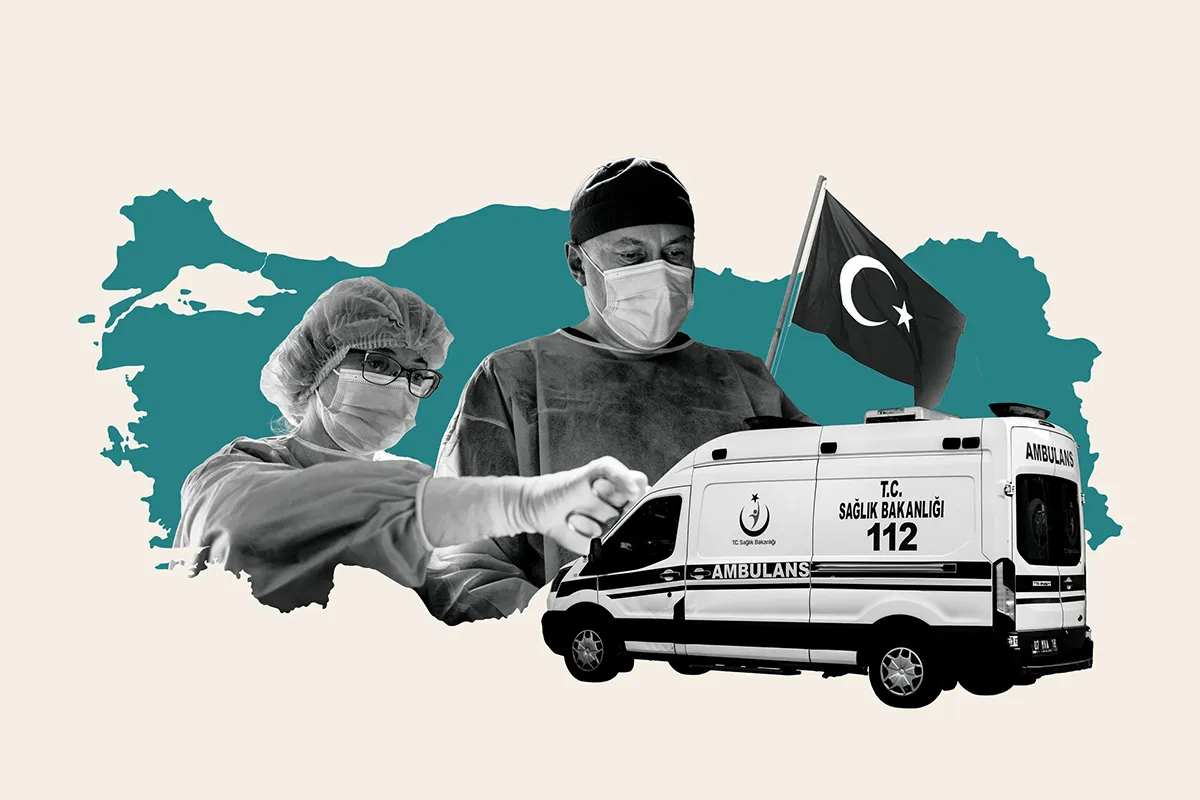
This is the first year that Turkey has been included in the ranking, an addition that was made to further expand the ranking’s global coverage and to provide readers with the most comprehensive overview possible. In recent years, Turkey has become a leading destination for medical tourism, with visitor numbers surging over 168 percent between 2021 and 2023, according to the Turkish Statistical Institute.
In an interview with Newsweek, the Acıbadem Healthcare Group, the No. 4 hospital in Turkey, said that it expects the country’s role to grow significantly over the next decade.
“What distinguishes Türkiye is the combination of highly trained physicians, modern hospital infrastructure, advanced medical technologies and geographic accessibility between Europe, Asia and the Middle East,” Deniz Şentop, Acıbadem’s director of international marketing and communications, said.
Acıbadem began welcoming international patients in the early 2000s. But what began as organic international demand and market opportunity quickly evolved into a strategic system-wide operational upgrade.
The influx of medical tourism—and the global dollars accompanying those patients—has fueled major investments in medical innovation, patient-centered services and international recognition for Turkey. Revenue generated from international patients has enabled hospitals to invest in advanced technologies, recruit highly specialized physicians, expand research programs and upgrade clinical infrastructure.
These improvements have, in turn, helped Turkey build global trust. With over 35 Joint Commission International (JCI) accredited hospitals, Turkey has one of the highest number of JCI accreditations. Pursuing these recognitions encourages health care institutions to rigorously improve clinical protocols, adhere to strict patient safety standards and commit to high quality of care.
“International patients come with higher expectations,” Akyavaş Pamuk said. “So, you have to raise your quality credentials, and you have to align with international standards.”
They also expect speed. So, Turkish hospitals have been pushed to find quicker and more efficient ways to deliver care. At Anadolu, that has translated into reduced wait times, simplified admission and discharge processes and streamlined workflows that allow different treatments to occur under the same roof.
All of this has culminated into a virtuous cycle.
“The ability to invest in the latest medical technology attracts more complex international cases, which in turn strengthens the institution’s expertise and global reputation,” Şentop explained.
The money coming into Turkey’s hospitals has enabled those institutions to accelerate the development of specialized centers of excellence in areas like oncology, organ transplantation, robotic surgery and advanced radiotherapy. While international patients represent a relatively small portion of total patient volume at Acıbadem, Şentop said the economic value generated by these patients "ultimately benefits all patients—both domestic and international.”
The patient makeup is similar at Anadolu, where Turkish patients account for 90 percent of all patients and about 70 percent of all cancer patients.
At both hospitals, the largest patient flows have come from the Balkans, Eastern Europe, the Middle East and North Africa. Bulgaria continues to rank as the leading country in patient volume at Anadolu, which is also a popular destination for patients from Romania, Georgia, Uzbekistan, Azerbaijan, Kazakhstan and Russia. The hospital treats approximately 10,000 international patients annually.
In recent years, however, Acıbadem and Anadolu have both seen increasing demand from Western Europe, the United Kingdom and North America. As health care costs in the U.S. continue to skyrocket, Akyavaş Pamuk anticipates that there will be more American patients traveling to Turkey in the coming years.
Although cost efficiency is often mentioned as a motivating factor, Şentop said it's rarely the primary reason for many foreign patients.
“In our experience, international patients primarily choose Türkiye because of medical expertise, advanced technology, and the ability to receive treatment without long waiting periods. In many healthcare systems, patients may wait months or even years for certain procedures,” he said.
For all that Turkey has to offer international patients, Akyavaş Pamuk credits the years of patient trust that its hospitals have built over time. Anadolu, for example, never had a large marketing budget. The model that it’s run on since its inception was “happy patient referring another patient,” Akyavaş Pamuk said.
“There was a cultural shift from physician-oriented care to patient-centered care,” she explained. “This took 20 years. It was one hell of a ride, and it was very difficult, but [our] teams led the way. They had to drive the business. They really had to be resilient. That’s what made the difference.”
View 0 Comments
Submit Correction
View Editorial & AI Guidelines