
...

By Jesus Mesa
Reporter
0
Share
Newsweek is a Trust Project member
See more of our trusted coverage when you search.Prefer Newsweek on Googleto see more of our trusted coverage when you search.
Iowa Democrats face a major choice one week before their primary, as State Representative Josh Turek and State Senator Zach Wahls compete for the chance to face Republican Representative Ashley Hinson in November for an open Senate seat in a state that has voted Republican in every presidential election since 2012.
The race is not defined by a traditional ideological divide. Both candidates support progressive economic policies and reject centrist compromises. Instead, the primary has become more of a debate over strategy, whether Democrats are better served by a candidate who has already won in conservative territory, or by one who believes strong turnout and an unapologetically progressive message can energize the Democratic base.
Who Is Josh Turek? Iowa Democrat Running on Electability in Trump-Won Districts
Turek, a two-term state representative from Council Bluffs, has centered his campaign on electability in Republican-leaning areas. A four-time Paralympian and two-time gold medalist in wheelchair basketball, Turek won his statehouse seat in 2022 by six votes in a district Trump carried three times.
Read More on Politics
He has framed that victory as evidence he can compete for swing voters in a state that has moved steadily toward Republicans over the last decade.

...
"I've been an underdog my whole entire life, in every single aspect," Turek said when launching his Senate campaign. "But I know that Iowa loves an underdog."
Turek’s message focuses heavily on economic concerns, including health care costs, housing prices, prescription drug expenses and costs facing farmers and small businesses.
He has received support from several prominent Iowa Democrats, including former Attorney General Tom Miller, former Lt. Gov. Sally Pederson and state Rep. J.D. Scholten, who ended his own Senate campaign to endorse him.
Turek has also secured backing from labor groups, including Heat and Frost Insulators Local 39 in Council Bluffs and Omaha.
Who Is Zach Wahls? Progressive Iowa Democrat Backed by Labor Unions
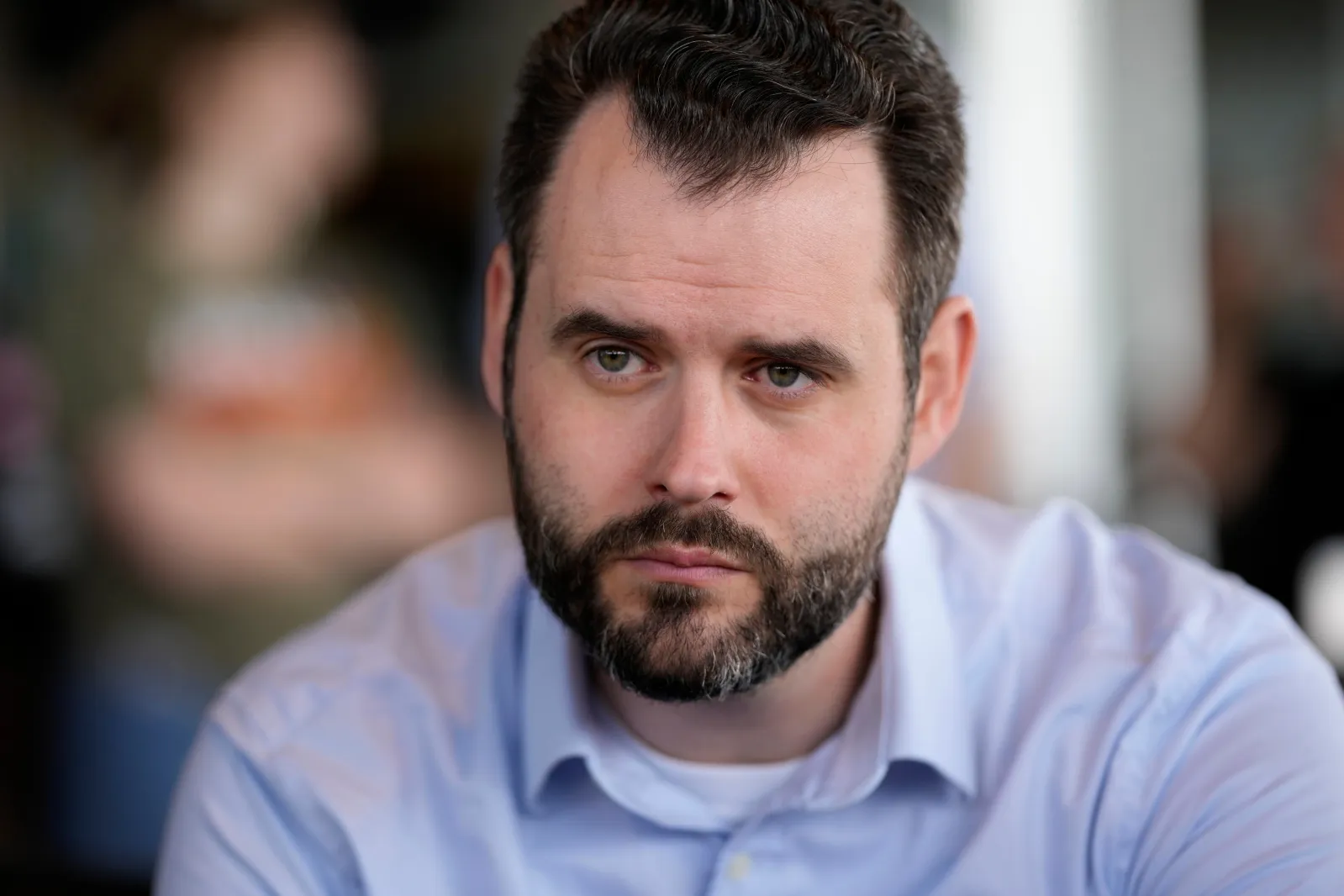
Wahls, a state senator from Coralville and former Iowa Senate minority leader, has positioned himself as the more openly progressive candidate in the race, arguing that Democrats can compete statewide by energizing working-class and labor voters.
He has focused his campaign on economic inequality and Democratic turnout, saying many Iowa voters feel left behind despite working harder than ever.
"We have an economy that is working great for the billionaires, great for the big corporations, but so many working class, middle class, retired Iowans are really struggling to keep up," Wahls said during a local interview.
...
Wahls has received endorsements from several labor unions, including Teamsters Local 90, United Food and Commercial Workers Local 1846, Communications Workers of America Local 7110 and Ironworkers locals across the state.
He has also drawn support from national progressive figures, including former Missouri Secretary of State Jason Kander.
During the campaign, Wahls has highlighted his experience leading Senate Democrats in Iowa while also calling for generational change within the Democratic Party.
The Central Question
Dave Peterson, Lucken Professor of Political Science at Iowa State University, told Newsweek electability "does seem to be the biggest factor in the race so far," but that both Democrats have been running effective campaigns.
The Democratic primary boils down to a single calculation. Does electability in Trump country require a candidate who can point to wins in conservative territory, or does it require a candidate who can mobilize Democratic voters with an unfiltered progressive message?
Turek's argument is straightforward. He won in a district that Trump carried decisively. That track record, he says, proves he can appeal to independent voters and persuade Republicans to cross over.
Wahls's argument is different. If Democrats turn out at high levels, he contends, they win. His backing from labor unions reflects his belief that energizing the base and pushing hard on economic issues will drive sufficient turnout to overcome Iowa's rightward drift.
The Des Moines Register reported that Turek "casts a more moderate image that his supporters believe will appeal to independents and disaffected Republicans." Yet Turek does not campaign as a moderate. He campaigns on working-class issues and farmer advocacy. He simply says his district proves he can win.
Ashley Hinson and the Republican Side
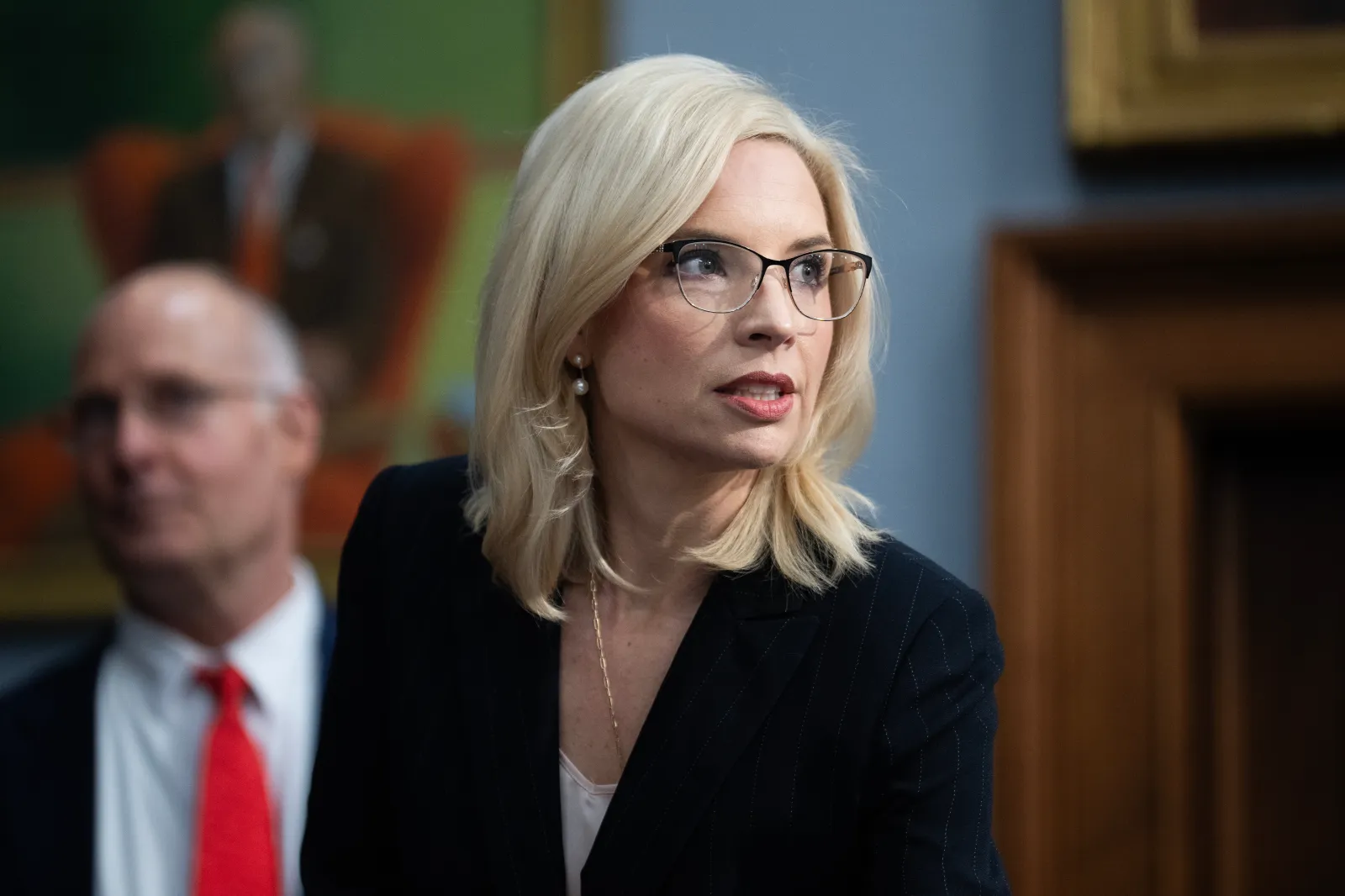
Hinson, a former television news anchor in her third term in Congress, has consolidated Republican support with speed.
She received President Donald Trump's endorsement shortly after announcing her campaign. Trump posted on Truth Social: "I know Ashley well, and she is a WINNER. A Loving Wife and Proud Mother of two sons, Ashley is a wonderful person, has ALWAYS delivered for Iowa, and will continue doing so in the United States Senate."
Hinson said she is "running to be President Trump's top ally in the United States Senate." She emphasized her support for strong border security, tax cuts and restrictions on transgender athletes in girls sports.
...
She also received early endorsements from Senate Majority Leader John Thune and the National Republican Senatorial Committee, which moved quickly to consolidate party support behind her.
Hinson faces a primary challenge from former State Senator Jim Carlin, who has positioned himself as even more loyal to Trump. But political observers say Hinson has locked down establishment support and holds the advantage.
One Iowa Republican operative noted that both Hinson and Carlin are aligned with Trump's movement. Yet Hinson's quick consolidation of establishment endorsements has given her a commanding position heading into June 2.
The Polling Picture
Public Policy Polling released a survey on May 21 showing Turek has opened a commanding lead over Wahls in the Democratic primary.
Turek leads 52-31, according to PPP's survey of 672 likely Democratic primary voters conducted May 20-21. The margin of error is plus or minus 3.8 percent.
Turek's appeal with primary voters is broad. Sixty-eight percent rate him favorably to only 6 percent with a negative view. Wahls is broadly well liked too, with 60 percent holding a positive opinion and just 10 percent unfavorable.
But among voters who like both candidates, Turek has the advantage. He leads 56-33 with that group.
Turek's lead is especially commanding among early voters. He leads 65-29 among those who have already returned their ballots. He is particularly strong with seniors, leading 61-23 in that demographic.
Tom Jensen, PPP's founder, wrote in the poll memo that Turek "took a substantial lead in April as voters became more familiar with him, and with less than two weeks to go there's not much evidence of that advantage receding."
Prediction markets reflect the same dynamic. On Kalshi, Turek has a 92.5 percent chance of winning the Democratic primary. On Polymarket, he has 93 percent.
In the general election matchup, prediction markets consistently favor Republicans. On Kalshi, Republicans have a 61 percent chance of holding the seat. On Polymarket, they have a 62 percent chance.
Trump's Approval and the Iowa Landscape
The most significant number in this race may be Trump's approval rating in Iowa.
Morning Consult found Trump's net approval rating is negative 7 points in Iowa. That is far better than in traditional swing states like Michigan, where it is negative 14. But it represents a meaningful decline from his 2024 performance.
Trump carried Iowa with 56 percent of the vote in 2024. A negative 7 net approval suggests he has lost ground among independent voters and some older Republicans.
This matters for Democrats. If Trump remains unpopular by November, even a Republican nominee closely aligned with him may struggle to maintain his 2024 margins. If Trump's approval rebounds, Hinson will benefit.
Outgoing Senator Joni Ernst, Iowa's Republican senator, offers a cautionary tale for Republicans. Public Policy Polling from August 2025 found 37 percent of Iowans approve of Ernst's performance while 50 percent disapprove. A negative 13 net approval is historically weak for an incumbent senator.
When the sitting Republican senator is underwater, the open seat becomes more competitive. Democrats are betting that pattern holds in November.
However, the last time Democrats won a Senate race in Iowa was in 2008, when Sen. Tom Harkin secured a fifth term in a landslide victory over Republican Christopher Reed, carrying 94 of the state's 99 counties.
What Happens Next?
Early voting in Iowa has already begun. Election Day is June 2.
View 0 Comments
Submit Correction
View Editorial & AI Guidelines