10
Loading video...


By Hollie Silverman and Giulia Carbonaro
0
Share
Newsweek is a Trust Project member
See more of our trusted coverage when you search.Prefer Newsweek on Googleto see more of our trusted coverage when you search.
President Donald Trump wrote on social media on Sunday that he plans to fill up the nation's Strategic Petroleum Reserve using Venezuelan oil he said was obtained in the "biggest oil deal in world history."
"One of the things I am going to do with the Venezuelan Oil is fill up the Strategic National Reserves which, because of Sleepy Joe Biden, has been virtually emptied," the president wrote on Truth Social on Sunday morning. "The 'topping out' process will begin very shortly, and is a Gift from Venezuela to the People of the United States."
On Friday, Trump announced on Truth Social an agreement involving the Venezuelan government and private-sector partners after saying he had secured access to more than 65 billion barrels of oil from the South American country.
Read More on News
He said that the arrangement would come at "no cost to the American taxpayer," more than double U.S. oil reserves and help lower rising gasoline prices.
After then-Venezuelan President Nicolás Maduro was taken into U.S. custody in January, Trump announced plans for greater U.S. involvement in Venezuela's oil sector, arguing that reviving the country's vast but underdeveloped reserves could boost global supply and eventually lower energy costs.
Related Story

Judge Excludes Speedy Trial Clock as Maduro’s Case Pushes to 2027
On Saturday, Venezuela's interim President Delcy Rodriguez celebrated the agreement as an "historic" deal, saying it will help revive Venezuela's economy over the 25 years it will remain in effect.
"This 25-year bilateral project envisages the development of 17 strategic oilfields with a production target of more than 1.5 million barrels per day," she said on Venezuela's state broadcaster VTV. "That figure relates solely to the bilateral agreement between Venezuela and the United States."
Rodriguez said the deal could generate more than $200 billion in revenue for her country and will not threaten its sovereignty over its natural resources.
Trump said Secretary of State Marco Rubio and Defense Secretary Pete Hegseth helped negotiate the deal alongside Rodríguez.
"This deal is a huge win for both the American and Venezuelan people," Rubio posted on X on Friday. "It demonstrates how President Trump's bold foreign policy is driving America First wins: securing stable reserves and low-cost oil in our Hemisphere and lowering gas prices here at home. For the Venezuelan people, this deal will bring nearly $100 billion in private investment, support thousands of high-paying jobs, and drive the reconstruction of Venezuela's economy."
A U.S. official told Newsweek on Friday night that the deal would give the U.S. an effective 55 percent output of a new Venezuelan oil venture through equity and oil purchased at cost. Rodríguez has granted a private company—a joint effort between the U.S. government and a private operator in Venezuela—100-year concessions to fields holding 63 billion barrels of proven reserves, potentially making it the world's second-largest corporate holder after Saudi Aramco, the official said.
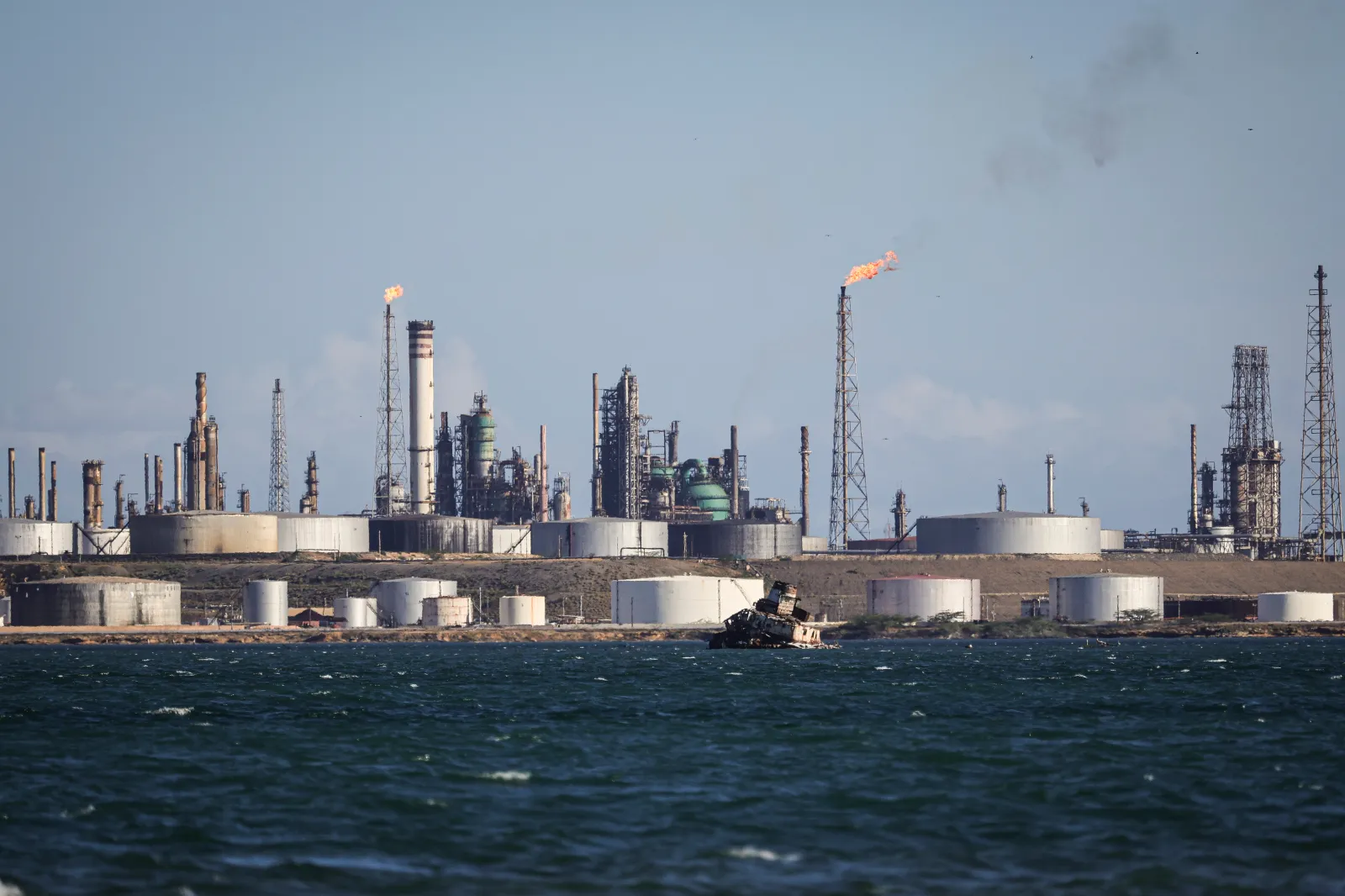
Venezuela holds some of the world’s largest oil reserves, with an estimated 303 billion barrels of crude—about 17 percent of the global total, according to the U.S. Energy Information Administration. Much of the country’s oil is already mapped and known, unlike in other regions where geologists are still searching for untapped reserves.
Newsweek reached out to the Venezuelan government on Friday for comment.
...
Related Story

Trump Says New Venezuelan Oil Deal Will ‘Substantially Lower’ Gas Prices
The Hurdles Facing Venezuelan Oil
High gas prices remain one of the most visible indicators of inflation and household costs for American consumers, with Trump repeatedly highlighting energy prices as a key economic issue ahead of the November midterms.
However, Patrick De Haan, head of petroleum analysis at GasBuddy, cautioned that oil production and gasoline prices do not move in lockstep. Even if more Venezuelan crude eventually enters global markets, consumers would still face several hurdles before seeing meaningful savings at gas stations.
"While the hope of lower gas prices sounds promising, it still will take billions of investment to get that oil," De Haan said in a statement to Newsweek on Saturday.
He noted that the 65 billion barrels cited by Trump refers to estimates of oil that Venezuela may possess rather than readily available supplies that can be pumped and shipped immediately.
Current Gas Price Average
As of Sunday, the national average price for a gallon of regular gasoline stands at about $4.07, according to the American Automobile Association (AAA). The organization said August 2026 is set to become the most expensive August on record for drivers, with the national average staying above $4 per gallon every single day.
AAA attributed elevated prices in part to ongoing volatility in global oil markets, including continued uncertainty surrounding the Strait of Hormuz amid the Iran war and crude oil prices that have remained in the $80-per-barrel range.
While gasoline prices have eased slightly from recent peaks, Americans are still paying substantially more than they were a year ago. According to AAA, the national average for regular gasoline was $4.09 per gallon on August 27, 2026, compared with $3.21 per gallon around the same time in 2025, an increase of roughly 88 cents, or about 27 percent year over year.
What Would Have to Happen for Gas Prices to Fall
De Haan explained that several developments would need to occur before additional Venezuelan oil could translate into lower gasoline prices.
First, substantial investment would be required to expand production. De Haan said extracting and transporting the oil would take considerable time, meaning "changes to fuel prices won't happen overnight or even in months."
Second, global refining capacity would need to increase. Even if crude supplies rise, refineries must have the ability to process that oil into gasoline and diesel. According to De Haan, refining capacity is already constrained, limiting the potential for lower crude prices to feed through to consumers.
Previous analysis of global energy markets has also shown that gasoline prices tend to lag behind movements in crude oil prices because fuel must be refined, transported and distributed before reaching retail stations.
Finally, questions remain about whether the reported agreement can be implemented. De Haan pointed to potential legal and geopolitical obstacles, asking: "How can the U.S. lay claim to a sovereign country's natural resources?"
Even if those issues are resolved, some energy analysts agree that any meaningful impact on gasoline prices would likely require sustained increases in global oil supply, adequate refining capacity and sufficient time for markets to adjust. Until then, Americans are unlikely to see immediate relief at the pump from Trump's Venezuela oil initiative.

...
Contact Newsweek editors for this story: Jenni Fink, Anthony Murray and Trevor Davies.
View 0 Comments
Submit Correction
View Editorial & AI Guidelines