10
Loading video...

By Soo Kim
Reporter
0
Share
Newsweek is a Trust Project member
See more of our trusted coverage when you search.Prefer Newsweek on Googleto see more of our trusted coverage when you search.
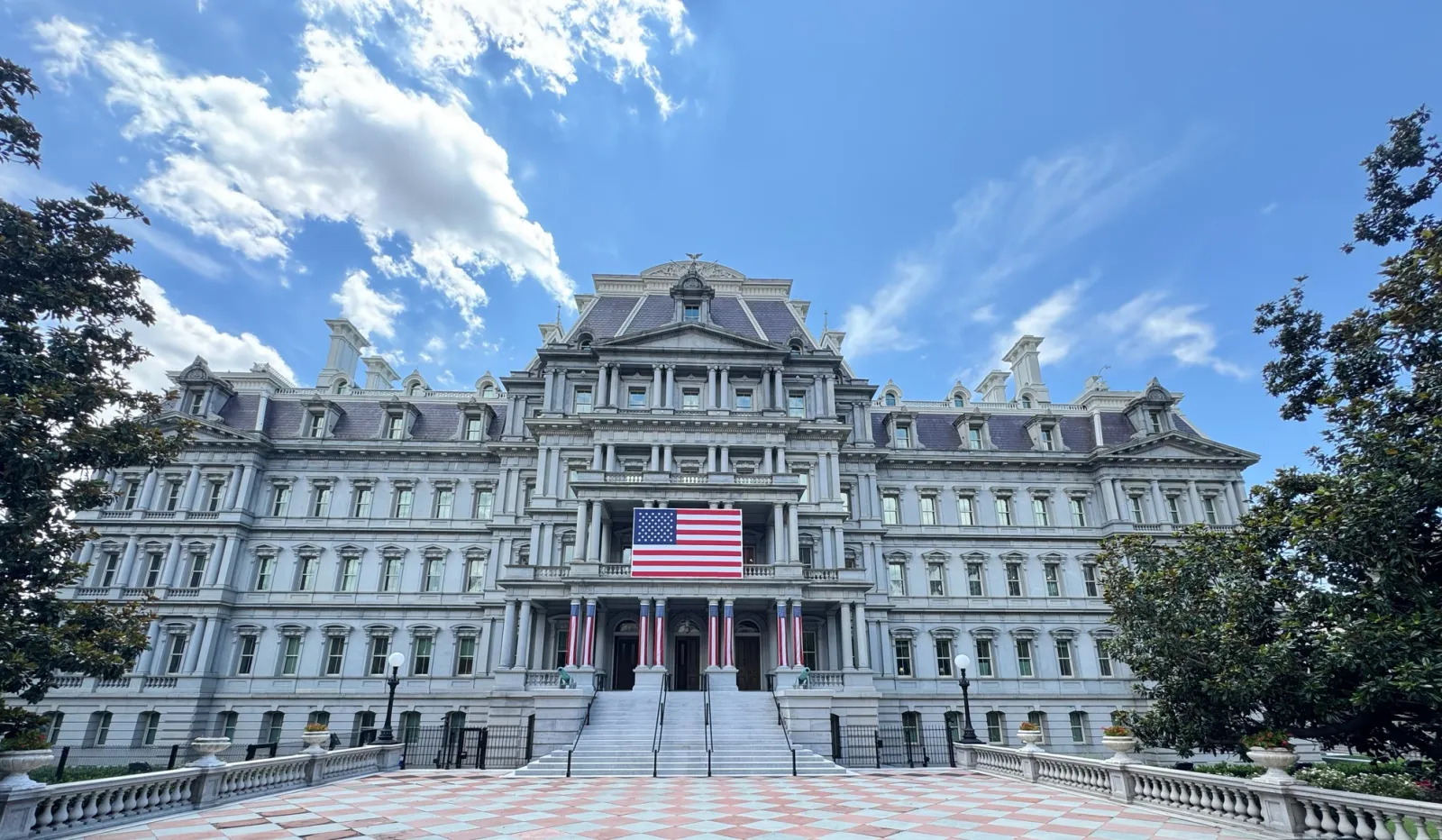
President Donald Trump's effort to remake the Eisenhower Executive Office Building (EEOB), one of the most prominent structures in the White House complex, has ignited a legal and preservation fight over the future of a National Historic Landmark and the limits of presidential authority.
The proposal is part of a broader series of construction and redesign projects Trump has championed around Washington, D.C., as the United States marks the 250th anniversary of its independence this year. The EEOB houses approximately 1,500 employees working for the executive offices of the president and vice president.
"President Trump continues to implement long-overdue and necessary renovations to beautify the People's House as we celebrate our great nation's 250th anniversary of independence," White House spokesperson Davis Ingle told Newsweek. "Thanks to the Builder-in-Chief, the White House will be properly glorified and remain in excellent condition for generations to come."
Read More on News
...
The White House said the administration will follow all necessary review processes, citing submissions and approvals involving the National Capital Planning Commission (NCPC) and the U.S. Commission of Fine Arts (CFA).
Law firm Cultural Heritage Partners (CHP) and the DC Preservation League have filed a lawsuit “seeking emergency relief” to ensure that the project complies with the National Historic Preservation Act (NHPA), the National Environmental Policy Act (NEPA), and other federal laws aimed to protect nationally significant historic resources.
Greg Werkheiser, attorney and founding partner of CHP, told Newsweek: "The president is a temporary steward of America's historic landmarks—not their owner. These buildings belong to the American people, and decisions that could permanently alter them should be made through the transparent public process that Congress required."
Trump's Vision to 'Beautify' the EEOB
The centerpiece of the controversy is Trump's plan to paint the EEOB's exterior white.
According to CHP, Trump unveiled the proposal on November 12, 2025, announcing plans to "beautify" the building by painting "its every exterior surface white." The group said the proposal would permanently alter "one of the most architecturally significant and historic structures in the Nation's Capital."
The White House Office of Administration has defended the project, arguing that the building has suffered decades of neglect.
"The EEOB has been largely neglected since its construction in the late 1800's," the office said in documents submitted for an April CFA meeting to review the design proposal. The administration noted that only limited façade maintenance was carried out in the 1960s and early 2000s and said the structure's appearance "does not align visually with the surrounding architecture and lacks any symbolic cohesion with the White House."
The office said grime, soot, staining, cracks, and abrasions have dulled the granite exterior and argued that painting would provide a repeatable maintenance solution.

...
Concern for 'Irreversible' Harm on Historic Landmark
Opponents argue that painting the landmark's granite exterior could permanently damage the building.
Featuring polished granite, slate, and ornate cast-iron detailing, the CHP says it is among the nation's finest surviving examples of French Second Empire architecture and a defining element of the White House complex.
The National Trust for Historic Preservation notes that the building has remained unpainted since its completion in 1888 and is also a contributing element of the Lafayette Square National Historic Landmark District.
The group has warned that Trump's plan to paint the façade bright white could cause "irreversible physical harm to this important structure."
"The subtle appearance of granite walls, slate roof, and cast-iron detailing are integral to its architectural significance and are character-defining features," the organization said. "Painting the exterior now would obscure the EEOB's historic appearance and undermine its character-defining features."
The group also warned that coating the stone could trap moisture inside the masonry and accelerate deterioration.

...
Setting a Dangerous Precedent
The debate over Trump's plan to revamp the EEOB is about much more than the color of a historic building, the CHP noted.
If the project moves forward, the move could represent a significant shift in how federal preservation laws operate and could extend beyond this single building, the law firm said.
According to CHP, the administration's legal position could allow future presidents to sidestep longstanding federal preservation and environmental laws by assigning projects to the White House instead of agencies traditionally subject to those laws.
Werkheiser from CHP warned*:* "This case has become about far more than whether one historic building is painted white. It asks whether any president can simply move a project into the White House and declare that laws enacted by Congress no longer apply. That's a precedent that reaches far beyond the Eisenhower Building."

...
Do you have an architecture or design-related story to share? Let us know via s.kim@newsweek.com, and your story could be featured by Newsweek.
Contact Newsweek editors on this story: Rebecca Flood and Gray R. Thomas
View 0 Comments
Submit Correction
View Editorial & AI Guidelines