...

By Tom O'Connor
Deputy Editor, National Security and Foreign Policy
0
Share
Newsweek is a Trust Project member
See more of our trusted coverage when you search.Prefer Newsweek on Googleto see more of our trusted coverage when you search.
As the clock runs down on President Donald Trump's deadline to advance on nuclear talks under threat of military action, some of the United States' closest partners in the Middle East are denying the White House key access to conduct strikes against the Islamic Republic.
In recent weeks, as Trump escalated his warnings to Iran and amassed the largest military build-up in the region since the 2003 U.S.-led invasion of Iraq, a growing chorus of nearby countries have called for restraint and have expressed opposition to allowing the U.S. to use their territories to launch an attack on Iran.
Among the latest to reiterate this position is Jordan, where a buildup of U.S. fighter jets, electronic warfare aircraft and cargo planes has been spotted at Muwaffaq Salti Air Base via recent satellite imagery recent shared with Newsweek by Planet Labs.
Read More on World
"Jordan has a defense agreement with the U.S., and the presence of U.S. aircraft and forces in Jordan is part of this agreement and is governed by the agreement," Jordanian government sources told Newsweek. "Jordan reiterates that it will not serve as launchpad for attacks against Iran."
At the same time, the Jordanian government sources stated that "Jordan also made it clear that it will not allow Iran and others to violate its airspace if war erupts."
"The sovereignty of our airspace and the safety of our people is our utmost priority," the government sources said. "Jordan hopes negotiations between the U.S. and Iran lead to an agreement that would prevent war in the region. Jordan always advocates for solving disputes through dialogue and diplomatic channels."
...
Access Denied
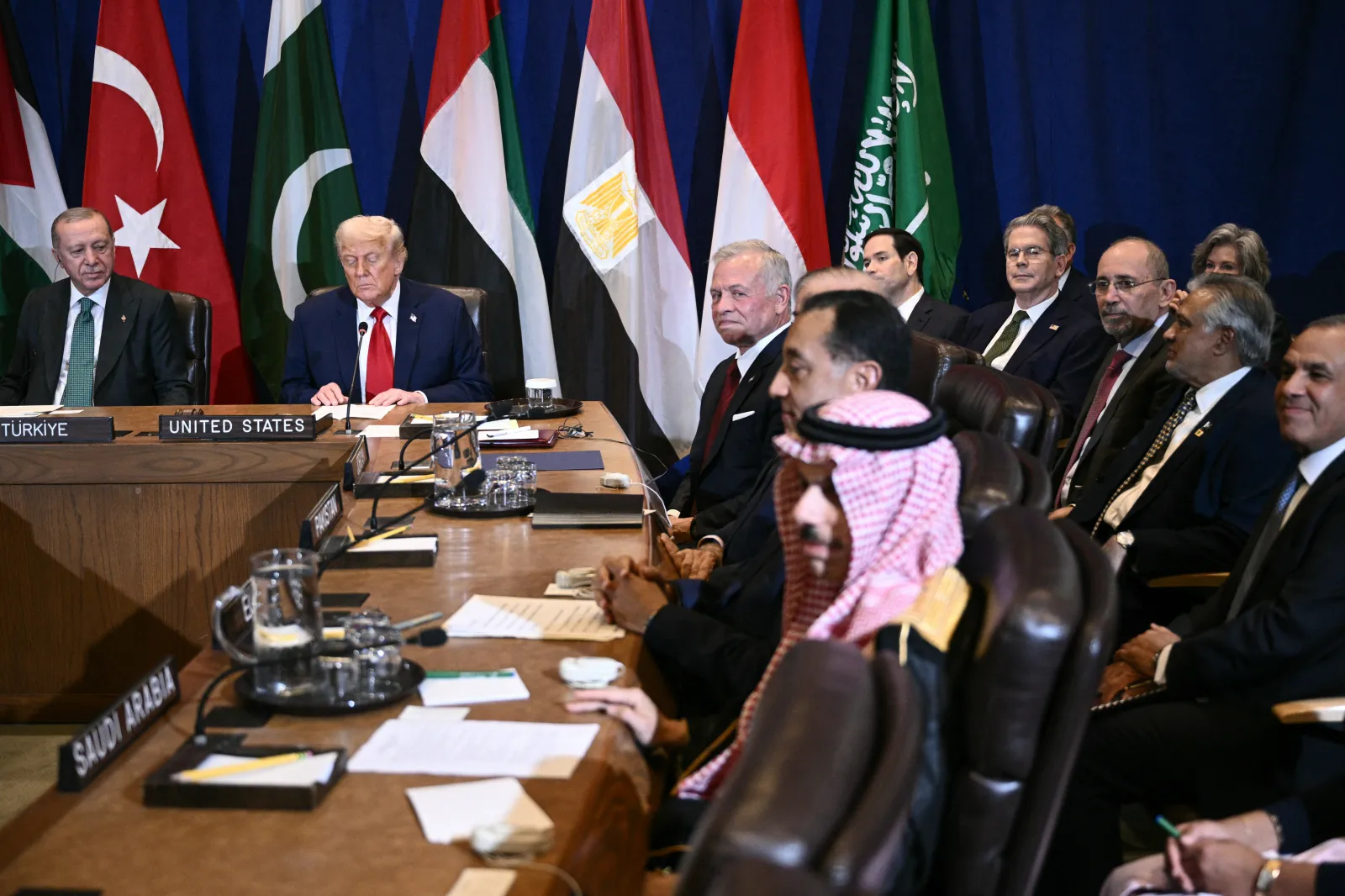
Jordan's King Abdullah II is one of a number of regional royals to weigh in against the use of national territory for carrying out U.S. military operations against Iran.
Saudi Arabian Crown Prince Mohammed bin Salman, who has enjoyed an especially close relationship with Trump and his inner political and business circle, was reported by the official Saudi Press Agency late last month to have "stressed the Kingdom's position in respecting the sovereignty of the Islamic Republic of Iran, and that the Kingdom will not allow the use of its airspace or territory in any military actions against the Islamic Republic of Iran or any attacks from any side, regardless of its destination," during a call with Iranian President Masoud Pezeshkian.
The recent satellite imagery shared with Newsweek from Planet Labs also showed a surge of U.S. military aircraft, including early warning aircraft, refueling tankers and transport planes at Prince Sultan Air Base in Saudi Arabia.
A brief U.S. readout of a call held Monday between Secretary of State Marco Rubio and Saudi Foreign Minister Prince Faisal bin Farhan Al Saud said the pair "discussed economic cooperation and continued close coordination on regional security and stability." The Saudi account said they "reviewed the strategic relations between the two countries and discussed the latest developments in the region and ongoing efforts in this regard."
While neither statement provided addition detail into the contents of the discussion, Riyadh has sought to wield its influence with the Trump administration in support of a diplomatic solution on the Iran nuclear issue, and it's not been alone in doing so.
The United Arab Emirates issued has also come out against the use of its territory for attacks on Iran, with a Foreign Ministry statement issued late last month having "reaffirmed the United Arab Emirates’ commitment to not allowing its airspace, territory, or waters to be used in any hostile military actions against Iran, and to not providing any logistical support in this regard."
The UAE Embassy declined Newsweek's request for comment, but referred to a readout of a call Monday during which UAE Foreign Minister Sheikh Mohammed bin Zayed Al Nahyan affirmed to Araghchi "the importance of the success of the talks between the United States of America and the Islamic Republic of Iran, in a manner that contributes to consolidating the foundations of security in the region and achieves the aspirations of its peoples for greater prosperity and stability."
Reports have cited regional officials attributing similar positions to Bahrain, Kuwait and Qatar, which hosts the largest U.S. military base in the Middle East. Al Udeid Air Base was subject to an Iranian missile attack following the unprecedented U.S. bombing of three Iranian nuclear facilities amid the 12-Day War between Iran and Israel last June.
Months later, in September, Qatar was struck once again, this time by Israel, in an operation intended to target senior Hamas leadership. That operation rattled a region already in the midst of security turmoil since the October 2023 Hamas-led attack on Israel sparked the war in Gaza and broader confrontation engulfing much of the Middle East.
Another Gulf Cooperation Council member, Oman, has traditionally remained neutral on geopolitical affairs and is currently playing a mediating role in the U.S.-Iran nuclear talks, the third round of which is expected to be in Geneva on Thursday.
Meanwhile, neighboring Yemen is divided between a Saudi-backed government and the Iran-aligned Ansar Allah, also known as the Houthi movement, which has threatened to intervene in any U.S. strike against Iran as the group remains poised to resume attacks on trade vessels and U.S. warships in the Red Sea and surrounding waters.
Also threatening intervention have been elements of the Islamic Resistance in Iraq, a coalition of militias that have in the past conducted rocket and drone strikes against U.S. troops in Iraq and Syria. The situation has proved frustrating for the government, which has long called on Washington to keep Baghdad out of the fight, fearing domestic consequences.
Some of the most explicit opposition to a U.S. strike on Iran has come from Turkey, a NATO ally that hosts U.S. nuclear weapons at Incirlik Air Base and also borders Iran directly. Ankara denied reports last summer that U.S. aircraft used Turkish airspace to conduct the strikes against Iranian nuclear sites, and Turkish officials have since called on both Washington and Tehran to avoid another clash.
Turkish Foreign Minister Hakan Fidan told CNN Turk earlier this month that "the region is not in a position to handle a new war" and urged both sides to find "more creative solution."
An official at the Turkish Embassy in Washington, D.C., told Newsweek that "Türkiye supports a diplomatic solution and strongly advises against military operations."
Newsweek has also reached out to the Embassies of Bahrain, Kuwait, Qatar and Saudi Arabia for comment.
Alternative Plans
U.S. forces positioned in partner nations in the Middle East proved crucial during the first two Gulf Wars that saw coalitions mounted against Iraq in 1991 and 2003. But the operation against Iran last June also demonstrated the Pentagon's long-range capabilities in sending B-2 stealth bombers from Whiteman Air Force Base in Missouri nearly 7,000 miles away to target heavily fortified nuclear facilities at Esfahan, Fordow and Natanz.
A lack of regional support may complicate the logistics of a new attack, especially as Trump warns such an operation would go further than the previous round. However, the U.S. also possesses a substantial amount of sea and air-based firepower in the form of two carrier strike groups, the USS Abraham Lincoln already in position near the Gulf of Oman and the USS Gerald R. Ford currently on its way to the region.
As was the case during the 12-Day War and previous rounds of Iranian strikes targeting Israel, U.S. aircraft and air defenses based in the region may potentially operate to intercept any missiles or drones flying through the airspace of U.S. partner nations. Jordan, for its part, has confirmed downing Iranian projectiles over its airspace during the 12-Day War and reports indicate other Arab countries also played a role in providing intelligence for defensive purposes.
Contacted for comment, U.S. Central Command referred Newsweek to the State Department, which did not respond.
Trump, meanwhile, has sought to rebut what he referred to in a Truth Social post on Monday as "Numerous stories from the Fake News Media" alleging that Air Force General Dan Caine, who serves as Chair of the Joint Chiefs of Staff, has warned the White House against taking military action on Iran.
"He has not spoken of not doing Iran, or even the fake limited strikes that I have been reading about, he only knows one thing, how to WIN and, if he is told to do so, he will be leading the pack," Trump wrote. "Everything that has been written about a potential War with Iran has been written incorrectly, and purposefully so."
"I am the one that makes the decision," Trump added. "I would rather have a Deal than not but, if we don’t make a Deal, it will be a very bad day for that Country and, very sadly, its people, because they are great and wonderful, and something like this should never have happened to them."
View 0 Comments
Submit Correction
View Editorial & AI Guidelines