...

By Andrew Stanton
Reporter
0
Share
Newsweek is a Trust Project member
See more of our trusted coverage when you search.Prefer Newsweek on Googleto see more of our trusted coverage when you search.
President Donald Trump will issue a 60-day waiver of the Jones Act in its latest effort to curb rising gas prices amid the war in Iran, White House Press Secretary Karoline Leavitt announced on Wednesday.
“President Trump’s decision to issue a 60-day Jones Act waiver is just another step to mitigate the short-term disruptions to the oil market as the U.S. military continues meeting the objectives of Operation Epic Fury. This action will allow vital resources like oil, natural gas, fertilizer, and coal to flow freely to U.S. ports for sixty days, and the Administration remains committed to continuing to strengthen our critical supply chains,” Leavitt said on X.
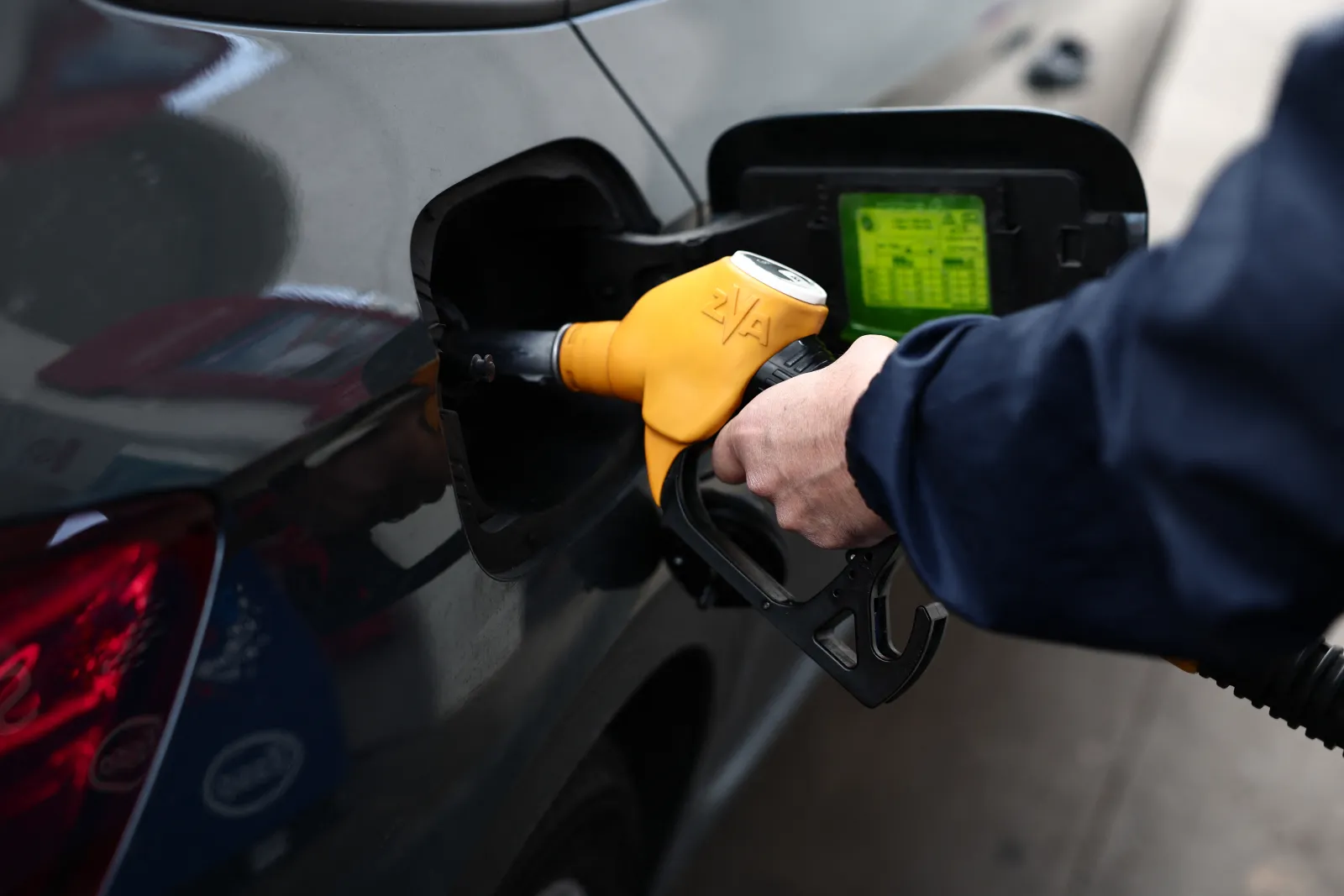
The announcement comes as Americans continue to face spiking gas prices amid the war with Iran, which began after the U.S. and Israel struck the Middle East country on February 28.
Read More on World
Gas prices averaged $3.842 on Wednesday—up from $3.578 a week earlier and $2.923 a month earlier, according to AAA. The rising gas prices have become a political challenge for Trump ahead of the midterms.
...
What Is the Jones Act?
The Jones Act is a century-old law requiring goods shipped between American ports to be on ships built, owned and operated in the United States. It is formally known as Section 27 of the Merchant Marine Act of 1920. It was designed to ensure the United States maintained a strong merchant marine fleet capable of serving as a naval auxiliary in times of war or national emergency.
The law was passed following World War I. President Woodrow Wilson signed it into law on June 5, 1920. It emerged from postwar anxieties about foreign dominance of U.S. coastal shipping. Before its passage, the presence of foreign-built or foreign-crewed vessels raised concerns about America’s maritime independence.
Beyond shipping restrictions, the Jones Act also plays a central role in maritime worker protections.
The law can be waived in the “interest of national defense,” the U.S. Maritime Administration notes, either through the Homeland Security or Defense Department.
What Is the Jones Act Waiver?
The waiver is intended to ensure oil is imported into U.S. ports as gas prices continue to rise.
How Does the Jones Act Impact Oil Prices?
Proponents of the Jones Act waiver believe that opening domestic shipping routes to foreign-flagged vessels may provide some relief by expanding transportation options.
Sam Ori, executive director of the Institute for Climate and Sustainable Growth and Energy Policy Institute at the University of Chicago, told Newsweek that the waivers might not have a major impact on gas prices.
“Jones Act waivers are really a sideshow and unlikely to result in any significant relief in oil or refined product prices at a national level. Steps like this—or a gas tax holiday or strategic stock releases—are part of a familiar playbook that comes out during oil price shocks,” Ori said.
The measures are intended to show Americans the administration “is taking steps to address pain at the pump,” but are “inadequate to address a global oil supply disruption, particularly of this unprecedented magnitude,” he said. “There are no effective short-term options for reducing prices aside from a complete reopening of the Strait of Hormuz and return of normal levels of output from Gulf countries. Short of that, this crisis in oil markets is likely to continue to escalate.”
The Center for American Progress estimated last week that waiving the Jones Act would decrease East Coast gas prices by 3 cents but could raise costs on the Gulf Coast.
The Cato Institute reported that a waiver would not “produce dramatic drops in fuel costs.”
“Transportation is just one of many factors that determine prices at the pump, and the current price environment reflects global supply disruptions that no domestic shipping policy can fully offset. But it is equally wrong to claim a waiver would do nothing. By the industry’s own admission, eliminating the Jones Act would increase domestic energy movements. That means fewer market distortions and more competitive pricing at the margin,” the think tank wrote.
When Could Oil Prices Go Down?
It’s not clear exactly when oil prices will go down, though administration officials have sought to quell concerns that costs could remain high in the long run. Oil costs were about $98 per barrel on Wednesday, according to Crude Oil Futures.
Trump and other world leaders have also taken steps to increase oil supply.
Also on Wednesday, the Treasury Department eased sanctions to allow U.S. companies to do business with Venezuela’s state-owned oil and gas company. And the Trump administration has announced it will temporarily free up Russian oil from U.S. sanctions, too.
The U.S. is releasing 172 million barrels from its strategic reserves, as the Paris-based International Energy Agency (IEA) said it will release 400 million barrels of oil from its members’ emergency reserves to help curb rising oil prices amid the war.
U.S. Energy Secretary Chris Wright expressed optimism about gas prices falling again during an interview on CNN’s State of the Union earlier in March.
“The Trump administration, in stark contrast to the Biden administration, his goal has been to lower energy prices, the Biden administration quite successful in raising energy prices. Gasoline today is still $1.50 a gallon cheaper than it was in the middle of the Biden administration But you're right. We want it back below $3 a gallon. And it will be again before too long,” he said.
Why Are Gas Prices Rising Amid the War With Iran?
Oil prices have surged as the war involving Iran widened, sparking uncertainty across global energy markets.
The Strait of Hormuz, a critical chokepoint for global oil transport, has been a point of concern, with fears that any prolonged instability could significantly constrain supply.
The strait lies between Iran to the north and Oman to the south, with shipping lanes passing through the territorial waters of both countries, but the strait is governed by international maritime law. Iran exerts significant influence because of its long northern coastline and control of nearby islands overlooking the narrow lanes, while Oman oversees the southern side.
The United States and allied navies also operate in the area to protect freedom of navigation, though Iran’s military posture has given it leverage during periods of conflict.
Roughly 20 million barrels of oil per day, about one‑fifth of global petroleum consumption, normally pass through the Strait of Hormuz, according to U.S. Energy Information Administration data. The waterway is also a critical route for liquefied natural gas, carrying about 20 percent of global LNG trade, largely from Qatar. Most of the oil shipped through the strait is bound for Asian markets, making disruptions especially significant for global energy prices.
Shipping has declined due to Iranian threats, missile and drone attacks near the waterway and U.S. military strikes on suspected Iranian minelaying vessels. Many shipping companies and insurers have pulled back because of safety risks and soaring insurance costs, effectively halting commercial traffic even without a formal blockade.
This article includes reporting by The Associated Press.
Update 3/18/26, 2:22 p.m. ET: This article was updated with additional information.
In a polarized era, the center is dismissed as bland. At Newsweek, ours is different: The Courageous Center—it's not "both sides," it's sharp, challenging and alive with ideas. We follow facts, not factions. If that sounds like the kind of journalism you want to see thrive, we need you.
When you become a Newsweek Member, you support a mission to keep the center strong and vibrant. Members enjoy: Ad-free browsing, exclusive content and editor conversations. Help keep the center courageous. Join today.


View 0 Comments
Submit Correction
View Editorial & AI Guidelines