
...

By Brendan Cole
Senior Reporter
0
Share
Newsweek is a Trust Project member
See more of our trusted coverage when you search.Prefer Newsweek on Googleto see more of our trusted coverage when you search.
President Donald Trump's pledge to sell F-35 fighter jets to Saudi Arabia has raised concerns in Israel that it would lose its military edge in the Middle East.
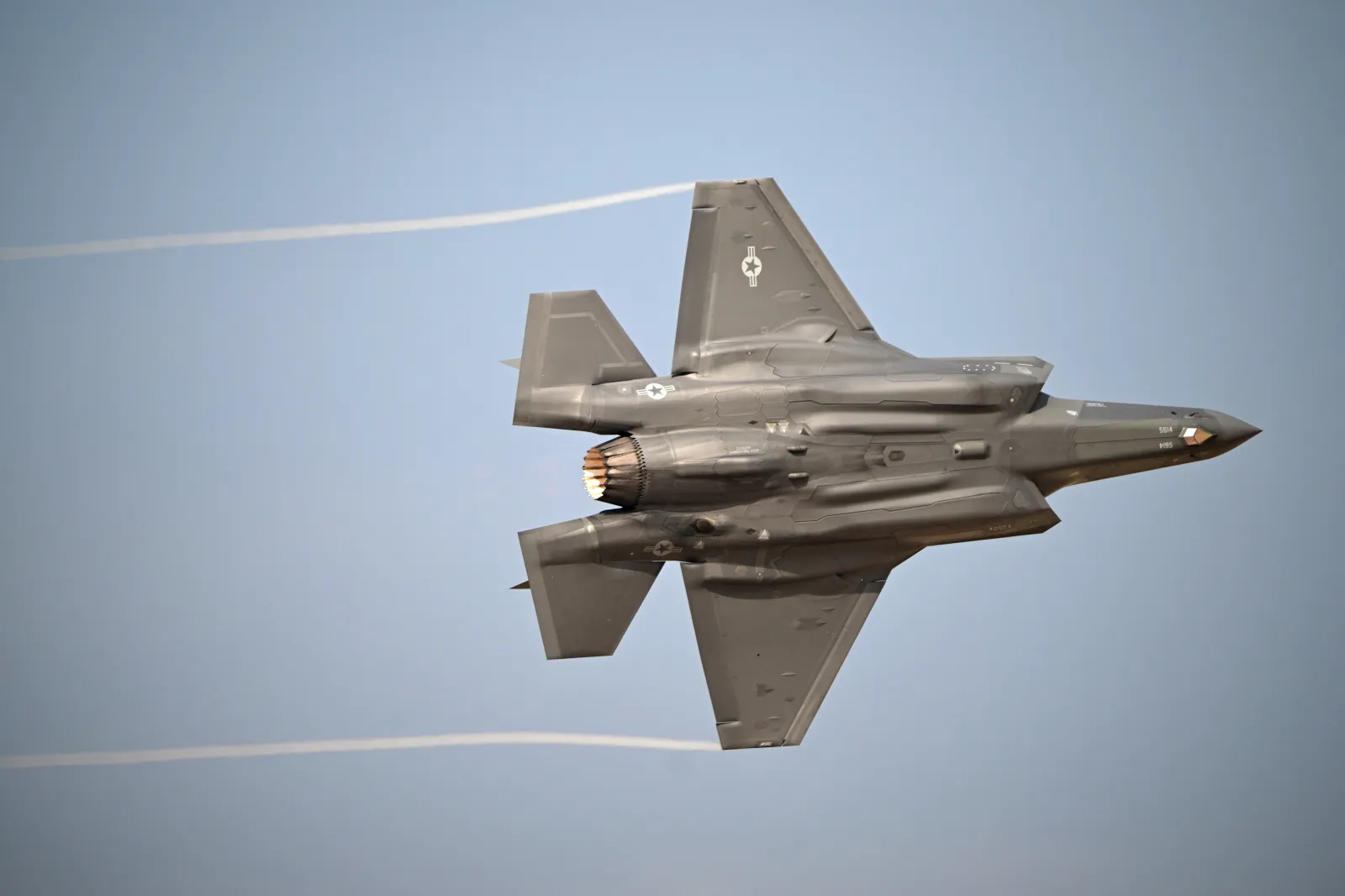
Ahead of a visit to Washington, D.C. by Saudi Crown Prince Mohammed bin Salman, Trump announced Monday he would sell the fifth-generation aircraft, considered among the world’s most advanced, which are also a mainstay of Israel’s aerial capabilities.
The IDF has raised the alarm that such a deal could set back Israel’s air superiority in the region, while outgoing strategic affairs minister, Ron Dermer, expressed Israel’s concerns to U.S. officials in Washington over the deal, according to Israeli media.
Read More on News
However, Middle East analysts have told Newsweek that much depends on how Israel’s relationship with Riyadh evolves.
Yossi Alpher, a former Israel Defense Forces (IDF) intelligence officer and ex-senior official with Israel's intelligence agency, told Newsweek it was hard to predict what will play out with the F-35 deal, “especially when the U.S., Israel and Saudi Arabia are all three ruled by, to put it kindly - highly flawed strategic thinkers.”
...
Why It Matters
Israel is currently the only operator of the F-35 in the Middle East, using a customized version called the F‑35I “Adir.” It is committed to 75 aircraft which have lauded stealth penetration ability against advanced air defenses,
Handing Saudi Arabia the same aircraft could undermine a U.S. policy, enshrined in law, of ensuring that Israel has the Qualitative Military Edge (QME) in having superior military capabilities compared to any potential adversaries in the Middle East.
Also, the deal has other security questions surrounding it. A Pentagon report has raised concerns that China could acquire the plane’s advanced technology given its defense ties with Riyadh, according to The New York Times.
What To Know
Trump said on Monday that the U.S. would sell F-35 fighter jets to Saudi Arabia, in a deal which is expected to be announced during Crown Prince Mohammed bin Salman’s visit to Washington.
However, under U.S. law, Israel is guaranteed weapons to maintain its “qualitative military edge” over Arab nations, and while U.S. officials have said they can provide that assurance, such a deal has raised concerns in Israel.
Eli Cohen, a member of Israel’s security cabinet, told Channel 14 on Monday “if they give them the F-35, we’ll get the B-2, for argument’s sake,” referring to the stealth bomber, adding that the Israeli military edge “must be preserved.”
Alpher told Newsweek on Tuesday that the deal was complicated because it involved the issues of Gaza, a Palestinian state, and normalization with Saudi Arabia—three issues of immediate relevance compared with the F-35s, which would take several years to arrive.
In the Middle East, where Gaza is pacified and rebuilding, a Palestinian state is successfully evolving and Israeli-Saudi Arabia relations are booming, which is Trump's aim, so “the F-35s and their negative effect on Israel's qualitative edge will look relatively tolerable,” Alpher said.

...
“But if, on the other hand, Saudi Arabia, a wealthy and brutal tribal autocracy, falls into malevolent hands—as understood by Israel and the moderate Arab world—if Hamas and the forces of militant Islam are rampant and if the U.S. is being run by a Trump on steroids, then the F-35s look very different,” Alpher added.
The United Arab Emirates (UAE) can attest to how long the process takes given it is still awaiting the jets despite Trump agreeing to selling them half a decade ago.
Riyadh must make a formal request for the jets which Congress must approve. The Pentagon would then need to finalize a letter of offer and acceptance, and then Saudi Arabia will need to negotiate with the manufacturer, Lockheed, which has production schedules with 19 foreign partners and orders of 1,172 jets, Bloomberg reported.
“It's not that the F-35s are going to be delivered tomorrow morning. It's a very long process and I would expect Israel to be active in Congress to try and slow it down,” Emmanuel Navon, senior fellow at the Jerusalem Institute for Strategy and Security (JISS), told Newsweek.
“It's not the first time that a friendly U.S. administration sells advanced military technology to Saudi Arabia,” he said referring to the Reagan administration selling advanced jets to the kingdom in the 1980s. in the 80s.
“Israel didn't like it at the time, it doesn't like it today, but of course the superpower here is the United States. The Saudi Arabia of today is not the hostile country that it was in the 1980s. It doesn't mean it's an ally either of Israel, but the U.S. as a superpower with its own agenda means there's very little Israel can do,” Navon added.
What People Are Saying
Yossi Alpher, a former Israel Defense Forces (IDF) intelligence officer, told Newsweek: “This is complicated because it involves the issues of Gaza, a Palestinian state, and normalization with Saudi Arabia....he added, it’s “hard to foresee, especially when the US, Israel and Saudi Arabia are all three ruled by, to put it kindly, highly flawed strategic thinkers.”
Emmanuel Navon, senior fellow at the Jerusalem Institute for Strategy and Security (JISS), told Newsweek: “Israel's qualitative edge has to be assessed based on the future relationship between Israel and Saudi Arabia, and there’s a very big question mark over this.”
What Happens Next
An F-35 deal with Saudi Arabia could be announced during the Crown Prince’s visit to D.C. starting Tuesday, although the agreement would need to go through Congress and it could take years to come fruition, given Lockheed’s other delivery commitments and the likely opposition from Israel.
View 0 Comments
Submit Correction
View Editorial & AI Guidelines