...

By Daniel R. DePetris
Fellow, Defense Priorities
0
Share
Newsweek is a Trust Project member
See more of our trusted coverage when you search.Prefer Newsweek on Googleto see more of our trusted coverage when you search.
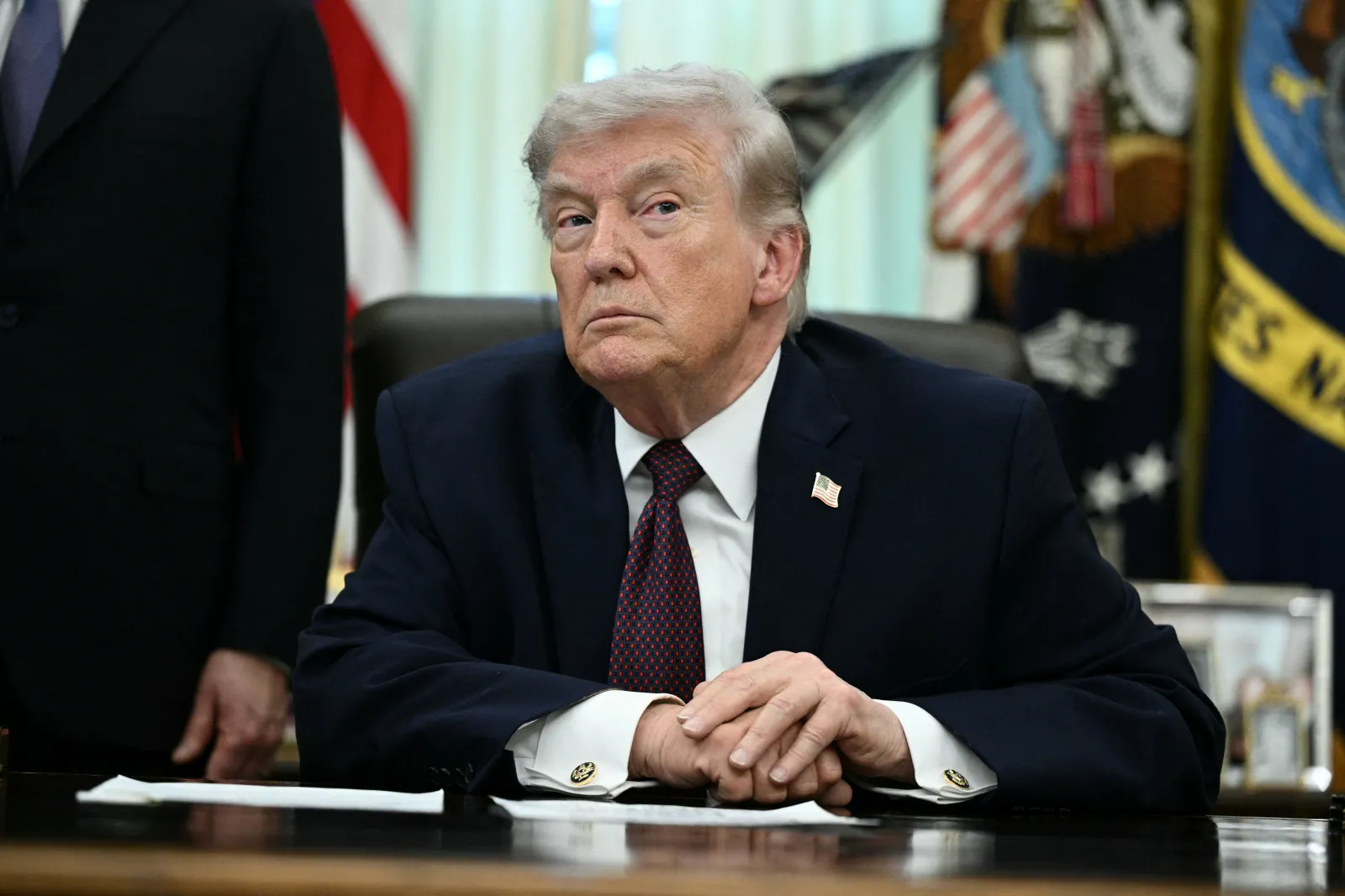
President Donald Trump is fighting a two-front war, and neither is going well.
The first, the kinetic fight against Iran, is blowing up plenty of Iranian military positions and killing a slew of Iranian officials but has also produced one of the biggest oil shocks in history. Faced with ballooning oil and gas costs, businesses and households from Europe to Asia are now instituting measures to conserve supplies. Republican lawmakers are increasingly petrified of how the war may impact the midterm elections. Trump, floundering for a result he can categorize as a win, is apparently in ceasefire talks with the Iranians.
...
Read More on Opinion
The other battle is between the United States and its traditional allies in Europe. Trump, never shy about expressing his disgust for NATO when it fails to meet his expectations, is spending almost as much time lobbing rhetorical grenades at the continent as he is in dropping bombs on the Islamic Revolutionary Guard Corps. In Trump’s telling, he is doing the world a favor by degrading Iran’s military capacity and preventing the country from acquiring a nuclear weapon. Europe, meanwhile, isn’t lifting a finger to aid the assault. British Prime Minister Keir Starmer, French President Emmanuel Macron and Spanish Prime Minister Pedro Sánchez, it seems, are no better in Trump’s eyes than Mojtaba Khamenei, Iran’s new supreme leader.
Per usual, Trump has leveraged the media to push his narrative. Starmer, he repeats, “is no Winston Churchill.” Spain, he says, better shape up or the U.S. will stop trading with the country. The French, Trump wrote on March 31, are not only unhelpful but actively hindering U.S. military operations by closing its airspace to U.S. military aircraft. NATO, Trump claims, is a “paper tiger” only interested in taking U.S. assistance without offering anything in return. He is now so angry about the situation that a U.S. withdrawal from defense alliance is apparently on the table.
If all this jawing sounds familiar, that’s because it is. Whether during his time as a real estate magnate in Manhattan or now as commander-in-chief, Trump’s so-called “art of the deal” has relied on a common formula: bully and bludgeon the other side until it begs for mercy or folds. The strategy has worked remarkably well for Trump in both politics and international relations. His threats to retake the Panama Canal scared the Panamanian government into ditching China’s Belt and Road infrastructure initiative and boosting security cooperation with Washington. Trump’s threats of tariffs and airstrikes against cartel locations in Mexico prompted Mexican President Claudia Sheinbaum to get far more aggressive in her security strategy. The tariff threat worked quite well against the European Union last year as well; the preliminary trade agreement Washington and Brussels signed included terms, such as the EU buying $750 billion worth of oil and gas and removing levies on U.S. industrial goods, that Trump has bragged about ever since.
Yet this art of the deal framework is no longer working. Trump’s playbook is getting old, and those on the receiving end have learned how to deal with it by growing a backbone. Far from eliciting concessions, Trump’s antics are now engendering resistance and alienating allies to the point where it’s becoming a strategic liability.
On the war in Iran specifically, Europe is not only dismissing Trump’s barbs but fighting back. France, which never thought a preventive war in the Persian Gulf was necessary to begin with, is refusing to allow aircraft carrying U.S. weapons en route to the Middle East to traverse through its airspace. Spain has gone a step further by prohibiting Washington from using joint bases on Spanish soil to service the war effort. Italy, a state with a right-wing government generally sympathetic to Trump’s America First movement, recently blocked U.S. military aircraft from landing at the Sigonella naval base in Sicily, purportedly because those planes would be involved in the war. Poland, one of the most pro-U.S. EU nations, is also stiffing Washington these days. When the Trump administration asked the Polish government to send air defense batteries to the Persian Gulf to deal with Iranian missile and drone attacks, Warsaw demurred.
Even the United Kingdom, Washington’s closest ally and a state that typically backs U.S. foreign policy whenever an American president comes calling, is holding firm. Starmer, Trump’s new favorite punching bag, has stressed repeatedly that, Trump’s pressure tactics aside, Britain will not be joining the war as a combatant or blindly following in Washington’s footsteps. Although the U.S. is using British bases to target Iran’s missile silos, London continues to oppose those very same bases from being utilized by Washington for “offensive strikes” in Iran. The fact that Starmer is now setting the U.K. on course to strengthen defense ties with the EU is a stark reflection of how British policymakers currently assess the health of the so-called “special relationship.”
Why does any of this matter? Because ostracizing allies and partners is hardly smart statecraft, particularly when you expect those same allies and partners to pull their weight or, in the case of the Strait of Hormuz, bail you out of a problem you created in the first place. Sometimes getting tough is appropriate; other times it’s folly. What we’re presently witnessing is folly in the making.
Daniel R. DePetris is a fellow at Defense Priorities and a syndicated foreign affairs columnist at the Chicago Tribune.
The views expressed in this article are the writer's own.
View 0 Comments
Submit Correction
View Editorial & AI Guidelines