...

By Barney Henderson
Content Director
0
Share
Newsweek is a Trust Project member
See more of our trusted coverage when you search.Prefer Newsweek on Googleto see more of our trusted coverage when you search.
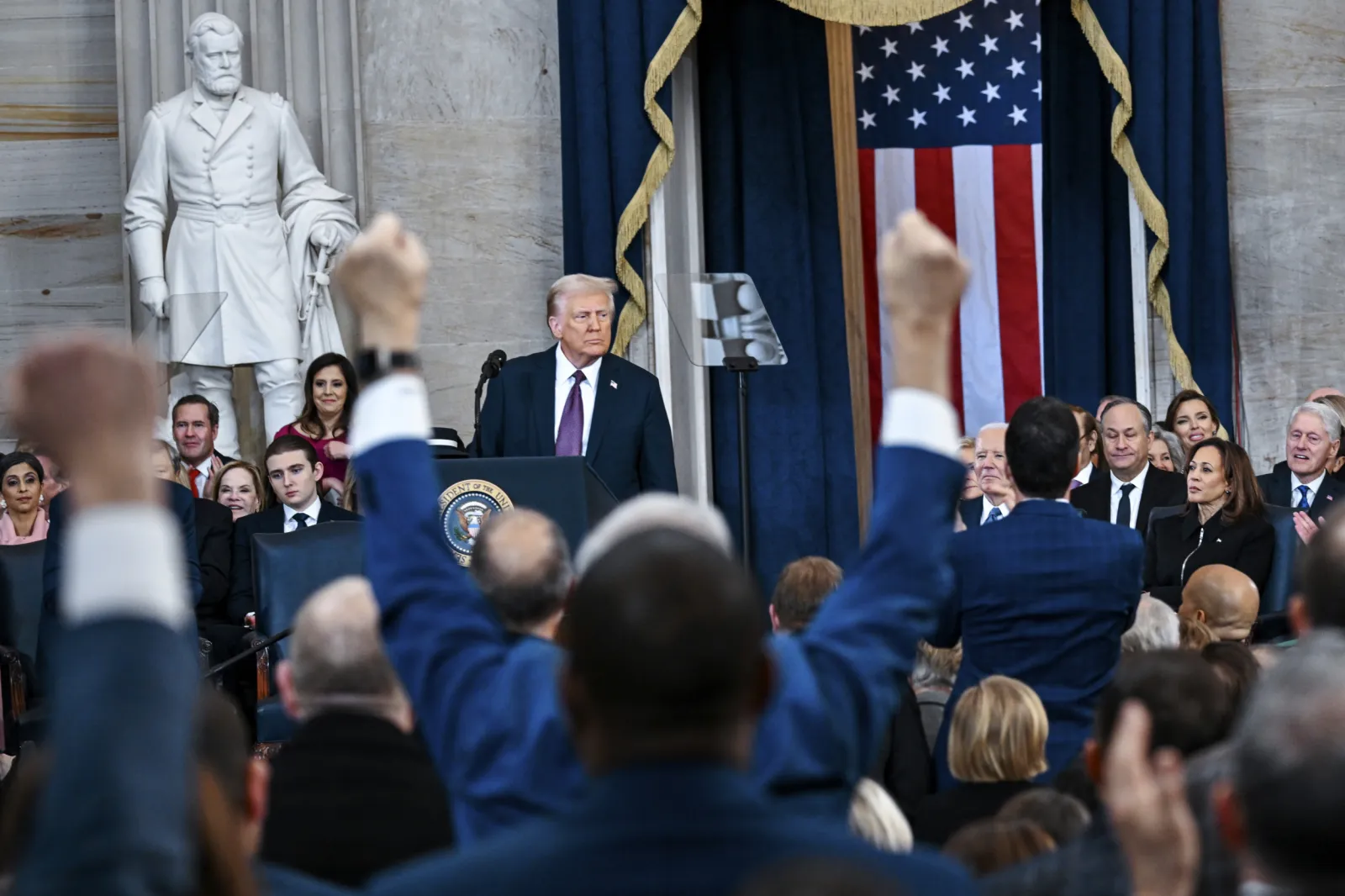
Donald Trump has pledged in his inaugural address to pursue a policy that "expands our territory" and puts US astronauts on Mars.
Trump said he "will pursue our manifest destiny into the stars" and "plant the stars and stripes on the planet Mars."
He added: "Ambition is the lifeblood of a great nation." And said his message to Americans was "to act with courage, vigour and the vitality of history's greatest civilization."
Read More on U.S.
...
Billionaire Elon Musk of SpaceX threw his hands up in the air and the audience applauded as Trump made the Mars announcement.
Why It Matters
The renewed focus on Mars comes at a time when the United States faces complex challenges in space policy. During his first term, Trump signed seven Space Policy Directives that prioritized returning astronauts to the Moon by 2024 as a steppingstone to Mars. However, delays pushed the lunar mission timeline to 2027, raising questions about the feasibility of a Mars mission within the next decade.
Trump's close association with Musk highlights the private sector's role in achieving interplanetary exploration. Musk's ambitious plans include sending uncrewed Starships to Mars as early as 2026 and crewed missions by 2028—timelines many experts view as optimistic.

...
Is Mars policy popular?
Trump's enthusiasm for sending astronauts to Mars was shared by some—but not all—Americans in a 2019 AP-NORC poll.
About 3 in 10 US adults said that sending astronauts to Mars was "very" or "extremely" important, about one-third said it was "moderately" important, and about 4 in 10 said it was "not too" or "not at all" important.
What to Know
Trump's statements mark a stark departure from former President Barack Obama's space priorities, which focused on bypassing the Moon to target human orbital missions to Mars by the 2030s. Trump's inclusion of Mars in his address suggests he envisions a more immediate push, although whether the Moon will remain part of the pathway is unclear. NASA's Artemis program, initiated under Trump, aims to achieve lunar landings as a precursor to Mars missions.
Experts note the challenges of Mars exploration, including the six-month journey time, increased risks to astronauts, and significant costs. Musk has described his vision as making humanity a "multi-planet species," but such plans face resistance in Congress over funding and safety concerns.

...
What's Next
Trump's announcement has reignited debate over America's role in space exploration. The focus now shifts to NASA and private entities like SpaceX, which will need to address technical, financial, and political hurdles. Congress will likely play a critical role in determining the scope and pace of these ambitions, as lawmakers balance Mars exploration with other national priorities.
View 0 Comments
Submit Correction
View Editorial & AI Guidelines