10
Loading video...

By Hannah Parry
Associate News Editor
0
Share
Newsweek is a Trust Project member
See more of our trusted coverage when you search.Prefer Newsweek on Googleto see more of our trusted coverage when you search.
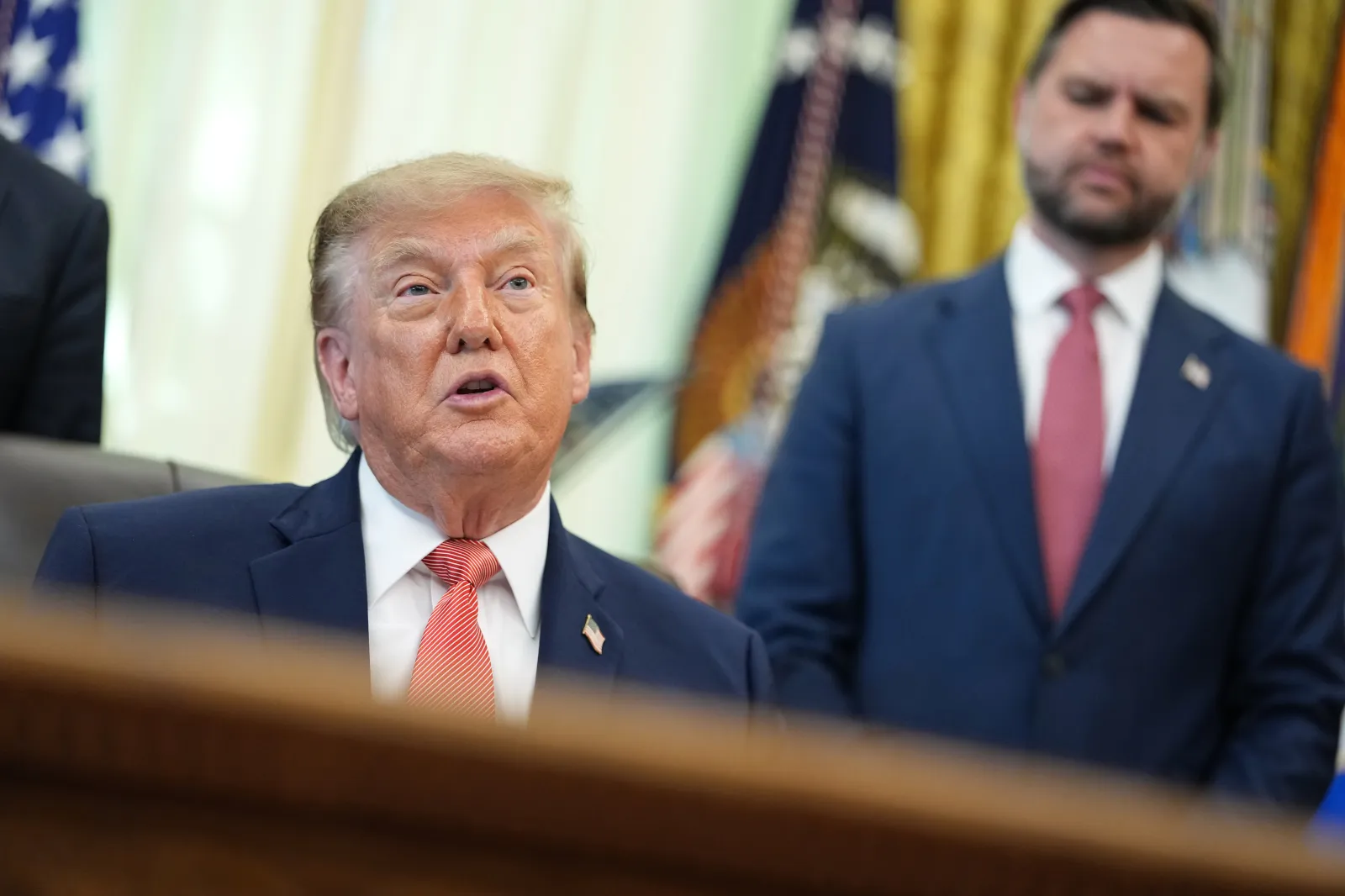
President Donald Trump promised whistleblowers a commission of 1 percent of the fraud they uncover—potentially millions of dollars in major cases—as he and Vice President JD Vance announced a $25 million initiative Tuesday to encourage Americans to report suspected fraud involving federal programs.
“All of those people that are willing to do the right thing and turn people in … they’re gonna become rich. When you get 1 percent of a billion dollars, 1 percent of a hundred billion dollars, it’s gonna be a tremendous amount of money," Trump said Tuesday.
The Justice Department's National Fraud Enforcement Division will administer the program, which is designed to help investigators uncover criminal activity involving taxpayer-funded benefits and other federal programs. According to the White House, rewards will be available for qualifying information that leads to criminal charges and successful enforcement action.
Read More on Politics
The initiative, known as the Fraud Whistleblower Incentive Program (WHIP), is part of the Trump administration's broader effort to combat fraud and improper payments across the federal government. Under the program, simply submitting an allegation will not qualify someone for a payment. Tips must contain original, truthful and complete information, be submitted voluntarily and meet the program's eligibility requirements.
The president's one percent reward pledge clashed with the Justice Department’s announcement on WHIP Tuesday, which specified awards generally ranging from $10,000 to $30,000 for information leading to criminal charges in designated categories of fraud.
When asked by reporters in the White House to clarify the apparent discrepancy, Trump said there was no limit on whistleblower compensation and that criminal charges were not necessary. He also promised to be “fair” in deciding how much whistleblowers would receive.
When asked for clarification on Trump and the DOJ's conflicting statements on the whistleblower rewards, the White House redirected Newsweek to the president's comments Tuesday.
Newsweek has reached out to the DOJ for comment.
...
How Trump's $25 Million Whistleblower Program Works
Under the program, eligible whistleblowers can receive awards for information leading to criminal charges in specified categories of fraud. The department said awards will be made at its sole discretion following the filing of criminal charges.
“Protecting the American people from fraud remains a top priority for the Department of Justice,” Attorney General Todd Blanche said in the department's announcement. “The Fraud Whistleblower Incentive Program (WHIP) offers everyone the opportunity to be part of the solution, help expose fraud, and be rewarded quickly for their efforts.”
The DOJ described the initiative as an effort to fill a gap in existing whistleblower programs, many of which issue awards only after a criminal matter has reached its final resolution, potentially including forfeiture proceedings and appeals.
WHIP is intended to provide payments earlier in the prosecution process, giving whistleblowers greater certainty about the timing and amount of a potential award.
The Treasury Department is committing $25 million to support the program's implementation, according to the Justice Department. That funding commitment is separate from the individual rewards available to qualifying tipsters.
Trump also said he would personally arbitrate disputes over who deserved whistleblower rewards, potentially placing him at the center of decisions over how the money would be distributed.
“Sometimes there’s a dispute as to who turned them in and who didn’t turn them in, who’s supposed to get what and when,” Trump said. “So I am going to do something which I think people will like. I will be the arbitrator of all of these decisions.”
“In other words, I’ll determine whether or not the person is deserving, and I’ll determine—and I will be very generous, believe me. We’re not looking to save on that,” he added.
Trump said recipients would receive their money immediately and that he would decide how to resolve competing claims, including whether rewards should be split between claimants. He described the process as “binding arbitration” and said disputes would be handled “expeditiously and fairly,” without lengthy court cases.
His remarks raise questions about how those proposed decisions would interact with the Justice Department’s published rules, which say awards are made at the department’s sole discretion following the filing of criminal charges. The department’s announcement does not identify Trump as the official responsible for determining individual awards.
The department said participants may remain eligible for additional awards through other programs, including the Justice Department's Corporate Whistleblower Awards Pilot Program.
False Claims Act Offers Potentially Larger Rewards
The new program's maximum, either one percent based on Trump's statements or $30,000, based on the Justice Department's release, is still considerably smaller than the percentage-based rewards available under the False Claims Act, which allows private individuals to bring lawsuits on behalf of the federal government over alleged fraud involving government money or property.
Originally enacted in 1863 during the Civil War, the law established a mechanism known as qui tam, allowing whistleblowers to help the government recover money obtained through false claims.
Under the statute, whistleblowers generally receive between 15 percent and 25 percent of the government's recovery when the government intervenes in a successful case. When the government declines to intervene and the whistleblower successfully pursues the action, the award generally ranges from 25 percent to 30 percent. Not every fraud allegation qualifies for a False Claims Act case.
The difference can be substantial. In a successful case resulting in a multimillion-dollar recovery, an eligible whistleblower's percentage-based award could exceed the maximum payment available under WHIP.
During Tuesday's announcement, Vance pushed back on comparisons with the False Claims Act, arguing that much of the fraud the administration wants to uncover is not covered by that law.
The distinction matters because the False Claims Act primarily addresses false or fraudulent claims for government money or property. WHIP is intended to encourage reports involving a range of criminal offenses and fraud affecting federal healthcare programs and other government benefits, subject to its own eligibility requirements.
The two systems also operate differently. The False Claims Act allows qualifying whistleblowers to pursue civil litigation under statutory procedures, while WHIP offers a separate financial incentive for information that leads to criminal charges in designated areas.
Trump Administration Expands Fraud Crackdown
The whistleblower initiative builds on the administration's broader effort to identify suspected fraud involving federal funds.
Trump established the Task Force to Eliminate Fraud in March and appointed Vance to lead the effort. The task force coordinates federal agencies' work to investigate suspected wrongdoing, strengthen eligibility checks and prevent improper payments.
Vance has argued that financial incentives can encourage Americans to help investigators identify fraud and protect taxpayer money.
“The Fraud Division was built to strike at the heart of fraud schemes, dismantling them and bringing criminals to justice faster than ever before,” Assistant Attorney General Colin M. McDonald, who leads the National Fraud Enforcement Division, said in the DOJ announcement.
McDonald described WHIP as a tool to bring members of the public into the government's fraud-fighting efforts and reward those who provide useful information.
The program covers federal healthcare offenses and related crimes, as well as fraud involving government programs and benefits administered by the departments of Agriculture, Labor, Health and Human Services, Housing and Urban Development, Education, Veterans Affairs and War, along with the Small Business Administration.
Within healthcare enforcement, the Justice Department identified hospice services, home healthcare, daycare and special-services fraud as particular priorities.
The department said the program is designed to encourage prompt reporting and give investigators information that can help them pursue criminal cases.
Nick Shirley Given $10,000 Check for Minnesota Reporting
As part of Tuesday's announcement, Trump presented independent journalist and online personality Nick Shirley with a $10,000 check for his reporting on suspected fraud involving Minnesota childcare centers.
Shirley attracted national attention in December 2025 after publishing a video questioning whether several Somali-run daycare facilities in Minnesota were operating as legitimate businesses while receiving public funding.
His video showed facilities that appeared empty during his visits and included interviews with people who said they had not seen children at the locations. The video drew attention from conservative activists and the Trump administration, helping bring additional scrutiny to allegations of fraud in Minnesota's publicly funded programs.
However, the video did not establish that every facility featured was committing fraud. The Associated Press reported that inspectors had said the centers were operating as expected, even as investigations, searches and arrests followed.
The White House credited Shirley's reporting with helping draw attention to the issue and prompting additional federal investigative resources to be directed toward Minnesota.
One facility highlighted in the reporting was Future Leaders Early Learning Center. Its former chief executive, Fahima Egeh Mahamud, pleaded guilty in July to wire fraud and conspiracy to defraud the United States. According to prosecutors, Mahamud submitted inflated reimbursement claims for meals allegedly served to children. Prosecutors said the scheme involved more than $4.6 million in childcare assistance claims and an additional $850,000 connected to a federal child nutrition program associated with the Feeding Our Future scandal.
What Qualifies for a Reward?
The Justice Department says WHIP awards are discretionary and depend on whether the information meets the program's requirements and leads to criminal charges in a covered area.
However, Trump on Tuesday stated that “criminal charges aren’t necessary" for the reward adding, “If we recover the money, that’s what it is. You get 1 percent.”
Prospective whistleblowers should also distinguish between submitting a tip through the new program and pursuing a separate claim under the False Claims Act. The legal procedures, eligibility requirements and potential financial rewards differ.
The DOJ has published the program's terms and conditions online. The department's announcement directs the public to its whistleblower guidance for details about eligibility and submission requirements.
Newsweek’s reporters and editors used Martyn, our AI assistant, to produce this story. Learn more about Martyn here. Contact Newsweek editors on this story: Samantha Beech and Edward T. Cummins
View 0 Comments
Submit Correction
View Editorial & AI Guidelines