10
Loading video...

By Brendan Cole
Senior Reporter
0
Share
Newsweek is a Trust Project member
See more of our trusted coverage when you search.Prefer Newsweek on Googleto see more of our trusted coverage when you search.
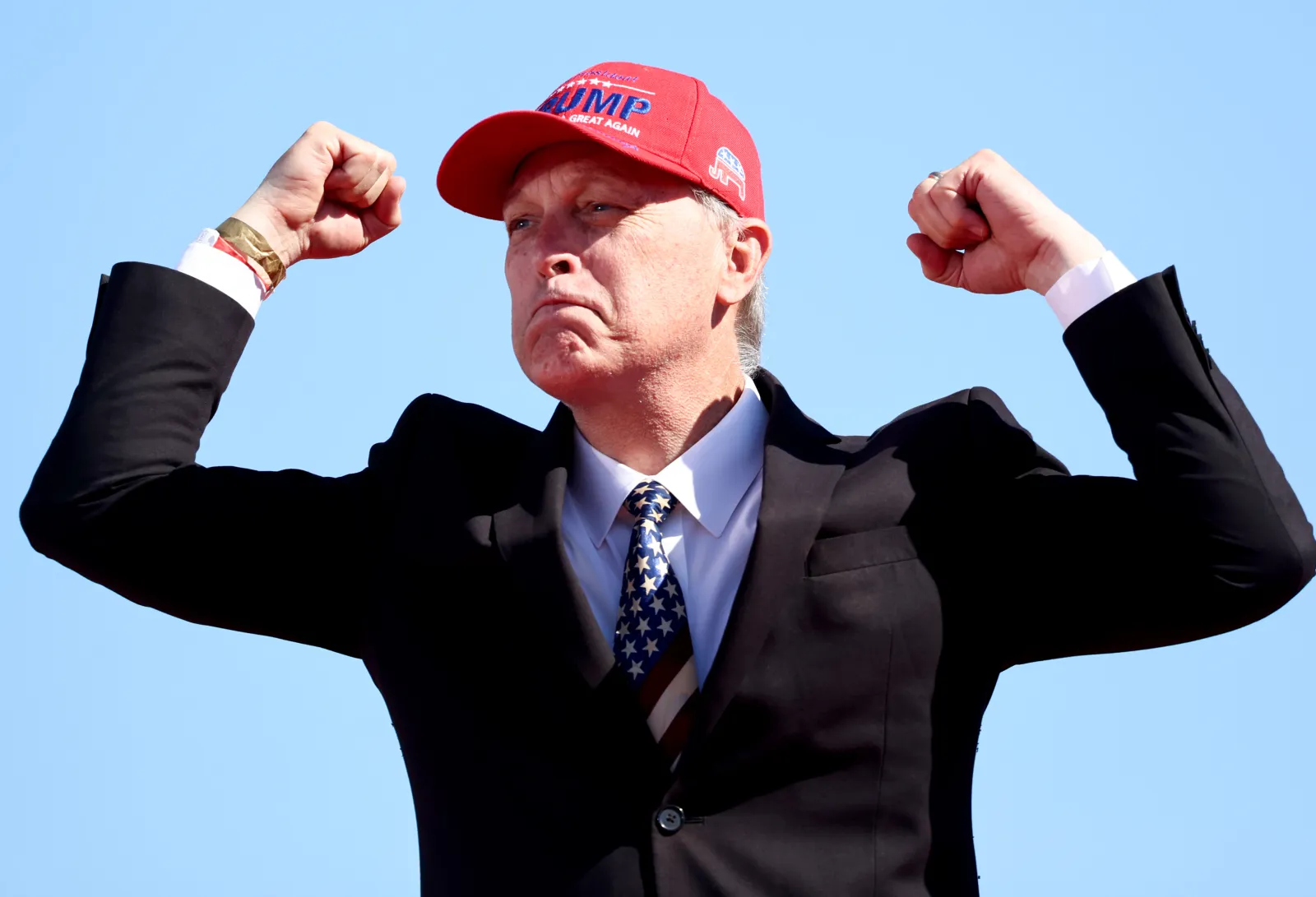
President Donald Trump’s unpopularity in Arizona could be a problem for Republican gubernatorial nominee Andy Biggs, who is trailing his Democratic rival, Governor Katie Hobbs, in polls ahead of November’s elections.
Biggs is a fierce supporter of Trump and has his endorsement, but he is behind in the race to win the critical battleground according to a poll by Quantus Insights which showed that a majority (55.4 percent) of respondents disapprove of Trump compared with 43.4 percent who approve.
Its findings do not prove that Trump is responsible for Biggs’s deficit but Quantus said "a national environment where the party's president is running 12 points underwater can turn a competitive race into an uphill one."
Read More on News
A recent Noble Predictive Insights poll reinforces the challenges facing Biggs, finding Hobbs ahead by a larger margin and showing Trump’s standing in Arizona continuing to weigh on Republican candidates down the ballot.
...
"This race will be close, and Governor Hobbs isn't taking anything for granted," spokesperson for Hobbs, Michael Beyer, told Newsweek, which has also contacted Biggs' office and the White House for comment.
Biggs was a comfortable winner of the Republican primary for the Grand Canyon State, getting nearly three-quarters (74 percent) of the vote on July 21.
His campaign presents the backing of Trump as a major endorsement. But Trump’s job approval in Arizona has a net rating of −12.0, according to Quantus, which said the intensity is "lopsided" with 53.2 percent strongly disapproving and 38 percent strongly approving.
The Quantus survey of 780 voters, which took place on August 21 with a 4.1 percent margin of error, found that Hobbs was nearly 6 percentage points ahead of Biggs, 49.1 percent to 43.2 percent. Six percent were undecided.
Among voters choosing between the two candidates, Hobbs leads 53.2 percent to 46.8 percent.
Hobbs was uncontested for the Democratic nomination, having won the 2022 governor’s race extremely narrowly, defeating Kari Lake by 50.3 percent to 49.6 percent.
Quantus also found that half Arizona likely voters, 50 percent, say Hobbs deserves reelection, while 47.6 percent say it is time for someone new, with only 2.4 percent not sure.
Young voters favor Hobbs more than older voters and she got the backing of 80.6 percent of those aged 18 to 29 and 63.3 percent among those aged 30 to 44.
However, among older voters, only 48 percent of those aged 45 to 64 and 44 percent of those older said they would back her.
Hobbs has the backing of urban voters by 56 percent to 40.4 percent while Biggs leads among rural and town voters—47.6 percent to 32.8 percent.
That leaves the campaign fighting over older versus younger, urban versus rural, college-educated versus working-class voters, said Quantus.
Beyer told Newsweek that Hobbs will "continue meeting voters across the state and working across the aisle to cut taxes, eliminate medical debt for nearly 700,000 Arizonans, secure the border, and protect our water."
Meanwhile, according to Noble, Hobbs leads Biggs 48 percent to 35 percent, with 12 percent undecided—a bigger divide than the Quantus findings.
Noble said the results show "a persistent drag on Republican candidates in Arizona tied to national political conditions," adding that the state’s electorate "continues to show volatility among independents and suburban voters."
Contact Newsweek editors on this story: Daniel Orton, Robert Greenall and Tony Phillips.
View 0 Comments
Submit Correction
View Editorial & AI Guidelines