...

By Tom O'Connor
Deputy Editor, National Security and Foreign Policy
0
Share
Newsweek is a Trust Project member
See more of our trusted coverage when you search.Prefer Newsweek on Googleto see more of our trusted coverage when you search.
As signs mount of impending U.S. military action against Iran, Israeli Prime Minister Benjamin Netanyahu appears poised to play a role in realizing his long-awaited vision of putting an end to the Islamic Republic in the event of a U.S. attack.
Neither the White House nor the Pentagon has confirmed any plans to strike in line with President Donald Trump's warnings over the killing of protesters amid nationwide demonstrations, and the U.S. leader even appeared to de-escalate on Wednesday after being informed that planned executions in Iran would not move forward.
But reports indicate that some U.S. personnel have begun evacuating from key front-line positions in the Middle East, refueling aircraft were on the move, airlines had canceled flights in the region and foreign governments were warning against travel to Israel, measures that preceded the last U.S. strikes on Iran during its 12-day war with Israel in June.
Read More on News
While the scope of such an operation remains uncertain, a renewed U.S. assault could place the Iranian government under further pressure after grappling with the large-scale protests that threatened to undermine the rule of Supreme Leader Ayatollah Ali Khamenei.
From the perspective of Netanyahu, who is also dealing with a sustained wave of domestic dissent, it's a unique chance to score a decisive, final victory in a long-running confrontation with the Islamic Republic after systematically and, at times, dramatically, striking down Iran's constellation of allies across Israel's borders since the outbreak of the war in Gaza, thus rolling back a strategic depth established by Tehran over the course of decades.
Now that the fight has come to Iran, former officials say Israel is already preparing to play a role.
Amir Avivi, a retired Israel Defense Forces (IDF) lieutenant general who serves as founder and chair of the Israel Security and Defense Forum, told Newsweek, "The best scenario for Israel is being proactive and attacking first, and not letting them overwhelm us with an attack. And as all of this is unfolding and happening, you have this demonstration that started now, and the American attack that is imminent. And obviously, once the U.S. decides to lead an attack for Israel, it's a good scenario, providing that they do it before the Iranian attack.
"So, the question is the timing, when it is going to happen, and how strong will be the attack, and how much it will deal also with the military capabilities and the industry," Avivi said. "Israel will be involved one way or another, certainly on the defense, certainly talking about intelligence, but possibly also more than that. This is being coordinated."
...
Crossing the Rubicon
The unprecedented direct exchange of fire between Iran and Israel that took place last June demonstrated Israel's undisputed air superiority over Iran as well as its willingness to strike unilaterally without waiting for the U.S. to spearhead an operation. When Trump did intervene, the targets were limited to three key nuclear sites that could only be penetrated by the kind of massive bunker buster bombs in the U.S. arsenal.
Iran, having retaliated to Israeli bombardment that targeted scores of personnel and sites related to Iran's military and nuclear industry by unleashing hundreds of missiles and drones against Israel, also responded to the U.S. bombings by conducting a missile strike against Al-Udeid Air Base in Qatar, the largest U.S. military installation in the Middle East. The following day, Trump announced a ceasefire had been reached, putting an end to the dozen-day confrontation.
A new round of strikes amid the recent turmoil in Iran, however, has the potential to go even further.
"The previous war was totally focused on military capabilities with no goal and no intention to overthrow the regime," Avivi said. "I think we're in a completely different scenario, and the intent is to overthrow the regime. And this means that this attack should not only deal with the military sites, talking about the production of ballistic missiles launchers sites that are related to the nuclear program or air defense, but also governmental sites, targeting the leadership itself, targeting the forces that are attacking the Iranian citizens."
Thus far, the Iranian government appears to have overcome any immediate existential threat posed by what many view as the most serious challenge to the Islamic Republic since its founding amid a popular revolution that ousted a pro-West monarchy in 1979. Iranian officials in recent days have begun to declare the restoration of order amid sizable pro-government rallies and ongoing internet blackouts, while warning against foreign intervention.
Yet amid a rising death toll that human rights organizations say includes around 3,500 protesters and state media says includes more than 120 security personnel, both Trump and Netanyahu have issued their own appeals for Iranians to continue to take to the streets, messages that may soon be met with military support.
"Usually, the idea is that you cannot really overthrow a government if you don't have boots on the ground, but you have the only Iranian people boots on the ground fighting for liberty," Avivi said. "I think that the U.S. or U.S.-Israeli attack will assist dramatically the Iranian people to do what they need to do to storm all the sites of the government and take over the country."
"And I think we maybe will see peace agreement between Iran and Israel even before we will have a peace agreement with Saudi Arabia," he added.

...
The Crown Jewel
Winning over Saudi Arabia and defeating Iran have long been the leading goals of Netanyahu's vision for a "new Middle East."
At one point, he appeared to be on track to obtain the former, engaging in quiet talks backed by the U.S. to strike a normalization agreement with the kingdom, built on the Trump-backed Abraham Accords, which saw the United Arab Emirates, Sudan, and Morocco establish ties with Israel. But these hopes unraveled with the October 2023 attack launched by the Palestinian Hamas movement.
Since then, Netanyahu has doubled down on his aim of toppling Iran, whose Axis of Resistance allies intervened in the early stages of the war in Gaza. With relentless campaigns that devastated Hamas and the Lebanese Hezbollah movement and led to the elimination of longtime leaders, as well as the overthrow of Syrian President Bashar al-Assad, for which Netanyahu also took credit despite the charge being led by Islamist rebels also considered a threat by Israel, the Israeli premier has reshaped the regional security equation.
The victories also served to overshadow the original failure of detecting the Hamas-led surprise attack that sparked the regional war.
"At a time when Trump strikes Iran or brings down the regime, or Israel has supported, it will be kind of a jewel in his crown, after October 7 and the blunder and the embarrassment and the tragic outcome inside Israel throughout this war, achieving great victories," Dan Arbell, a former Israeli diplomat serving as scholar-in-residence at American University, told Newsweek.
With Netanyahu having been "a crusader" on the Iran issue for his many years in office, Arbell said such an outcome "would be kind of a vindication," marking a "part of his legacy after he's gone."
There are also motivations rooted in Netanyahu seeking to retain his grip on Israel's political scene as elections loom in October.
An ongoing trial over allegations of bribery, fraud and breach of trust, as well as scandals involving allegations his advisers accepted payments from Qatari officials to promote Doha's interests, have contributed to a collapse in popularity for Israel's longest-serving prime minister, thus increasing the value of another historic win in the form of dealing a decisive defeat to Iran.
"For all these reasons, legacy, vindication and drawing attention away from his domestic woes, I think he would love to see that happen under his watch," Arbell said, "and he would love to contribute as much as he can to make it happen."
Newsweek has reached out to the Israeli Consul General in New York for comment.

...
Behind the Scenes
Yet Arbell argued that Israel would be unlikely to fire the first shot, preferring Trump to take the initiative before Israel would step in, though he said "you cannot rule out" a preemptive Israeli action.
"I think that Israel right now is kind of behind the scenes and doesn't want to be seen, though, as kind of leading the charge or actively spearheading this effort, and would rather have Trump do the so-to-speak, dirty work," Arbell said. "And then it'll perhaps follow up if there any kind of repercussions or any aftershocks to such a U.S. attack."
Netanyahu has campaigned for a more hawkish U.S. approach to Iran, dating back to his first three-year premiership in 1996, during which he predicted that the Islamic Republic was only 3-5 years away from obtaining a nuclear bomb. He would go on to become a critic of nuclear diplomacy between Washington and Tehran, particularly the discussions under President Barack Obama that led to the 2015 Joint Comprehensive Plan of Action (JCPOA).
Netanyahu then welcomed Trump's 2018 decision to ax the JCPOA, which lifted sanctions on Iran in exchange for a curbing of its nuclear activities, and advised against efforts under both President Joe Biden and the second Trump administration to reach a new agreement. If there was a new deal, Netanyahu suggested last year, it should be done "the way it was done in Libya"—a model that Trump has previously criticized for paving the way for U.S.-led intervention that overthrew longtime leader Muammar el-Qaddafi years later.
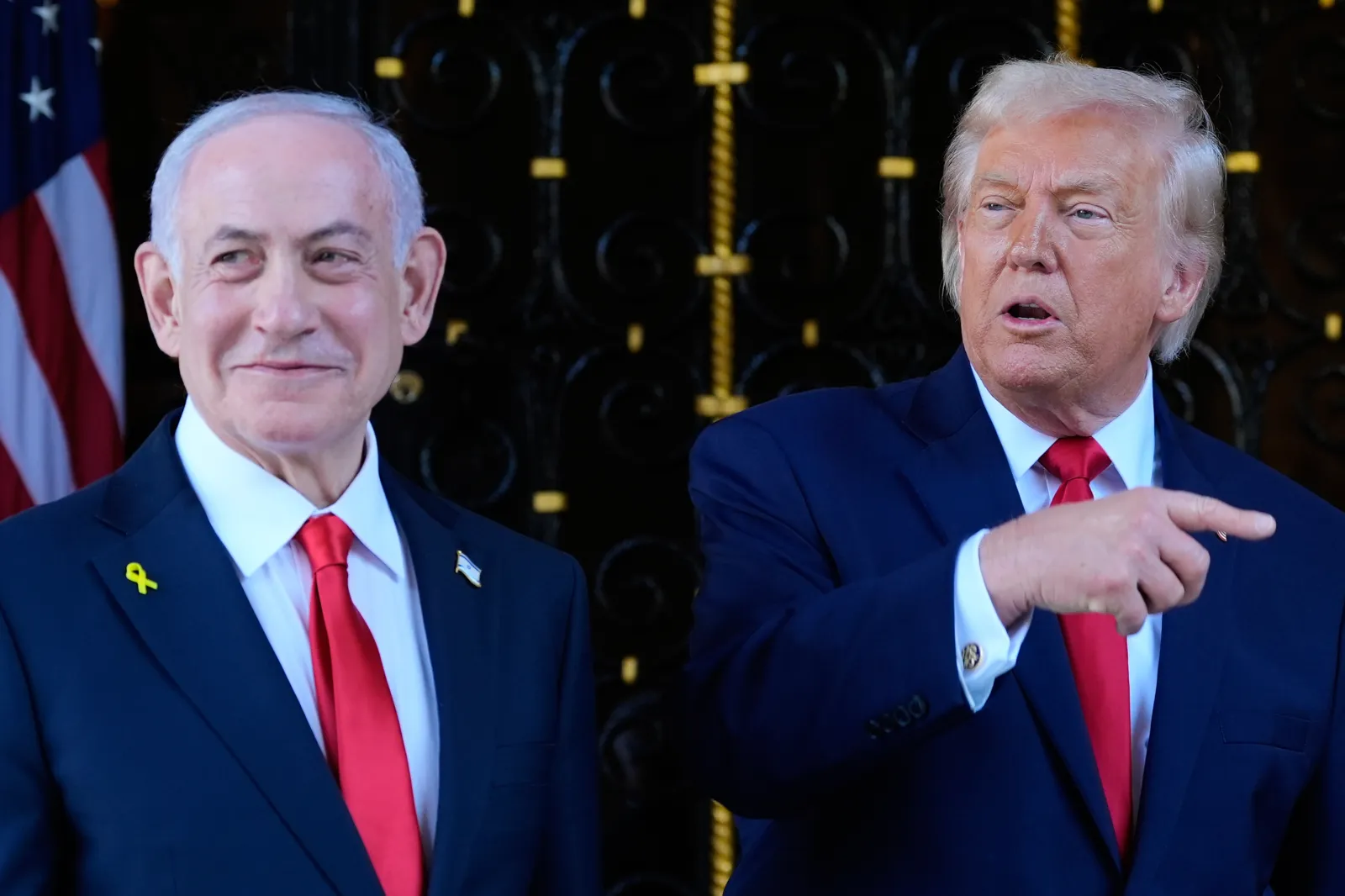
During his latest meeting with Netanyahu late last month, a day after merchants and shopkeepers in Tehran's Grand Bazaar began to protest economic conditions in a movement that would soon swell into a nationwide uprising, Trump renewed his tough talk on Iran, warning that if the Islamic Republic was found to be rebuilding its military capabilities, "the consequences will be very powerful, maybe more powerful than the last time."
Days later, Trump demonstrated once again his willingness to come through with his threats, ordering a U.S. Delta Force raid to seize Venezuelan President Nicolás Maduro and his wife, Cilia Flores, from their home in Caracas to face "narco-terrorism" charges in New York.
Echoing Avivi, Yossi Kuperwasser, reserve IDF brigadier general and head of the Jerusalem Institute for Strategy and Security who previously led the Israeli Ministry of Strategic Affairs and IDF Military Intelligence Research Division, also felt that any a new round of action in Iran would likely pursue targets attached to the country's leadership.
"It's going to be different, because I assume that we should not go only after nuclear project facilities, which were quite destroyed in June, we shall focus probably more so on regime targets," Kuperwasser told Newsweek. "So, that's what I would expect to be part of the retaliation once it happens."
Like Arbell, however, he argued that Netanyahu would likely be content with allowing the U.S. to lead the charge and respond only if Tehran strikes back or Washington asks for assistance.
"We are not going to participate, in my mind, kinetically, in this effort unless the Iranians are going to shoot at us," Kuperwasser said. "If that were to happen, I guess we should respond very fiercely. But until that happens, we are going to support whatever the Americans are going to decide to do."
That said, if the U.S. were to request Israeli assistance, he added, "we should not leave them alone."

...
The Day After
But what would come next in the event of a state collapse in Iran raises difficult questions. Thus far, opposition factions within Iran have yet to rally behind a single leader and the most prominent figure to step up from abroad is the son of the Iran's last shah, Reza Pahlavi, who is based in the U.S. and has yet to receive an endorsement from Trump.
Other scenarios include a government insider stepping up to rule, not unlike what occurred in Venezuela, as well as the possibility of instability breeding ramped up insurgencies and fragmentation, such as witnessed in neighboring Iraq following the U.S.-led invasion in 2003.
Kuperwasser saw all of these options as being "on the table" should the government fall. The "dream," he argued, would be the emergence of "a new leadership within the demonstrators that would make it possible for Iran to move towards liberal democracy, to allow the Iranian people through some elections to decide what its future is going to look like."
"Yes, this might be a dream," he said, "and there are already forces that would like to take advantage of this situation to have a different end result."
Avivi, for his part, felt that U.S. economic aid and stabilization efforts would be key in securing trying to establish an interim government, noting Pahlavi as a potential candidate.
At the same time, he acknowledged the threat posed by potential anarchy and proposed a similar route taken following the fall of Assad in Syria, immediately after which Netanyahu ordered the large-scale targeting of Syrian military sites, to preempt any threat posed by a new government.
He argued that "in any scenario, we have to hit really, really hard all the main industrial military capabilities," including missile sites, "and really weaken Iran militarily in a way that we can have some kind of risk management as to the future."
Raphael Cohen, director of the RAND School of Public Policy's National Security Program and retired U.S. Army reserve colonel who previously served on congressionally appointed National Defense Strategy commissions, came to a similar conclusion.
"When one of these regimes fall, there is always the chance that weaponry end up in the hands of rogue actors. (Mind you, the Israeli retort to this would be that this weaponry is already in the wrong hands)," Cohen told Newsweek. "The way the Israelis dealt with this problem in the past—for example when the Assad regime fell—was through a wave of preventive strikes to destroy existing stockpiles.
"Iran is a harder problem set than Syria was (it's a larger country with a more formidable military and more formidable military stockpiles). Nonetheless, I think it's entirely possible that the Israelis do something similar here and blow up what they can, before it goes missing."

...
A Resilient Foe
Cohen also saw an interest for Israel in taking military action ahead of an Iranian government downfall, a move that may hasten that outcome.
"Even before the protests heated up, Israel signaled increasing concern about Iran reconstituting its missile program. There also is some reporting to suggest that Iran was also reconstituting its weapons of mass destruction program too," Cohen said. "And so, Israel would certainly have interest in trying prevent Iran from developing both of these capabilities and if it can hasten the fall of regime in the process, all the better."
Whether Netanyahu would act with or without Trump, Cohen argued "it could go either way."
"We train with the Israelis, but as we have seen over the last several years, the Israelis have been perfectly willing to act unilaterally if they feel threatened," he added. "And so which way they go will depend a little on what signals President Trump is sending."
But even a sustained U.S.-Israeli military campaign against Iran, short of a full-scale invasion, which does not appear to align with current military movements or Trump's broader preference for swift and precise action, would not guarantee the end of the Islamic Republic.
The Iranian government, while having suffered setbacks on several crucial fronts, has a long history of grappling with foreign and domestic foes. Israel's understanding of this reality may serve to temper the willingness to strike first.
"It’s unlikely that Israel will militarily intervene to support the anti-regime protesters and forces in Iran, without first being attacked by Iran," Michael Makovsky, president and CEO of the Jewish Institute for National Security of America and former special assistant at the Office of the Secretary of Defense (now Secretary of War), told Newsweek. "That’s partly because it’s unlikely such action would be effective in toppling the regime."
He argued that, "even if President Trump orders military strikes against Iran soon, which I think he needs to do to maintain credibility following his rhetoric, it is unlikely to alter the internal dynamics of the country."
"What the U.S. might help over time is preventing Iranian oil exports through a quarantine, supplying the opposition with weapons, and the like," he added, noting that it would be up to "the Iranian people" to overthrow their government.
And while Makovsky argued that Netanyahu would not be able to take full responsibility should that occur, he said the Israeli premier "would be thrilled, and it would likely help him electorally."
"He could certainly take credit for facilitating the regime’s demise by managing the tremendous weakening of Hezbollah, which led to the fall of Iranian-allied Assad, and then in the brilliant operation of the 12-Day War," Makovsky said. "And if he helped convince President Trump to speak out and act on behalf of the Iranian protesters—of which I am not aware—he could rightly take credit for that too."
"While [Netanyahu] greatly wants the Tehran regime to fall, as do all Israelis, and as should all Americans," Makovsky added, "he’s a cautious leader who won’t do anything foolish to bring it about."
View 0 Comments
Submit Correction
View Editorial & AI Guidelines