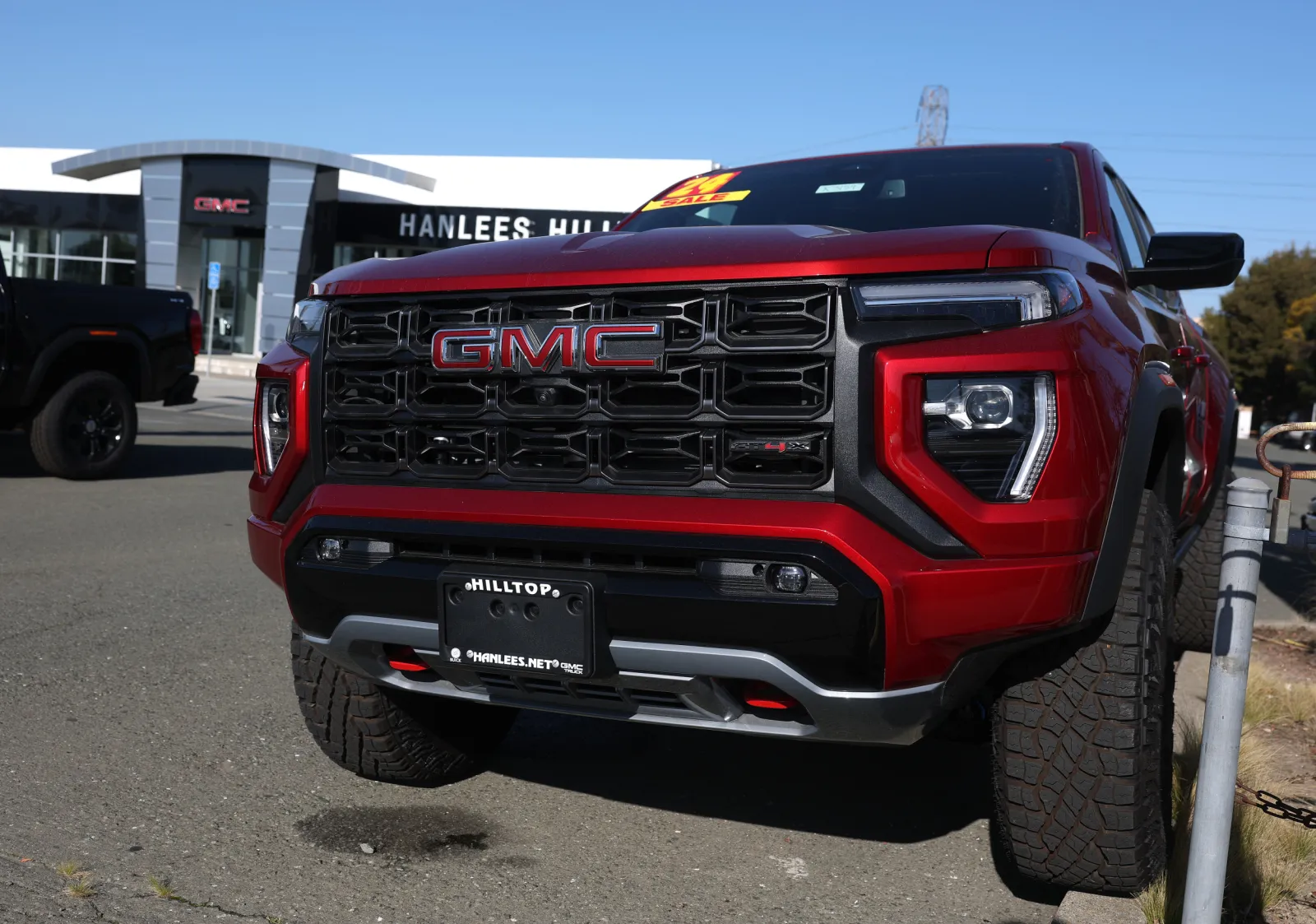
...

By Shane Croucher
Senior Editor
0
Share
Newsweek is a Trust Project member
See more of our trusted coverage when you search.Prefer Newsweek on Googleto see more of our trusted coverage when you search.
General Motors (GM) has issued a warning about how tariffs may affect its business in the future, as President Donald Trump's administration promises some imminent relief for automakers in the U.S.
Why It Matters
In March, Trump announced there would be a 25-percent import tariff on all foreign-made cars and parts.
Read More on News
The president is seeking to protect domestic manufacturers from what he sees as unfair competition, as well as open international markets for them to sell into.
However, the tariffs may complicate supply chains for automakers, raising the costs of parts they may struggle to source quickly—if at all—inside the U.S.
...
What To Know
The automaker posted strong financial results for its first quarter, but is reassessing its expectations for 2025 due to auto import duties.
"We believe the future impact of tariffs could be significant," GM chief financial officer Paul Jacobson told reporters on a call, Reuters reported.
"We're telling folks not to rely on the prior guidance, and we'll update when we have more information around tariffs."
GM earned $2.78 billion, or $3.35 per share, for the three months ended March 31. A year earlier it earned $2.98 billion, or $2.56 per share. Revenue climbed to $44.02 billion from $43.01 billion.
Its initial full-year financial forecast doesn't contemplate the potential impact of tariffs.
The Trump administration is poised to alleviate some of the tariffs on foreign auto parts used to manufacture vehicles in the U.S., according to reports by The Wall Street Journal and Reuters.
While GM said it remains committed to investing in American manufacturing, the specter of tariffs adds new uncertainty to an already volatile market outlook. CEO Mary Barra previously emphasized the company's $35-billion investment plan for electric and autonomous vehicles by 2025.
Analysts warn that consumers may ultimately bear the brunt of higher expenses. According to research from the Center for Automotive Research (CAR), the average price of a new vehicle could increase by $455 to $6,875 if tariffs on imported parts are fully passed down. That could significantly weaken demand in a market already pressured by high interest rates and declining affordability.
What People Are Saying
The "modern automotive supply chain is both global and complex, convoluting the seemingly simple question of the cost of 25-percent tariffs on the industry," said K. Venkatesh Prasad, senior vice president of research and chief innovation officer at CAR, earlier in April.
He continued that "automakers and their suppliers are often multinational companies with facilities spread out across the world, making it difficult to discern how much of a vehicle is domestically produced."
What Happens Next
Trump had previously said the tariffs would come into effect by 3 May, although the announcement may affect that date.
This article includes reporting by The Associated Press.
View 0 Comments
Submit Correction
View Editorial & AI Guidelines