...

By Newsweek Editors
0
Share
Newsweek is a Trust Project member
See more of our trusted coverage when you search.Prefer Newsweek on Googleto see more of our trusted coverage when you search.
A few years ago, you could walk into a store, point at a decent laptop, and be reasonably sure next year it would be faster, lighter, and yet still cheaper or at least no more expensive. That was the bargain America struck with suppliers, and for a long time it held.
Recently, however, a small, innovative company that sells repairable laptops did something unusual: it revealed that the bargain is starting to break. Framework told customers it was raising prices because the memory market had turned "extremely volatile," adding, "We held off on it as long as we could."
Framework explained that the biggest spike was in the exact kind of memory it uses—especially for its 128GB configuration—because those particular chips "have spiked the most." It means its 128GB desktop jumped from $1,999 to $2,459, a $460 increase for the same machine with the same ambition: to be a computer.
Read More on News
Framework doesn’t run the world’s biggest data centers. It doesn’t set global prices. Which is why it’s a useful signal. When the small, customer-friendly company can’t “hold off” anymore, it usually means something bigger has shifted elsewhere.
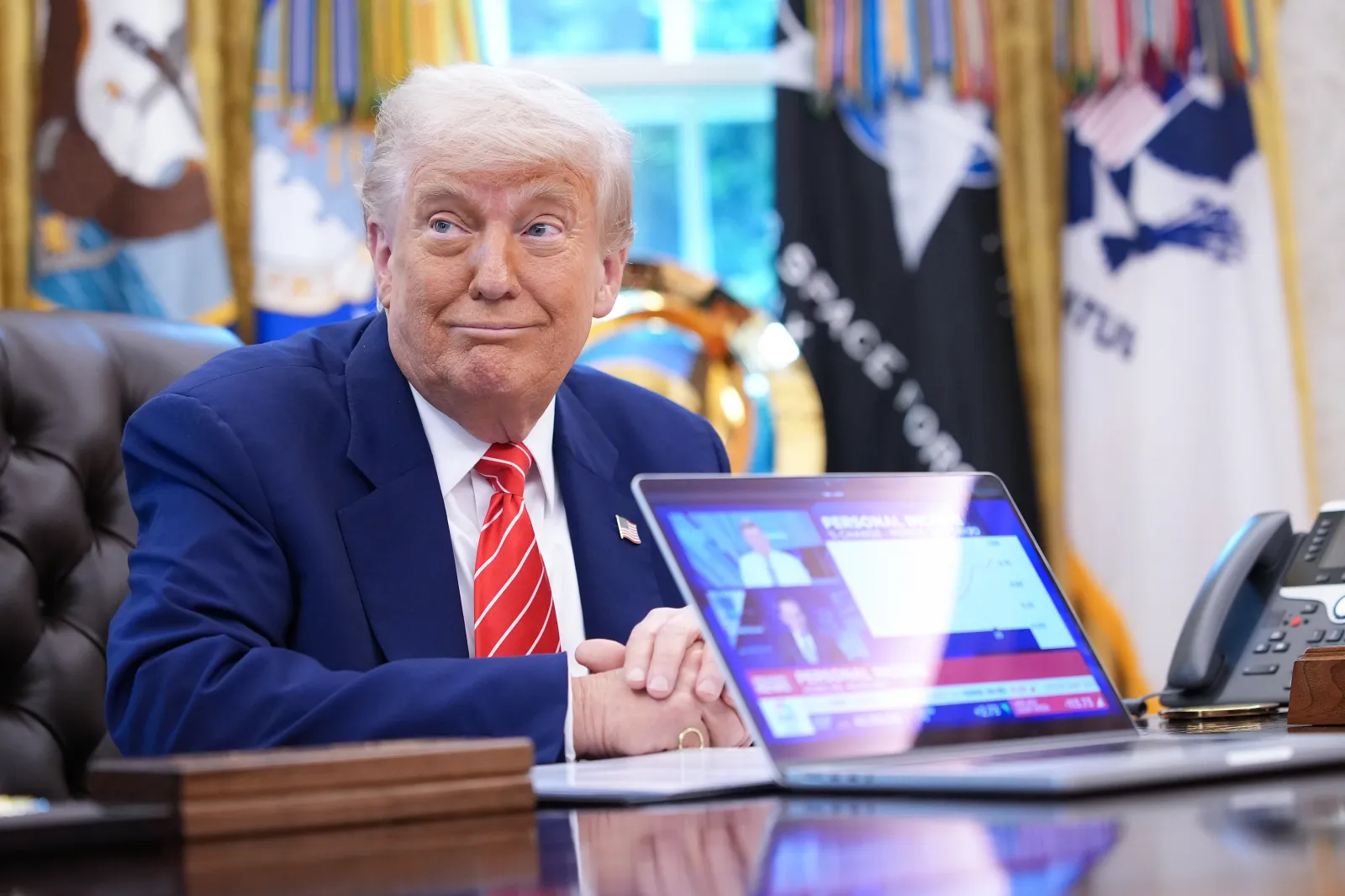
That shift has two parents. One wears a hoodie and talks about AI. The other wears a red tie and talks about tariffs.
Common Knowledge
In January 2026, President Donald Trump's White House issued a proclamation arguing that imports of chips "pose a threat to the national security and economy," and that domestic capacity is "insufficient to meet domestic demand. Trump had floated a blunt instrument in August 2025: "We’ll be putting a tariff of approximately 100 percent on chips and semiconductors…But if you’re building in the United States of America, there’s no charge."
The left has consistently retorted that tariffs are taxes that are ultimately paid by consumers. The quickest way to worsen the "affordability crisis" is to make inputs more expensive on purpose.
The Consumer Technology Association has projected a $90–$143 billion hit to U.S. consumer purchasing power and suggested laptop and tablet purchases could fall by as much as 68 percent under certain tariff scenarios.
Uncommon Knowledge
So much for geopolitics. The effect is real on consumers. TrendForce forecast in early February 2026 that "conventional" memory chip contract prices could rise by up to 95 percent quarter-over-quarter at the start of 2026, and that PC memory prices are expected to at least double in that same period. If a core ingredient in computers suddenly costs more, the computers get pricier or the features get trimmed.
That's also where Big Tech comes in. RBC Capital Markets estimates that roughly 45 percent of Big Tech’s capital spending growth is explained by higher memory prices—about $98 billion of spending that looks like a huge expansion, but is, to a significant degree, simply the same shopping basket at a higher price. That's how a boom in “AI infrastructure” ends up raising the cost of your laptop. When the biggest buyers face a price spike, they can absorb it, and everyone else feels it.
It also helps explain a seemingly unrelated story. Micron, a producer of computer memory, announced in December 2025 that it would exit the "Crucial consumer business," saying: "The AI-driven growth in the data center has led to a surge in demand for memory and storage. Micron has made the difficult decision to exit the Crucial consumer business in order to improve supply and support for our larger, strategic customers in faster-growing segments." It’s a rational response to a market where the most powerful customers are not individual shoppers but massive buyers building out data centers.
Trump tariffs don't just add higher costs to the mix, but extra friction too. Tariffs rarely hit just one neat thing. Even the prospect of changing rules can create price “buffers” as companies try to protect themselves from surprises.
The reason this is jarring is that Americans generally expect the opposite. The Bureau of Labor Statistics explicitly notes that its computer price measures account for changing quality, meaning faster machines can show “price declines” even when stickers don’t change.
But consumers are no longer key. Two forces—AI’s hunger for the same basic components, and a tariff-driven push to reshape supply chains—hit at the exact point where Americans were used to abundance.
Your next laptop isn’t just a device anymore. It’s a souvenir from a new competition, in which the “future of AI” and the “future of national security” are fighting over the same pieces of silicon you used to take for granted.
If you’re enjoying Uncommon Knowledge, please share. If you have suggestions for future editions or feedback, email subscriber.feedback@newsweek.com. We want to hear your voice.
View 0 Comments
Submit Correction
View Editorial & AI Guidelines