
...

By Hugh Cameron
Reporter
0
Share
Newsweek is a Trust Project member
See more of our trusted coverage when you search.Prefer Newsweek on Googleto see more of our trusted coverage when you search.
President Donald Trump's proposed tariffs on Mexico and Canada threaten to raise the costs of several goods for Americans.
Consumers, more cost-conscious after several years of inflation, may soon encounter more expensive food and drink in their local grocery stores, with levies also expected to impact cars and gas.
Newsweek reached out to the White House via email for comment.
Read More on Politics
Why It Matters
Canada and Mexico are two of the United States' three largest trading partners, with China narrowly ahead of the former and behind the latter in terms of imports.
According to the Census Bureau's most recent data, the U.S. imported $377.2 billion of goods from Canada in the first 11 months of 2024 while exporting $322.2 billion. These figures totaled $466.6 billion for Mexico and $309.4 billion, respectively.
Experts appear in agreement that Trump's proposed 25 percent tariffs on goods from both countries—which the president on Monday said are likely to come into effect on February 1—will lead to price increases for U.S. consumers in the short term as producers pass on the higher costs to their customers.
...
Which Products Could Become More Expensive?
Several major exports from Canada and Mexico to the U.S. may see price increases due to the proposed tariff plans.
Cars and Car Parts
Mexico and Canada are leading exporters of automotive parts and vehicles to the U.S., and both countries serve as key manufacturing hubs for some of the biggest names in the car industry.
According to an analysis by Wells Fargo in late November, tariffs would put General Motors, Ford and Stellantis—the "Big Three" of American carmakers—at risk when sourcing vehicle parts.
The financial company's estimates, cited by Fortune, found that this could result in an average price increase of $2,100 for each vehicle assembled in the U.S.
Gas
Canada is far and away the largest natural gas supplier to the U.S., according to the U.S. Energy Information Administration.
GasBuddy analyst Patrick De Haan told Reuters that consumers in the Midwest could see price increases of up to 30 cents per gallon if the region's refineries are forced to pay higher prices for Canadian crude imports.
Food
The U.S. imports a large amount of fresh produce from Mexico, which supplied 63 percent of its vegetable imports and 47 percent of fruit and nut imports in 2023, according to a recent report from the U.S. Department of Agriculture.
Mexican avocados comprise approximately 90 percent of the U.S. supply. The tariffs impact the cost of this popular fruit and Mexico's economy, which relies heavily on avocado exports.
The U.S. is also heavily reliant on food imports from Canada, its leading supplier of vegetable oils, grains, fish, cocoa, meats and livestock in 2023.
As a result, higher tariffs on food products from both countries could drive grocery prices even further upward.
Beer
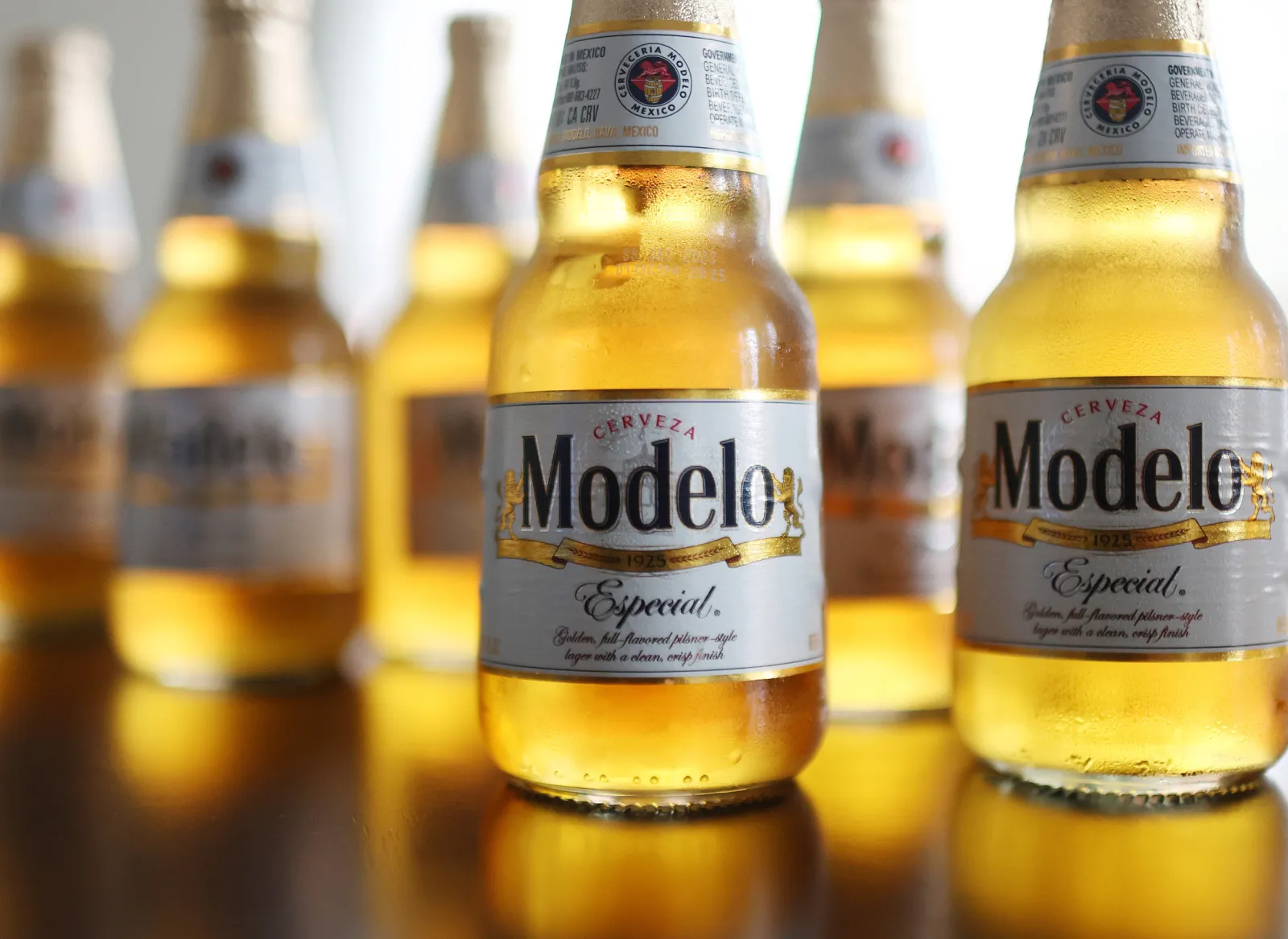
Modelo, which in 2023 overtook Bud Light as America's bestselling beer, is made in Mexico by Grupo Modelo, which also exports other brands, including Corona and Pacifico.
Shares of Constellation Brands, which owns the U.S. rights to the Grupo Modelo labels, have dropped sharply in recent weeks due to concerns over the impending tariffs, declining 20 percent since the beginning of the year.
Trump's proposed tariffs on Mexico could see Constellation Brands' cost of goods sold increase by around 16 percent, according to Wells Fargo Securities analyst Chris Carey, cited by CNBC, these increases likely passed onto consumers.
...
What People Are Saying
President Donald Trump, to reporters on Monday: "We're thinking in terms of 25 percent [tariffs] on Mexico and Canada because they're allowing vast numbers of people—Canada's a very bad abuser also—vast numbers of people to come in, and fentanyl to come in."
JPMorgan CEO Jamie Dimon, to CNBC's Andrew Ross Sorkin at the World Economic Forum in Davos, Switzerland, on Wednesday: "If it's a little inflationary, but it's good for national security, so be it. I mean, get over it. National security trumps a little bit more inflation."
What Happens Next
Despite the fears expressed by some and reports that Trump may decide to reel in his aggressive tariff plans, the president appears undeterred, telling one reporter on Monday that the 25 percent levies on Canada and Mexico will likely come into effect on February 1.
Do you have a story we should be covering? Do you have any questions about this article? Contact LiveNews@newsweek.com.
View 0 Comments
Submit Correction
View Editorial & AI Guidelines