10
Loading video...

By Dan Gooding
Associate News Editor
0
Share
Newsweek is a Trust Project member
See more of our trusted coverage when you search.Prefer Newsweek on Googleto see more of our trusted coverage when you search.
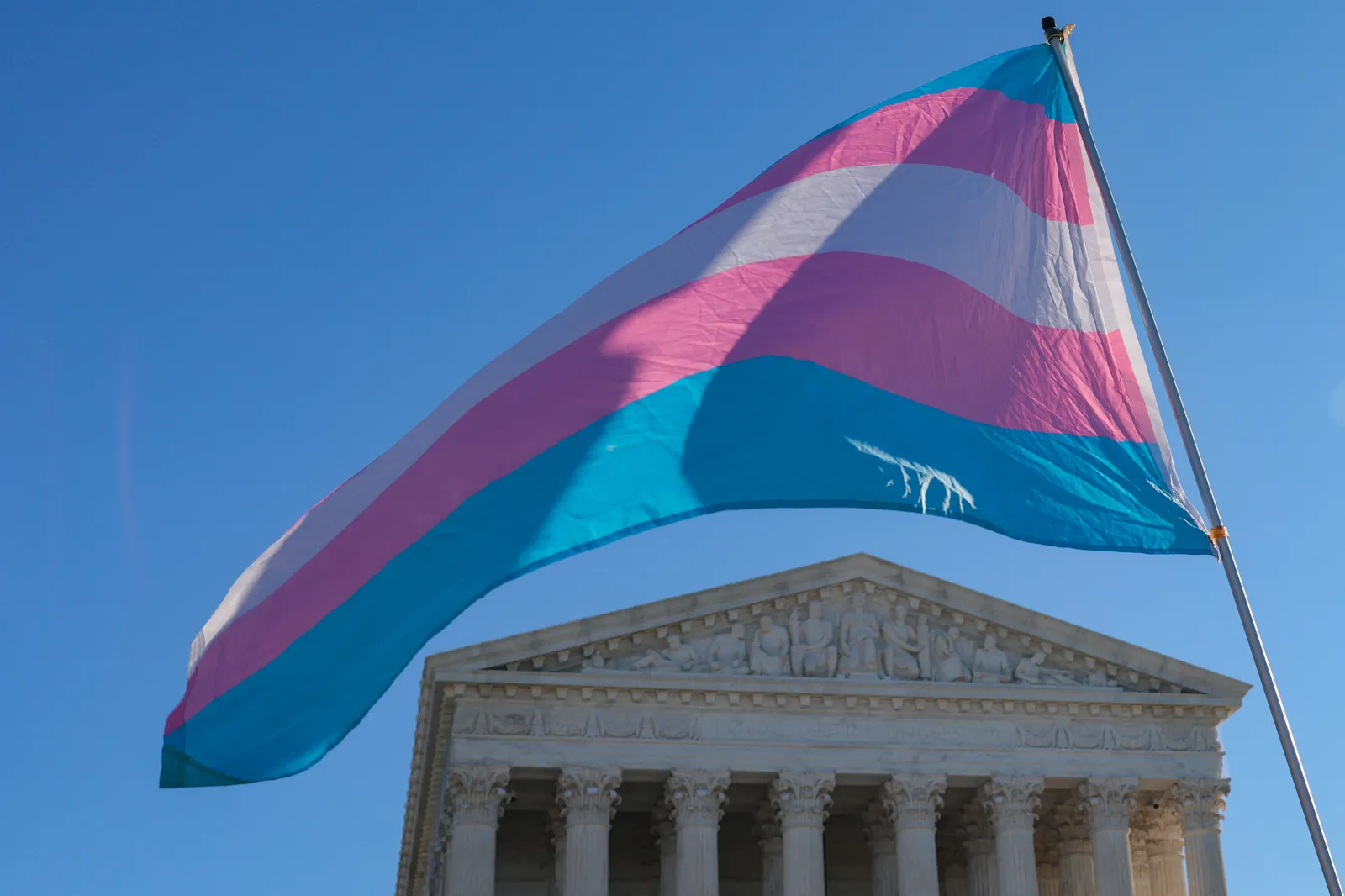
Transgender inmates can continue to receive gender-affirming care while a legal challenge plays out, following a Wednesday Supreme Court decision.
The decision blocked the Trump administration's efforts to deny gender-affirming care to inmates in federal prisons, with conservative justices Samuel Alito and Clarence Thomas stating they would have allowed the policy to take effect.
The emergency order, which gave no explanation from the justices, marks a rare defeat for the current White House's stance on the rights of transgender people.
Read More on Politics
The case stems from a complaint filed by transgender inmates in federal prisons in New Jersey, Florida, and Minnesota who said the government's policy of denying surgical or hormonal treatments was unlawful.
“This order is a loss for common sense. Since the President’s very first day in office, he has fought to halt the U.S. taxpayer funding of transgender mutilation of prison inmates, and the waste of taxpayer resources on so-called ‘social accommodations,’" White House spokeswoman Allison Schuster told Newsweek.
"This administration will continue to fight for bold action to stop the waste of taxpayer dollars, restore Gold Standard Science as the guiding principle of all health policy, and protect countless Americans from these dangerous, life-altering medical practices, especially those funded on the taxpayer’s tab.”
The Federal Bureau of Prisons deferred to the DOJ when reached for comment.
“This is a critical ruling for our clients and all transgender people in Bureau of Prisons custody,” Li Nowlin-Sohl, Senior Staff Attorney with the ACLU’s LGBTQ & HIV Project, said in a statement shared with Newsweek. “The denial of medically necessary health care, including gender-affirming health care, to people in prison is a violation of their fundamental constitutional rights. We will continue to defend the rights of our clients and all incarcerated people.”
Bureau of Prisons Transgender Policy: What to Know
After President Donald Trump returned to the White House in January 2025, he signed an executive order directing federal agencies to stop using federal funds for gender-affirming care, including within the federal prison system.
The BOP then moved to halt treatments, including hormone therapy, which had previously been made available to some transgender prisoners. It also said trans people would not have access to clothing or toiletry items that aligned with their gender identity.
Treatments would instead be focused on therapy and psychiatric medications, the policy said.
The policy also said BOP staff must refer to inmates by their legal name "or pronouns corresponding to their biological sex," adding that it was important staff communicate "effectively and professionally" with all inmates.
...
Transgender Inmates Sued Trump
A lawsuit followed in March 2025, with the three plaintiffs arguing that ending prescribed treatments violated the Eighth Amendment's ban on cruel and unusual punishment.
The plaintiffs—one transgender woman and two transgender men—are representing around 1,000 transgender people currently in federal custody.
They alleged that the policy discriminated against transgender people in violation of equal opportunity protections, and that the administration acted unlawfully under the Administrative Procedure Act and the Rehabilitation Act.
In June 2025, the federal District Court for the District of Columbia issued a preliminary injunction, blocking the Trump administration policy and sparking a Court of Appeals case, which saw the government's appeal denied. The case was then accepted by the Supreme Court earlier in the fall.
In the government's Supreme Court brief, it said its reasoning for the policy was "simple and straightforward."
"All agree that gender dysphoria is a mental-health disorder, so BOP will address it through mental-health treatment. BOP will no longer address it instead through physical, sex-rejecting interventions (such as sex trait-modification surgeries, hormone interventions in general, and social accommodations), which rest on clinical standards that have been widely discredited and which raise serious security and prison-administration concerns," the October 9 filing read.
20261009140353124-26A416-Kingdom-Reply-FINAL.pdf.PDF
A Department of Justice spokesperson told Newsweek, “While we’re disappointed in the Court’s order, this isn’t a final decision on the merits. We look forward to pursuing our appeal in the DC Circuit to reinstate BOP’s policy that affirms biological reality.”
How Thomas, Alito Have Voted on Transgender Issues
Neither Thomas or Alito has been receptive to recent legal arguments expanding protections for transgender people. Both have repeatedly favored interpretations of federal law and the Constitution that emphasize biological sex rather than gender identity.
In 2020, Alito dissented in the landmark case Bostock v. Clayton County, which held that Title VII's prohibition on sex discrimination covers discrimination against gay and transgender employees. In a dissent, joined by Thomas, Alito argued the majority's reasoning was wrong and called the outcome "preposterous."
More recently, Alito has generally aligned with restrictions on transgender rights, including on transgender women competing in women's sports.
Thomas has frequently taken an even more categorical approach. In the case involving transgender athletes earlier this year, he wrote that sex is an immutable biological characteristic and criticized terminology that he believes obscures biological distinctions. He also argued that gender dysphoria is not comparable to characteristics such as race, sex, or national origin.
Related Story

Four Supreme Court Justices Sit Out Decision Preventing Quorum
What Happens Now?
The Supreme Court's decision not to grant the Trump administration's appeal means the policy remains blocked for now, pending further court action. This means gender-affirming care must be provided by the BOP as per its previous directives.
The case now continues in the lower courts, where judges will decide whether the policy is lawful, and the case could later return to the Supreme Court on a full appeal.
Contact Newsweek editors on this story: Jason Lemon, Grayson Thomas and Geoffrey Rowland.
View 0 Comments
Submit Correction
View Editorial & AI Guidelines