
10
Loading video...

By Daniel R. DePetris
Fellow, Defense Priorities
0
Share
Newsweek is a Trust Project member
See more of our trusted coverage when you search.Prefer Newsweek on Googleto see more of our trusted coverage when you search.
Before President Donald Trump decided to launch a preventive war against Iran on February 28, the Strait of Hormuz, the narrow chokepoint through which roughly 20 percent of the world’s oil and gas flowed to international markets, wasn’t an issue. Approximately 120-150 vessels transited the waterway every day. And while U.S. defense planners always knew an Iranian closure of the strait was a possibility, it was merely a hypothetical in peacetime.
Yet, as Iran weaponizes its own geography and deters shippers from traveling the strait, the Trump administration is now facing a situation whereby one of its chief adversaries is holding global energy prices hostage. This, combined with the latest Houthi threats against Saudi vessels in the Bab el-Mandeb off Yemen’s coast, has pushed global crude prices to more than $100 a barrel for the first time since May. Reopening the Strait of Hormuz is now the top U.S. objective, above and beyond containing Iran’s nuclear program.
Unfortunately for Trump, he doesn’t have many options for doing so. And the ones he does have aren’t good.
Read More on Opinion

...
Ramp Up The Air Campaign
The first, a bigger U.S. air campaign against Iranian military facilities along its southern coast, might scratch Trump’s itch to show tactical progress against the Iranian military but is hardly guaranteed to coerce the Islamic Revolutionary Guard Corps (IRGC) into ceasing its attacks in the waterway. Indeed, the U.S. military has struck hundreds of Iranian targets, from coastal batteries and drone storage facilities to air defense sites, over the last 12 days, in an attempt to degrade Tehran’s capacity to continue holding the strait under its thumb. While Iranian defense platforms have no doubt been destroyed in the process, the Iranians have demonstrated no inclination to stop their own offensive operations—and as the U.S. intelligence community’s own assessments reveal, upping the intensity of U.S. strikes is unlikely to push the regime into softening its position. The war has gifted Iran one of the most significant cards it has ever held—de facto control over who can cross the chokepoint—and the Iranians intend to keep it in their hands.
Use The Navy To Guarantee Tanker Safety
Another military option under consideration would be a large-scale U.S. naval operation to protect civilian tankers as they make the journey out of the region. The idea is straightforward: with U.S. military ships guiding the tankers, shippers will have more confidence to make the trip.
Yet a naval operation of this sort is not as easy as it may appear. The Trump administration already attempted a mission like this in May with the adoption of "Project Freedom," which was designed to establish a U.S.-protected route so shippers could avoid Iranian threats. The bid collapsed almost as quickly as it was announced, not because the U.S. Navy couldn’t do the job but because the operation required assistance from regional states, like Saudi Arabia, who were afraid of how Iran would respond. The Saudis were so terrified about Iranian retaliation that Saudi Crown Prince Mohammed bin Salman prohibited the U.S. military from using bases in the kingdom, as well as Saudi airspace, to implement the plan.
Even if the Saudis did buy into the effort, there’s a question as to whether the U.S. Navy could sustain an escort mission over a long period. According to Chief of Naval Operations Adm. Daryl Caudle, the answer is no.
"There are many things we can continue doing to enhance the blockade...but to actually start doing something where I’m providing escort services through a contested strait will, in my military opinion, exceed the capacity of the Navy to do that effectively,” Caudle said during a May 21 hearing.
Related Story
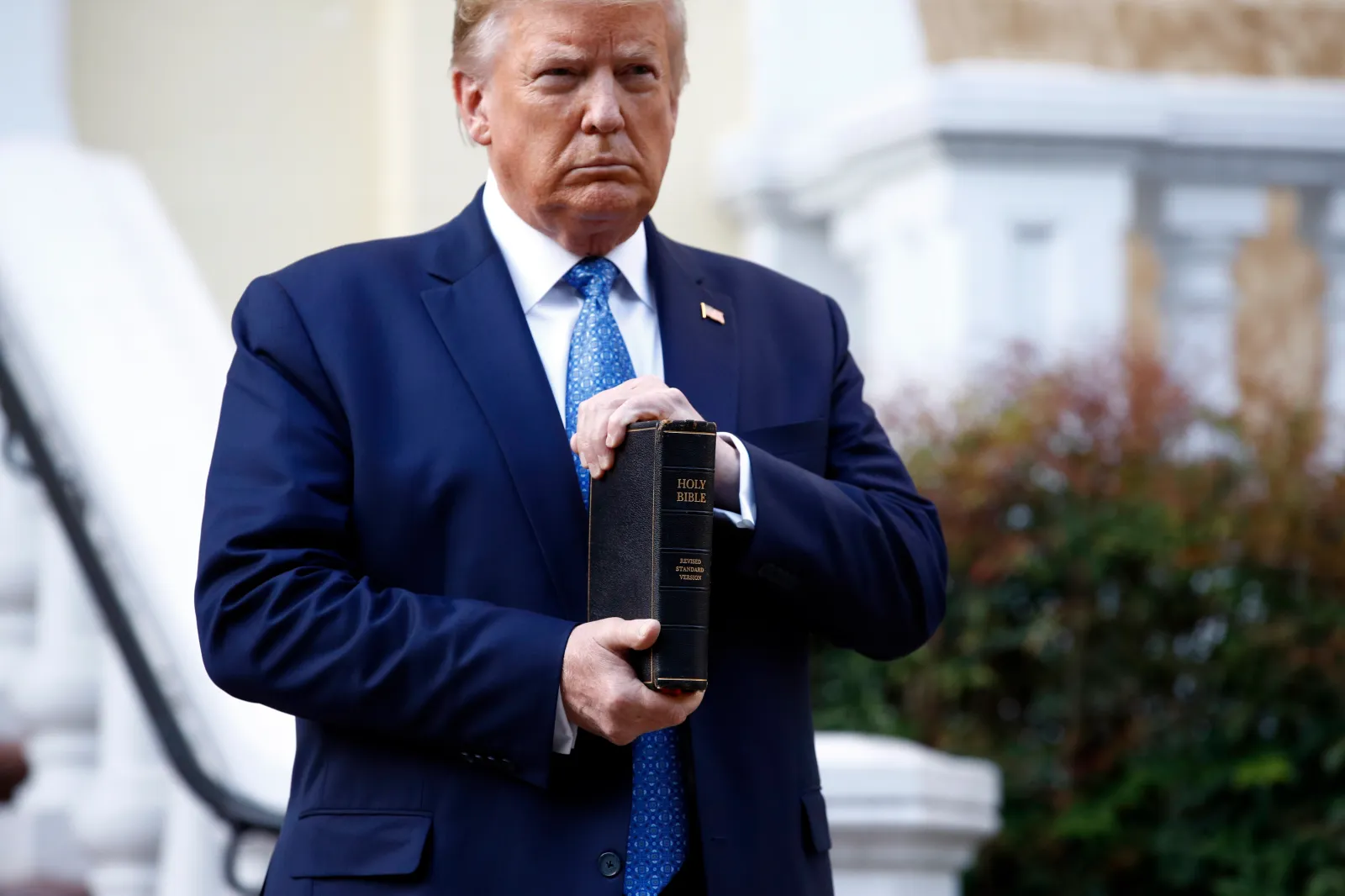
Trump Goes Biblical Against the Islamic Republic
One Step Further: A Ground Invasion
Some have suggested a U.S. ground invasion of Iran’s smaller islands in the strait, as well as Iran’s southern coastline, would do the trick.
But while the Iranian military is vastly inferior to America’s own in terms of conventional capability, carrying out even a limited invasion would still need tens of thousands of troops, consistent U.S. air cover and the types of air defense interceptors that are becoming increasingly scarce as the conflict goes on. Simply seizing Kharg Island, where about 90 percent of Iran’s oil processing takes place, wouldn’t be a walk in the park either. U.S. troops would have to hold this territory at the same time the island becomes saturated with drones and cruise missiles, all of which Iran could fire in the mountainous interior of the country, where U.S. aircraft would have trouble spotting them. Despite the Iranian military’s degradation, the IRGC still retains a good portion of its own capability and can manufacture cheap but effective drones relatively quickly.
One Step Back: Return To The Negotiating Table
Negotiations with Iran to reopen the strait are the least costly in terms of material and human damage. Finding a diplomatic way to return to the pre-war status quo was precisely what the June Memorandum of Understanding sought to accomplish before it fell apart. The situation has only gotten more complicated since then. The Iranians continue to insist that nothing short of full control of the waterway is acceptable to them. Striking a deal, therefore, means Washington either ceding this point to Iran or agreeing that shippers from here on out will have to pay Tehran for the pleasure of using the strait. To date, the United States views either scenario as unacceptable and a dangerous precedent.
Those are the tough choices in front of Trump’s face right now. None of them come without a huge cost. What he decides will determine whether the war continues, escalates or dies down.
What’s the least worst option for Trump and the United States writ large?
The answer will satisfy nobody: paying the toll. Such a scheme will surely rub a lot of people the wrong way, and Trump will find it very difficult to square such a humiliation with his constant need to sell a win. But let’s stop denying the undeniable: the war has created new facts on the ground. The Trump administration could always negotiate the rate or, better yet, turn a vulnerability into an asset by using Iran’s desire to enlist charges as a leverage point to get better terms on the nuclear file. This, rather than more bombing or a costlier invasion, is the surest way out of the mess we created.
Daniel R. DePetris is a fellow at Defense Priorities and a syndicated foreign affairs columnist at the Chicago Tribune.
The views expressed in this article are the writer's own.
View 0 Comments
Submit Correction
View Editorial & AI Guidelines