10
Loading video...

By Mandy Taheri
Reporter
0
Share
Newsweek is a Trust Project member
See more of our trusted coverage when you search.Prefer Newsweek on Googleto see more of our trusted coverage when you search.
A federal judge handed the Trump administration a legal victory in its effort to expand its southern border wall, rejecting a request from the Tohono O'odham Nation to halt construction along a 62-mile stretch of the tribe's reservation along the Arizona-Mexico border.
The Tohono O'odham Nation argues the project would damage sacred and culturally significant sites, interfere with religious practices and further separate tribal communities that have long existed on both sides of the international border.
The ruling helps clear the way for the administration to continue its barrier along a portion of the U.S.-Mexico border. President Donald Trump has made border wall construction a centerpiece of his immigration agenda, seeking to expand, reinforce, and construct barriers along the U.S.-Mexico border during both of his terms.
Read More on News
The border wall project has also sparked litigation beyond the Tohono O'odham case. Tribal nations, religious organizations and landowners have challenged various aspects of construction, including a separate eminent domain case involving land near a religious pilgrimage site along the southern border.
Newsweek has reached out to the legal representatives for the plaintiffs and defendants.
Related Story

Map Shows Area Trump Wants to Take From Catholic Church for Border Wall

...
What the Court Ruled
U.S. District Judge Richard Leon, who was nominated by President George W. Bush, denied the tribe's request for a preliminary injunction, finding it was “unlikely to succeed on the merits of these claims” that the proposed border wall would unlawfully alter reservation boundaries or constitute trespass on tribal land.
In the order he states, “I conclude that plaintiff is unlikely to succeed on the merits because the federal Roosevelt Reservation exists along the international border and, in any event, plaintiff has not established that construction of a border wall will indeed alter Reservation boundaries.”
In 1907, President Theodore Roosevelt established the Roosevelt Reservation, a 60-foot-wide strip of federal land along much of the U.S.-Mexico border. This came about 10 years before the Tohono O'odham Nation’s modern-day reservation was established, however, the Nation “argues that it had aboriginal title to the land before the creation of the Roosevelt Reservation,” per court filings.
Leon concluded that the government's interests in border security, immigration enforcement and public safety outweighed the harms alleged by the tribe at this stage of the litigation.
“And in any event, I find that the Government’s interests in securing the border, enforcing immigration laws, and ensuring public safety outweigh any surviving irreparable harms at this juncture,” Leon wrote.
He concluded the order, writing, “The international border is an area of great significance to both the United States and to the Nation. While I have concluded that a preliminary injunction is unwarranted, I fully expect the Government in the months ahead to follow through on its guarantees of consultation and cooperation with the Nation to address the Nation's concerns regarding border wall construction!”
The Tohono O’odham Nation's Lawsuit
The tribe has a 2.8-million-acre reservation in Arizona, of which 62 miles go alongside the international border with Mexico. It argues that its “broader aboriginal territory” extends into Mexico, with 17 O’odham communities, approximately 2,000 members, who live in Mexico and “continue to cross the border for sacred pilgrimages and ceremonies at important religious and cultural sites,” according to court filings reviewed by Newsweek. In total, the tribe has around 37,000 members.
The Nation filed a lawsuit against the move in June, including a preliminary injunction halting construction of the border wall, arguing that the proposed border wall will change the reservation boundaries and trespass on the reservation.
...
In the original complaint, lawyers representing the tribe state, “While the Nation values its close relationship with the Department, it has long opposed construction of a border wall on the Reservation. The Nation understands that construction of the wall would entail significant devastation on the Reservation, including the destruction of mountain peaks sacred to the O’odham.”
They continue: “It would fray the ties between O’odham communities and families on opposite sides of the border, interfere significantly with O’odham religious rituals and practices, and destroy plant and animal resources sacred to the O’odham.”
The Tohono O’odham Nation has worked with the U.S. government for decades on border security, having agreed to construct a vehicle barrier in 2004 along the border. That barrier allowed people to cross. It has also collaborated with the government on a drug trafficking task force, among other initiatives.
The tribe disagreed with the Friday ruling. Tohono O’odham Nation chairman Verlon M. Jose said in a Friday statement, “Too many critical issues were not adequately addressed, such as inevitable impacts construction will have on the Nation’s land and the permanent destruction of sacred sites. The Nation will consider all possible options for moving forward, as this issue is simply too important to the O’odham.”
Impacted Area
The affected area spans a 62-mile section of the Tohono O'odham Nation's reservation along the U.S.-Mexico border. The reservation is in Arizona's Sonoran Desert, an ecologically sensitive region known for unique wildlife and desert vegetation. The desert is the only place the saguaro cactus grows naturally, according to the National Park Service.

...
In a court filing, the Nation shared a map of the greater ancestral lands which encompass much more than the present-day reservation borders, with land extending past Phoenix, Tucson, and into Mexico.

...
Why Does the Trump Administration Want the Land?
Immigration enforcement and border security have been central priorities of the Trump administration, with the White House saying that the border wall will be completed by next year.
In July 2025, Congress provided billions of dollars for barriers and other security measures along the border, and the federal government would use some of those funds for the property and construction.

...
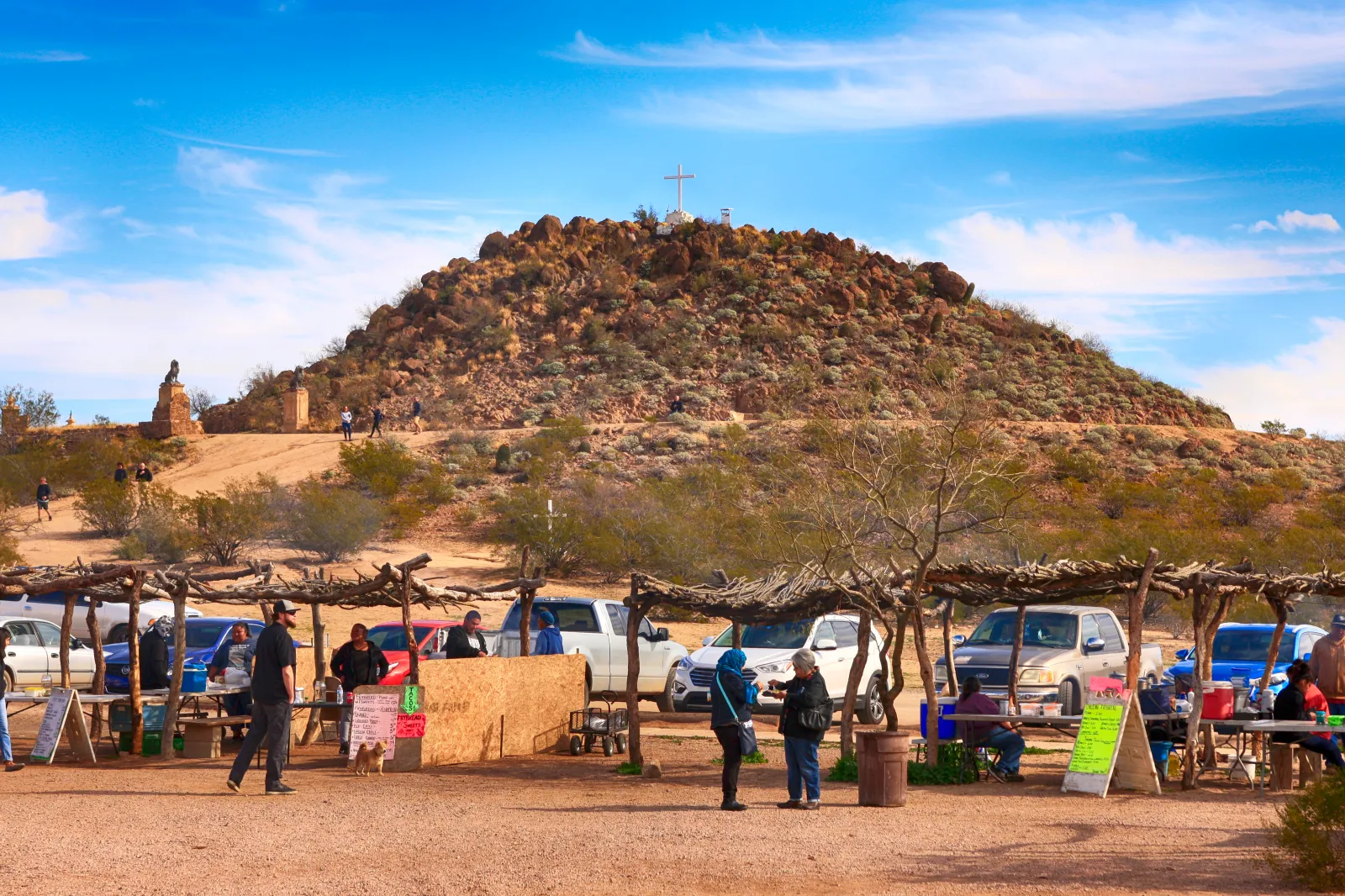
Border wall construction has also drawn challenges from religious groups and landowners. In a separate case, the federal government has sought control of dozens of acres surrounding Mount Cristo Rey, a Catholic pilgrimage site near the U.S.-Mexico border, to facilitate border wall and security projects. The federal government argues the property is needed for border security, while church officials contend the seizure would interfere with religious exercise at a sacred Catholic site.
The Trump administration has begun border wall construction in Big Bend National Park in Texas. The construction may require contractors to blast through part of Mariscal Mountain, a towering limestone ridge inside Big Bend National Park, according to federal maps, environmental groups and House Democrats.
“CBP is building one new access road, improving existing roads, installing detection technology, and placing vehicle barriers in limited, strategic locations. We are not building a 30-foot wall or stadium lighting through Big Bend National Park, Big Bend Ranch State Park, or the Black Gap Wildlife Management Area," CBP Commissioner Rodney Scott told Newsweek earlier this week.
The project has sparked a bipartisan backlash across Texas, uniting local elected officials, environmental groups, former National Park Service leaders and tourism businesses who argue the planned roads, barriers and surveillance infrastructure would damage sensitive desert habitat, alter remote stretches of Big Bend National Park and threaten an economy heavily dependent on outdoor recreation and tourism.
Related Story
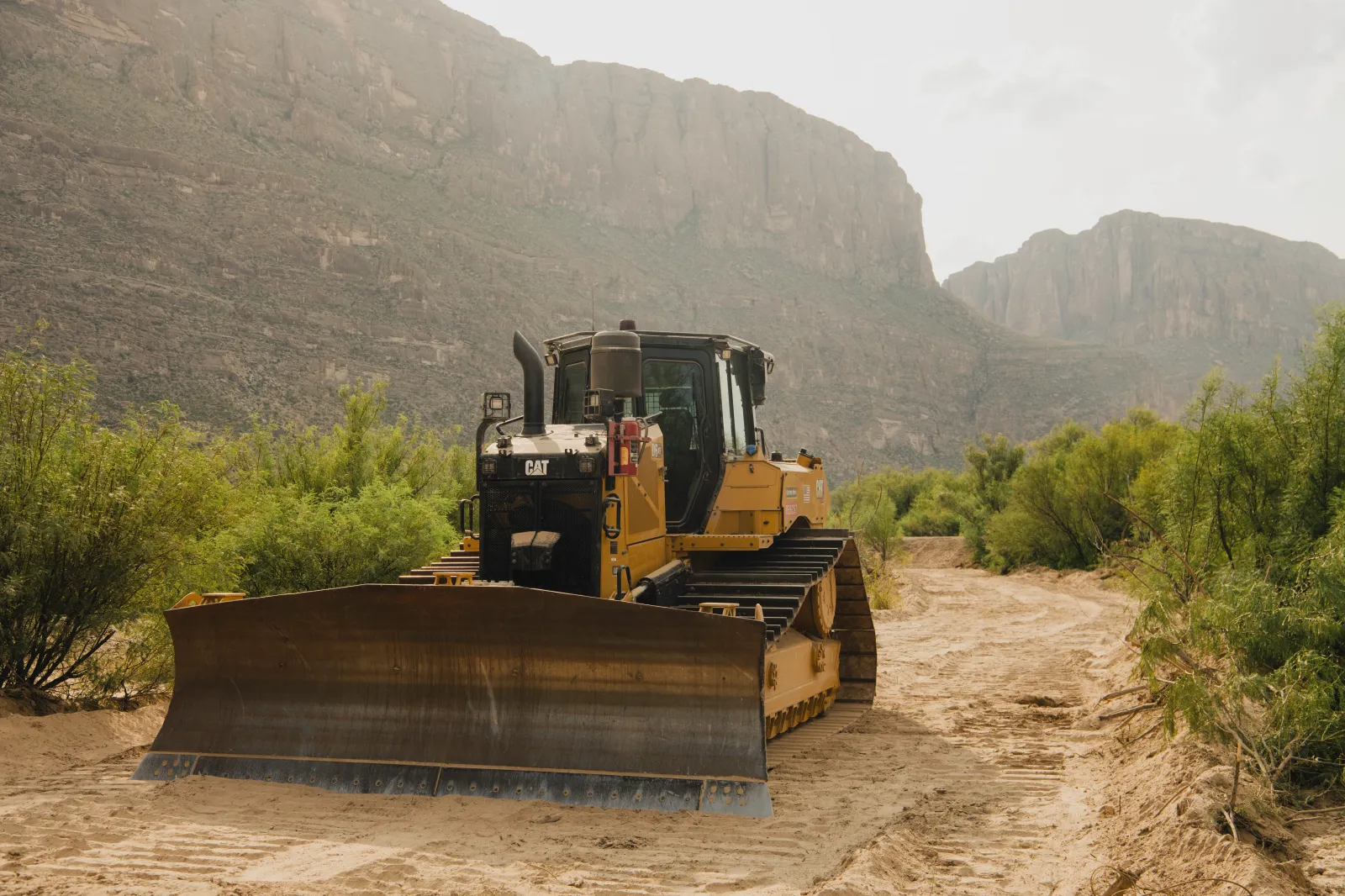
Bulldozers Plow Through Big Bend National Park, Sparking Fury in Texas
Contact Newsweek editors for this story: Steve Mollman and Anthony Murray.
View 0 Comments
Submit Correction
View Editorial & AI Guidelines