...

By Gabe Whisnant
News Editor
0
Share
Newsweek is a Trust Project member
See more of our trusted coverage when you search.Prefer Newsweek on Googleto see more of our trusted coverage when you search.
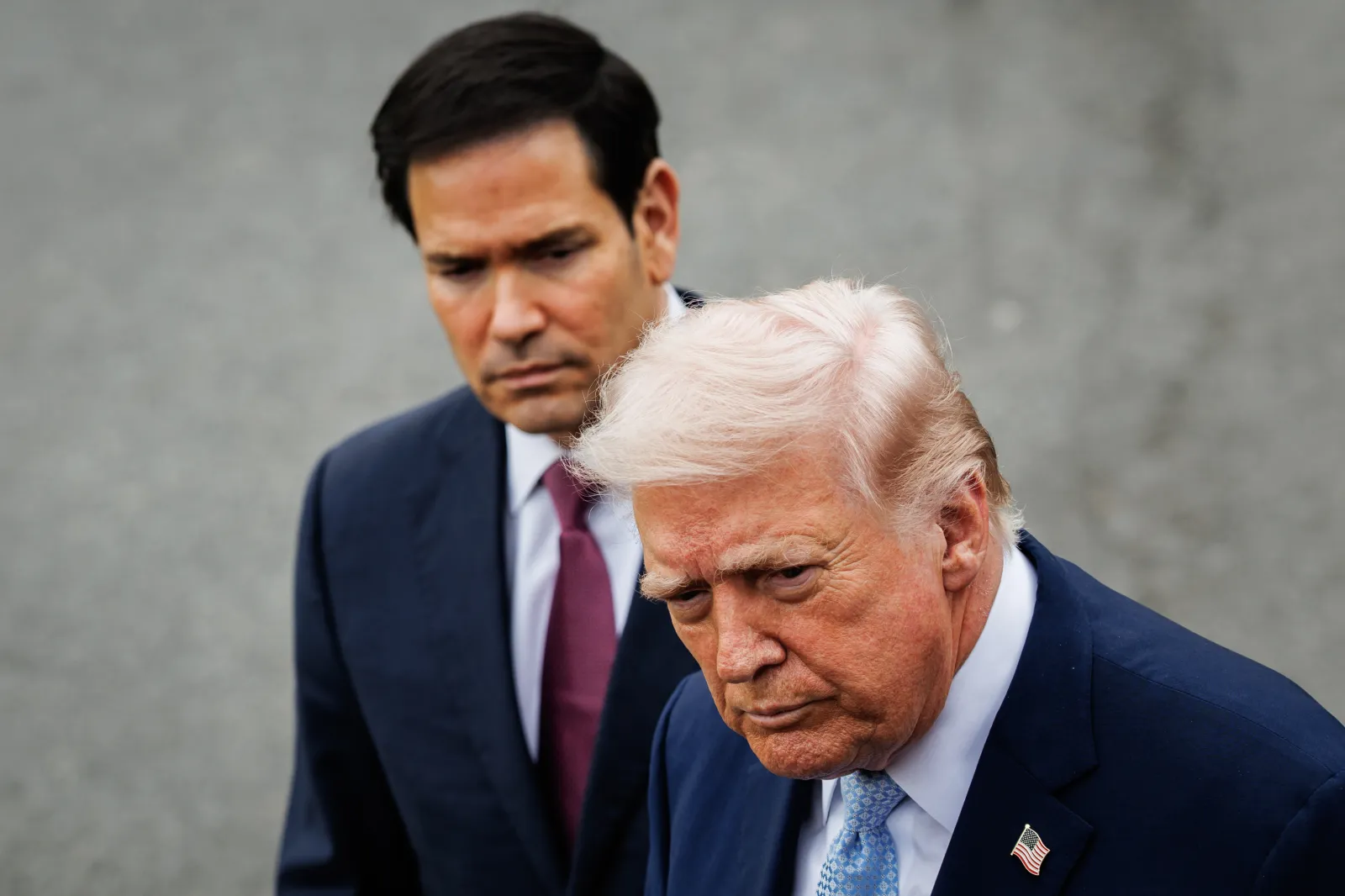
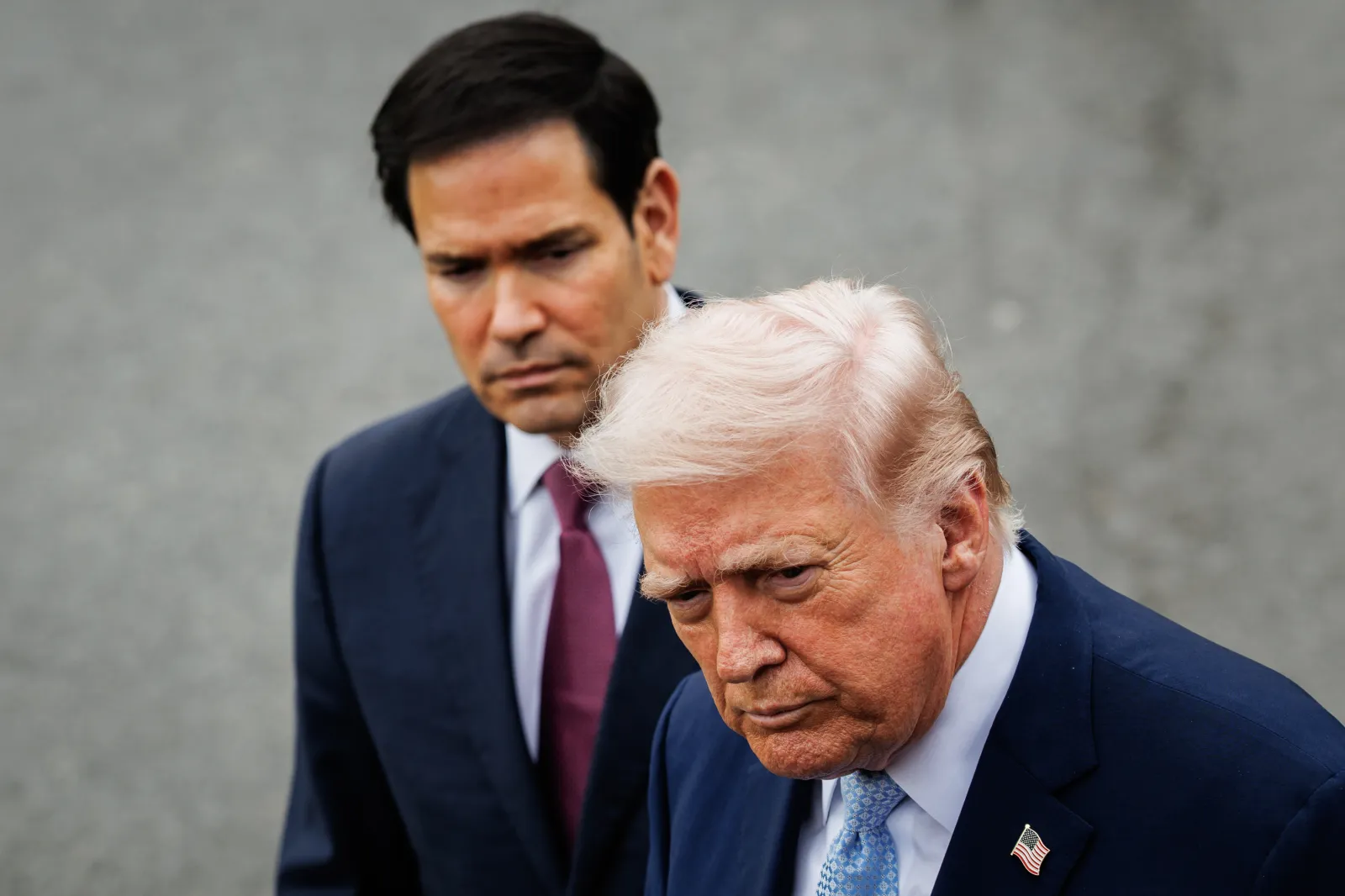
President Donald Trump said Friday that the United States is considering “winding down” its military operation in the Middle East, a statement that came as rising oil prices sent the U.S. stock market sharply lower.
Trump made the comment in a Truth Social post on social media Friday evening, but his remarks appeared to conflict with his administration’s recent actions, including deploying additional troops and warships to the region and asking Congress for another $200 billion to fund the ongoing attacks on Iran.
In the same post, the president offered an unclear picture of whether the United States would continue policing the Strait of Hormuz, a vital global shipping lane through which a significant share of the world’s oil supply passes. Trump said earlier this week that the U.S. did not need help securing the waterway, while also criticizing other countries for failing to contribute.
Read More on World
The comments heightened the uncertainty over U.S. strategy in the region as financial markets reacted to continued volatility in energy prices and the administration pressed ahead with requests for expanded military funding.
Meanwhile, polls have revealed Americans’ mixed sentiments about the Iran war since the administration launched strikes with Israel against the Middle Eastern country. Support for the war could be crucial to Republicans’ chances of winning key seats in the midterms.
...
Iran Expands Attacks as U.S. Bolsters Military Presence in the Middle East
As Israeli airstrikes on Friday hit targets in Tehran, Iran launched additional attacks on Israel and energy infrastructure in neighboring Gulf Arab states, deepening a conflict that has spread beyond its original battlegrounds. The escalation unfolded as the region marked one of the holiest days on the Muslim calendar and as Iranians observed Nowruz, the Persian New Year, a typically festive holiday overshadowed by the war.
The human toll continues to rise. More than 1,300 people have been killed in Iran, according to local authorities. Israeli strikes on Iran‑backed Hezbollah positions in Lebanon have displaced more than 1 million people and killed over 1,000, Lebanese officials said. In Israel, Iranian attacks have killed 15 people, with additional deaths reported in the occupied West Bank. At least 13 U.S. service members have been killed during the conflict.
With limited information emerging from inside Iran, it remained unclear how much damage U.S. and Israeli strikes that began February 28 have inflicted on the country’s arms, nuclear or energy facilities, or even who is effectively directing the government. Despite weeks of bombardment, Iran has continued to mount attacks that are choking off oil supplies and sending shock waves through the global economy, driving up food and fuel prices far beyond the Middle East.
U.S. and Israeli officials have offered shifting explanations for the campaign, at times framing it as an effort to topple Iran’s leadership and at other times as a mission to eliminate Tehran’s nuclear and missile capabilities. There have been no public signs of an uprising inside Iran, and officials on all sides have offered no clear indication of when the fighting might end.
Iranian Leaders Strike Defiant Tone, Issue Wider Threats
Iran’s new supreme leader, Ayatollah Mojtaba Khamenei, praised Iranians’ resilience in a written statement read on state television to mark Nowruz, rejecting the idea that the killing of senior officials could bring down the government. He said U.S. and Israeli strikes were based on a false assumption that targeting Iran’s leadership would lead to its collapse.
Khamenei has not appeared in public since assuming power following the assassination of his father, Ayatollah Ali Khamenei, who was killed in Israeli strikes at the outset of the war. Iranian officials have also said the younger Khamenei was wounded in the initial attacks.
Iran’s top military spokesman, General Abolfazl Shekarchi, escalated the rhetoric Friday by warning that “parks, recreational areas and tourist destinations” worldwide would no longer be safe for Iran’s enemies. The threat renewed fears that Tehran could return to using militant or proxy attacks beyond the Middle East as a means of exerting pressure.
At the same time, Iranian officials insisted the country continues to manufacture missiles, pushing back against Israeli claims that its production capabilities have been destroyed. Iranian state television later reported that General Ali Mohammad Naeini, a Revolutionary Guard spokesman who made similar claims, was killed in an airstrike.

...
U.S. Reinforcements, NATO Pullback and Energy Shockwaves
As Iran broadened its attacks, the United States continued to build up its military posture in the region. Three more U.S. amphibious assault ships and roughly 2,500 additional Marines are being deployed to the Middle East, according to U.S. officials who spoke on condition of anonymity to discuss sensitive operations. The reinforcements will join more than 50,000 American troops already stationed across the region.
The deployment follows a separate move earlier this week in which another group of amphibious assault ships carrying about 2,500 Marines was redirected from the Pacific to the Middle East. Trump has said he has no plans to send U.S. ground forces into Iran, while also emphasizing that he retains all military options.
NATO, meanwhile, confirmed it has withdrawn several hundred personnel from Iraq, relocating them to Europe after a series of Iranian attacks on foreign military bases hosting British, French and Italian troops. The forces were part of a NATO advisory mission established in 2018 to assist Iraqi defense officials.
Iran has increasingly targeted energy infrastructure in Gulf Arab states following Israeli strikes on Iran’s massive South Pars offshore natural gas field earlier in the week. Two waves of Iranian drones struck Kuwait’s Mina Al‑Ahmadi oil refinery early Friday, sparking a fire at one of the Middle East’s largest processing facilities. Bahrain reported a warehouse fire after debris from an intercepted projectile fell on the site, and Saudi Arabia said it shot down multiple drones aimed at its oil‑rich Eastern Province.
Iran’s campaign against energy sites, combined with its pressure on shipping through the Strait of Hormuz, has raised fears of a prolonged global energy crisis. Brent crude oil, the international benchmark, rose to about $108 per barrel Friday, up sharply from roughly $70 before the war began, triggering another sell‑off in global stock markets.
British officials said they have agreed to allow U.S. forces to use U.K. bases for operations aimed at preventing further attacks on shipping in the strait, after Trump criticized NATO allies for failing to contribute more directly.
The violence has unfolded amid religious observances across the region. Explosions were reported over Dubai as air defenses intercepted incoming fire during Eid al‑Fitr celebrations, marking the end of Ramadan. In Jerusalem, missile fragments landed near the Old City, home to some of the holiest sites in Judaism, Christianity and Islam.
On Friday, Israel expanded its strikes into Syria, saying it targeted infrastructure in response to attacks on the Druze minority. Syria’s foreign ministry condemned the strikes, calling them based on “flimsy pretexts and fabricated excuses.”
This article includes reporting by the Associated Press.
View 0 Comments
Submit Correction
View Editorial & AI Guidelines