...

By Hollie Silverman
News Editor
0
Share
Newsweek is a Trust Project member
See more of our trusted coverage when you search.Prefer Newsweek on Googleto see more of our trusted coverage when you search.
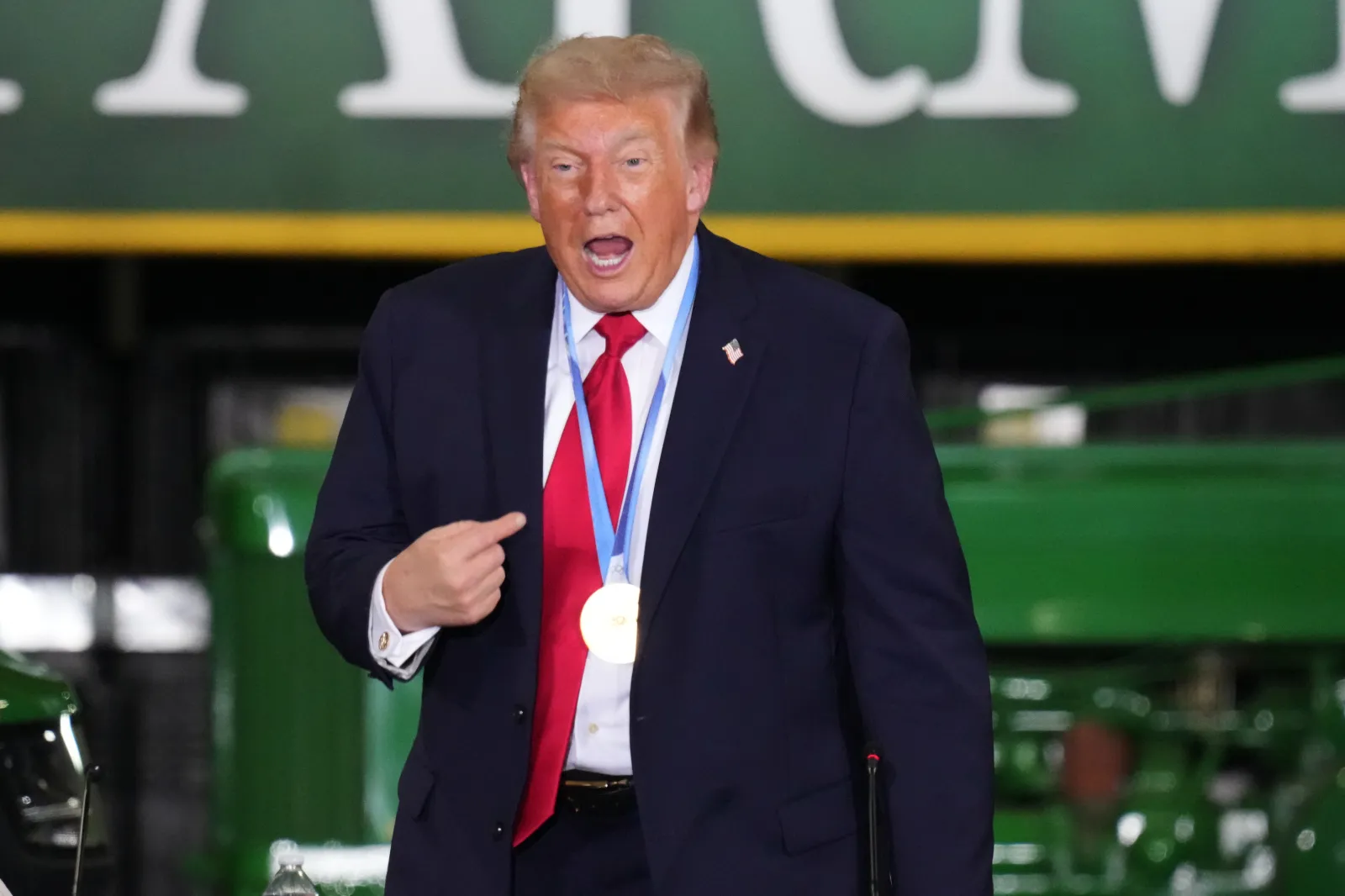
President Donald Trump said the United States is prepared to resume military operations against Iran should ongoing diplomatic efforts falter. Speaking on NBC News' Meet the Press with Kristen Welker, the president stated the administration will either secure a comprehensive agreement to halt Tehran’s nuclear ambitions or “blow the hell out of them.”
The interview, which was taped on Friday but aired Sunday to mark the 100th day since the start of the war, highlighted a dual-track strategy of high-stakes diplomacy backed by the threat of overwhelming force. While Trump indicated Washington is “very close to a deal” with Iranian leadership, he cautioned that returning to military action would present a less complicated path if negotiations stall.
“I’m going to do it either through negotiation or I’m going to blow the hell out of them, to be honest with you,” he said. “That’s actually the easier path.”
Read More on News
The president's remarks come amid a fluid geopolitical landscape characterized by a sustained U.S. naval blockade, targeted airstrikes on Iranian infrastructure, and regional retaliatory actions. Trump defended his handling of the situation, describing the conflict as limited in scope and rejecting comparisons to past prolonged wars. “I don’t like these endless wars. This is not an endless war,” he said, adding the U.S. has been engaged for about three months.
...
Strategic Timelines and Thresholds for Escalation
Trump defined the administration's threshold for renewing offensive military operations, citing a lack of diplomatic momentum as the primary catalyst for escalation.
“My red line would be if I think I wasn’t going to make a deal, or if I wasn’t going to make a deal fast enough,” Trump stated.
While Trump affirmed that a successful diplomatic framework would see the U.S. actively assist Iran in dismantling its nuclear infrastructure, he reiterated that the military action remains an option. The president has framed the current effort as a necessary step to prevent Iran from developing a nuclear weapon, repeatedly saying such a scenario would pose a direct threat to the U.S. and its allies.
“If we don’t make a deal, then we’re going to take them out militarily very harshly,” he warned.
Timeline of the Iran War
- February 28, 2026 (The Outbreak): Following a series of Iranian-backed attacks on U.S. positions in Iraq and Syria, the U.S. and Israel launch coordinated strikes on Iranian missile sites, drone facilities, and Islamic Revolutionary Guard Corps (IRGC) command centers. Iran responds by firing ballistic missiles at American bases and mobilizing naval forces near the Strait of Hormuz.
- Early March (Naval and Cyber Warfare): The U.S. intensified its air campaign against Iranian air defenses and logistics hubs. Severe naval clashes erupted in the Persian Gulf as U.S. destroyers intercepted Iranian fast-attack boats. Concurrently, U.S. Cyber Command disrupted Iranian radar and missile-tracking networks. Commercial shippers began rerouting tankers, causing global insurance rates to spike.
- Mid-March to April (Maximum Mobilization): The Pentagon deployed additional carrier strike groups to the region. Following maritime interdiction operations by the U.S. to choke off weapons shipments, Iran fired anti-ship missiles and briefly closed the Strait of Hormuz. The U.S. responded with its largest wave of airstrikes of the war, targeting missile factories and naval bases. Thousands of additional U.S. troops were deployed to reinforce regional air defenses as Congress pressed the White House for a long-term strategy ahead of the War Powers Act deadline.
- May (The Pause): Entering its third month, the war saw near-daily naval encounters and mounting civilian casualties inside Iran. In mid-May, a fragile ceasefire brokered by Pakistan created the first sustained pause in fighting, opening the door for indirect diplomatic talks.
- June 7: The conflict marks its 100th day, with a U.S. naval blockade reaching its 56th day as negotiations remain underway.
How Many People Have Died in the Iran War?
Trump has said 13 Americans have been killed in the current conflict, which he acknowledged was “too many,” but significantly fewer than in past wars.
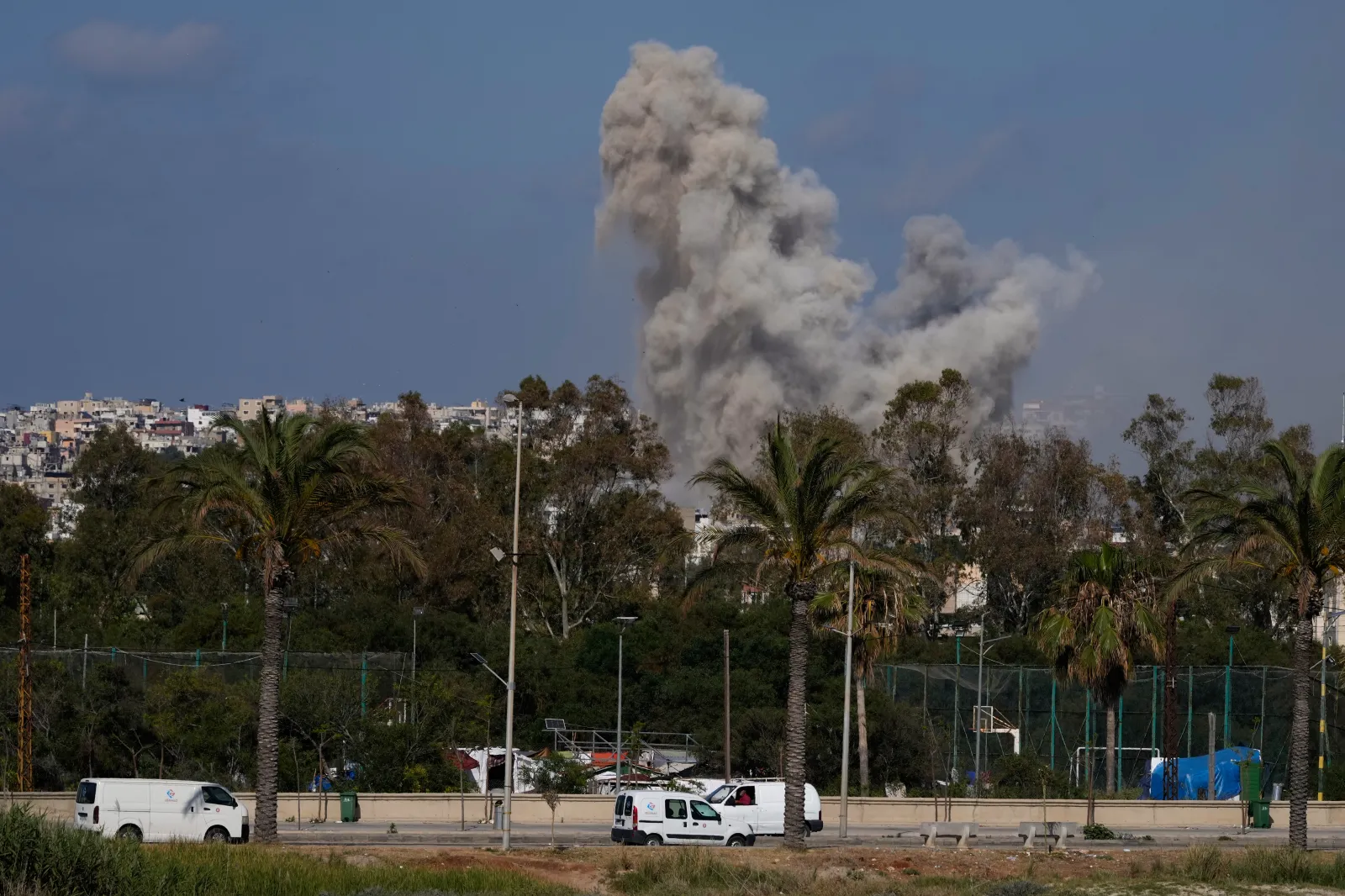
According to reporting from Al Jazeera, over 7,000 people have died in the conflict across multiple countries including Jordan, Iran, Kuwait, Lebanon and Qatar.
...
What Trump Is Demanding
Trump said any agreement with Iran must go beyond past nuclear deals by placing strict limits not only on developing nuclear weapons but also on acquiring them through other means.
In Sunday's interview, he emphasized that Iran must be barred from “develop[ing] or purchas[ing], acquire, or buy” nuclear material, framing the broader language as essential to closing what he described as loopholes in previous agreements like the 2015 Joint Comprehensive Plan of Action under President Barack Obama.
He said sanctions relief or the unfreezing of Iranian assets would not come upfront, but only after Iran complies with U.S. terms. “If they behave, if they do a good job, we start talking,” Trump said, signaling that economic incentives would follow, not precede, concessions.
Should an agreement be codified, the President outlined an enforcement mechanism wherein U.S. personnel and technical equipment could deploy directly to Iran to oversee the extraction and destruction of highly enriched uranium—which he termed “nuclear dust.”
Iran’s Foreign Ministry spokesman Esmail Baghaei recently told Iranian state media that “the focus of the negotiations is on ending the war, and at this stage we are not discussing the details of the nuclear issue.”
Tehran says it has an “inalienable” right to nuclear technology while insisting its program is peaceful.
However, Trump expressed cautious optimism regarding his current diplomatic counterparts in Tehran, describing them as “more rational” than previous regimes. He concluded with a stark reminder that the window for diplomacy remains narrow.
“They cannot have a nuclear weapon,” Trump said. “Either we’re going to have something done fairly quickly, or we’ll finish it out militarily.”
...
View 0 Comments
Submit Correction
View Editorial & AI Guidelines