...


By Dan Gooding and Gabe Whisnant
0
Share
Newsweek is a Trust Project member
See more of our trusted coverage when you search.Prefer Newsweek on Googleto see more of our trusted coverage when you search.
President Donald Trump said Monday that expanding domestic U.S. gas and petroleum production is essential to national defense, invoking the Defense Production Act to speed energy development.
The move comes as gas prices surge nationwide amid global supply disruptions tied to the Iran war and instability in the Strait of Hormuz, fueling political pressure on the administration.
The declaration gives the Energy Department broader authority to support oil and gas production, refining and fuel logistics, potentially reshaping domestic energy policy while offering no immediate relief at the pump.
Read More on Politics
...
"Domestic petroleum production, refining, and logistics capacity, including exploration and production, gathering and transmission pipelines, storage, and marine terminals, are industrial resources, materials, or critical technology items essential to the national defense," the declaration read.
Failure to act now, Trump wrote—as he waived requirements that he said slow such production—would "severely impair national defense capability."
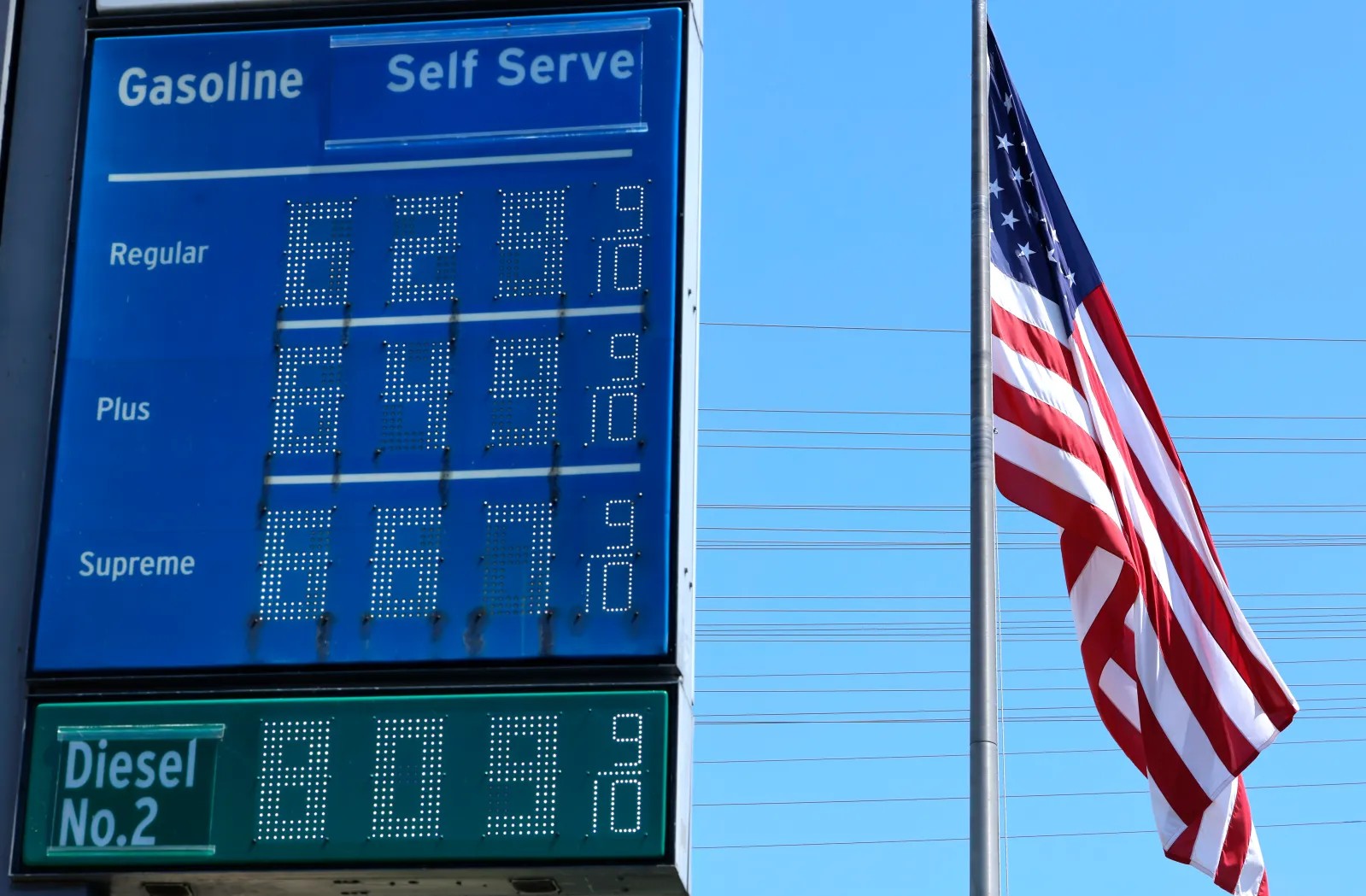
Trump has come under increasing scrutiny over gas prices, which have risen above $6 a gallon in some states as the Iran war and subsequent on-again, off-again closure of the Strait of Hormuz presses global oil supplies.
On Sunday, it was suggested that gas below $3 would not be possible before the midterms in November.
What the Defense Production Act Order Allows
The presidential determination does not mandate new drilling or refinery construction, but it clears legal and financial pathways for the federal government to intervene more aggressively in the energy sector. Under Section 303 of the Defense Production Act, the Energy Department can provide direct financial support, loan guarantees, purchase commitments or other incentives to expand oil and gas production, refining capacity and fuel transportation infrastructure.
White House officials said the authority is intended to address bottlenecks that have limited U.S. energy output despite strong demand, including long permitting timelines, financing risks and aging infrastructure. The declaration specifically highlights pipelines, storage facilities and marine terminals as critical links in the fuel supply chain that, if disrupted, could affect both national defense readiness and civilian energy supplies.
Administration officials emphasized that the move does not override all existing environmental or safety regulations, though Trump said certain requirements that “slow production” could be waived or streamlined where legally allowed. The Energy Department is expected to work with private companies to identify projects eligible for federal support, though no specific funding amounts or projects were named in the announcement.
Officials also framed the action as a way to reduce vulnerability to foreign supply disruptions over time, arguing that a stronger domestic fuel network would help insulate the U.S. economy and military from shocks stemming from conflicts or chokepoints abroad. The determination follows earlier energy‑related orders Trump has signed since declaring a national energy emergency in January 2025.
Political Pressure Mounts as Gas Prices Stay High
The announcement comes at a politically fraught moment for the administration, as rising gas prices continue to strain household budgets and dominate voter concerns ahead of November’s midterm elections. While U.S. oil producers remain among the world’s largest, global prices have been driven higher by the Iran war and uncertainty surrounding shipping traffic through the Strait of Hormuz, which handles a significant share of the world’s oil exports.
Energy analysts note that even if domestic production increases, the impact on retail gasoline prices is unlikely to be immediate. Refinery capacity, fuel blends, transportation costs and global market conditions all play a role in what drivers ultimately pay at the pump. Those structural factors have complicated the administration’s efforts to offer firm predictions on when relief might arrive.
Gas prices have become a central political vulnerability for Trump, who campaigned on promises of lower energy costs and expanded production. Critics have argued that invoking national defense powers blurs the line between emergency authority and routine energy policymaking, while supporters say the move reflects the reality of energy’s role in both military readiness and economic stability.
Inside the administration, messaging on fuel prices has been mixed, with officials alternately warning of prolonged volatility and predicting eventual declines if supply routes stabilize. Trump himself has pushed back against more pessimistic assessments, maintaining that prices will fall once global tensions ease.
For now, the Defense Production Act determination sets the stage for a broader federal role in shaping energy markets, even as officials acknowledge that consumers are unlikely to see immediate price relief. The White House has said the priority is safeguarding long‑term supply and national security, while navigating the short‑term political fallout of historically high fuel costs.
Updates: 4/20/26, 7:05 p.m. ET: This article was updated with new information.
View 0 Comments
Submit Correction
View Editorial & AI Guidelines