
...

By Anna Rahmanan
0
Share
Newsweek is a Trust Project member
See more of our trusted coverage when you search.Prefer Newsweek on Googleto see more of our trusted coverage when you search.
Democratic New Jersey Governor Mikie Sherrill handed President Donald Trump and SAVE Act supporters politically useful ammunition on Tuesday when she disclosed that a state Motor Vehicle Commission software error had wrongly registered about 6,600 people to vote who had said they were not U.S. citizens.
The stakes of the development extend beyond New Jersey. For Trump, the disclosure supplies something his sweeping claims about noncitizen voting have often lacked: a specific, state-confirmed example of an administrative failure resulting in apparently ineligible people being registered and, in some cases, casting ballots. For Democrats, it complicates the argument that existing safeguards are sufficient to catch such mistakes before they affect an election. As for congressional Republicans, particularly senators who have questioned the practicality or political wisdom of Trump-backed voting legislation, it makes resistance considerably harder.
That does not mean the New Jersey episode proves Trump’s broader allegations about widespread noncitizen voting. The numbers remain relatively small, the error was limited to a particular system and there is not yet evidence that the affected voters deliberately broke the law. But politics rarely waits for an investigation to establish the precise size of a problem and Trump has always needed a tangible case around which to build an argument about election vulnerability. New Jersey has now provided one.
Read More on Analysis
The timing is particularly bad for Democrats because the House has already passed legislation requiring documentary proof of citizenship to register for federal elections, while the broader Trump-backed SAVE America Act remains blocked in the Senate amid Democratic opposition and questions from some Republicans over its implementation and potential political consequences.
Until now, opponents could frame the legislation as an excessive response to a largely hypothetical threat. This New Jersey story now makes it all less hypothetical. SAVE Act supporters, on the other hand, no longer have to ask voters to imagine what might happen if a government database mistakenly placed ineligible residents on the rolls. They can now point to a Democratic-led state where officials (Democratic officials at that) say that is exactly what occurred.
Sherrill said the error occurred between June 2023 and June 2024, before she took office, and that the people affected had answered “no” when asked whether they were U.S. citizens while applying for driver’s licenses or identification cards. She ordered the erroneous registrations removed, launched an investigation and said New Jersey had begun replacing the vendor responsible for the system.
Related Story
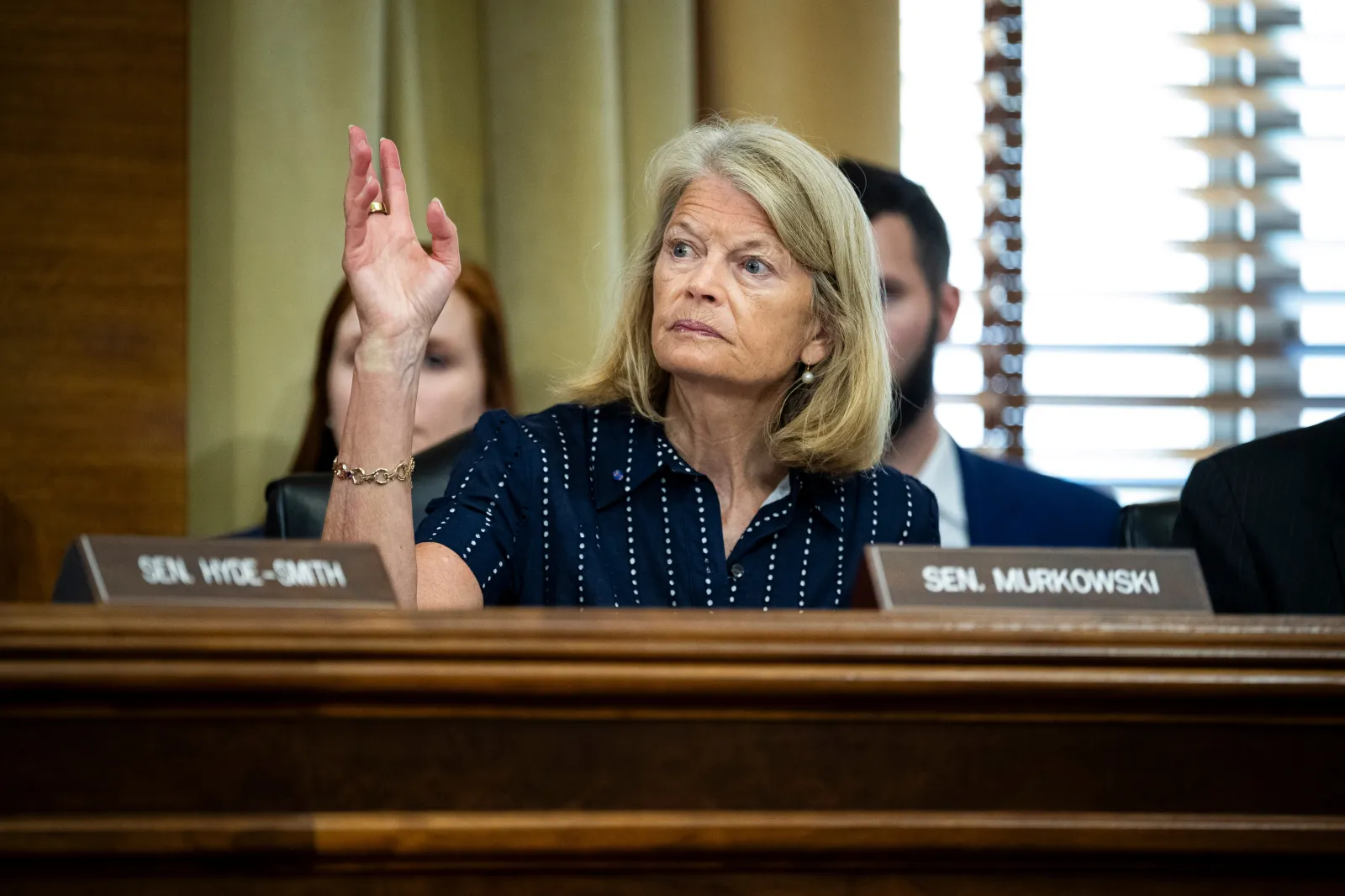
Murkowski: SAVE Act Could Require $1,000 Trips to Register to Vote
Those details help Sherrill distance her administration from the original failure, but they also make the episode more politically damaging. This was apparently not a case in which applicants lied about their citizenship or successfully deceived election officials. Instead, the system was given the correct information and produced the wrong result anyway.
Although that distinction might matter legally, it may matter less politically. For Trump and his allies, the simplest version of the story will be the most effective: thousands of people told a Democratic state they were not citizens, the state registered them anyway and some subsequently voted.
The governor also revealed that while roughly 6,600 people were mistakenly added to the voter rolls, a preliminary review found fewer than 400 of them had ultimately cast ballots.
The smaller figure is likely to become the political flashpoint because the story is no longer just about inaccurate voter rolls. It also involves ballots that were actually cast by people who, according to the state, should never have been registered in the first place. Even if those votes were insufficient to change the outcome of any race—and even if the voters reasonably believed their registrations meant they were entitled to participate—the incident allows Republicans to argue that the safeguards failed at the moment when they mattered most.
At the same time, the scale remains far smaller than Trump’s longstanding claims of widespread noncitizen voting. Fewer than 400 ballots in a state where millions of votes are cast is not evidence of a coordinated national effort to manipulate elections, nor does a software failure in one New Jersey agency demonstrate that similar problems exist throughout the country...but has that ever really mattered to Trump?
The president's election arguments have often worked by turning isolated examples into symbols of systemic weakness. New Jersey has given him an example that is especially potent because the state itself identified the error and because the initial registration reportedly happened despite applicants explicitly stating that they were not citizens.
The SAVE Act would require prospective voters to present documentary proof of citizenship, such as a passport or birth certificate, when registering for federal elections. Opponents argue the requirement could disenfranchise eligible voters who lack easy access to those documents. A survey cited by the Brennan Center for Justice found that an estimated 21.3 million voting-age U.S. citizens either do not have ready access to proof-of-citizenship documents or lack them entirely. SAVE Act critics therefore have substantial data behind their concern that the cure could create a much larger problem than the one it is intended to solve.
That remains the strongest Democratic response: this was a preventable error involving thousands of registrations and it should not be used to impose new barriers on millions of eligible voters. Better software, stronger auditing, clearer communication between motor vehicle and election agencies and more reliable vendor oversight may be solutions, according to Democrats. A nationwide documentation requirement that could make registration harder for citizens might not.
Sherrill’s response may also support that case because the politician disclosed the problem, removed the registrations, ordered an investigation and moved to replace the vendor. Democrats can present those actions as evidence that administrative controls can identify and correct failures without rewriting federal registration rules.
The difficulty is that the system apparently detected the problem only after some of the affected people had voted, which in turn gives Republicans an obvious reply: a safeguard that works after an ineligible ballot has been cast is not much of a safeguard.
The disclosure also places Senate Republicans in a more uncomfortable position. Their concerns about the SAVE America Act may remain legitimate, particularly if the legislation creates new costs for states or registration obstacles for eligible voters. But opposing Trump on the issue now risks being portrayed not as caution about a flawed bill but as indifference to a documented vulnerability.
Democrats face an equally difficult messaging problem: if they emphasize that fewer than 400 people voted, Republicans can accuse them of minimizing unlawful ballots. If they emphasize that the error was caught, Republicans can point out that it was caught too late. And if they focus entirely on the vendor, they may appear to be treating election integrity as a technical customer-service problem rather than a basic government responsibility.
That is why the New Jersey case matters more politically than its raw numbers might suggest: it compresses the election-security debate into a single, easily understood failure.
Whatever investigators ultimately find, Trump now has the political capital he was looking for. If the New Jersey error proves isolated, he can still cast it as evidence that officials discover vulnerabilities only after ballots are cast. If similar mistakes emerge elsewhere, he can argue that the system is less reliable than Democrats admit.
The whole thing does something pretty useful: it makes Trump's words easier to sell and it gives SAVE Act supporters a concrete answer not only to Democrats who say the legislation is unnecessary, but also to Republicans who were still searching for a reason to resist it.
View 0 Comments
Submit Correction
View Editorial & AI Guidelines