
10
Loading video...


By Steve Mollman and Hollie Silverman
0
Share
Newsweek is a Trust Project member
See more of our trusted coverage when you search.Prefer Newsweek on Googleto see more of our trusted coverage when you search.
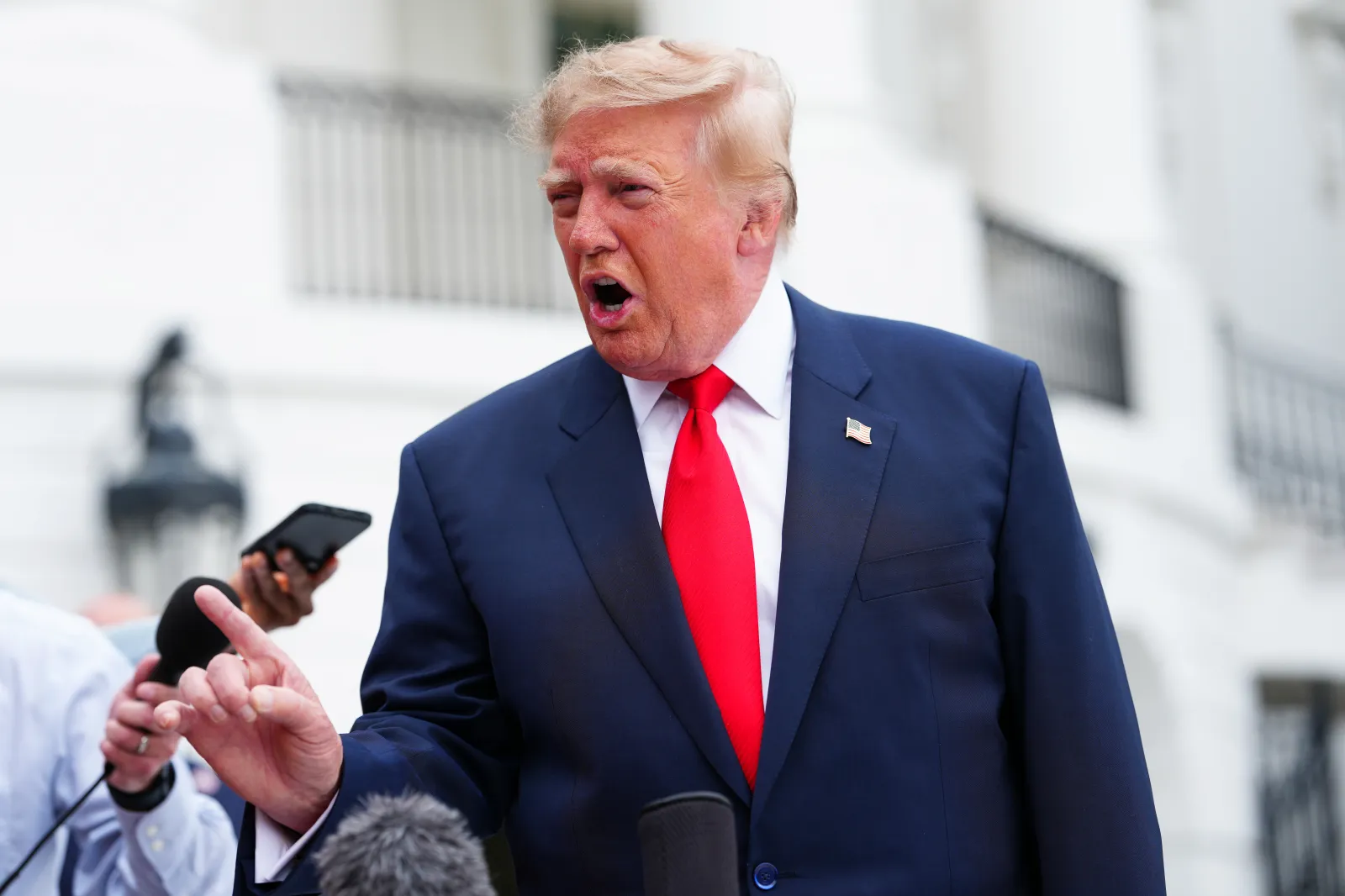
Diesel prices would come down "IN RECORD NUMBERS, AND FAST!" under a new agreement with Russia, President Donald Trump said on Friday, but energy analysts who spoke with Newsweek say the deal is unlikely to deliver significant relief before the November 3 midterm elections.
Trump announced in a Truth Social post that Russian President Vladimir Putin had agreed to supply additional diesel fuel to global markets after the administration authorized transactions involving Russian diesel.
The White House pushed back on suggestions the deal's impact would be limited.
Read More on News
"Adding hundreds of thousands of tons of diesel fuel to the global markets will lower prices," a White House official told Newsweek on Monday. "The Treasury Department issued an OFAC license allowing Russia to immediately begin selling diesel to the United States and the world, which they were previously unable to do."
The official added that the additional supply would help bring down costs for "American farmers, truckers, and workers."
But the analysts who spoke with Newsweek said the additional supply is too small to significantly change diesel-market fundamentals before Election Day.
Newsweek reached out to the Energy Department for comment on Monday.
...
Will Trump's Diesel Deal Lower Prices?
Experts who spoke with Newsweek on Monday were skeptical that the agreement would meaningfully lower diesel prices before the midterms.
Patrick De Haan, head of petroleum analysis at GasBuddy, said the promised volumes appear too small to substantially change market conditions. He told Newsweek that he does not expect the agreement to "meaningfully" affect U.S. diesel prices.
"Perhaps slight decreases, but that's only if the deal actually happens," De Haan said. "Russia may not actually have enough diesel as this deal represents."
Asked whether truckers, farmers and other major diesel users could see noticeable relief before Election Day, De Haan was equally doubtful.
"I don't believe this changes much," he said. "It doesn't add any supply to a global market that needs it badly."
Related Story

How Ukraine Could Explode Trump’s ‘Deal With the Devil’
De Haan also questioned the scale of the announcement, noting that the initial 300,000-ton shipment cited by Trump represents only about a day and a half of typical U.S. diesel supply.
"The amounts aren't exactly sizable," he said. "The 300,000 tonnes is about 1.5 days of typical U.S. supply."
He added that the promised exports are "very small" relative to global diesel demand and questioned whether Russia can deliver the volumes Trump described.
Tom Kloza, senior energy and market adviser at Gulf Oil, also questioned whether Russia could realistically deliver the volumes Trump described.
"Would Russia be willing to part with diesel to the U.S. when it doesn't have enough to handle domestic needs?" Kloza told Newsweek.
Kloza added that refinery disruptions remain a major obstacle, noting that Russian refining capacity has been damaged by repeated drone attacks in the ongoing war with Ukraine and that refining systems elsewhere in the Middle East are also under pressure.
Ed Hirs, an energy economist at the University of Houston, also questioned whether the agreement could significantly affect prices before voters head to the polls.
"The diesel that will be consumed over the next three weeks is already in the pipeline to consumers," Hirs told Newsweek.
He said the lead time required to transport, refine and distribute fuel makes it unlikely the agreement would have a major impact before Election Day.
Hirs further argued that quality concerns could limit the willingness of U.S. distributors and major fuel brands to handle Russian diesel. "Russian diesel fuel quality is spotty in the best of times," he said, adding that firms such as ExxonMobil, Chevron, Gulf, BP and Shell would be unlikely to guarantee the product.
Margarita Balmaceda, a professor at Seton Hall University’s School of Diplomacy and International Relations, told Newsweek that additional Russian diesel could provide some localized relief but consumers should not expect a significant nationwide drop in prices before the November 3 midterm elections.
“The short answer is that a little local relief is possible, but a nationwide price break by November 3 is unlikely,” Balmaceda said.
She said futures could fall as traders anticipate additional supply, but physical diesel would still have to reach U.S. buyers, and any wholesale savings would have to make their way down the supply chain to truckers, farmers and freight operators.
“Russia’s promised volumes may simply be redirected from existing buyers, so any relief is likely to be modest and local,” Balmaceda said.
She warned about the geopolitical implications of buying more Russian fuel during the war in Ukraine, saying the deal could open “the door for Russia to access additional revenue,” which could support purchases of “drones and other weaponry” and delay negotiations to end the war.
On concerns that expanding data centers may be contributing to diesel shortages through their use of backup generators, Balmaceda said they “don’t look like a major driver of national diesel prices.” Instead, she said their growing electricity needs could put pressure on the wider energy system because much of the U.S. power grid remains dependent on fossil fuels.
Why Diesel Prices Have Become Major Political Issue
Unlike gasoline, diesel is critical to many parts of the economy.
The fuel powers trucking fleets, farm equipment, freight rail, construction machinery and industrial operations. When diesel prices rise, costs often spread through supply chains and can contribute to broader inflation.
Trump has increasingly focused on diesel costs in recent weeks, arguing that lowering prices would help farmers, ranchers and truckers. The administration has already allowed the temporary use of tax-exempt dyed diesel on public roads, encouraged allies to release fuel reserves and now moved to facilitate additional Russian diesel exports.
The issue has gained added political significance because diesel prices remain elevated with three weeks remaining until the midterms. Diesel prices averaged about $6.27 per gallon nationally on Monday, according to AAA.
Even as Trump argues that the agreement will lower prices, some Republicans have criticized the move, saying the U.S. should not provide Russia with additional energy revenue while the war continues.
Some Republicans are also seeking to stop the agreement outright. Representative Brian Fitzpatrick, a Pennsylvania Republican and co-chair of the House Ukraine Caucus, said he plans to introduce bipartisan legislation blocking purchases of Russian oil.
"We will be introducing bipartisan legislation to block any and all purchases of Russian oil," he wrote on X. "It will be called the 'Ronald Reagan Peace Through Strength Act.'"
Analysts Question Whether Russia Adds Enough Supply
Bob McNally, president of Rapidan Energy Group, said the global diesel market has lost about 1 million barrels per day of supply, while Russia's incremental exports amount to only about 0.1 to 0.2 million barrels per day.
"So the new barrels will help on the margin but will fall well short of the losses from the Iran and Russia-Ukraine conflicts," McNally said.
Analysts previously interviewed by Newsweek have also questioned whether Russia can deliver the volumes Trump described, citing refinery damage caused by Ukrainian drone attacks and broader supply constraints.
Ukraine Disputes Trump's Claims About Energy Markets
The diesel deal has escalated tensions between Trump and Ukrainian President Volodymyr Zelensky.
Trump has repeatedly linked high diesel prices to Ukrainian attacks on Russian energy infrastructure and has argued that reducing attacks on Russian refineries could help ease fuel costs.
But Zelensky pushed back on Monday during an interview with Fox News.
"Everybody understands that the prices on diesel doesn't depend on our attacks on diesel in Russia," he said. "Everybody understands that it depends on the blocking of Hormuz, Strait of Hormuz."
Zelensky also responded to Trump's suggestion to reporters on Saturday that Ukraine should replace its leader.
"If President Trump wants to change the leader in Ukraine he [has] to know only our people can change [that] and I am ready for elections, really," Zelensky said, adding that Ukraine would need at least 60 days without Russian attacks to safely conduct a vote.
"We have attacks each hour...how can people vote?" he said.
Zelensky Says Russia Violated Trump's Energy Ceasefire
The dispute widened Monday after Zelensky accused Russia of continuing attacks on Ukrainian energy infrastructure despite Trump's announcement on Sunday that Russia and Ukraine had agreed to stop targeting each other's energy facilities.
Zelensky said Russia struck at least six energy-related targets overnight, including a gas facility and a petrol station. He argued that the attacks showed Moscow had no intention of honoring the ceasefire.
"This is what happens when Russia sees the prospect of higher revenues for its war machine," Zelensky wrote on X.
Reuters also reported that European allies expressed skepticism of the arrangement, while the European Union moved ahead with a new sanctions package targeting Russia.
The developments underscore how Trump's diesel initiative remains tied to the broader war in Ukraine, even as the White House promotes it primarily as an economic measure aimed at lowering fuel costs.
For now, however, the view from energy analysts appears clear: The additional diesel may help on the margins, but the volumes announced by Trump are too small to meaningfully alter global diesel markets before Election Day.
Newsweek reporters and editors used Martyn, our AI assistant, to produce this story. Learn more about Martyn here.
Contact Newsweek editors on this story: Steve Mollman and Dave Siminoff.
View 0 Comments
Submit Correction
View Editorial & AI Guidelines