
10
Loading video...

By Steve Mollman
News Editor
0
Share
Newsweek is a Trust Project member
See more of our trusted coverage when you search.Prefer Newsweek on Googleto see more of our trusted coverage when you search.
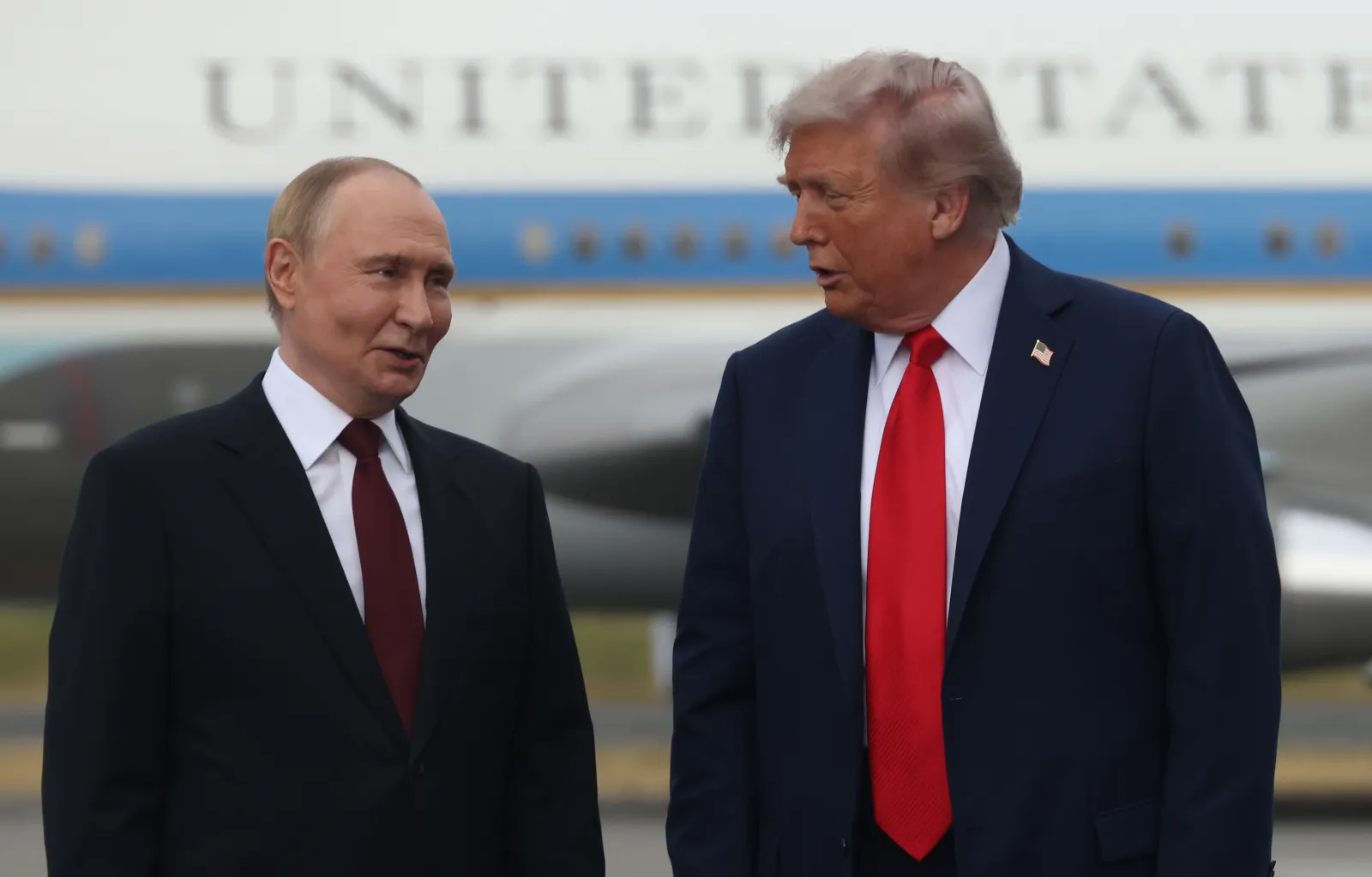
President Donald Trump announced Friday that Russian President Vladimir Putin had agreed to supply millions of tons of diesel fuel to global markets, saying the arrangement would help lower fuel prices that have remained near record highs ahead of November's midterm elections.
In a Truth Social post, Trump said he had concluded a "highly successful discussion" with Putin and that Russia would immediately begin shipping diesel fuel into global markets.
"It was agreed that Russia will immediately supply over 300,000 Tons of Diesel Fuel to the American and Global Marketplace, another 500,000 Tons during the month of November, and 1,000,000 Tons immediately thereafter," Trump wrote.
Read More on News
He added that, based on refinery capacity, Russia would eventually deliver another 3 million tons of diesel fuel and predicted the move would rapidly lower prices.
"Diesel Prices for Americans and, indeed, the World, will be COMING DOWN, IN RECORD NUMBERS, AND FAST!" Trump wrote.
A White House official told Newsweek on Friday that the Treasury Department had issued a general license allowing Russian diesel to reach global markets. In a statement, the Treasury Department's Office of Foreign Assets Control said it was issuing Russia-related General License 135, authorizing transactions involving the "sale, delivery, offloading, and importation of diesel fuel of Russian Federation origin" at Trump's direction. In an email newsletter, the White House described the arrangement as a "major diesel deal" and said it would bring more than 4.8 million tons of diesel fuel to the American and global marketplace.
The announcement follows repeated comments by Trump linking high diesel prices to refinery disruptions in Russia and elsewhere. Earlier this week, he argued that Ukrainian attacks on Russian energy facilities had contributed to tightening diesel supplies and rising fuel costs.
The president also linked the announcement to what he described as "TOTAL CONTROL of the Strait of Hormuz" and reiterated that "Iran will not have a Nuclear Weapon."
The president later defended the diesel deal while speaking to reporters.
"I think you heard about the oil deal with Russia. That is a big deal. That is massive amounts of oil coming into our country, and I want to thank President Putin to be honest with you," Trump said. "And it's diesel, which is what we want."
Newsweek reached out to the Energy Department and Russian embassy on Friday for comment.
Ukrainian President Volodymyr Zelensky appeared to criticize the announcement Friday, arguing that easing pressure on Russia without a broader de-escalation agreement would strengthen Moscow's ability to continue the war. He said "any easing of sanctions against Russia" without a lasting agreement was "an obvious weakness."
"Gifts to Putin will not bring peace or any benefit to the civilized world," Zelensky wrote on X Friday. "Russia will 'repay' the diesel with further terror and perfidy."
He also argued that "allowing Russia to sell petroleum products is an investment in a war that must be ended, not prolonged."
Representative Don Bacon, a Nebraska Republican and frequent critic of Russia's invasion of Ukraine, also criticized the move.
"We need lower diesel prices for American farmers, ranchers and consumers, but buying Russian fuel is the wrong answer," Bacon wrote on X on Friday. He argued Ukraine's attacks on Russian refineries have targeted facilities that "fuel and finance Putin's illegal invasion" and said Congress had passed sanctions legislation, the Lindsey O. Graham Sanctioning Russia and Iran Act of 2026, signed by Trump last month, aimed at increasing pressure on Moscow rather than easing it.
Trump Details Russia Diesel Agreement
The announcement came as the White House prepared additional actions aimed at lowering diesel prices and increasing fuel supplies.
Speaking earlier Friday at a White House event, Trump teased what he called a major development on diesel.
"We have a big announcement coming up on diesel," Trump said. "We have, I think, some big news on that diesel situation. We're going to be knocking the hell out of it."
Reuters reported that industry sources expect the White House to issue a directive in the coming days encouraging federal agencies to explore ways to boost energy production and potentially use authorities under the Defense Production Act.
Friday's announcement was aimed at lowering prices by increasing global diesel supplies through Russia.
...
Latest Move in Fight Over Soaring Fuel Costs
The Russia agreement is the latest in a series of steps taken by the administration as diesel prices have surged following supply disruptions linked to conflicts in the Middle East and refinery outages elsewhere.
According to AAA data cited by Reuters, the national average diesel price reached $6.28 per gallon on Thursday, up sharply from a year ago. Diesel prices have become a growing political concern for the administration ahead of the November midterms because of their impact on farmers, truckers, inflation and consumer costs.
Earlier this week, Trump signed an executive order allowing tax-exempt dyed diesel to be used on public roads through the end of the year and deferring the federal diesel tax associated with that fuel. The White House argued the move could provide relief for truckers, farmers and other diesel users.
But several analysts questioned whether that order would significantly affect prices because it did not increase supply.
Tom Kloza, senior energy and market adviser at Gulf Oil, previously told Newsweek that the dyed-diesel order "really doesn't alter the supply problems," although it could put some downward pressure on prices through tax savings.
Patrick De Haan, head of petroleum analysis at GasBuddy, similarly argued that the policy "doesn't add a single gallon of supply."
"A bigger piece of news would come if Russia resumes exports," Kloza said, adding that Russia had once exported large quantities of diesel fuel to world markets before refinery disruptions curtailed production.
Ed Hirs, University of Houston Energy Fellow in the Department of Economics, told Newsweek Friday night, "If everything goes smoothly, the U.S. consumer will not get relief at the pump until well after the election—and even then, the relief will only be temporary because the release is a relatively small amount of fuel in the global market."
Hirs continued, "Why? The U.S. is self-sufficient in diesel production and exports about 1.5 million bbls per day. The export deal with Russia calls for the release of 4 million metric tons of diesel or about 29 million bbls of diesel. Tankers carry up to 2 million bbls. It is a relatively small amount that will certainly help Asian and African economies, but any price impact for the U.S. will be minimal."
Hirs added that "Russia is not a reliable supplier both in terms of shipping and quality of fuel."
Will More Supply Lower Prices?
The potential impact of Trump's announcement may depend on how quickly Russian diesel reaches global markets and whether the pledged volumes materialize.
Analysts have repeatedly argued that the current diesel crunch stems largely from supply constraints rather than taxes.
Trump's announcement appears aimed directly at that problem by increasing the amount of diesel available globally.
But in comments to Newsweek on Friday, Kloza expressed skepticism that the announcement would meaningfully change diesel market fundamentals.
"My initial response is to regard this as more noise from Truth Social," Kloza said. "Russia does not have the capability of contributing any meaningful amount of diesel to the world market in the foreseeable future. Most reports suggest that Ukrainian drone attacks have crippled about half of their refining."
Kloza also questioned whether the volumes cited by Trump would be enough to significantly affect prices.
"The numbers mentioned don't add up to much as well," he said. "The market reacted with a 7-8cts/gal drop after the news broke, but nearly all traders I talk to doubt whether this will effect a trend change. Diesel molecules are scarce and promise to be scarce through October, into November and perhaps beyond."
The administration has already pressed allies to release emergency fuel reserves. Last week, G7 nations agreed to release oil and diesel supplies from stockpiles after pressure from Washington, though analysts said at the time that the move alone was unlikely to fully resolve the shortage.
Kloza said the latest announcement should be viewed alongside other recent efforts by governments to ease fuel costs, including Trump's dyed-diesel order and Europe's pledge to release fuel supplies.
"All of these moves fall short of addressing the problems," he said.
Diesel Crisis Has Become Political Issue
The diesel crunch has become both an economic and political challenge for the White House.
Unlike gasoline, diesel powers much of the transportation, agricultural and industrial sectors. Rising diesel costs can increase expenses for trucking companies, farmers, rail transport, manufacturers and consumers.
Farm groups have warned that elevated fuel prices are straining operations during harvest season, while trucking companies have reported growing financial pressure from higher operating costs.
Trump has increasingly framed the issue as a top priority, particularly for rural voters and industries heavily dependent on diesel. "Lower prices for Americans, especially our Great Farmers, Ranchers, and Truckers, is my Greatest Priority," the president wrote Friday.
With diesel prices still near record levels and fuel costs emerging as a midterm issue, the administration is betting that additional global supply, including from Russia, can help ease one of the most persistent economic pressures facing consumers and businesses.
Newsweek’s reporters and editors used Martyn, our AI assistant, to produce this story. Learn more about Martyn here.
Contact Newsweek editors on this story: Samantha Beech, Edward T. Cummins and Anna Commander
View 0 Comments
Submit Correction
View Editorial & AI Guidelines