...

By Brendan Cole
Senior Reporter
0
Share
Newsweek is a Trust Project member
See more of our trusted coverage when you search.Prefer Newsweek on Googleto see more of our trusted coverage when you search.
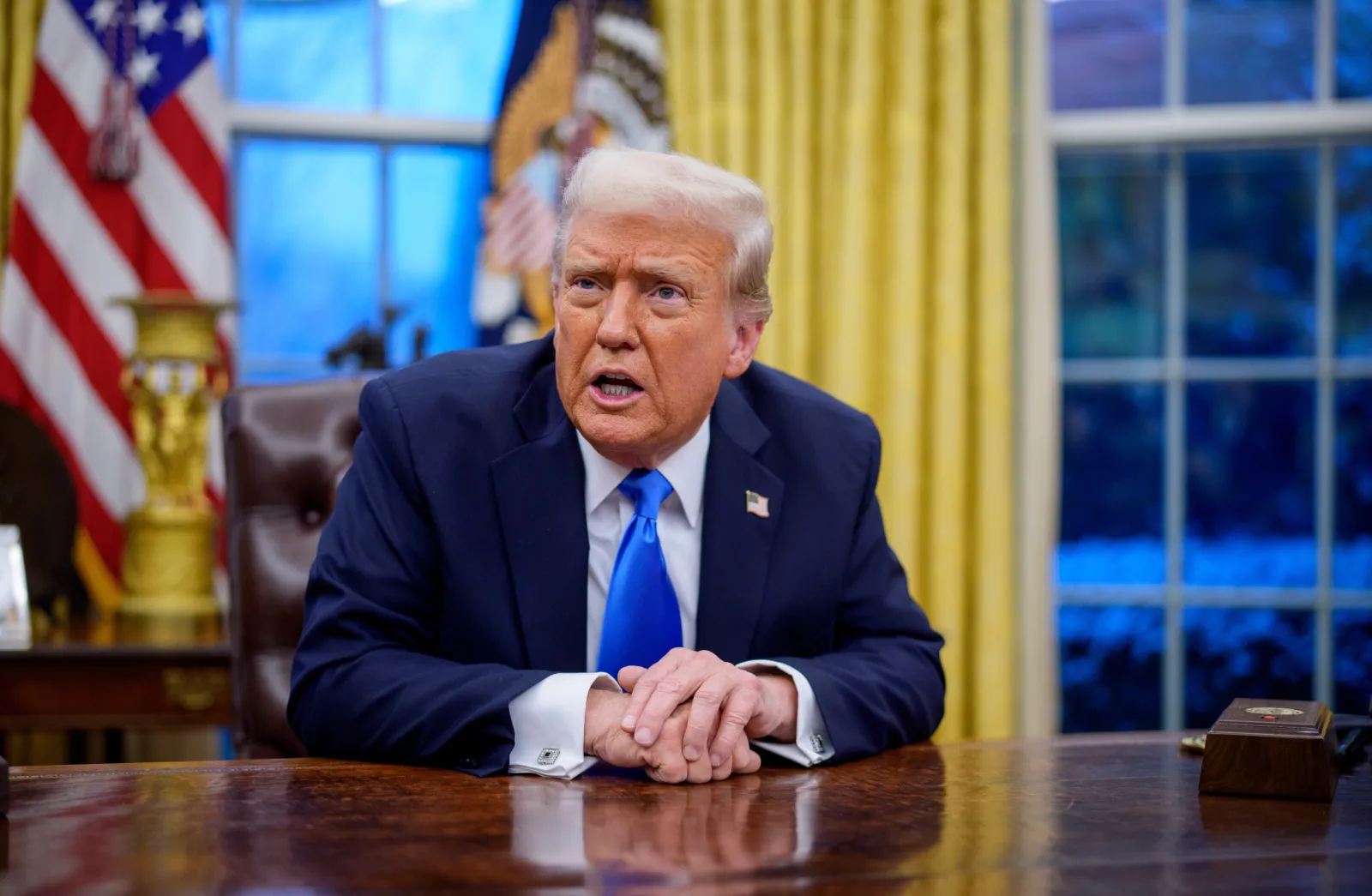
The return of President Donald Trump's "America first" policies has changed how Europeans view the transatlantic alliance, according to a new poll.
The survey by the European Council on Foreign Relations (ECFR) found that half of European citizens consider the U.S. a "necessary partner," which is more than twice of those who viewed Washington as an "ally."
Pawel Zerka, a senior fellow at the ECFR, told Newsweek on Wednesday that the findings show that European countries have had an opportunity to adjust the way they view transatlantic relations.
Read More on World
Newsweek contacted the U.S. State Department on Wednesday for comment.
...
Why It Matters
The poll by the European think tank gives a snapshot of public opinion on the continent about what the Trump administration means for international ties.
The polling preceded Trump's announcements on tariffs for China, Canada and Mexico and his clash with Denmark due to his push to acquire its autonomous territory of Greenland. But the ECFR noted how there was no reason to believe that Trump had changed his opinion of the EU from 2018 when he called it a "foe."
What To Know
Following Trump's U.S. election victory, the ECFR conducted the poll throughout November of 18,507 people across 14 European countries, three of which are not EU members (the United Kingdom, Switzerland and Ukraine).
One half (50 percent) of respondents said the U.S. was a "necessary partner" rather than ally, with highest number holding that view in countries traditionally close to the U.S., such as Ukraine (67 percent) Estonia (55 percent) and Denmark (53 percent).
Just over one fifth (21 percent) considered the U.S. an ally, with lower figures recorded in Germany (19 percent), France (14 percent) and Bulgaria (11 percent).
Zerka from the ECFR told Newsweek that unlike with Trump's first term, European countries can no longer pretend that his administration was an anomaly and have since recognized the U.S. is changing, which requires the transatlantic relationship to adapt.
He said there was a danger that Europeans would be divided with some countries seeking privileged relationships with Trump, while others wanting to prioritize Europe. But there was also an opportunity for Europe to force a new relationship with the U.S.
The ECFR said its findings showed views of Trump's return vary depending on country and political outlook.
The think tank said some European far-right parties had been skeptical towards the U.S. but Trump's re-election saw them reassess their approach. It noted how France's National Rally (RN) political party had a "subdued" reaction compared with Alice Weidel, the chancellor candidate of Alternative for Germany (AfD).
This may also point to why, according to ECFR's findings, AfD voters see the U.S. more positively than before, while the attitudes of RN supporters largely stayed unchanged.
Those backing mainstream parties like the Christian Democrats (CDU), Social Democrats (SPD) and Greens in Germany, PSOE in Spain or Renaissance in France, have revised their perception of the U.S. downwards since 2023, the ECFR said.
The report's authors concluded that Europeans can expect strategic, economic and political challenges from Trump's "America First" policies.
What people are saying
Pawel Zerka, senior fellow at the ECFR, told Newsweek: "Europeans can no longer pretend that Trump 1.0 was just an accident. They need to think of America as a country which is deeply changing, and those changes also require the transatlantic relationship to adapt."
What Happens Next
The ECFR said its findings show that policy differences in Europe—such as on the war in Ukraine—could allow Trump to split Europeans.
However, Zerka said that amid this threat, Trump also presented an opportunity for the continent because "nothing has mobilized and focused the minds of Europeans like this before."
View 0 Comments
Submit Correction
View Editorial & AI Guidelines